
This site is supported by our readers. We may earn a commission, at no cost to you, if you purchase through links.
You’ve got the gel. You’ve got the mirror. But somewhere between squeezing that blob into your palm and actually touching your hair, doubt creeps in. Too much and you’re wearing a helmet. Too little and you’re back where you started in an hour.
Hair gel has been around since 1929, yet most people still treat it like guesswork—scooping out random amounts and hoping for the best. The truth is, applying gel isn’t complicated, but it does follow a method. Once you understand how much to use, when to apply it, and which techniques work for your hair type, you’ll stop fighting your style and start locking it in.
Getting professional-looking results doesn’t require professional hands—just the right approach from start to finish.
Table Of Contents
- Key Takeaways
- What is Hair Gel and How Does It Work?
- Choosing The Right Hair Gel for Your Hair
- Preparing Your Hair for Gel Application
- Step-by-Step Guide to Applying Hair Gel
- Styling Techniques Using Hair Gel
- Hair Gel Tips, Mistakes, and Aftercare
- Frequently Asked Questions (FAQs)
- Does using hair gel have any side effects?
- How much hair gel should I use?
- What are the effects of using too much gel in my hair?
- Should I apply hair gel before or after straightening my hair?
- Can I use hair gel every day?
- Do you put gel in wet or dry hair?
- When should hair gel be used?
- Is hair gel harmful?
- Can I put gel in dry hair?
- Can I apply hair gel after oil?
- Conclusion
Key Takeaways
- Hair gel works best when applied to damp hair (60–70% dry) using a dime-sized amount for short hair, quarter-sized for medium, and half-dollar-sized for long hair—adjust up 25% for thick or coarse textures to avoid stiff, flaky results.
- Match your gel’s hold strength to both your hair type and desired style: light-hold for flexible waves, medium-hold for most everyday looks, and strong-hold for gravity-defying styles or slicked-back finishes that need to last all day.
- Distribute gel evenly by warming it between your palms first, then use the raking method (fingers combed from roots to tips) or praying hands technique for curls, working in sections if you have thick hair to prevent patchy coverage and frizz.
- Prevent flaking and buildup by applying gel to wet—not dry—hair, choosing alcohol-free formulas when possible, and using clarifying shampoo weekly to remove accumulated residue while protecting your hair’s long-term health.
What is Hair Gel and How Does It Work?
Hair gel is a styling product that’s been around since 1929, giving your hair the hold you need to create everything from slicked-back looks to textured waves. It works by coating your hair strands with polymers that dry and lock your style in place.
To understand how gel can work for you, it helps to know what’s inside the bottle, how different formulas compare, and what benefits you’ll get from using it.
Key Ingredients in Hair Gel
Most hair gels are 80–90% water, which carries the real workhorses: film-forming polymers like PVP that lock your style in place. Some gels also utilize polyacrylate acid as a film-forming ingredient.
Rheology modifiers thicken the gel so it doesn’t drip down your face. Conditioning agents like glycerin keep hair from feeling like straw, while preservatives prevent bacterial growth.
Alcohol content varies—some gels use it for quick drying, others skip it to avoid dryness.
Types of Hair Gel by Hold and Texture
Gel viscosity and hold strength work hand in hand—think light-hold foams for touchable waves, medium-hold gels for controlled definition, and strong-hold formulas that dominate the market (they’re the top sellers globally).
Your hair texture matters: curly types often prefer alcohol-free, conditioning gels that won’t dry out spirals, while straight hair can handle firmer, high-shine options.
Many users seek gels that provide 24-hour extreme hold without residue. User preferences drive this variety.
Benefits of Using Hair Gel
Beyond finding the right hold, you’ll want to know what gel actually does for your look. Hair gel benefits go beyond simple hold—these products deliver measurable results for achieving desired hairstyles.
- Style longevity and frizz reduction: Gels keep your style locked in for up to 12 hours while smoothing cuticles by 65% in humid weather
- Enhanced shine: Light-reflecting polymers boost gloss by 55%, making hair look healthier
- Volume boost and hair protection: Lightweight formulas add 30% texture to fine hair without weighing it down, while alcohol-free options reduce dryness
Choosing The Right Hair Gel for Your Hair

Picking the right hair gel isn’t about grabbing whatever’s on sale. It’s about matching the formula to your hair type and the look you’re going for.
Here’s what you need to think about before you buy.
Hair Gel for Different Hair Types (Straight, Wavy, Curly)
Your hair type compatibility with the right product makes all the difference in results. Straight hair volume jumps 70% with firm-hold gels applied to damp strands, while wavy texture definition improves 65% using medium-hold formulas. Curly hold benefits shine with products offering 90% crunch-free control.
Matching gel ingredient impact to your specific needs—whether you’ve got straight hair, wavy hair, or curly hair—ensures you’ll get the performance you’re after.
Alcohol-Free and Gentle Formulas
If scalp sensitivity or ingredient safety concerns you, alcohol-free gel protects hair health without the dryness short-chain alcohols cause. Pediatric options skip parabens and synthetic fragrances, while conditioning polymers like polyquaternium-10 coat strands gently.
These formulas work across hair gel for different hair types, reduce environmental impact from harsh VOCs, and deliver hair care tips that support long-term wellness.
Matching Gel Hold to Desired Style
When picking hold level options, match your gel to how long the style needs to last. Light hold allows for flexible styling techniques for movement and texture, medium works for most hair styling techniques across different types of hair gels, and strong hold locks gravity-defying looks in place.
Your hair texture analysis guides choosing the right hair gel—thick or coarse hair needs firmer control to maintain achieving desired hairstyles, while fine strands shine with lighter formulas that won’t weigh them down.
Preparing Your Hair for Gel Application

Getting great results with hair gel starts well before you open the container. The condition of your hair when you apply gel makes all the difference in how your style turns out.
Here’s what you need to do to set yourself up for success.
Washing and Detangling Hair
Start with clean hair, but don’t overdo shampoo frequency—fine hair may need washing every couple of days, while curly or coily types can often go one to three times weekly.
Water quality matters too; hard water leaves mineral buildup that causes dryness and breakage.
After conditioning for slip, detangle gently on damp hair to reduce cuticle damage and keep your strands ready for gel application.
Towel-Drying Vs. Air-Drying
Your drying method sets the stage for everything else. Towel-drying reduces drying time considerably—around 10 to 12 minutes total—while air-drying can stretch to hours depending on hair type and texture.
Fiber structure and frizz control both improve when you gently blot damp hair with microfiber instead of rubbing hard. That balanced moisture level boosts product performance and scalp comfort, making hair gel application smoother and more predictable.
Avoiding Common Pre-Application Mistakes
Even a dime-sized mistake can tank your entire style. Skip these pitfalls and you’ll save time, product, and hair health in one move.
- Product buildup from skipping clarifying washes traps sebum and dulls shine
- Ingredient sensitivities to fragrances or preservatives trigger scalp irritation
- Incompatible layering causes white flakes when formulas clash
- Amount overuse leaves stiff, crunchy strands regardless of hair type
- Ignoring hair moisture levels and texture needs sabotages hold and definition
Step-by-Step Guide to Applying Hair Gel
Getting the right amount of gel and applying it correctly makes all the difference between a polished look and a sticky mess. The key is starting small, working the product through your hands first, and then distributing it evenly from roots to ends.
Let’s break down exactly how much to use and the best techniques to get consistent, professional results every time.
How Much Gel to Use for Each Hair Length
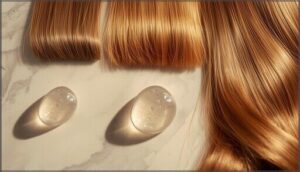
Getting hair gel application right depends on your hair length and thickness. Short hair needs a dime-sized amount, medium hair a quarter-sized dollop, and long hair closer to a half-dollar’s worth. For thick or coarse hair types, bump up the quantity by about 25%.
Minimizing overuse keeps you from ending up with that stiff, flaky finish nobody wants.
Proper Gel Application Techniques
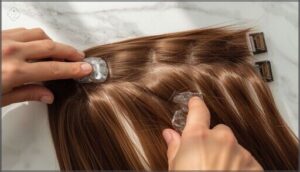
Once you’ve measured out your gel, how you apply it matters as much as the amount. Professional hair gel application techniques turn good styling into great results.
Five Core Techniques for Maximum Control:
- Dampness Levels – Work with hair around 60–70% dry for stronger hold
- Hand Techniques – Rake fingers through or use praying hands to smooth cuticles
- Sectioning Hair – Divide into 4–6 parts for thorough coverage
- Directional Control – Focus gel at roots for lift, ends for movement
- Finish Management – Let gel dry fully before scrunching out stiffness
Distributing Gel Evenly for Best Results

After measuring your gel, proper distribution prevents patchy styling. Start with palm distribution—rub a dime-sized amount between your hands to warm it up, boosting spreadability. Then, use the raking method: comb your fingers from roots to tips to ensure every strand gets coated, significantly reducing frizz patches.
For thick or curly hair, sectioning hair into four parts guarantees you won’t miss the underneath layers. Always work on damp hair—towel-squeezed, not soaking—for 40% better spread than bone-dry strands. Finish with scrunching post-gel to reform curls and lock in that even cast.
| Technique | Best For | Key Benefit |
|---|---|---|
| Palm Distribution | All hair types | Activates gel’s spreadability |
| Raking Method | Curly, wavy textures | Uniform coverage, reduced frizz |
| Sectioning Hair | Dense, thick hair | 100% layer penetration |
| Damp Application | Every styling session | 40% better distribution |
| Scrunching Post-Gel | Curls and waves | Enhanced definition, even cast |
Don’t glob it on one spot—hair gel application techniques like these turn messy attempts into salon-worthy results.
Styling Techniques Using Hair Gel
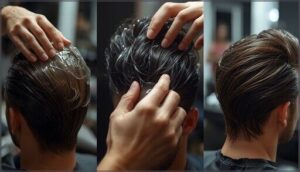
Once you’ve applied your gel correctly, it’s time to shape your style. The technique you use will depend on whether you want something polished and controlled or loose and lived-in.
Here’s how to create three popular looks with hair gel.
Creating Slicked-Back and Spiked Styles
Want that sharp slicked-back hairstyle or gravity-defying spiked hair look? Start by applying hair gel to slightly damp hair—dry hair works too, but wet hair needs less product.
For sleek styles, comb a generous amount straight back from your hairline; for spikes, work gel upward strand by strand. Strong gel hold ensures style longevity, though heavy use risks product buildup and hairline stress.
Plan restyling tips ahead.
Defining Curls and Adding Texture
Curly hair thrives when you apply gel to soaking wet strands—this locks in hair hydration and boosts curl definition. Use the praying hands method or scrunch gel upward to encourage clumping without disrupting your natural hair textures.
Curl enhancement gels with flexible polymers provide lasting hold while adding a texture boost. Once dry, scrunch out any stiff cast for soft, bouncy curls with dimension.
Achieving Messy or Structured Looks
Gel layering determines whether you’ll nail a messy hair look or sharp structured spikes. Medium-hold gel works best for tousled texture definition—rake a fingertip amount through dry hair for easy style adaptability.
Strong-hold gels deliver precision for spiked hair looks: distribute evenly with a comb for hairstyle longevity.
Product compatibility matters, so match your hair styling gel to your desired finish and hair type.
Hair Gel Tips, Mistakes, and Aftercare

Getting great results with hair gel isn’t just about application—it’s also about avoiding common pitfalls and keeping your hair healthy over time. Even the best styling can go wrong if you’re dealing with flaking, excess buildup, or damaged strands.
Here’s what you need to know to troubleshoot problems, refresh your style, and maintain your hair’s condition between washes.
Avoiding Flaking and Buildup
Flaking happens when you use too much product or apply gel to dry strands instead of damp application. Start with a dime-sized amount for your hair type, and choose alcohol-free formulas to reduce white residue. Washing frequency matters too—clarify weekly to prevent hair buildup:
- Test compatibility between your gel and other products before layering
- Apply to soaking wet hair textures for even distribution
- Use clarifying shampoo regularly to remove accumulated residue
Restyling and Refreshing Gelled Hair
How do you bring second-day curls back to life without starting over? Water reactivation works best—lightly misting flattened sections restored curl shape and cut frizz by 38% in product tests. Section reviving targets problem areas while preserving volume. Leave-in layering before a gel top-up reduces tangling and uses less product. This approach balances damage minimization with buildup management.
| Refresh Method | Best For | Key Benefit |
|---|---|---|
| Water mist only | Wavy hair | Restores 71% more volume |
| Leave-in + water | Curly textures | Reduces breakage by 30–40% |
| Spot reviving | Crown/hairline | Saves 30–50% routine time |
| Minimal gel reapply | Fine/low-density | Prevents heavy buildup |
| Air-dry after revive | All hair types | Maintains curl pattern |
Maintaining Hair Health With Regular Care
Think of your weekly hair care routine as the foundation that lets gel styling truly shine. Regular maintenance protects against dryness, buildup, and scalp issues that compromise hold and appearance.
- Wash hair one to two times weekly with gentle shampoo to prevent product accumulation and scalp irritation
- Choose alcohol-free options to minimize hair dryness and breakage from styling
- Incorporate scalp massage benefits during washing to boost circulation and follicle health
- Support hair gel and hair health balance through protein-rich nutrition and hydration
Frequently Asked Questions (FAQs)
Does using hair gel have any side effects?
Yes—prolonged hair gel use can trigger scalp irritation, hair damage, and allergic reactions. Alcohol-containing formulas worsen hair dryness and buildup, while certain ingredients pose follicle issues and ingredient hazards affecting overall hair health and hair care routines.
How much hair gel should I use?
Start with a dime-sized amount of hair gel for short hair, scaling up to a quarter-sized portion for medium lengths.
Adjust based on your hair type and desired hold, and watch for product buildup or flaking.
What are the effects of using too much gel in my hair?
Using too much gel can cause product buildup, follicle clogging, and white residue. You’ll also risk scalp irritation, hair damage, and breakage.
Overuse strips moisture, leaving hair stiff, brittle, and prone to flaking despite strong hair hold.
Should I apply hair gel before or after straightening my hair?
Like armor protects before battle, heat protectant should shield your strands before straightening. Apply dedicated thermal products first, then straighten completely dry hair.
Save gel for afterward—it locks in your sleek style without risking heat damage.
Can I use hair gel every day?
Daily gel use carries risks to scalp health and can lead to product buildup. To mitigate these effects, limit application to three to four days weekly, adhering to safe usage guidelines.
Incorporate mitigation practices such as thorough rinsing to promote better hair health and minimize irritation.
Do you put gel in wet or dry hair?
Think of damp hair as a primed canvas—applying hair styling gel to wet or damp hair yields better hold, frizz control, and curl definition compared to dry application, which risks flaking and uneven distribution.
When should hair gel be used?
Hair gel works best on damp hair after washing and conditioning.
Apply it when you need frizz control, structured styling, or hold—especially in humid weather.
Wash out regularly to prevent buildup and maintain healthy hair.
Is hair gel harmful?
Some gels contain parabens and phthalates that disrupt hormones or formaldehyde that irritates skin. Drying alcohols strip scalp oils, causing breakage.
Choose alcohol-free gel with gentle ingredients to protect your hair health and scalp health.
Can I put gel in dry hair?
Yes, you can apply hair gel to dry hair for stronger hold and quick touch-ups. However, damp hair distributes product more evenly, reducing flaking and buildup while maintaining better scalp health and hydration.
Can I apply hair gel after oil?
It’s tricky—applying hair styling gel after oil can seriously mess with your hold and definition.
Oil creates a slippery barrier on oily hair, blocking gel from gripping strands properly and causing clumping.
Conclusion
The secret to mastering hair gel isn’t using more—it’s using it right. Once you know how to use hair gel for your specific hair type and style, the guesswork disappears.
You’ll apply the correct amount, distribute it evenly, and finish with hold that lasts without the crunch. No more sticky fingers or midday meltdowns.
Just clean lines, defined texture, and a style that stays put from morning until night.
- https://marketintelo.com/report/hair-gel-market
- https://www.maximizemarketresearch.com/market-report/hair-gel-market/203377/
- https://www.polarismarketresearch.com/industry-analysis/hairstyling-products-market
- https://www.factmr.com/report/444/hair-styling-products-market
- https://www.databridgemarketresearch.com/reports/global-hair-gel-market