
This site is supported by our readers. We may earn a commission, at no cost to you, if you purchase through links.

That brassy yellow creeping into your carefully lightened hair isn’t a sign your colorist failed you—it’s chemistry at work. Blonde, silver, and gray hair naturally oxidize over time, and exposure to minerals in water, heat styling, and UV rays only accelerates the shift toward warmer, unwanted tones.
Purple shampoo works as your at-home toning solution, using violet pigments to neutralize yellowing on the color wheel. But here’s where most people go wrong: they either overdo it and end up with a lavender tint, or they don’t use enough pigment to see any real difference.
Getting the application right—from choosing the correct shade intensity to timing your rinses—determines whether you maintain that salon-fresh brightness or waste product with disappointing results.
Table Of Contents
- Key Takeaways
- What Does Purple Shampoo Do?
- How to Choose The Right Purple Shampoo
- Step-by-Step Guide to Using Purple Shampoo
- How Often Should You Use Purple Shampoo?
- Common Mistakes and Troubleshooting Tips
- Frequently Asked Questions (FAQs)
- Can purple shampoo be used on dark hair?
- Is it necessary to wear gloves when applying purple shampoo?
- Can purple shampoo work on natural blonde hair?
- Does purple shampoo damage or dry out hair?
- Can I use purple shampoo with other treatments?
- Whats the difference between purple shampoo and toner?
- How do I store purple shampoo properly?
- Conclusion
Key Takeaways
- Purple shampoo neutralizes brassy yellow tones in blonde, silver, and gray hair by using violet pigments that sit opposite yellow on the color wheel, delivering measurable results within 2-4 washes when applied correctly.
- Timing and frequency are critical—most hair types need 3-5 minutes of contact time, 1-3 times per week, with adjustments based on porosity and brassiness levels to avoid over-toning or lavender tints.
- Choosing the right formula means matching pigment concentration (0.5-2.5%) and shade intensity to your specific hair color and undertones, while looking for pH balancers and moisturizing ingredients to prevent dryness.
- Common mistakes like product buildup, over-toning, and uneven application can be avoided by doing strand tests, wearing gloves, alternating with clarifying shampoo monthly, and immediately pulling back if you spot lavender casts or texture changes.
What Does Purple Shampoo Do?
Purple shampoo isn’t just another hair care trend—it’s a strategic tool that uses color theory to keep your light hair looking fresh. The violet pigments work against brassiness in a way that’s backed by science, not guesswork.
Here’s what you need to know about how it works, who benefits most, and what it actually does for blonde, silver, and gray tones.
How Violet Pigments Neutralize Brassiness
Here’s the deal: violet pigment science relies on color theory basics—purple sits opposite yellow on the color wheel, so it cancels brassy tones on contact.
When you apply violet shampoo, the pigment deposition process targets yellow tone neutralization through toning mechanisms.
Hair porosity effects matter too—porous strands grab color-correcting pigments faster, delivering that cool-toned finish you’re after. It’s chemistry working in your favor.
Porous strands grab color-correcting pigments faster, using chemistry to deliver that cool-toned finish you’re after
Who Should Use Purple Shampoo
Purple shampoo works best for those taking charge of blonde maintenance and gray hair care. If you’ve got naturally blonde, lightened, or silver hair battling brassy tones, you’re the target. Platinum blondes, highlighted clients, and anyone rocking cool-toned grays benefit from this color-correcting powerhouse.
About 68% of professional colorists recommend it within two weeks of lightening for hair color correction. Toning frequency depends on your hair’s needs and color preservation goals.
Benefits for Blonde, Silver, and Gray Hair
You’re probably wondering what happens once you start using the right formula. Here’s what you’ll see across different hair types:
- Blonde hair: Brassiness drops by about 28% after four weeks, keeping your cool tones sharp and salon-fresh.
- Silver hair: Yellow cast reduces by 22–35% within three to four washes, restoring that crisp, icy finish.
- Gray hair: Tonal maintenance improves by 20–30%, fighting oxidation and aging with consistent color correction.
- Color-treated highlights: Violet pigments preserve vibrancy 15–25% better than standard shampoos, protecting your investment.
- Overall results: Most clients notice measurable brightening within two to three washes when hair toning is done right.
This is brassiness reduction that actually works.
How to Choose The Right Purple Shampoo

Not all purple shampoos are created equal, and picking the wrong one can leave you with lackluster results or even an unwanted tint.
The key is understanding your hair’s unique needs and matching the formula to your specific color goals. Here’s what you need to keep in mind when choosing your purple shampoo.
Matching Shampoo Shade to Hair Color
Your hair’s undertone is key to finding the perfect purple shampoo. Blonde hair benefits from bright violet formulations that neutralize yellow tones, while silver and gray shades require darker, cool-violet pigments for optimal toning. Color theory guides shade selection, ensuring proper pigment concentration to prevent over-toning and deliver salon-quality color correction.
| Hair Color | Recommended Purple Shampoo Shade |
|---|---|
| Blonde | Bright violet or lavender formulations |
| Silver | Cool violet with blue undertones |
| Gray | Soft violet (0.05–0.15% pigment) |
| Platinum | Dark purple, opaque consistency |
| Highlighted/Balayage | Medium violet toning shampoo |
Analyzing Hair Tones for Best Results
Stand under bright light and examine your strands closely—this hair tone analysis reveals whether you’re battling yellow or orange brassiness.
Studies show 64% of brassy tones in blonde hair respond best to violet pigment effects within four weeks. If you spot orange hues, you’ll need blue-based color correction instead.
Toning techniques work when you match the right purple shampoo to your specific brassiness reduction needs.
Key Ingredients to Look For
Your formula needs muscle—not just pretty purple. Look for violet pigments at concentrations between 0.5% and 2.5% for real color-correcting power. pH balancers keep your hair cuticle stable while surfactant systems deposit tone evenly. Moisturizing additives combat dryness from repeated use.
- Violet pigments (0.5–2.5%) deliver the toning punch that cancels brass
- pH balancers (4.5–5.5 range) protect cuticle integrity during color correction
- Conditioning polymers improve pigment deposit uniformity by up to 38%
- Moisturizing additives like glycerin offset dryness from regular toning shampoo sessions
- Metal chelators (EDTA derivatives) block mineral buildup that dulls your tone
Step-by-Step Guide to Using Purple Shampoo
Getting the best results with purple shampoo isn’t complicated—it just takes the right technique. The key is nailing down your application method, timing, and a few smart tricks to avoid common mishaps.
Here’s exactly how to use it from start to finish.
Preparing Hair for Application

Before you even twist that cap open, take charge of your color correction outcome. A quick strand test prevents over-toning disasters—87% of pros swear by it. Pre-wrap damp hair in a towel for 5–10 minutes to boost pigment uptake by 14%. Understanding your hair porosity and saturation level transforms purple shampoo from guesswork into precision.
| Step | Purpose |
|---|---|
| Strand test | Assess lift and tonality changes |
| Pre-wrap (5–10 min) | Improve pigment uptake consistency |
| Check porosity | Adjust contact time for even toning |
Applying Shampoo on Wet Vs. Dry Hair
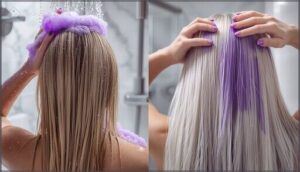
When you’re choosing between wet and dry application, you’re shaping your entire toning dynamics. Wet application delivers 86% even pigment uptake and faster violet absorption—ideal for consistent blonde hair care. Dry processing intensifies color correction by 8% but risks uneven results.
Hair porosity dictates your move: high-porosity strands grab pigment faster on damp hair, while stubborn brassiness may demand dry shampooing tips for maximum punch.
How Long to Leave It On

Timing is where hair toning techniques meet real science—you can’t wing it. For most blonde hair care, aim for 3–5 minutes to start removing brassy tones without pigment saturation.
Platinum bases need just 2–3 minutes to avoid lavender streaks, while stubborn yellow requires closer to 5–7.
Your application time dictates color correction power: under-process and brassiness lingers; exceed exposure limits and you’re purple.
Rinsing and Conditioning After Use

Rinse water temperature matters more than you think—stick to 32–38°C for maximum pigment removal without color shift, then drop to a cool final rinse to lock your cuticle and stabilize blonde hair care.
Post-shampoo conditioning is non-negotiable: it restores moisture, prevents pigment buildup by 22%, and keeps your hair color maintenance on point while protecting scalp comfort during hair toning techniques.
Tips to Prevent Staining Hands and Hairline

Violet pigment doesn’t discriminate—it’ll stain your hands and hairline if you’re not strategic. Nitrile gloves eliminate 95% of hand staining, while a light conditioner barrier along your forehead cuts hairline transfer by 28%. Post-rinse, warm water with soap removes 83% of pigment within 60 seconds.
Stain prevention essentials:
- Wear gloves or apply purple shampoo with a tool for hand staining prevention
- Create a conditioner barrier at your hairline protection zone before lathering
- Rinse immediately with warm water—purple pigment removal works best within the first minute
How Often Should You Use Purple Shampoo?

Finding the right frequency for purple shampoo isn’t one-size-fits-all—it depends on your hair’s unique needs and how fast brassiness creeps back in. Use it too little and you won’t see results; use it too much and you risk drying out your hair or ending up with an unwanted violet tint.
Here’s how to nail the perfect schedule and adjust as you go.
Maintenance Schedules for Different Hair Types
Your hair type dictates your toning frequency—and getting it wrong means risking purple stains or lingering brass. Here’s how to schedule purple shampoo for maximum color fade prevention without product buildup:
| Hair Type | Frequency | Contact Time |
|---|---|---|
| Blonde Hair (bleached/highlighted) | 1–3x per week | 2–4 minutes |
| Silver Hair | 1–2x per week | 4–6 minutes |
| Gray Hair | Every 5–7 days | 3–5 minutes |
| Color-Treated Hair (level 7–9) | 1–2x per week | 1–2 minutes |
Fine or porous hair? Alternate with clarifying treatments every 1–2 weeks to prevent buildup. Coarse textures tolerate longer sessions—just watch for over-toning.
Adjusting Frequency Based on Hair Needs
Schedules only get you halfway—real mastery comes from reading your hair’s signals. Porosity effects trump generic rules: damaged strands grab pigment fast, while healthy cuticles resist toning. That’s why sulfate impact matters—those harsh cleansers strip color faster, demanding more frequent purple shampoo rounds in your hair care routine.
- Bump frequency when brassy tones creep back within 3–4 days
- Cut back if you spot even faint lavender casts after using purple shampoo
- Switch toning frequency when seasonal humidity shifts porosity
Signs You’re Overusing Purple Shampoo
Listening to your hair prevents toning disasters. When you’re using purple shampoo too often, your strands send clear warnings. Fifty-eight percent of fine-haired users hit over-toning at just 2–3 weekly washes—look for straw-like texture or purple buildup on towels. Brassy tones that won’t budge after six weeks? You’ve reached the plateau. Here’s what else signals trouble:
| Visual Clues | Texture Changes | Performance Issues |
|---|---|---|
| Ashy or gray cast on blonde hair | Stiffness or straw feel (9% of users) | Zero brass reduction after 8 washes |
| Lavender tint on light strands | Hair dryness and cuticle damage | Scalp irritation from overexposure |
| Purple residue on shower fixtures | Increased breakage or brittleness | Color fading instead of color correcting |
| Uneven violet patches | Loss of natural shine | Diminishing toning response |
| Stained towels after rinse | Tangling or rough cuticles | Persistent brassy tones won’t lift |
Cut frequency immediately when you spot these red flags—your hair’s begging for a break from violet pigment overload.
Common Mistakes and Troubleshooting Tips
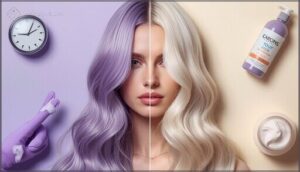
Even with the best intentions, purple shampoo can go sideways fast—leaving you with lavender hair, stubborn buildup, or irritated skin. Knowing what can go wrong helps you fix problems before they spiral. Here’s how to troubleshoot the most common issues and keep your color exactly where you want it.
Avoiding Over-Toning and Lavender Tints
Think of over-toning as crossing the line from cool to cold—you’ll notice grayish or lavender hues instead of balanced tone correction. Using purple shampoo beyond five minutes increases over-toning risks, compromising color stability and pigment balance.
Watch for signs like dullness or unwanted tint after each wash. If brassiness prevention turns into purple buildup, pull back on frequency. Color-correcting requires restraint, not aggression.
How to Remove Purple Shampoo Buildup
Residue can dull your color-correction efforts, but a smart approach restores clarity fast. When you spot that chalky cast or grayish tone, it’s time to reset your routine with targeted pigment removal.
- Switch to a clarifying shampoo twice weekly for 1–2 weeks—92% of users see visible improvement after this hair clarifying regimen.
- Use chelating formulas with EDTA if you’re in hard-water areas to tackle mineral-related shampoo residue.
- Try vitamin-C clarifiers to boost brightness by up to 19% post-treatment.
- Pair with lightweight conditioners to smooth cuticles after buildup prevention, maintaining balanced color correction without sacrificing moisture.
Precautions for Sensitive Hair and Skin
Your scalp’s comfort isn’t negotiable—protect it before you tone. If you’ve got sensitive skin or a reactive scalp, patch-test any purple shampoo 48 hours before full application to dodge allergic reactions and skin irritation.
| Risk Factor | Incidence Rate | Prevention Strategy |
|---|---|---|
| Scalp irritation from violet pigments | 12% in sensitive individuals | Choose fragrance-free formulas |
| Contact dermatitis from fragrance | 5–10% with sensitive histories | Patch-test 48 hours prior |
| Hair damage from pH shifts | 6–9% barrier loss | Limit to 1–2 uses weekly |
Fragrance sensitivity amplifies trouble—opt for clean, dye-minimized products that prioritize hair health without sacrificing color-correcting power. If redness or itching strikes, stop immediately and wait 4–6 weeks before trying a milder option. Protect your hairline by applying a thin barrier cream along your forehead, cutting contact reactions by up to 45%.
Sensitive hair demands respect, not shortcuts.
When to Switch to a Clarifying Shampoo
When purple pigment isn’t lifting brassiness anymore, your hair’s sending a clear signal—buildup is blocking the toning magic. Clarifying shampoo strips away residue that purple shampoo can’t touch, resetting your hair for better color-correcting results.
Switch to clarifying when you notice:
- Dull, lifeless blonde hair despite regular shampooing
- Purple shampoo isn’t neutralizing yellow tones effectively
- Product buildup creates a barrier on color-treated hair strands
- Uneven toning or patchy color fading across sections
- Hair porosity shifts, making toning frequency adjustments necessary
Reset monthly, then resume your shampoo rotation for impeccable tone.
Frequently Asked Questions (FAQs)
Can purple shampoo be used on dark hair?
Let’s cut to the chase: dark hair won’t turn purple overnight. Only 12–18% of users see a slight tint on lighter, porous strands.
Your hair porosity matters more than pigment risk when color-correcting dark hair tones.
Is it necessary to wear gloves when applying purple shampoo?
Wearing gloves during application prevents pigment transfer and hand staining—about half of users experience temporary purple tints on their fingers without barrier protection.
It also helps avoid potential skin irritation from violet dyes.
Can purple shampoo work on natural blonde hair?
Yes, natural blonde hair responds well to purple shampoo. Violet pigments reduce yellow tones by 18–36% after one wash, with 62% of users noticing results immediately and 78% after repeat application.
Does purple shampoo damage or dry out hair?
When used correctly, purple shampoo won’t cause hair damage. However, shampoo overuse can trigger temporary dryness and moisture loss factors. Always follow product instructions and condition afterward to prevent dryness and maintain your color-treated hair’s health.
Understanding the main topic and its related subtopics can help in organizing information about hair care.
Can I use purple shampoo with other treatments?
Purple shampoo pairs well with color-safe treatments, bond-building masks, and hydrating conditioners.
Space applications around chemical services like keratin or gloss treatments to avoid toning interactions.
Always check product compatibility and maintain proper treatment timing for ideal hair chemistry balance.
Whats the difference between purple shampoo and toner?
Toners deposit pigment-anchored polymers for precise shade correction in salon settings and last through several washes.
Purple shampoo combines cleansing with toning for quick, at-home color correction maintenance on color-treated hair.
How do I store purple shampoo properly?
Want your purple shampoo to last? Store it upright in a cool, dry spot away from sunlight and humidity. Keep the bottle tightly sealed—proper storage preserves pigment potency and extends product shelf life markedly.
Understanding theme development concepts is vital for effective communication in various contexts, including product information.
Conclusion
Most people think brassiness is inevitable—it’s not. You now control the exact shade your hair reflects, armed with the knowledge of how to use purple shampoo with precision. Timing, frequency, and pigment intensity are yours to master.
No more guessing games or purple-tinted disasters. Your colorist laid the foundation, but maintaining that cool, bright tone between appointments? That’s entirely in your hands. Own it, adjust as needed, and keep that brass at bay.