This site is supported by our readers. We may earn a commission, at no cost to you, if you purchase through links.
Your razor might be working against your body’s natural defense system. About 25% of men who groom their pubic area experience skin irritation, razor burn, or infection—consequences that stem from disrupting a protective barrier evolution designed over millions of years.
The hair down there isn’t random; it reduces friction during movement and intimacy, maintains your skin’s microbiome through sebum with antimicrobial properties, and shields delicate tissue that’s markedly thinner than skin elsewhere on your body.
Shaving isn’t medically necessary—it’s purely cosmetic—yet the health trade-offs are documented and measurable. Before you reach for that razor again, understanding what you’re removing, why it exists, and how to minimize damage if you choose to proceed can protect you from unnecessary complications that range from annoying ingrown hairs to serious folliculitis infections.
Table Of Contents
- Key Takeaways
- Is It Healthy to Shave Male Pubic Hair?
- Benefits and Drawbacks of Shaving
- Health Risks and Common Skin Issues
- Best Practices for Safe Pubic Hair Shaving
- Alternatives to Shaving and Safer Options
- Frequently Asked Questions (FAQs)
- Should you shave male pubic hair?
- Does shaving pubic hair boost confidence in men?
- What happens if you shave pubic hair?
- Should male pubic hair be groomed?
- Why is pubic hair important?
- How do you trim pubic hair for men?
- Can pubic hair removal impact fertility or hormones?
- How does age affect pubic hair grooming decisions?
- Are there specific medical conditions that prohibit shaving?
- Does pubic hair affect athletic performance or comfort?
- Conclusion
Key Takeaways
- Shaving pubic hair isn’t medically necessary and disrupts your body’s natural defense system—about 25% of men who groom experience skin irritation, razor burn, or infection from removing hair that reduces friction, maintains skin microbiome, and shields delicate tissue.
- Pubic hair serves specific protective functions including cushioning skin during movement and sex, producing antimicrobial sebum that keeps bacterial balance in check, and preventing pathogen entry through the thin genital skin that’s more vulnerable than skin elsewhere on your body.
- Extreme groomers face 4.4 times higher odds of cutaneous STIs compared to non-groomers because shaving creates microcuts that allow bacteria in, despite the persistent myth that hair removal improves hygiene or prevents infections.
- Trimming carries the lowest risk profile at approximately 5% compared to shaving’s 25% irritation rate—keeping hair shortened while preserving the protective barrier avoids razor burn, folliculitis, and ingrown hairs without sacrificing grooming preferences.
Is It Healthy to Shave Male Pubic Hair?
You’ve probably heard a dozen opinions about whether shaving down there‘s healthy, but let’s cut through the noise with what the science actually says.
If you’re already rethinking grooming myths, the truth about shaving and beard growth might surprise you just as much.
From a urologist‘s perspective, there’s no medical reason you need to remove pubic hair—in fact, your body put it there for some pretty specific reasons. Here’s what you should know about the health side of shaving before you reach for that razor.
Medical Perspective on Shaving
Shaving isn’t medically required—it’s purely cosmetic. But here’s what matters: you’re disrupting your skin barrier with each pass of the blade, creating pubic hair shaving risks like razor burn, skin irritation, folliculitis, and even infection. Those hair follicles produce sebum that naturally protects your microbiome balance and helps with infection control. Research backs this up.
From a urologist’s perspective, keeping pubic hair doesn’t hurt cleanliness—but removing it? That choice carries documented health trade-offs you should understand:
- Increased susceptibility to bacterial and viral skin infections
- Disruption of natural sebum production and protective oils
- Loss of friction-reducing barrier during movement and intimacy
- Higher risk of microabrasions that allow pathogen entry
- Potential imbalance in the genital skin’s microbiome ecosystem
Pubic hair plays important roles, such as providing a against irritation and infection.
Natural Functions of Pubic Hair
Your pubic hair isn’t decorative—it’s functional. Friction reduction ranks high: hair cushions your skin during sex and movement, lowering chafing and microabrasions that let pathogens in.
It maintains your skin’s microbiome by trapping sebum with antimicrobial punch, keeping bacterial balance in check and boosting genital health. Pubic hair also wicks sweat for temperature control, traps natural scents tied to pheromone signaling, and adds sensory stimulation through nerve-rich follicles.
These natural functions work together as part of smart pubic hair management—stripping it all away undermines protections your body built in for hygiene and resilience. Additional theories, such as the role of, highlight the complexity and evolutionary significance of pubic hair.
Myths Vs. Facts About Pubic Hair Removal
All those protective functions get ignored when myths about grooming take over. You’ve probably heard that shaving improves hygiene or prevents infections, but the opposite is true: hair removal methods create microcuts that let bacteria in, and extreme groomers face 4.4 times higher odds of cutaneous STIs.
Despite grooming myths, shaving actually increases infection risk—extreme groomers face 4.4 times higher odds of cutaneous STIs than non-groomers
Pubic hair biology nurtures your skin microbiome and reduces friction, so shaving risks outweigh the supposed “cleanliness” men chase through grooming trends.
Benefits and Drawbacks of Shaving

Shaving your pubic hair comes with trade-offs that go beyond the surface-level smoothness you might be chasing. The decision involves real health considerations, not just personal preference or what looks good in the mirror.
Let’s break down the actual benefits and drawbacks so you can weigh what matters most for your body.
Hygiene and Cleanliness Considerations
Many men believe removing hair guarantees better hygiene, but that’s a myth—daily hygiene with warm water and gentle soap is what truly matters for odor control and skin balance. Hair itself doesn’t harbor infection if you practice microbial management through regular, gentle cleansing. In fact, shaving can disrupt your natural barrier, increasing skin irritation and infection risks through tiny cuts.
If you do choose to shave, proper leg shaving techniques for men can help minimize irritation and reduce the risk of ingrown hairs.
Consider these realities:
- Sweat and bacteria live on skin, not in pubic hair itself
- Thorough drying after showers prevents fungal growth and odor
- Clean hair maintains your body’s microbial balance better than bare, nicked skin
Aesthetic and Sensory Effects
Removing hair from your groin changes both appearance and sensation in measurable ways. Shaving male pubic hair makes the penis and scrotum more defined, which 60% of men rate as more attractive and modern. You’ll notice visual changes like sharper lines and a cleaner silhouette that aligns with media-ready grooming standards.
On the sensory side, bare skin amplifies tactile awareness during intimacy—38% report heightened sensitivity to touch, temperature control shifts as air flows more freely, and friction reduction or increase depends on stubble length, affecting comfort during movement and partner contact.
Impact on Confidence and Intimacy
Self-esteem in the bedroom often hinges on how prepared you feel—and that’s exactly where grooming enters the equation. Men who regularly trim or shave their pubic hair report stronger sexual health and wellness, with many citing a confidence boost that translates into more frequent initiation and less embarrassment during undressing. When your body image and confidence align, intimacy comfort improves naturally: you stop worrying about sweat or appearance, open communication about preferences flows more easily, and both you and your partner may find oral and manual contact smoother and more enjoyable, which directly raises partner attraction and overall satisfaction.
- Mental edge: Feeling “prepared” reduces self-consciousness about smell or sweat, helping you stay present during sex
- Physical ease: Shorter hair prevents tugging in certain postures, making male grooming and confidence feel more connected to real comfort
- Partner feedback loop: Compliments on your grooming reinforce the link between effort, attractiveness, and desire for more intimacy
Maintenance and Regrowth Issues
Regrowth itching typically occurs two to three days after shaving, when blunt stubble begins to poke through the skin and rub against fabric. This sensation can feel like fire, especially if you’re wearing tight briefs. Coarse, curly pubic hair exacerbates the issue, as curved shafts press back toward the skin, leading to folliculitis and ingrown hairs.
To manage this, it’s essential to maintain a sane shave frequency. Daily or near-daily grooming can stack razor burn and microcuts faster than your skin can heal, turning regrowth management into a cycle of chronic irritation that no amount of moisturizer can fix.
| Shave Frequency | Hair Regrowth Timeline | Skin Irritation Risk |
|---|---|---|
| Daily | Visible stubble in 24–48 h | Very high—cumulative cuts, persistent redness |
| 2–3 times per week | Noticeable in 48–72 h | Moderate—some recovery between sessions |
| Weekly | Returns in 5–7 days | Low—skin has time to heal fully |
| Bi-weekly or longer | Full texture in 10–14 days | Minimal—rare exposure to blade trauma |
| Trimming only | Bulk stays controlled | Very low—no razor contact, fewer ingrown hairs |
Health Risks and Common Skin Issues
Shaving your pubic area might seem like a simple cosmetic choice, but it carries real medical consequences that most men don’t anticipate until they’re dealing with the aftermath.
The genital skin is thinner and more vulnerable than skin elsewhere on your body, which means standard shaving techniques that work fine on your face can cause serious trouble down below.
Here’s what actually happens when a razor meets that delicate tissue, and why these complications are more common than you’d think.
Skin Irritation and Razor Burn
Razor burn feels like fire on delicate skin, and it’s one of the most common grooming injuries men face—about a quarter of male groomers report burns or rashes. Razor burn causes include dull blades, skipping pre-shave prep, and shaving dry skin, all of which worsen skin inflammation.
Your scrotum and penis are especially vulnerable; friction disrupts the skin’s protective layer during shaving, leaving you red, stinging, and uncomfortable without proper irritation prevention and post-shave care.
Ingrown Hairs and Folliculitis
Ingrown hairs and folliculitis can turn your groin into a painful battleground after shaving. Curly pubic hair curls back into skin when cut close, creating tender bumps that sometimes fill with pus—folliculitis symptoms you can’t ignore. Shaving risks multiply when you use dull blades or shave against the grain.
To prevent these skin irritation nightmares:
- Trim instead of shaving bare
- Exfoliate gently once weekly
- Use sharp razors with lubricating gel
- Shave with hair growth direction
Infection Risks and Prevention
Those tiny cuts from shaving aren’t just cosmetic—they’re gateways for bacterial risks and viral transmission that can upend your microbiome balance. Skin infections like folliculitis and molluscum jump nearly threefold among frequent groomers, while extreme shavers face 4.4 times higher odds of cutaneous STIs.
Prevention starts with hygiene practices: clean sharp blades, shave with growth direction, and give skin 24–48 hours between sessions to heal.
Allergic Reactions to Products
Shaving products pack hidden allergens—fragrances, preservatives like parabens, and benzocaine in numbing creams—that hit the permeable scrotal skin hard, causing red, itchy rashes or burning. About 9% of genital dermatitis cases trace back to these product triggers.
Skin sensitivity spikes after repeated folliculitis or ingrown hairs weaken your barrier.
Choose fragrance-free, gentle products; if a rash persists, allergen testing through patch work pinpoints the culprit and protects your skin care routine.
Best Practices for Safe Pubic Hair Shaving
If you’ve decided to shave, doing it safely requires more than just grabbing a razor and hoping for the best. The skin in your genital area is thin, sensitive, and prone to cuts, so technique matters more than enthusiasm.
Here’s what actually works to minimize irritation, infection risk, and those painful ingrown hairs that can ruin your week.
Recommended Shaving Techniques

Get stroke control right and you’ll slash your risk of razor burn and ingrown hairs. Here’s how to pull off safe shaving techniques for pubic hair without regret:
- Shave with the grain to minimize tugging and irritation
- Stretch your skin taut using your free hand for a flatter surface
- Apply thick shaving lubricants like gel or cream to reduce friction
- Use short, controlled strokes and rinse your razor every two to three passes
- Start with trimming methods to shorten longer hair before razor safety matters most
Pre-Shave and Aftercare Tips

Your shave preparation matters more than the razor itself. Wash the pubic area with a mild, fragrance-free cleanser for at least three minutes in warm water, because that softens coarse hair and opens follicles, which drops your risk of tugging and folliculitis by half. Trim longer hair to about five millimeters first—clogged blades scrape harder and cause microtears. Apply a thick, alcohol-free gel or cream for slip, then shave with the grain using short strokes, rinsing your blade every two passes to clear trapped hair.
Post shave care is non-negotiable: rinse with cool water to calm inflammation, pat dry with a clean towel, then apply a soothing, fragrance-free moisturizer with aloe or hyaluronic acid. Skin exfoliation before shaving and proper razor maintenance between sessions prevent ingrown hairs and razor burn.
- Cleanse three to five minutes with warm water and mild soap
- Trim first to prevent blade clog and painful tugging
- Use thick shave gel for friction-free blade glide
- Rinse with cool water immediately after your last stroke
- Moisturize with alcohol-free, soothing ingredients like aloe
Frequency of Shaving and Skin Recovery
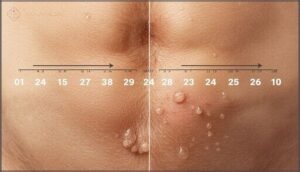
Most men’s pubic hair grows fast enough that shaving every three to seven days keeps things smooth—but dermatologists point out that shaving two to three times per week doubles your risk of razor burn and ingrown hairs compared with spacing sessions further apart.
Your skin barrier needs several days minimum to rebuild lipids and moisture after each shave, so waiting until redness and folliculitis fully clear before your next pass protects against chronic inflammation and infection.
Choosing The Right Tools and Products

Precision matters—your skin’s safety depends on the right tools. Electric trimmers with rounded guards are engineered for pubic hair removal, minimizing nicks and sparing you from that “feels like fire” sting. Razor blades should never be shared or dull; swap them often and pair with thick, fragrance-free shaving cream for maximum glide and protection. Grooming kits that include dedicated body tools lower cross-contamination risks. Before using depilatory creams, always patch-test. Don’t gamble with your skin—choose wisely:
- Rounded-tip Electric Trimmers
- Dedicated Razor Blades
- Patch-tested Hair Removal Creams
Alternatives to Shaving and Safer Options

You don’t have to choose between bare skin and doing nothing. Several grooming methods offer middle ground that can reduce infection risk, irritation, and those painful ingrown hairs that feel like fire.
Here’s what the clinical evidence says about trimming, waxing, chemical removal, and how to pick the option that actually protects your skin.
Trimming Vs. Shaving: Health Impacts
Your body built pubic hair as a cushion, not decoration. Trimming shortens length while keeping that barrier intact, so you dodge the razor burn, cuts, and folliculitis that hit men who shave completely. Data shows full grooming nearly doubles injury odds compared to those who trim or skip grooming entirely.
| Factor | Trimming | Shaving |
|---|---|---|
| Skin Protection | Leaves protective layer intact | Removes all barrier function |
| Ingrown Hairs | Minimal risk, softer regrowth | High risk, blunt stubble irritates |
| Infection Risk | Lower, no microcuts | Higher, small breaks in skin |
| Skin Irritation | Rare itching or burning | Frequent razor burn, redness |
| Hair Regrowth | Comfortable, soft tips | Prickly, friction during movement |
Trimming preserves pubic health by letting hair cushion friction from sex, exercise, and clothing, while shaving strips that defense and exposes thin genital skin to every irritant.
Waxing, Sugaring, and Depilatory Creams
Pulling hair out from the root—through waxing techniques or sugaring benefits—gives you 3–6 weeks of smoothness, but intimacy with your skin demands caution. Professional intimate waxing often skips the scrotum because thin, loose tissue tears easily, and depilatory creams designed for body hair removal can torch genital mucosa if misused.
Hair removal safety boils down to method choice and aftercare:
- Waxing removes pubic hair completely but carries burn and folliculitis risks
- Sugaring sticks to hair rather than skin, lowering post-treatment irritation
- Depilatory creams dissolve hair chemically yet cause burns in roughly 30% of users
- All pubic hair removal methods need 24–48 hours of rest to prevent infection
Medical and Dermatology Guidelines
Your dermatologist’s advice comes down to this: skip shaving over active herpes or warts to avoid spreading infection.
Trimming with clean scissors or electric tools beats close shaving for pubic health because it lowers folliculitis and cut risks.
Replace blades every 5–7 uses, follow shave techniques that move with hair growth, and allow 24–48 hours between sessions for skin protection and hair regrowth without ingrown hairs or irritation.
Factors to Consider Before Choosing a Method
Your skin type shapes every grooming decision you’ll make—men with sensitive genital skin face 40% more irritation from waxing than trimming does. Health risks compound when you add diabetes or recurrent infection history to close shaving.
Hair texture, personal preference, and your grooming goals all matter, but pair them with evidence: retinoids and certain antibiotics raise chemical burn odds with depilatories, so match method to your body’s real limits.
Frequently Asked Questions (FAQs)
Should you shave male pubic hair?
Shaving your pubic hair comes down to weighing personal comfort, partner expectations, and grooming preferences against real skin risks like razor burn, cuts, and ingrown hairs that proper technique can reduce.
Does shaving pubic hair boost confidence in men?
Many men report feeling more confident after grooming their pubic region, especially around intimacy—but that boost hinges on personal comfort, not universal truth.
Pressure to match trends can backfire, triggering self-doubt instead.
What happens if you shave pubic hair?
You’ll get smoother skin and heightened sensation at first, but expect stubble within days, razor burn, ingrown hairs, and a higher risk of folliculitis or infection if shaving techniques skip proper infection prevention.
Should male pubic hair be groomed?
Your mileage may vary: about 50% of American men groom their pubic area for hygiene, aesthetics, or intimacy, yet no medical guideline requires male pubic hair removal.
Trimming preserves natural hygiene and male grooming trends without shaving risks.
Why is pubic hair important?
Your pubic hair creates a soft buffer between skin surfaces, trapping oils with antimicrobial properties while supporting your microbiome. It reduces friction during movement and sex, blocks pathogens, and helps regulate temperature and moisture naturally.
How do you trim pubic hair for men?
Think of a trimmer as your scalpel—precision matters.
Wash first with mild soap, disinfect the blade, choose guards over bare skin, trim with hair growth in short strokes, then shower to rinse debris.
Can pubic hair removal impact fertility or hormones?
Shaving won’t harm your fertility or hormone balance, but some depilatory creams contain phthalates—endocrine disruptors that may lower sperm count with long-term use—and laser near the testes demands proper technique.
How does age affect pubic hair grooming decisions?
Your twenties feel like a runway—you’re grooming to be seen, often removing more hair to match ideals from porn and social media.
Men past forty shift toward comfort, trimming lightly for hygiene rather than appearance. Grooming frequency drops steadily after thirty-five as cultural pressures fade and practical concerns about skin irritation, time, and healing take over.
Are there specific medical conditions that prohibit shaving?
Certain medical conditions turn the razor into a real threat to genital health. Active infections like herpes or molluscum, chronic diseases such as psoriasis, poor healing from diabetes, surgical risks, and allergic reactions all prohibit safe shaving.
Does pubic hair affect athletic performance or comfort?
Hair acts like nature’s cushion between skin surfaces, but performance changes are minimal.
Friction reduction and sweat management come down to personal comfort in athletic gear more than actual grooming, so choose what feels right.
Conclusion
Your body’s pubic hair functions like a shock absorber—removing it trades natural protection for aesthetic preference. Whether it’s healthy to shave pubic hair male depends on your technique, skin sensitivity, and willingness to manage complications.
If you choose removal, trimming carries the lowest risk profile at approximately 5% compared to shaving’s 25% irritation rate. Understand the trade-offs, respect your anatomy’s design, and prioritize informed decisions over cultural pressure. Your skin will respond accordingly.
- https://www.healthline.com/health/should-i-shave-my-pubic-hair
- https://pmc.ncbi.nlm.nih.gov/articles/PMC10926629/
- https://www.ulike.com/blogs/hair-removal/benefits-of-shaving-pubic-hair-as-a-male
- https://www.bombayshavingcompany.com/blogs/body-hair-removal/pros-and-cons-of-shaving-your-pubes
- https://gillette.com/blog/male-intimate-grooming-dos-and-donts/