This site is supported by our readers. We may earn a commission, at no cost to you, if you purchase through links.
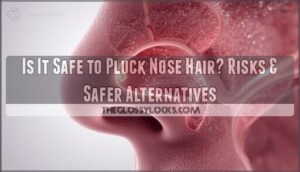
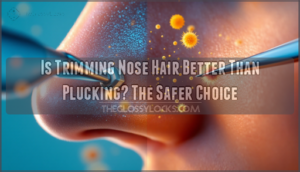
Plucking nose hair might seem like a quick grooming fix, but dermatologists and otolaryngologists warn it’s one of the riskiest habits for nasal health. Each plucked hair creates a microscopic wound inside your nostril, an open invitation for bacteria that normally live harmlessly on your skin.
The nasal cavity sits dangerously close to blood vessels that connect directly to your brain, making even minor infections potentially serious. Despite these risks, many people assume plucking is safer than it actually is, prioritizing cosmetic appearance over respiratory protection.
Your nose hairs aren’t just unsightly strands—they’re a critical first-line defense against airborne particles, allergens, and pathogens. Understanding the medical dangers of plucking and exploring safer grooming methods can help you maintain both appearance and nasal function without compromising your health.
Table Of Contents
- Key Takeaways
- Is It Safe to Pluck Nose Hair?
- What Does Nose Hair Do for Your Health?
- What Are The Dangers of Plucking Nose Hair?
- What Are Safer Alternatives to Plucking?
- How to Protect Nasal Health During Grooming
- Frequently Asked Questions (FAQs)
- Is it safe to pull nose hairs with tweezers?
- How unhealthy is picking your nose?
- Why are nose hairs so thick?
- How to stop nose hair from growing?
- Can nose hair grow back after laser removal?
- Does nose hair thickness change with age?
- Are there medical conditions causing excessive nose hair?
- How often should you trim your nose hair?
- Conclusion
Key Takeaways
- Plucking nose hair creates open wounds in bacteria-rich tissue near blood vessels that connect to your brain, risking serious infections like folliculitis, nasal vestibulitis, and even nasal cellulitis.
- Your nose hairs function as a critical respiratory filter that traps dust, allergens, and pathogens before they reach your lungs—removing them compromises this natural defense system.
- Safe alternatives like rounded-tip scissors or electric trimmers let you manage visible nose hair without damaging follicles or creating infection pathways.
- Warning signs requiring medical attention include fever above 100.4°F, spreading redness with pus, facial swelling lasting more than 2-3 days, or persistent bleeding beyond 10 minutes.
Is It Safe to Pluck Nose Hair?
No, plucking nose hair isn’t safe and can lead to serious medical complications. The practice damages hair follicles and creates openings for bacteria to enter your nasal passages.
If you’re looking for safer alternatives, methods to prevent nose hair from growing back include trimming with rounded scissors or using specialized electric trimmers designed for nasal grooming.
Here’s what you need to know about the risks, why doctors advise against it, and common misconceptions about nose hair removal.
Medical Risks of Plucking
Plucking nose hair triggers a cascade of complications you can avoid. Each pull damages the follicle, sparking inflammation that reddens and swells the surrounding skin.
Here’s what repeated plucking does to your nasal tissue:
- Follicle Damage – Trauma weakens hair roots, causing persistent inflammation
- Folliculitis – Infected follicles form small pimples or pustules
- Nasal Irritation – Skin becomes tender, potentially leaving scars or dark spots
- Ingrown Hair – Sharp regrowth angles back into skin
- Skin Infections – Bacteria enter follicles, risking nasal vestibulitis or nasal cellulitis
For more information on safe hair grooming, review these areas to avoid tweezing.
Why Plucking is Not Recommended
Beyond the immediate pain and swelling, medical consensus rejects plucking because it opens pathways for serious nasal infections like folliculitis and nasal vestibulitis. Your nose connects directly to your sinuses and brain, so even minor hair follicle damage can escalate quickly.
Doctors reject nose hair plucking because your nasal passages connect directly to your sinuses and brain, turning minor follicle damage into dangerous infections
Plucking can also cause skin issues, such as ingrown hair complications, which may lead to lasting discomfort and irritation.
| Plucking Complications | Health Impact |
|---|---|
| Ingrown hair formation | Painful bumps, chronic irritation |
| Bacterial entry points | Nasal cellulitis, deeper tissue infection |
| Weakened respiratory filter | Increased allergen and pathogen exposure |
| Follicle scarring | Permanent hair loss, cosmetic damage |
Myths Vs. Facts About Nose Hair Removal
Many people believe plucking is harmless or that removing all Nose Hair improves hygiene—both are Nose Hair Myths. In reality, Hair Removal Risks include nasal vestibulitis and ingrown hair complications.
Nasal Health Tips emphasize Trimming Benefits: you preserve Filtration Importance while avoiding infection. Understanding Nose Hair Removal Risks helps you make safer grooming choices that protect your respiratory defense without sacrificing appearance.
What Does Nose Hair Do for Your Health?
You might think nose hair is just an annoyance, but it’s actually working hard to protect your respiratory system. Those tiny hairs act as your body’s first defense against everything from dust to bacteria.
Here’s what they do to keep you healthy.
Nose Hair as a Respiratory Filter
Your nose hair acts as the respiratory system‘s first checkpoint, catching airborne particles before they reach your lungs. These short, coarse hairs trap dust and larger pollutants on contact, while nasal mucus production works alongside to improve air filtration.
Together with cilia functionality deeper in your nasal passages, this nasal defense mechanism aids your respiratory health by reducing irritant exposure at entry.
Protection Against Allergens and Infections
Your nasal hairs block allergens and microbes before they trigger immune responses deeper in your system. This nasal filter function reduces allergy prevention risks by trapping pollen, dust, and pet dander at entry, while mucus production washes away pathogens.
When infection prevention barriers stay intact, your respiratory health improves through reduced sinusitis and fewer allergy attacks, maintaining ideal nasal hygiene and allergen defense.
The Role of Cilia in Nasal Defense
Cilia function as microscopic sweepers that work nonstop to protect your respiratory health. These hair-like structures beat about 1,000 times per minute, propelling mucus and trapped debris toward your throat through mucociliary clearance.
Here’s how ciliary structure facilitates nasal filtration:
- Cilia transport bacteria-laden mucus before pathogens reach deeper airways
- Coordinated beating clears inhaled particles within 15 to 20 minutes
- Each hair follicle anchors cilia that maintain nasal hygiene through constant motion
What Are The Dangers of Plucking Nose Hair?
Plucking nose hair doesn’t just hurt—it can trigger a cascade of complications that range from annoying to dangerous.
When you yank out a hair, you create an open wound in a bacteria-rich environment, and that’s where the real problems begin. Here are the main dangers you need to know about.
Ingrown Hairs and Folliculitis
Plucking can trap hair beneath the skin, creating painful ingrown hairs that spark folliculitis—an inflamed or infected hair follicle. You may notice red bumps, pus, or tenderness around the nostril.
Bacterial spread from repeated plucking worsens skin irritation and risks deeper follicle infection. Proper ingrown prevention means skipping the tweezers entirely, safeguarding both hair regrowth and nasal health.
Nasal Vestibulitis and Furunculosis
When you pluck nasal hairs, microtrauma opens the door to nasal vestibulitis—a Staphylococcus aureus infection marked by redness, swelling, and crusty sores at your nostril entrance.
Deeper follicle invasion triggers furunculosis, creating painful nasal boils that demand topical vestibulitis treatment or oral antibiotics. These staph infections showcase furunculosis symptoms like localized bumps and tenderness, underscoring why plucking invites nasal infections you can easily avoid.
Risk of Severe Infections and Complications
Untreated nasal vestibulitis can escalate into severe complications when bacterial infections like Staphylococcus aureus enter deeper facial tissues or orbital areas.
Bacterial transmission through local vascular channels poses respiratory dangers in immunocompromised individuals, sometimes requiring hospitalization. Proper infection control matters—if you notice warmth, spreading redness, or worsening pain after plucking nose hair, seek medical advice immediately to prevent nasal infection risks from advancing.
What Are Safer Alternatives to Plucking?
You don’t have to abandon grooming just because plucking is off the table. Several safer methods let you keep visible nose hairs in check without risking infection or damage to your nasal passages.
Here’s how to manage nose hair while protecting your respiratory health.
Trimming With Rounded-Tip Scissors
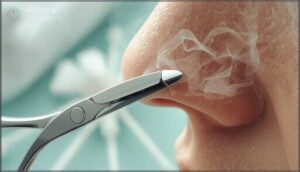
Rounded-tip scissors offer a safe trimming approach by reducing skin nicks and preventing follicular trauma. You should sterilize stainless steel blades before each use, then trim visible nose hair with short, controlled snips at the outer nostril edge.
This safe trimming practice maintains adequate nasal health protection while managing length. Avoid plucking entirely, as trimming preserves the respiratory filter function your cilia provide.
Using Electric Nose Hair Trimmers
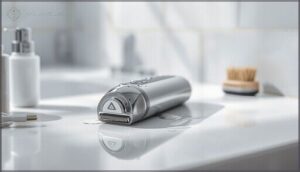
Electric trimmers offer a faster alternative to scissors. These devices use rotary or oscillating blades with rounded protective caps that prevent direct contact with delicate mucus membranes.
You should choose a model with:
- Waterproof design for easy rinsing after each use
- Rechargeable battery providing 60 to 90 minutes of trimming time
- Hypoallergenic stainless steel blades to minimize skin irritation
Clean your nose trimmer regularly to prevent bacterial buildup.
Laser Hair Removal Pros and Cons
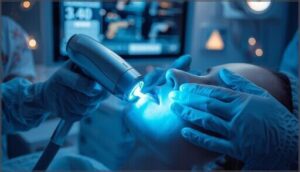
Laser hair removal offers a long-term solution among nose hair removal methods, reducing regrowth by 70 to 90 percent after four to eight sessions. Treatment usually costs $200 to $600 per session, totaling $1,500 to $5,000.
However, lasers can damage delicate nasal mucous membranes and work poorly on light or gray hair. You’ll face temporary redness and rare risks of scarring or pigment changes.
Hygiene Tips for Safe Nose Hair Grooming

Regardless of which hair removal methods you choose, proper nasal hygiene prevents infection and irritation.
Clean your hair care tools with rubbing alcohol before and after each use to eliminate bacteria. Trim only visible hairs without inserting tools deep into your nostrils.
Wash your hands thoroughly, and blow your nose gently after grooming to clear loose debris and maintain effective nasal cleaning.
How to Protect Nasal Health During Grooming

Grooming nose hair safely means protecting what you need while keeping things hygienic. You don’t have to choose between looking neat and maintaining your respiratory defenses.
Here’s how to strike that balance and recognize when something’s gone wrong.
Importance of Partial Hair Retention
You don’t need to remove every nose hair to look neat—keeping some length protects your nasal passage while managing visible strands. Partial retention preserves filtration, reduces follicle trauma from repeated plucking nose hairs, and minimizes nasal hair removal risks.
- Hair retention tips: Trim only what’s visible outside your nostrils.
- Follicle health: Safer hair management prevents irritation and infection.
- Scalp protection principles: Retention strategies reduce hair breakage and support the importance of nose hair.
Signs of Infection to Watch For
Vigilance matters when grooming—nasal infection can escalate fast. Watch for fever symptoms above 100.4°F, increasing redness signs with pus drainage, or facial swelling that worsens over 2-3 days. These signal bacterial infection requiring prompt care to prevent medical complications along facial infection pathways.
| Warning Sign | What to Monitor |
|---|---|
| Fever or chills | Temperature above 100.4°F lasting beyond 24 hours |
| Redness signs with pus drainage | Warmth, swelling, foul smell around nostril |
| Facial swelling with pain | Worsening discomfort over 2-3 days |
| Thick nasal discharge | Yellow or green drainage with fatigue |
When to Seek Medical Advice
Severe bleeding from a nasal injury, uncontrolled nosebleeds beyond 10 minutes, or fever above 102°F for 48+ hours demands medical evaluation.
Seek urgent care if you experience worsening facial pain, persistent swelling, respiratory issues like shortness of breath, or confusion—signs of potential medical emergency including bacterial infection, blood clot formation, or rare brain infection complications requiring immediate medical attention.
Frequently Asked Questions (FAQs)
Is it safe to pull nose hairs with tweezers?
Pulling nasal hairs with tweezers creates microtears in delicate skin, opening pathways for bacteria to trigger folliculitis or cellulitis.
Trimming preserves your protective filter while reducing visible hair—a smarter choice for nasal hygiene.
How unhealthy is picking your nose?
Picking your nose introduces bacteria into your nasal cavity, damages delicate tissue, and disrupts the protective mucous barrier.
Compulsive picking increases infection risks, worsens nasal hygiene, and can compromise respiratory health by removing protective nose hair.
Why are nose hairs so thick?
Your nose hairs thicken with age as hormonal changes extend hair follicle growth cycles, making vibrissae coarser and denser.
This enhanced nasal filter catches larger particles in your nasal passages, protecting respiratory health.
How to stop nose hair from growing?
You can’t fully halt nasal hair, but laser reduction and electrolysis efficacy offer permanent removal by targeting follicles.
Growth inhibitors don’t work. Instead, use a nose trimmer for safer hair removal without plucking.
Can nose hair grow back after laser removal?
Yes, your nose hairs can grow back after laser hair removal. Laser treatments damage follicles, but survivors and stem cells often regenerate finer, lighter hairs within six to twelve months.
Does nose hair thickness change with age?
Like silver threads thickening over time, your nasal hairs do change with age.
Hormonal shifts increase vibrissae thickness and coarseness, especially in men, making regular trimming more necessary to maintain nasal cavity comfort and appearance.
Are there medical conditions causing excessive nose hair?
Certain endocrine disorders, hormonal imbalance, hypertrichosis, and genetic syndromes can trigger excessive nasal hair growth.
These metabolic causes often affect broader respiratory health, potentially worsening allergy attacks and sinus infections if underlying conditions remain untreated.
How often should you trim your nose hair?
You don’t need to trim constantly. Most people manage nose hair every one to two weeks, though individual growth rates vary.
Use your trimmer post-shower trimming when hairs become visible for best results.
Conclusion
Your nose hairs work like security guards at the entrance to your respiratory system, and plucking them leaves that door wide open. The answer to is it safe to pluck nose hair is clear: no.
Trimming with rounded scissors or electric trimmers protects both function and appearance without infection risk. Preserve the hairs deeper inside your nostrils, watch for redness or swelling, and consult your doctor if symptoms develop. Safe grooming maintains your natural defenses.
- https://health.clevelandclinic.org/wp-content/uploads/sites/3/2016/08/Everything-You-Need-to-Know-About-Nose-Hair.pdf
- http://healthline.com/health/nose-hair-removal
- https://www.mayoclinic.org/diseases-conditions/ingrown-hair/symptoms-causes/syc-20373893
- http://www.russakdermatology.com/
- https://www.donyoomd.com/about.php