This site is supported by our readers. We may earn a commission, at no cost to you, if you purchase through links.
Most people treat nose hair grooming as a vanity issue—something to handle quickly before a meeting or date. But dermatologists see it differently. Those wiry strands filtering the air you breathe capture particles as small as 2 micrometers, trap pollen before it reaches your lungs, and cut asthma risk by up to 81% in people with seasonal rhinitis. They’re not cosmetic nuisances; they’re frontline respiratory defense.
The method you use to manage them matters more than you’d think. Plucking feels thorough, but it creates microscopic wounds in follicle tissue—wounds sitting inside a cavity colonized by Staphylococcus and other nasal bacteria. Whether trimming nose hair is better than plucking isn’t a matter of preference; it’s a question with a clinically defensible answer, and the evidence points clearly in one direction.
Table Of Contents
- Key Takeaways
- Why Nose Hair Matters for Health
- What Happens When You Remove Nose Hair?
- How Does Trimming Nose Hair Work?
- What Are The Risks of Trimming Nose Hair?
- How Does Plucking Nose Hair Work?
- What Are The Risks of Plucking Nose Hair?
- Is Trimming Nose Hair Better Than Plucking?
- Best Tools for Safe Nose Hair Trimming
- Tips for Healthy Nose Hair Grooming
- Frequently Asked Questions (FAQs)
- Conclusion
Key Takeaways
- Nose hair isn’t just cosmetic—it filters particles as small as 2 micrometers and can cut asthma risk by up to 81% in seasonal rhinitis sufferers, so removing it entirely weakens a critical respiratory defense.
- Plucking creates microscopic follicle wounds inside a nasal cavity already colonized by Staphylococcus aureus, opening a 24–48 hour infection window that can escalate to folliculitis, nasal vestibulitis, or worse.
- Trimming preserves the hair shaft and its filtration function while leaving follicle tissue completely untouched, making it the method dermatologists and ENT specialists consistently recommend over plucking or waxing.
- Safe trimming requires more than just the right tool—you should insert no deeper than 3–5 mm, disinfect blades after every use, and skip trimming entirely when nasal inflammation is active.
Why Nose Hair Matters for Health
Nose hair doesn’t get much credit, but it’s doing serious work every time you breathe. Think of it as your body’s first security checkpoint — catching dust, pollen, and bacteria before they reach your lungs.
Keeping them trimmed (not removed) with a best nose hair trimmer helps maintain that filter without sacrificing function.
Here’s why keeping those hairs healthy actually matters.
Nose Hair’s Role in Filtration
Think of your nose hair as a built-in air filtration system — one that works around the clock without any settings to adjust. These coarse hairs capture particles between 2–15 micrometers in diameter, including dust and debris, before they travel deeper into your airways.
Coated in mucus, they’re a frontline filtration mechanism that bolsters respiratory protection. That’s nasal defense doing exactly what it’s designed to do. Understanding the role of nasal mucus function is essential for maintaining respiratory health.
Protecting Against Allergens and Pathogens
Beyond dust, your nose hair acts as a dedicated pathogen defense system. Large pollen grains — averaging 20–50 microns — stick directly to that mucus barrier coating each hair shaft. Allergen trapping happens here, at the nasal filter level, before irritants reach sensitive airways.
Mucus also immobilizes bacteria and viruses on contact, making this your first real line of infection control. Understanding the airway protection mechanisms is vital for maintaining overall respiratory health.
Impact on Respiratory Health
That nasal barrier does more than catch debris — it directly shapes your respiratory health. Dense nose hair cuts asthma risk by up to 81 percent in people with seasonal rhinitis.
Nose hair removal strips that protection, raising infection risk and letting allergens reach your lower airways.
For breathing ease and sinus health, maintaining nasal balance through smart nasal hygiene isn’t optional — it’s your respiratory defense.
What Happens When You Remove Nose Hair?
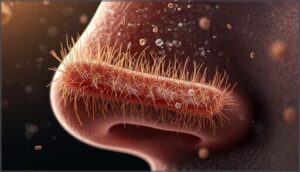
Removing nose hair sounds harmless, but your nasal defenses don’t see it that way. Once those hairs are gone, a chain reaction starts that affects everything from your immune response to your sinus health.
Here’s what actually happens when you pull or wax them out.
Effects on Nasal Defenses
Your nose hair does far more than you might expect. When you remove it entirely, your nasal defenses drop fast — three critical systems take the hit:
- Nasal Filtration drops, allowing particles and allergens deeper into your respiratory system
- Mucociliary Function weakens without hair guiding debris toward cilia
- Humidity Balance falters, drying mucosa and impairing allergen blockage
Respiratory protection depends on what you keep, not what you remove.
Increased Risk of Infection
Removing nose hair opens a door you don’t want unlocked. Plucking creates microscopic follicle damage, exposing tissue to nasal bacteria like Staphylococcus — and those wounds take 24 to 48 hours to start healing. That window is when infection control breaks down. Sinus infections, folliculitis, even serious complications become real health risks. Trimming safety matters precisely because it never touches the follicle at all.
Impact on Allergies and Sinus Health
Filtration is your first shield against allergies and sinus inflammation. When you pluck, you weaken nasal filtration, letting allergens slip past and trigger sinusitis or respiratory infections.
Trimming preserves enough hair to support allergen reduction, keeping your respiratory health in check. If you value allergy prevention and strong nasal health, don’t strip away this barrier—trim, don’t pluck.
How Does Trimming Nose Hair Work?
Trimming is the go-to method doctors actually recommend, and for good reason. It keeps your nose hair functional while still cleaning up the look.
Pulling or waxing nose hair, by contrast, opens the door to ingrown hairs and follicle infections from nose hair removal — risks that make trimming the obvious, safer choice.
Here’s what you need to know about how it works.
Types of Nose Hair Trimmers
You’ve got more options than you might think. Rotary trimmers use spinning circular blades inside a protective guard, making them adaptable and versatile for nose hair removal. Linear blades oscillate back and forth, catching flat-lying hairs rotary heads can miss. Manual clippers work silently without batteries.
High-end electric trimmers with vacuum systems capture trimmed hair directly, keeping cleanup minimal. Each nose hair trimmer type prioritizes safety over skin contact.
Benefits of Trimming
Trimming is the smartest form of hair management your nose will thank you for. It preserves your natural nasal filter while keeping things tidy — no follicle damage, no open wounds, no drama.
Here’s what nose hair trimming benefits actually look like:
- Nose health stays intact — your air purification system keeps working
- Infection risk drops — trimming tools don’t disturb follicles
- Breathing feels cleaner — fewer trapped debris clusters
- Personal grooming stays safe — no microscopic tears from aggressive removal
Safety Tips for Trimming
Even a simple grooming habit can go sideways without the right approach. Follow these Trimming Techniques to keep your Nose Hair Care routine safe and effective:
| Trimmer Safety Step | Why It Matters |
|---|---|
| Insert only 0.25–0.5 inches deep | Prevents cuts in vascular tissue |
| Disinfect blades before each use | Eliminates infection-causing bacteria |
| Trim only visibly protruding hairs | Preserves natural filtration function |
| Skip trimming during active inflammation | Fragile lining tears more easily |
Smart Grooming Precautions and consistent Hygiene Practices make nose hair removal genuinely low-risk.
What Are The Risks of Trimming Nose Hair?
Trimming is far safer than plucking, but it’s not completely without risk. Like any grooming tool used near delicate tissue, it comes with a few things worth knowing before you start.
Here’s what to watch out for.
Potential for Minor Cuts
Minor cuts during nose hair removal are more likely than you’d think. The nasal vestibule skin measures just 0.5 mm thick — one wrong angle and you’re dealing with a real bleeding prevention challenge.
Key cut risk factors to watch:
- Applying heavy pressure against nasal walls
- Using dull blades that tug instead of cut
- Inserting trimmers too deep past safe limits
- Skipping nose-clearing before trimming
These trimming safety oversights turn minor injury into a genuine infection risk.
Hygiene and Tool Maintenance
A dirty trimmer is just as risky as a dull one. Hair debris and skin oils collect on blades after every use, creating conditions where bacteria thrive. Sanitizing tools after each session isn’t optional — it’s what separates safe grooming from a potential nasal infection.
| Trimmer Maintenance Step | Frequency |
|---|---|
| Rinse blades, cleaning methods applied | After each use |
| Blade care with disinfectant spray | After each use |
| Deep soak for hygiene practices | Weekly |
| Storage practices in dry case | Always |
Best Practices for Safe Trimming
Good hygiene practices only go so far if your technique is off. For safe nose hair care, turn on your electric trimmer before inserting it — this prevents painful pulling.
Keep insertion to about 3–5 mm, using gentle trimming motions in small circles. Only target visible nose hair. These trimmer safety steps cut health risks and infection chances markedly.
How Does Plucking Nose Hair Work?
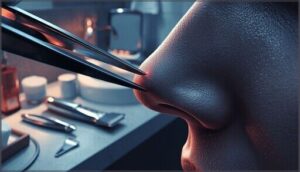
Plucking might seem like a quick fix, but there’s more going on beneath the surface than most people realize.
Understanding how it actually works — the tools involved, how long results last, and what that means for your nasal health — changes how you think about it.
Here’s what you need to know before you reach for those tweezers.
Plucking Tools and Methods
Plucking nose hairs usually involves tweezers or coiled plucking tools. Slant tweezer use works well for grabbing visible hairs along the nostril edge, while pointed tweezer use targets shorter, stubborn strands deeper inside.
Proper plucking grip techniques matter — you should grasp each hair firmly at the base before pulling outward.
Plucking preparation steps like sterilizing tools with isopropyl alcohol reduce, but don’t eliminate, nose hair removal risks.
Duration and Effectiveness
So the tools are in hand — but how long does plucking actually last? Pulled from the root, plucked nose hair takes roughly three weeks to regrow, making pluck results duration noticeably longer than trim results duration.
Trimming nose hair, by contrast, needs repeating every one to two weeks.
When weighing regrowth speed differences and long-term grooming needs, plucking’s edge in effectiveness over time starts looking smaller once the risks enter the picture.
Immediate Results Vs. Long-Term Issues
The immediate cosmetic gains from plucking are real — bare nostrils, no stubs, instant neatness. But those short-term comfort tradeoffs quietly add up. Each pluck tears a follicle lining, creating an open wound in a bacteria-rich space.
Over time, progressive infection burden builds, raising your risk of nasal vestibulitis and chronic breathing changes. Long-term nasal damage simply isn’t worth the temporary clean look.
What Are The Risks of Plucking Nose Hair?
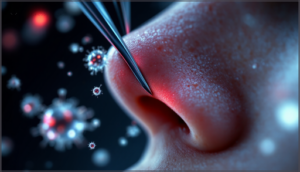
Plucking might seem like a clean, lasting fix — but it opens the door to some real health problems. The nose isn’t just a cosmetic zone; it’s a bacteria-rich environment where even a tiny wound can spiral into something serious.
Here’s what you’re actually risking every time you reach for the tweezers.
Folliculitis and Infection Risks
Every time you pluck a nose hair, you’re opening a Follicle Microtears Pathway — a tiny wound in one of the most bacteria-rich areas of your face. Staph Colonization Dynamics explains why this matters: Staphylococcus aureus already lives in roughly 30% of healthy noses. That microtear gives it a direct entry point, triggering folliculitis, Nasal Vestibulitis Progression, or — in severe cases — Cavernous Sinus Complications.
Plucking a nose hair opens a tiny wound where Staphylococcus aureus already lives, inviting serious infection
Watch for these Early Infection Warning signs:
- Redness or swelling inside the nostril
- Pimple-like bumps near the follicle base
- Pain or tenderness that worsens over 24–48 hours
Ingrown Hairs and Inflammation
When a hair curls back into the nasal vestibule instead of growing outward, Ingrown Hair Mechanics take over — triggering the Follicular Inflammation Process that causes Nasal Vestibule Bumps, warmth, and Chronic Soreness Patterns that linger for days. Unlike trimming, plucking tightens the follicle opening, increasing ingrown hair recurrence.
Watch for Red Flag Symptoms: worsening tenderness, swelling, or signs of folliculitis or nasal vestibulitis — all indicating possible infection.
Pain and Discomfort
Plucking registers an 8–10 out of 10 on pain scales — that’s not grooming, that’s punishment. Dense nerve clusters in your nasal follicles fire hard the moment a hair is pulled, and the sting doesn’t stop there.
- Immediate Plucking Pain spikes within seconds and radiates for up to 10 seconds post-pull
- Lingering Nasal Soreness from micro-tears persists 1–3 days, worsening with every sneeze
- Trimming Comfort Level stays near zero discomfort — no root trauma, no recovery time
Long-term sensitivity builds with repeated plucking, making each session worse. Trimming sidesteps all of it.
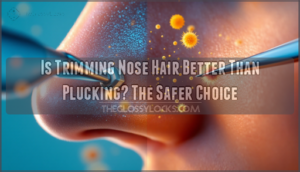
Is Trimming Nose Hair Better Than Plucking?
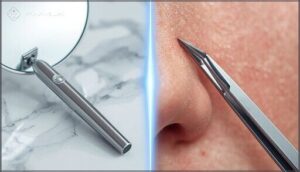
So you’ve seen what plucking can do — the infections, the pain, the follicle damage. Trimming tells a very different story, and the medical community is pretty unified on which method wins.
Here’s how trimming stacks up regarding expert recommendations, safety, and your nasal health.
Medical and Dermatological Recommendations
Both dermatologist trimming guidelines and ENT specialist advice point to the same conclusion: trim, don’t pluck. As part of broader nasal health and hygiene recommendations, medical professionals consistently flag the risks of nose hair removal methods like plucking — especially for high-risk patients with compromised immunity.
Infection warning signs such as redness or swelling post-procedure are your body telling you something went wrong.
Safety and Effectiveness Compared
When you weigh the Safety Outcome Overview honestly, trimming wins on every front. Infection Risk Comparison data shows plucking creates open follicle wounds, while trimming leaves tissue intact. Ingrown Complication Odds drop to near zero with trimming.
Pain Level Differences are equally clear — plucking hurts, trimming doesn’t.
On Grooming Efficiency Tradeoffs, trimming takes seconds versus minutes of precise, painful plucking.
Impact on Nasal Health
Beyond comfort and pain, the real stakes are your long-term nasal health. Plucking triggers nasal vestibulitis, disrupts your nasal microbiome, and causes mucosal barrier damage that opens the door to respiratory infections.
These aren’t minor inconveniences — chronic congestion risk and olfactory function effects can follow. Trimming nose hair preserves the importance of nose hair while supporting long-term breathing comfort.
Best Tools for Safe Nose Hair Trimming
Choosing the right tool makes all the difference for safe nose hair trimming. Not every option on the market is created equal, and knowing what to look for can save you from unnecessary irritation or infection.
Here’s what you should consider before picking up a trimmer.
Features of Quality Trimmers
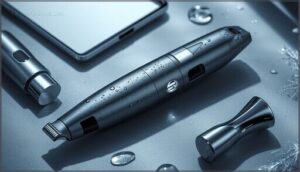
The right nose hair trimmer makes all the difference. Look for surgical-grade stainless steel blade materials and safety guard technology that shields nasal tissue from direct contact.
A water-resistant design lets you rinse away debris easily, while strong battery performance ensures consistent motor speed throughout each use.
An ergonomic grip keeps your hand steady—because controlled trimming nose hair means fewer risks, full stop.
Rounded Scissors Vs. Electric Trimmers
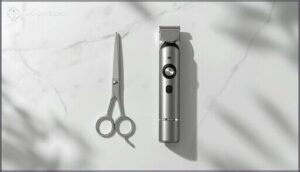
Both tools trim nose hair effectively, but they’re not equal in practice:
- Blade guard safety: Electric trimmers shield nasal tissue with a protective cap; cuticle scissors or rounded-tip scissors lack this barrier.
- Precision control differences: Scissors handle single stray hairs better; electric trimmers win on grooming speed comparison.
- User skill demands: Scissors require steady hands; electric trimmers suit daily use practicality with minimal technique.
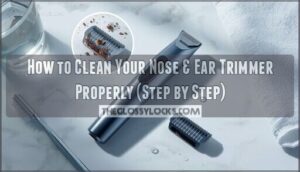
Cleaning and Maintenance Tips

Your nose hair trimmer is only as safe as how well you maintain it. Post-trim cleaning matters — tap loose clippings into the sink, rinse detachable heads for 30 seconds, then dry thoroughly. Proper drying techniques prevent bacterial growth.
Follow a blade lubrication schedule every eight weeks, and practice safe storage practices in a dry, dust-free case. Trimmer disinfection steps — like weekly alcohol sprays — complete your personal hygiene practices.
Tips for Healthy Nose Hair Grooming
Good grooming habits don’t have to be complicated, but a few key practices can make a real difference for your nasal health. Knowing when to trim, when to leave things alone, and how to keep everything clean are the basics worth getting right.
Here’s what to keep in mind.
How Often to Trim
Your ideal trimming interval depends on age, sex, and growth rate. Men over 35 often need weekly sessions, while women and younger adults can stretch to every two to four weeks.
These age-based frequency and gender-specific schedules reflect how hormones drive growth. Checking a side-view mirror every seven days keeps things tidy without over-trimming, which can compromise respiratory health and hygiene.
Recognizing When to Trim or Leave Alone
Knowing when to act is half the battle. Visual Overgrowth Signs—like strands visible from two feet away or hairs exceeding one centimeter—are your clearest cues. Breathing Discomfort Cues and allergy season adjustments also matter.
Trim nasal hair when you notice:
- Strands protruding past nostril edges
- Tickling or sneezing triggered by length
- Increased allergy symptoms during peak seasons
- Age-related growth thickening beyond 2 centimeters
- Airflow feeling restricted during normal breathing
Inner hairs? Leave them alone.
Maintaining Nasal Hygiene and Health
Good nasal hygiene goes beyond trimming nose hair — it’s about protecting the whole environment inside. After trimming, rinse gently to clear debris and support maintaining mucus balance.
Watch for recognizing infection symptoms like redness, crusting, or tenderness, as these signal early trouble. Nasal environment protection also means cleaning your trimmer after every use to guarantee ongoing infection prevention and treatment.
Frequently Asked Questions (FAQs)
Is there a downside to trimming nose hair?
Yes, trimming nose hair does carry some downsides. Reduced Particle Filtration, Stub-Induced Itchiness, Nasal Dryness Discomfort, and Trimmer-Related Microtrauma are all real Nose Hair Trimming Risks worth knowing before you pick up that trimmer.
Can laser removal replace trimming for nose hair?
Laser hair removal can reduce visible nostril hair by about 75% over six sessions, but it doesn’t fully replace trimming. It only targets outer follicles, leaving inner filtering hairs untouched.
Does nose hair grow back thicker after trimming?
No, trimming nose hair doesn’t make it grow back thicker — that’s the Hair Thickness Myth. Blunt ends just feel coarser.
Growth Cycle Science confirms genetics and hormones, not your Nose Hair Trimmer, control thickness.
Are there age-related changes in nose hair growth?
Ironically, as you age and need nose hair’s filtration most, it grows faster and thicker.
Androgen-related changes, SHBG decline impact, and follicle aging patterns drive extended growth phases — especially in men past
Can diet or hormones affect nose hair growth?
Both diet and hormones directly influence nose hair growth. Androgen levels, thyroid imbalance, protein intake, omega-3 status, and zinc deficiency all affect how fast and thick your nose hair develops.
Is nose hair grooming different for allergy sufferers?
Yes. If you have allergies, your nasal membranes are already hyper-reactive, so allergy-sensitive grooming matters more. Preserving allergen filtration by trimming only visible nasal hair helps protect your respiratory health.
Conclusion
Your nose hair works like a silent security guard—always on duty, rarely appreciated. Trimming preserves that defense, while plucking punches holes in it, literally. Every yanked follicle is an open door for bacteria already living in your nasal cavity.
When you ask whether trimming nose hair is better than plucking, the clinical answer isn’t complicated: Keep the guard intact. Reach for the trimmer, not the tweezers, and your respiratory system will quietly thank you.
- https://bovem.co/blogs/blog/biggest-dangers-of-plucking-nose-hair-prevent-infections-ingrown-hairs-and-inflammation
- https://www.marieclaire.com/beauty/how-to-remove-nose-hair/
- https://www.womenshealthmag.com/uk/beauty/hair/a63663597/how-to-get-rid-of-nose-hair/
- https://www.manscaped.com/blogs/grooming/why-you-need-to-trim-your-nose-hair
- https://www.mayoclinic.org/