
This site is supported by our readers. We may earn a commission, at no cost to you, if you purchase through links.

Most guys abandon their beard goals somewhere around week three—not because they can’t grow one, but because nobody told them the awkward phase was coming. The patchy, itchy, uneven stretch between stubble and a real beard looks rough, and without a plan, the razor wins.
Here’s the thing: that messy middle stage isn’t a sign your beard won’t fill in. It’s just biology doing its job on its own timeline. Knowing how to keep your beard styled while growing means working with each stage instead of fighting it—and the right grooming habits make the difference between looking polished and looking like you forgot to shave.
Table Of Contents
- Key Takeaways
- Beard Growth Stages and What to Expect
- Daily Beard Grooming Routine
- Trimming and Shaping for Style
- Nutrition, Health, and Beard Appearance
- Styling Tips for Growing Beards
- Frequently Asked Questions (FAQs)
- How to maintain a beard while growing?
- How to style a beard when growing it out?
- What is the rule 5 for beards?
- Can beard products cause skin breakouts?
- How do partners typically react to growing beards?
- When should you shave and start over?
- Does beard growth differ after age 40?
- Can facial piercings interfere with beard styling?
- Conclusion
Key Takeaways
- The awkward phase between weeks 3–6 isn’t a sign your beard won’t fill in — it’s just follicles waking up on their own timeline, so don’t quit.
- A daily routine of beard oil first, then balm, combined with a wide-tooth comb keeps your beard looking intentional at every growth stage.
- What you eat, how much you sleep, and how often you exercise directly affect beard density — biotin, zinc, vitamin D, and 7+ hours of sleep are non-negotiables.
- Patchy spots respond to strategic trimming, daily boar bristle brushing, and consistent 5% minoxidil foam — results show around week 16.
Beard Growth Stages and What to Expect
Growing a beard isn’t just about putting down the razor and waiting. Your beard goes through distinct stages, and knowing what’s coming makes the whole process a lot easier to manage.
A solid beard grooming routine for fast growth helps you work with each stage instead of fighting it.
what to expect at each step.
Growth Phases and Timelines
Most guys quit right when things start to get good. Here’s the real timeline:
- Week 1: Stubble Duration kicks in — 0.3–0.5mm daily, mild itch starting day 3
- Weeks 2–4: Patchy Onset hits; resist trimming
- Weeks 4–8: Filling Rate increases as dormant follicles wake up
- Weeks 8–12: Anagen Timing peaks — full coverage arrives
DHT Sensitivity, driven by genetics, controls how fast and dense that final stage looks.
The beard’s development follows three growth phases.
Typical Beard Patterns During Growth
Not every beard grows the same. Your pattern falls into one of five types:
| Pattern | Key Feature | Timeline |
|---|---|---|
| Cheek Patchiness | Sparse upper coverage | Fills 6–12 months |
| Neckline Density | Coarser neck growth | Peaks late 20s |
| Chin‑Mustache Fusion | Central zone connects first | Links by week 6 |
Swirl Directionality affects beard symmetry too — cowlicks shift your beard shape noticeably. Full Coverage Timeline varies, but understanding beard growth cycles helps you plan your beard grooming routine accordingly.
The full growth pattern characteristics provide a useful guide for selecting complementary beard styles.
Managing Awkward Growth Periods
Knowing your pattern helps, but weeks three through six will still test your patience. That’s the awkward zone — patchy beard areas look uneven, growth gaps show up, and beard symmetry feels off.
Daily brushing trains hair direction, keeping your beard shape intact.
Trim stray neckline and cheek hairs weekly.
Stick with it. Confidence boost strategies start with just not quitting.
Daily Beard Grooming Routine

A good grooming routine is what separates a clean, intentional beard from a wild mess. It doesn’t take long — just a few consistent habits done daily.
Once your routine is locked in, it’s worth exploring classic beard styles for formal occasions to give all that careful grooming a sharp, polished direction.
Here’s what your routine should cover.
Washing and Conditioning Techniques
Washing your beard wrong is like watering a plant with saltwater — you’re doing more harm than good.
Frequency Guidelines depend on your beard length and skin type. Short beards need 3–5 washes weekly; longer ones do fine with 2–3. Follow these Temperature Steps and techniques every time:
- Wet thoroughly with warm water, then massage a dime-sized beard wash into the roots for 1–2 minutes of deep cleansing
- Rinse with lukewarm water, finish with a cool splash for skin hydration and pore tightening
- Use the Pat Dry Method — gently press a soft towel against your beard, never rub
- Apply conditioner root to tip, let it sit 3–5 minutes for maximum Conditioner Timing and product absorption — key Ingredient Benefits include glycerin and jojoba oil for moisture balance
Applying Beard Oil and Balm
Once you’ve dried off, it’s oil-first — always. Warm 3–4 drops using the palms‑rub Oil Drop Timing method, then work it in with Massage Circles under and through the hair.
Two minutes later, apply Balm Warm‑Up: a pea-sizeds melted in your hands for 10 seconds. That’s the Layering Technique — oil manages skin hydration and product absorption while balm locks the style in.
Combing and Detangling Tips
Grab a wide-toothed comb after your oil and balm routine — that’s when Combing Techniques actually pay off.
Natural Ideal Comb Materials like wood or horn handle oil distribution without static.
Start at the ends, work upward — classic Detangling Errors happen when you force through from the roots.
Daily combing trains growth direction and cuts flyaways considerably, preventing breakage over time.
Managing Beard Itch and Irritation
Beard itch peaks around weeks two and three — right when most guys quit. Don’t. Here’s how to push through:
- Apply 3–5 drops of beard oil daily post‑shower using jojoba or argan oil ingredients to restore your skin barrier fast.
- Use gentle skin exfoliation twice weekly to clear dead cells and prevent ingrown hairs.
- Switch to lukewarm water — temperature control alone reduces irritation considerably.
Noncomedogenic products keep pores clear for lasting beard itch relief.
Trimming and Shaping for Style
Growing your beard out doesn’t mean letting it run wild.
A little trimming and shaping goes a long way in keeping things looking intentional, not accidental.
Here’s what you need to know to stay sharp while you grow.
Defining Neckline and Cheek Lines
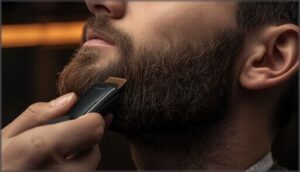
neckline placement makes or breaks the whole look. Set it one to two finger widths above your Adam’s apple, forming a soft U-curve for proper jawline alignment and shadow contour.
cheek line angle, connect your sideburn to your mustache corner at roughly 45 degrees. Run a symmetry check from the front — both sides should mirror each other cleanly.
Trimming Frequency and Methods

Trim timing by phase matters more than most guys realize.
Weeks one through four: Clean your cheek lines every one to two weeks — light maintenance schedule only.
Around month two, light trims every two to three weeks balance uneven lengths.
Always practice dry vs wet trimming by trimming dry — wet hair lies longer and causes over‑cutting.
Match scissor vs guard choice to your current phase.
Tools for Precise Shaping
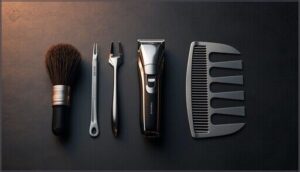
The right tools make all the difference. Use a T-blade for angle control on cheek lines and a stencil for alignment along the neck. Adjustable guard settings let you dial in exact lengths, while ceramic blade cooling prevents skin irritation during longer sessions.
Scissor ruler markings handle stray hairs with precision. A wide-toothed comb and boar bristle brush keep everything positioned before you cut.
Managing Split Ends and Uneven Growth

Split ends sneak up on you — dryness and rough toweling are usually the culprits.
Pat dry with a microfiber towel, then use Hydrating Oil Application on damp hair daily to seal the cuticle.
For patches, try Targeted Beard Massage with Roller Stimulation Techniques to boost circulation.
Weekly Split-End Repair Masks and Patchy Area Supplements like biotin round out your split end prevention game.
Nutrition, Health, and Beard Appearance

What what you eat, how you sleep, and how you move all show up in your beard — whether you like it or not.
Think of your body as the engine and your beard as the exhaust; if the engine’s running rough, it’ll show.
Your beard is the exhaust note of your body’s engine — when health runs rough, it shows
Here’s what actually moves the needle.
Essential Vitamins and Minerals
Your beard grows from the inside out. What you eat shows up in every strand.
- Biotin Benefits – 2,000–5,000 mcg daily strengthens keratin to prevent breakage
- Zinc Role – aids follicle repair; oysters pack 74mg per 100g
- Vitamin D Impact – boosts testosterone by 20% in deficient men
- Vitamin E Circulation – almonds deliver 26mg per 100g, feeding your roots
Stack these with Vitamin C Collagen support, B complex vitamins, and solid protein intake, and your beard has everything it needs.
Hydration and Skin Health
Water Intake matters more than most guys realize. Your skin produces sebum — the natural oil that keeps beard hair soft. When you’re dehydrated, sebum drops, and beard dandruff increases up to 50%. Aim for 3.7 liters daily.
Post-wash, apply beard oil with Humectant Ingredients like jojoba or hyaluronic acid for Oil Absorption Timing that locks moisture in.
A Humidifier Benefits overnight dryness prevention, keeping your Skin Barrier Support intact.
Impact of Sleep and Stress Management
Your skin needs water — and your beard needs sleep.
Men getting under 7 hours see a real drop in Sleep‑Driven Testosterone, which weakens follicle stimulation. During REM‑Phase Benefits, your body peaks testosterone production. Poor sleep schedule means patchier growth.
Stress‑Induced Hair Loss hits through cortisol spikes. Use Cortisol Reduction Techniques like 10 minutes of daily meditation for quality rest recovery and steady stress management.
Exercise and Circulation Benefits
Working out does more for your beard than you think. Exercise-induced circulation pushes nutrients straight to your follicles — that’s your Cardio Boost in action.
- HIIT Bloodflow: 20-minute sprint intervals raise facial circulation by 25%
- Strength Hormone Surge: Squats and deadlifts spike testosterone by 15% post-session
- Neck Mobility drills: 5-minute daily routines direct blood flow to patchy cheek areas
Add Recovery Nutrition post-workout — your follicles are primed to absorb it.
Styling Tips for Growing Beards

Growing a beard doesn’t mean giving up on looking put-together.
The right styling approach depends on your face shape, how to handle any patchy spots, and even the time of year. Here’s what you need to know to stay sharp through every stage of the grow-out.
Choosing a Style for Your Face Shape
Your face shape is the blueprint — everything else follows from it.
Oval Beard Options like a classic full beard at 12–15 mm work because they don’t fight your proportions.
Square Jaw Styles benefit from circle or Balbo beards to soften that jawline.
Round Face Balbo trims the sides thin.
Heart Shape Volume fills the chin.
Diamond Chin Extensions lengthen a narrow point downward.
Addressing Patchy or Uneven Areas
Patchy spots don’t have to stall your progress. Most guys hit uneven growth — it’s genetics, not failure. Here’s how to work with it:
- Strategic Trimming — Blend dense areas down to match sparse ones every 7–10 days.
- Brushing for Fullness — Train longer hairs over patches using a boar bristle brush daily.
- Minoxidil Protocol — Apply 5% foam twice daily; expect real hair density gains around week 16.
- Derma Rolling — Use a 0.5mm roller twice weekly to boost follicle blood flow.
- Peppermint Oil — A 3% dilution massaged into patchy areas stimulates dormant follicles within 4 weeks.
Seasonal Adjustments for Beard Care
Your beard doesn’t care what season it is — but your routine should.
| Season | Key Focus |
|---|---|
| Winter Hydration | Daily balm with shea butter; wash every 2–3 days |
| Summer Sweat | Sulfate-free wash; lightweight jojoba oil post-shower |
| Humidity Frizz | Wide-tooth comb; leave-in conditioner to seal cuticles |
| Sun SPF | Raspberry seed oil; SPF moisturizer on exposed patches |
| Seasonal Scents | Citrus in summer, woodsy in winter |
Seasonal beard care and product selection isn’t optional — it’s how you protect your growth investment year‑round.
Frequently Asked Questions (FAQs)
How to maintain a beard while growing?
Keeping a beard means trimming it while you’re trying to grow it. Apply beard oil daily, define your neckline, and follow a consistent beard grooming routine and maintenance plan.
How to style a beard when growing it out?
Styling during the growth phase means working with what you have. Use trimming and shaping techniques for neckline and cheek lines to keep edges clean while length builds naturally underneath.
What is the rule 5 for beards?
Rule 5 means checking your beard every five days and evaluating five things: length, thickness, style, upkeep, and balance.
It turns random trimming into a repeatable grooming routine and maintenance system that actually works.
Can beard products cause skin breakouts?
Yes, they can. Heavy oils like coconut oil clog pores. Overuse causes buildup. Always patch test first, choose non-comedogenic options like jojoba, and never apply products to sweaty skin.
How do partners typically react to growing beards?
Reactions vary by stage. Stubble irritation is real — partners notice. About 46% find well-groomed beards most attractive. Preference shifts happen fast, so trimming requests during the awkward phase are common.
When should you shave and start over?
Sometimes the smartest move is a clean reset.
If a persistent itch, patchy beard growth past 30 days, or a professional appearance deadline hits, shave and start fresh during your skin recovery window.
Does beard growth differ after age 40?
After 40, hormone decline slows things down. Lower testosterone levels, reduced DHT sensitivity, and follicle shrinkage mean hair grows 2–4mm daily instead of 5mm — about 20–30% slower overall.
Can facial piercings interfere with beard styling?
Piercing placement absolutely affects beard styling. Jewelry snagging on hairs mid-comb is frustrating. Swap hoops for flat studs, trim around hardware carefully, and apply balm before combing to reduce friction.
Conclusion
Every stage has a purpose, every product earns its place, and every trim keeps you moving forward.
Learning how to keep your beard styled while growing takes patience, but it’s not guesswork—it’s a process you can control.
Clean it, condition it, shape the lines, and feed it from the inside out.
The guys who push past week three aren’t luckier than the ones who quit.
They just showed up with a plan.
- https://www.healthline.com/health/beauty-skin-care/beard-maintenance
- https://brickellmensproducts.de/a/l/en/blogs/grooming-manual/10-common-fails-to-avoid-when-growing-your-beard
- https://www.stubbleandstache.com/blogs/blog/8869921-beard-growing-101
- https://www.beardbrand.com/blogs/urbanbeardsman/5-beard-tools-you-need
- https://www.byerim.com/blogs/learn/the-ultimate-beard-care-routine-growth-softness-and-skin-comfort-in-4-6-weeks