This site is supported by our readers. We may earn a commission, at no cost to you, if you purchase through links.
Your hair follicles face constant assault from free radicals, environmental toxins, and everyday oxidative stress—the same cellular damage that ages your skin and weakens your immune system. But here’s something most people don’t realize: your body produces a master antioxidant specifically designed to protect against this damage.
L-glutathione, a small molecule made from three amino acids, works inside your cells to neutralize harmful compounds before they can weaken hair follicles or disrupt growth cycles. While your body makes glutathione naturally, levels decline with age, stress, and poor nutrition, which may explain why hair health often deteriorates over time.
Understanding how L-glutathione benefits for hair—from preventing premature graying to supporting stronger, healthier growth—can help you make informed decisions about protecting your hair from the inside out.
Table Of Contents
Key Takeaways
- Glutathione is your body’s master antioxidant that protects hair follicles from free radical damage and oxidative stress, which decline naturally with age and may explain why hair health deteriorates over time.
- This tripeptide molecule works by neutralizing harmful compounds before they weaken follicles, supporting stronger growth, preventing premature graying by protecting melanocytes, and improving scalp circulation for better nutrient delivery.
- You can boost glutathione levels through sulfur-rich foods like broccoli and asparagus, liposomal supplements (which offer 50–90% absorption versus less than 1% for standard oral capsules), and lifestyle habits including regular exercise, quality sleep, and stress management.
- Scientific evidence shows that people with hair loss have 40% higher oxidative damage markers and lower glutathione-dependent antioxidant capacity, though you’ll typically need 3–6 months of consistent supplementation to notice visible hair health improvements.
What is L-Glutathione and How Does It Work?
L-glutathione is a powerful antioxidant your body produces naturally, made up of three amino acids: cysteine, glycine, and glutamic acid. It works by neutralizing free radicals that can damage your cells, including those in your hair follicles, and it plays a key role in detoxification.
To understand how it aids hair health, let’s look at how it functions, where it comes from, and how your body uses it.
Structure and Function as an Antioxidant
Because lglutathione packs three amino acids—glutamic acid, cysteine, and glycine—into one powerful molecule, this tripeptide composition gives your cells serious antioxidant muscle. The cysteine’s thiol group acts like a magnet for free radicals, neutralizing oxidative stress before it harms your follicles.
Through redox cycling and enzymes like glutathione peroxidase, it continuously shields cellular protection, keeping your scalp environment primed for healthy hair. Glutathione also plays a key role in maintaining redox balance within cells.
Role in Cellular Health and Detoxification
Your cells rely on redox homeostasis to stay healthy, and l-glutathione is the workhorse behind it. This antioxidant aids cellular health by driving xenobiotic conjugation—basically, tagging toxins so your body can flush them out.
Inside hair follicles, it shields against toxicant injury and oxidative stress, acting as a biomarker capacity for detoxification efficiency. Phase 2 detoxification is essential for making toxins less harmful.
Compartment roles matter, too: mitochondria, cytosol, and nucleus all depend on glutathione to maintain function and protect your scalp’s cellular machinery.
Production and Bioavailability in The Body
Your body doesn’t rely on diet alone for glutathione—endogenous synthesis produces most of it in the liver, where hepatic concentrations peak. Cysteine availability limits how fast cells can build this tripeptide, though oral absorption from supplements can boost stores.
Dietary sources of glutathione like fish and spinach help, but regulation turnover and bioavailability of glutathione depend on consistent precursor supply to keep your scalp’s antioxidant defenses strong.
How L-Glutathione Benefits Hair Health
Now that you know what glutathione is and how it works in your body, let’s talk about what it actually does for your hair. This antioxidant doesn’t just float around—it targets specific issues that affect hair health, from the roots to the scalp itself.
Here are the four main ways glutathione aids stronger, healthier hair.
Protection Against Oxidative Stress

Your hair faces constant attack from free radicals—unstable molecules that damage cells throughout your body. Glutathione acts as your scalp’s antioxidant network, neutralizing these threats before they harm follicles. Here’s how this cellular protection works:
- Free radical defense: Glutathione donates electrons to unstable molecules, stopping oxidative stress before it damages hair structures
- Follicle ROS damage prevention: By controlling reactive oxygen species, it keeps follicles functioning properly during growth cycles
- Melanocyte protection: It shields pigment-producing cells from oxidative injury that leads to graying
- Mitophagy activation: This process helps follicle cells recycle damaged components and boost their glutathione metabolism
- Scalp environment support: Reduced oxidative burden means healthier conditions for strong, resilient hair growth
Supporting Hair Follicle Vitality

Behind the scenes, your follicles thrive on cellular redox balance—glutathione keeps this equilibrium steady so follicles stay resilient. It also bolsters dermal papilla health, those tiny signaling hubs that direct growth cycles. Plus, it aids keratin protein synthesis and helps maintain immune privilege, shielding follicles from unwanted inflammation. Here’s how antioxidant strategies protect what matters:
| Mechanism | Glutathione’s Role | Hair Health Impact |
|---|---|---|
| Cellular Redox Balance | Neutralizes reactive oxygen species in follicle cells | Maintains follicle function during growth cycles |
| Dermal Papilla Health | Protects signaling cells from oxidative stress | Preserves hair-inducing capacity and follicle size |
| Keratin Protein Support | Aids proper protein synthesis and folding | Strengthens emerging hair fibers at the shaft |
Enhancing Blood Circulation to The Scalp
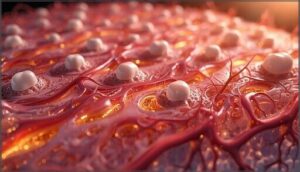
When your capillaries widen, more oxygen and nutrients reach every follicle—that’s where glutathione’s vasodilation effects shine. Studies show it boosts nitric oxide activity, improving microvascular support and scalp perfusion. Better blood circulation means:
- Follicle oxygenation keeps hair roots energized and resilient
- Nutrient delivery supplies the building blocks your hair craves
- Reduced oxidative damage preserves tiny scalp vessels
- Healthier growth cycles driven by improved scalp health
Glutathione helps your blood nourish hair from within.
Detoxification Effects on The Scalp

Because glutathione neutralizes free radicals and oxidative stress at the scalp surface, it strengthens your scalp barrier while clearing pollutant influence. It also drives systemic toxin reduction through liver pathways, creating a cleaner environment for follicles.
This antioxidant action improves sebum and microbiome balance, aids scalp inflammation modulation, and promotes overall scalp health—giving your hair a detoxified foundation for growth.
L-Glutathione for Preventing Hair Loss and Graying

Hair loss and premature graying aren’t just about genetics—they’re often signs that free radicals and inflammation are taking a toll on your follicles.
Glutathione steps in as your scalp’s protective shield, working behind the scenes to keep those roots strong and your natural color intact.
Here’s how it confronts three of the biggest threats to your hair.
Combating Free Radical Damage
Think of free radicals as tiny vandals attacking your hair follicles every day. Glutathione steps in as your cellular bodyguard, neutralizing these unstable molecules before they cause damage.
Glutathione acts as your cellular bodyguard, neutralizing free radicals that attack hair follicles daily
This powerful antioxidant scavenges reactive oxygen species that would otherwise break down follicle structures, trigger oxidative stress, and accelerate hair loss. By protecting cells from this relentless assault, glutathione helps maintain follicle integrity and fosters healthier growth.
Reducing Inflammation and Scalp Irritation
If your scalp feels tender, itchy, or inflamed, you’re not alone—and glutathione’s anti-inflammatory properties may offer relief. This antioxidant helps calm irritated skin by interrupting inflammatory pathways and reducing oxidative stress that fuels conditions like scalp dermatitis. Here’s how it works:
- Lowers reactive oxygen species in inflamed tissues
- Downregulates inflammatory signals (such as NF-κB)
- Improves barrier function and reduces moisture loss
- Eases erythema and pruritus in scalp conditions
- Promotes overall scalp health and comfort
Clinical limitations exist—large trials remain sparse—but early studies show promise for reducing inflammation without serious side effects.
Preserving Hair Color and Pigmentation
Ever wonder why some hair turns silver while others hold their natural hue longer? Glutathione influences melanin synthesis—the process that gives your hair color. Research shows it modulates pigment balance between darker eumelanin and lighter pheomelanin, potentially slowing premature graying by protecting follicle pigmentation from oxidative stress.
While in vitro studies confirm these antimelanogenic effects, human evidence remains limited, so controlled trials are still needed.
Scientific Evidence Linking Glutathione to Hair Growth

You’ve probably heard claims about glutathione and hair health, but what does the science actually say?
Researchers have been studying how this antioxidant affects hair follicles, protein production, and oxidative damage.
Here’s what the evidence shows about glutathione’s real impact on hair growth and vitality.
Research on Hair Regeneration and Density
Recent animal studies show promise for hair regeneration when glutathione metabolism is enhanced. Laboratory research has uncovered four key findings about how this antioxidant affects your hair follicles:
- Mitophagy activation restored hair growth in aged mice by boosting cellular glutathione
- GPx4 deficiency caused visible thinning and reduced follicle density during development
- Systemic enzymes like glutathione peroxidase were lower in people experiencing hair loss
- Natural antioxidants that support glutathione improved hair health markers in clinical studies
Glutathione’s Role in Protein and Collagen Synthesis
Your hair’s strength relies on proteins, and glutathione helps your body build them more efficiently. It stimulates collagen production while supporting keratin synthesis, the protein that forms your hair shaft.
This amino acid synergy enhances cellular repair mechanisms throughout your follicles, maintaining their structural integrity.
When glutathione levels drop, protein assembly slows down, weakening the foundation your hair needs to grow thick and resilient.
Studies on Oxidative Stress and Hair Loss
Beyond protein support, research directly connects oxidative stress to hair loss patterns you might recognize. Studies show that AGA oxidative stress markers rise considerably in affected scalps, while dermal papilla senescence accelerates when free radicals overwhelm your follicles.
Here’s what the evidence reveals about follicle cycling ROS and hair growth:
- Patients with androgenetic alopecia show 40% higher oxidative damage markers than controls
- Antioxidant interventions can restore follicle size and maintain anagen duration
- Senescent cells under oxidative stress produce fewer growth factors like VEGF
- Clinical loss patterns correlate with reduced glutathione-dependent antioxidant capacity in hair follicles
How to Increase Glutathione for Healthier Hair

Now that you understand how glutathione benefits hair health, you’re probably wondering how to actually boost your levels.
The good news is that you have several practical options, from what you eat to how you live your daily life.
Let’s walk through the most effective ways to increase glutathione and give your hair the help it needs.
Dietary Sources and Nutrition Tips
You can boost glutathione through smart food choices that support your hair health. Focus on glutathione-rich foods like asparagus, avocado, and broccoli, which deliver direct antioxidant support.
Include protein precursors from poultry, fish, and legumes to fuel your body’s own production. Add micronutrient support through selenium and vitamin C for better nutrient absorption.
Gentle cooking methods like steaming preserve these plant antioxidants better than frying.
Supplementation Options and Bioavailability
When standard oral capsules deliver less than 1% bioavailability, you need smarter strategies. Glutathione supplementation works best through:
- Liposomal glutathione – achieves 50–90% absorption versus conventional tablets, raising blood levels by roughly 40% at 500 mg daily
- Intravenous options – provide 100% bioavailability for rapid systemic effects, though they require clinical administration
- Precursor strategies – N-acetylcysteine (NAC) bypasses degradation, converting efficiently to boost intracellular stores
Topical application offers limited systemic benefit compared to these approaches.
Lifestyle Strategies to Support Glutathione Levels
Since supplementation alone won’t optimize glutathione, daily habits matter just as much. Physical activity increases levels by 10–20%, while 7–9 hours of quality sleep aids production. Stress management through meditation can raise stores by roughly 20%.
Limit alcohol and toxin exposure—quitting smoking helps preserve reserves.
Focus on your dietary pattern: whole foods, lean protein, and nutrient-dense choices create lasting benefits for healthy hair.
Safety, Side Effects, and Consultation Guidelines
While oral glutathione risks usually involve mild stomach upset or loose stools, IV glutathione dangers include serious reactions like anaphylaxis and contamination issues. Long-term supplementation may lower zinc levels, so monitoring recommendations include periodic blood work.
Special populations—pregnant women, those with asthma, or anyone on chemotherapy—should avoid supplements without consultation.
Always discuss bioavailability of glutathione and potential supplement interactions with your doctor first.
Frequently Asked Questions (FAQs)
Can glutathione reverse existing hair damage permanently?
Picture a weathered rope frayed beyond repair—that’s damaged hair. Glutathione can’t permanently reverse existing structural damage to your hair shaft, but it protects follicles from oxidative stress, potentially improving future hair growth quality.
How long until glutathione shows hair results?
You’ll generally notice hair health improvements within 3-6 months with oral glutathione supplementation.
IV therapy may show subtle scalp changes in 2-4 weeks, though significant hair growth requires consistent treatment over several months.
Does glutathione work for all hair types?
Glutathione’s antioxidant power doesn’t play favorites with hair type. Its cellular protection works universally across straight, wavy, curly, and coily textures, though melanin influence and structural differences mean individual responses vary.
Evidence gaps remain regarding type-specific outcomes.
Can children or teenagers use glutathione safely?
Although glutathione supplementation has been studied in children with specific medical conditions under supervision, routine use for hair health in minors lacks clear safety data and requires careful medical oversight and individualized dosing.
Does glutathione interact with common hair medications?
No established interactions exist between glutathione and finasteride or minoxidil at typical doses.
However, you should consult your doctor before combining supplements with hair loss medications to assure safety and desired results.
Conclusion
Think of your hair follicles like a garden constantly battling pollution—they need protection to thrive.
By supporting your body’s glutathione production through sulfur-rich foods, quality sleep, and strategic supplementation when needed, you’re building a defense system from within.
The l-glutathione benefits for hair aren’t about quick fixes; they’re about addressing the cellular damage that undermines growth, color, and strength. Your follicles will thank you for the investment.
- https://pmc.ncbi.nlm.nih.gov/articles/PMC11196958/
- https://pubmed.ncbi.nlm.nih.gov/27974920/
- https://getheally.com/patients/news/does-glutathione-help-hair-growth
- https://www.harmoniahealthsolutions.com/does-glutathione-really-work-for-hair-growth-science-says/
- https://clinicaltrials.gov/study/NCT06841458