This site is supported by our readers. We may earn a commission, at no cost to you, if you purchase through links.
Most barbers won’t tell you this: that “low fade” you asked for sits somewhere between skin and half an inch—but the exact measurement separates an amateur trim from a sharp cut. The difference between a guard 1 and guard 3 is only 4.5 millimeters, yet it completely changes how your fade hits your jawline and frames your face.
Low fade length measurements aren’t just numbers on a clipper. They’re the blueprint for controlling contrast, managing your face shape, and stretching time between barber visits. Get the guard progression wrong and you’ll wear a hard line above your ear for three weeks.
Table Of Contents
- Key Takeaways
- Low Fade Length Measurements Explained
- Standard Guard Sizes for Low Fades
- Choosing The Best Low Fade Length
- Maintenance Tips for Low Fade Haircuts
- Top 10 Tools for Achieving Low Fade Lengths
- 1. Aomgd Hair Trimming Guide Template
- 2. Self Haircut Kit for Men
- 3. Fade Comb Set for Hair Cutting
- 4. Blend Friend Fade Comb Set
- 5. Fadeking Hair Clipper Guards Set
- 6. Fade Combs Haircut Kit For Men
- 7. Fade Comb Haircut Kit for Men
- 8. Fade Comb For Men Haircut Tool
- 9. Dliojhl Gradient Hair Fade Comb
- 10. Blend Friend Hair Fade Comb Tool
- Frequently Asked Questions (FAQs)
- What length should a low fade be?
- What are the measurements for a low fade haircut?
- What is the 5 inch rule?
- What does 1/2 3/4 mean in haircuts?
- Can low fades work with thinning hair?
- How does head shape affect fade placement?
- Whats the ideal fade length for professionals?
- Do low fades require special shampoo or conditioner?
- Can you transition from high to low fade?
- Conclusion
Key Takeaways
- A low fade starts about one inch above your ear and uses clipper guards zero through three or four, with each guard step adding roughly 3mm—that 4.5mm jump between guard 1 and guard 3 completely changes how the fade frames your jawline.
- Most low fades demand touch-ups every 2-3 weeks for zero to guard 1 lengths or 4-6 weeks for guard 3-4 blends, because the clean lines you walked out with blur faster than you think.
- Your face shape dictates where the fade should start—round faces need the fade slightly above the ear for vertical stretch, square faces should begin just above the jawline to soften harsh angles, and oval faces can handle flexible placement from ear-level to temple.
- Professional fade execution requires precise blending zones spanning 1/4 to 3/4 inch between guard steps, using light passes and micro blending techniques to eliminate hard lines instead of relying on single strokes.
Low Fade Length Measurements Explained
You can’t nail a low fade without understanding the numbers behind it. The measurements aren’t complicated, but most guys skip the basics and end up with a fade that looks off.
Here’s what you need to know about where a low fade starts, how guard numbers translate to actual hair length, and why it sits different from mid or high fades.
A low fade usually begins about an inch above the ear and blends upward using shorter clipper guard sizes to create that gradual transition.
What is a Low Fade?
A low fade haircut starts the shortening right above your ears and blends gradually into longer hair on top. The fade line sits lower than mid or high fades, creating a subtle shift.
You’re getting a clean, controlled gradient on the sides and back while keeping length where it matters—up top for styling options and contrast.
For more ideas and advice on, check out detailed style resources.
Typical Starting and Ending Points
Your fade line placement starts about one inch above your ear—that’s your reference point for consistency. Mark it on both sides using hairline mapping before you touch the clippers.
The shift zones end where skin or zero guard meets the longer top section. Most low fade haircuts run from zero to guard three or four, creating smooth blend techniques.
Always perform symmetry checks by comparing both sides at eye level.
Guard Numbers and Hair Length Chart
Once you nail down your fade line placement, you’ll need the right clipper guard numbers to execute it.
Guard zero sits at skin level—no visible hair on the sides when you use it for a fade. Guard one adds about 1/8 inch (3 mm), while guard two delivers 1/4 inch (6 mm). Guard three reaches 3/8 inch (9.5 mm), and guard four hits 1/2 inch (12.7 mm).
Most low fades use guard progression from zero to three or four, creating smooth hair length measurements through careful blending zone strategies.
For a better understanding of the haircut numbers system, review how each clipper guard translates directly to hair length.
How Low Fades Differ From Other Fades
Understanding guard progressions is one thing—knowing where your fade starts changes everything. A low fade begins just above your ears, creating subtle contrast between short sides and longer top hair. Mid fade techniques position the blend around temple height for more noticeable transitions. High fade haircuts start near your crown, exposing maximum scalp and demanding the sharpest styling options.
Face shapes and hair texture determine which fade techniques suit you best.
Standard Guard Sizes for Low Fades
Low fades depend on precise guard sizes to create that smooth gradient from skin to longer hair. Most barbers stick to a tight range—zero guard through three or four—to build the blend without jarring lines.
Here’s what each guard length actually means and how it fits into your fade.
Zero Guard (Skin) to Guard 3/4
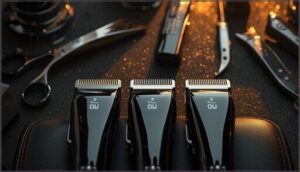
Zero guard puts your clippers at skin level—no protection, pure contrast. From there, you’ll climb through guard progression to reach 3/4 inch (roughly 19mm) at the top of your low fade. This is the foundation of skin fade techniques.
Blending methods demand light passes and steady angles. Poor clipper maintenance ruins even perfect guard size selection. Master the shift between these clipper guard numbers, and you control the entire fade.
Common Clipper Lengths in Millimeters and Inches
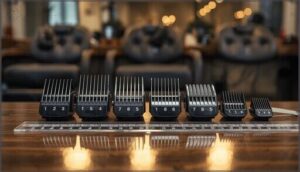
You need absolute precision with clipper guard numbers. Guard 1 leaves 3mm (1/8 inch), guard 2 sits at 6mm (1/4 inch), and guard 3 delivers 10mm (3/8 inch). Haircut length numbers climb predictably—each step adds roughly 3mm.
Hair length charts simplify millimeter conversions, but your hand memorizes cutting tools faster than any reference sheet. Master clipper guard sizes, and fade techniques become instinct.
Blending Zones and Transition Areas
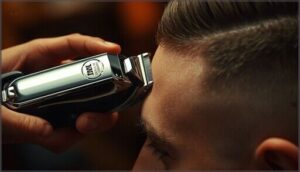
Blending techniques turn multiple clipper passes into one fluid low fade haircut. Your shift geometry spans roughly 1/4 to 3/4 inch between guard progression steps—zero through three—following natural head contours.
Micro blending eliminates hard lines with freehand feathering across the taper fade zone. Fade angles mirror jawline curves while scalp visibility guides how wide you stretch each shift area.
Choosing The Best Low Fade Length
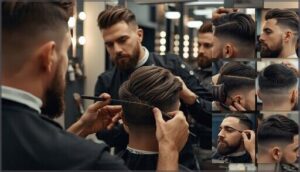
Getting the guard numbers right is one thing—choosing the actual fade height that works for you is another. Your face shape, hair type, and personal style all play a role in determining where that fade should start and how much contrast you want.
Here’s what you need to think about before committing to a specific low fade length.
Face Shape and Fade Height
Your face shape decides where your low fade should start—ignore this and you’ll accentuate every flaw you want to hide.
Ignoring face shape when choosing fade height will accentuate every flaw you want to hide
Here’s the breakdown:
- Oval Face Fades: You can push fade heights higher without shortening your face; flexible clipper guard placement from ear-level to temple works.
- Round Face Elongation: Start the fade slightly above your ear to create vertical stretch and slim your profile.
- Square Face: Begin just above your jawline; this softens harsh angles through strategic blending techniques.
Hair Texture and Density Considerations
Fine hair blends faster through guard progression—you’ll finish your fade haircut in fewer passes. Coarse strands demand tighter clipper control, or you’ll see hard lines instead of smooth transitions. Hair density measurement determines how many blending techniques you need: high density hides mistakes; low density exposes every error.
| Hair Texture | Guard Progression Strategy |
|---|---|
| Fine (under 0.07mm) | Half-guard increments work best |
| Coarse (over 0.10mm) | Full-guard jumps with longer blending |
| Medium texture | Standard one-guard steps suffice |
Personal Style and Desired Contrast
Your wardrobe sets the contrast level your low fade needs to match. Classic archetypes favor clean guard progression with moderate fade haircut height, while dramatic personas demand sharper transitions for visual punch.
- Color psychology drives texture choices—bright tones pair with higher contrast fades to heighten energy
- Fashion trends shift contrast expectations across seasons and style movements
- Face shape determines ideal fade height that complements your natural bone structure
Maintenance Tips for Low Fade Haircuts

Your low fade won’t stay sharp on its own. The clean lines you walked out of the barbershop with will blur and grow out faster than you think.
Let’s cover exactly when to book your next trim and what you can handle yourself between visits.
Recommended Trimming Frequency
Trimming schedules for low fade haircut maintenance depend on guard length and hair growth rate. Zero to guard 1 fades demand trims every 2 to 3 weeks to keep lines sharp. Guard 3 or 4 blends stretch to 4 to 6 weeks.
Straight hair shows regrowth faster than curly textures, so adjust your grooming tips and hair care rhythm based on how quickly your fade looks grown out.
At-Home Touch-Ups Vs. Barber Visits
Barbershops deliver cleaner blends, but a basic clipper kit for haircut maintenance pays for itself after two visits. You save one to two hours per month skipping travel and waiting.
Skill levels matter—professionals handle tough fade haircut gradients while your at-home touch-ups work for necklines and edge control.
Cost comparison favors DIY between cuts, but big events demand a barber. Convenience options and grooming tips balance both approaches.
Top 10 Tools for Achieving Low Fade Lengths
You can’t execute a clean low fade without the right tools in your hands. The difference between a professional-looking blend and a choppy mess comes down to what you’re working with.
Here are the top 10 tools that’ll give you precise control over every guard shift and blend zone.
1. Aomgd Hair Trimming Guide Template
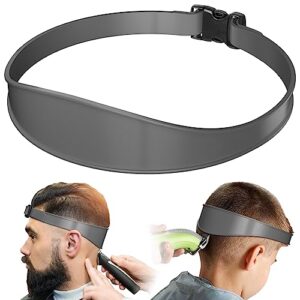
You don’t need a mirror behind your head to nail the neckline anymore. The Aomgd Hair Trimming Guide Template (model AM-LFD-HUI) wraps around your neck with skin-friendly silicone and elastic, giving you a guided edge for DIY fades at home.
It’s adjustable, weighs just 1.76 ounces, and works with any clipper or trimmer you already own.
The catch? Larger heads may find it slips, and you’ll need a few practice runs to lock in your technique.
| Best For | Anyone wanting to clean up their neckline at home without guessing where to cut or needing a second mirror. |
|---|---|
| Material | Silicone/Elastic |
| Design Type | Adjustable Band |
| Use Case | DIY Home Haircuts |
| Key Benefit | Clean Necklines |
| Skill Level | Beginner-Friendly |
| Weight | 1.76 oz |
| Additional Features |
|
- Works with clippers, trimmers, or razors you already have
- Lightweight and portable, so you can toss it in a drawer or travel bag
- Adjustable sizing fits most head shapes
- Can slip on larger heads or lose grip during use
- Takes a few tries to get comfortable with placement and tension
- The adjustable mechanism can loosen unexpectedly for some users
2. Self Haircut Kit for Men
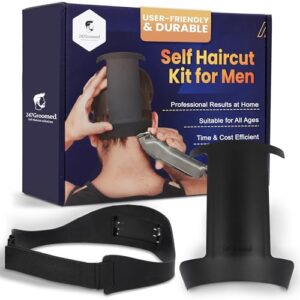
Complete kits hand you everything you need in one box—clippers, guards, and accessories that cover every stage of a low fade. Most include zero to 12 mm guards, rechargeable batteries, and a cleaning brush to keep blades sharp.
You’ll get corded and cordless options for reaching tight angles without fighting a cord. The 247 Groomed kit weighs 82 grams and fits head sizes from XS to XXL, making it practical for self-cuts or helping a friend dial in clean lines.
| Best For | Anyone who wants to save money on barber visits and learn to cut their own hair at home, especially if you’re going for clean fades and sharp necklines. |
|---|---|
| Material | Plastic/Silicone |
| Design Type | Adjustable Band |
| Use Case | Self-Haircuts |
| Key Benefit | Even Lines |
| Skill Level | Requires Practice |
| Weight | 82 g |
| Additional Features |
|
- Adjustable guides and templates make it easier to get even lines and consistent fades without professional training
- Fits a wide range of head sizes (XS to XXL) so multiple people in your household can use it
- Lightweight at 82 grams and comes with everything you need to start cutting right away
- Plastic build feels cheap to some users and might not hold up as well as metal alternatives
- The back of your head is tough to reach and requires practice or a second mirror setup
- Ratchet adjustment can be clunky, and some people think the price is too high for what you get
3. Fade Comb Set for Hair Cutting
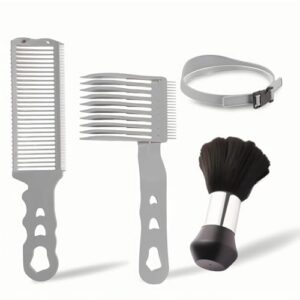
Curved plastic guides lock your clipper angle at the perfect height—no more guessing where each guard shift should land. These sets ship with graduated tooth gaps that create multiple blending points in one upward stroke, and rounded teeth mean you won’t scrape your scalp raw while chasing a clean gradient.
The anti-slip matte coating keeps the tool steady when your palms sweat, and most models flex to match your head contour so every pass stays consistent from temple to nape.
| Best For | Home users and beginners who want to practice fade haircuts without expensive barber visits, especially if you’re comfortable with a learning curve. |
|---|---|
| Material | ABS Plastic |
| Design Type | Fade Comb Set |
| Use Case | Home/Salon Use |
| Key Benefit | Precise Fade Angles |
| Skill Level | Beginner-Friendly |
| Weight | 7.05 oz |
| Additional Features |
|
- Curved design with anti-slip grip follows your head shape naturally, so you get consistent angles without constantly readjusting your hand position
- Graduated teeth create multiple blend points in one stroke, which speeds up the fading process compared to eyeballing each clipper level
- Flexible and waterproof construction means the comb bends with you and cleans up easily after each use
- Takes practice to nail the technique—your first few attempts probably won’t look salon-quality
- Doesn’t work well on very short hair since the guide needs enough length to grip and blend
- Build quality feels budget-level, so don’t expect it to last through years of heavy professional use
4. Blend Friend Fade Comb Set
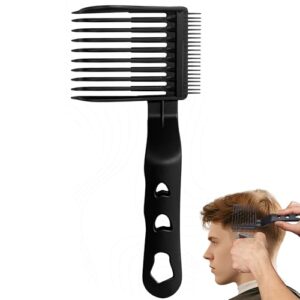
Two ergonomic grips and gradient teeth turn guesswork into geometry—you’ll blend zero straight to guard three without visible lines. The anti-static ABS plastic fights frizz while you work away from the scalp or press close for tight skin work, and evenly spaced teeth keep your blade angle locked so every pass builds the same gradient height.
Wipe down with mild soap after each cut, then stash both combs in a protective case so bent teeth won’t ruin your next fade.
| Best For | Home barbers and DIY enthusiasts who want to create professional-looking fades without paying for salon visits every few weeks. |
|---|---|
| Material | ABS Plastic |
| Design Type | Graded Fade Combs |
| Use Case | Home/Professional Use |
| Key Benefit | Exact Length Control |
| Skill Level | Requires Practice |
| Weight | 2.08 oz |
| Additional Features |
|
- Gradient teeth and ergonomic grips make it easier to blend different clipper guard lengths without harsh lines
- Anti-static ABS plastic helps control frizz while you work, keeping hair manageable during the cut
- Lightweight and portable enough to toss in a travel bag for touch-ups on the go
- Several users reported the plastic cracking or breaking after a few uses
- Takes practice to master the grip and angle—not instantly intuitive for beginners
- May not hold up well for professionals doing multiple cuts per day
5. Fadeking Hair Clipper Guards Set
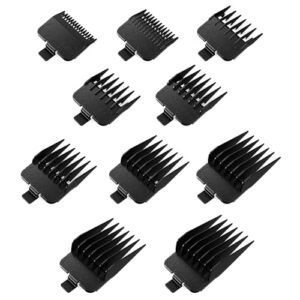
Seven precision guards—0.5 mm through 13 mm—lock onto most metal clipper blades without wiggle or slip, so you control every fade pass from skin work to bulk removal. Color-coded markings let you grab the right size mid-cut, and the rounded ABS plastic edges won’t snag coarse hair or scratch scalp when you push close.
Rinse guards under warm water after each session and check for stress cracks before your next low fade to avoid mid-blend breakage.
| Best For | Home barbers and DIY groomers who want reliable fade control across a full range of cutting lengths without constantly swapping tools. |
|---|---|
| Material | Plastic |
| Design Type | Guard Attachments |
| Use Case | Grooming Precision |
| Key Benefit | Consistent Results |
| Skill Level | Easy Installation |
| Weight | 4.66 oz |
| Additional Features |
|
- Color-coded guards make it easy to find the right size quickly during cuts
- Secure attachment prevents shifting or popping off mid-fade
- Wide range from 0.5 mm to 13 mm covers skin fades through longer bulk work
- May not fit every clipper brand despite claims of universal compatibility
- Some users report the guards don’t always match their stated sizes accurately
- ABS plastic can crack under regular use, especially if dropped or stressed
6. Fade Combs Haircut Kit For Men
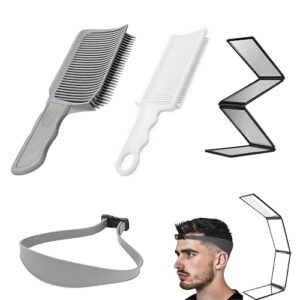
Four fade combs with flat and curved edges give you the control to shape low fades without guessing your guideline. Fine polished teeth glide through thick or coarse hair without snagging, and the adjustable silicone neck band keeps guides locked in place during your pass.
The 360-degree fourfold mirror shows you every angle—back, sides, crown—so you catch uneven blends before they turn into stripes.
Clean the combs with warm soapy water after each cut, then dry completely to prevent mildew on the band.
| Best For | Men who want to maintain clean fades at home between barber visits and are willing to practice the technique. |
|---|---|
| Material | Plastic |
| Design Type | Fade Comb Kit |
| Use Case | Self-Grooming |
| Key Benefit | Versatile Cutting Styles |
| Skill Level | Requires Practice |
| Weight | 10.58 oz |
| Additional Features |
|
- Flat and curved edge combs give you precise control over fade lines and blend transitions
- 360-degree mirror lets you see every angle so you catch uneven spots before they become obvious
- Adjustable silicone band keeps the guides secure during cutting so your guidelines don’t shift
- Takes practice to get good results, especially if you’re new to cutting your own hair
- Doesn’t include any instructions or video tutorials to help you learn the technique
- Won’t work well for highly textured hair or complex trendy styles that need professional tools
7. Fade Comb Haircut Kit for Men
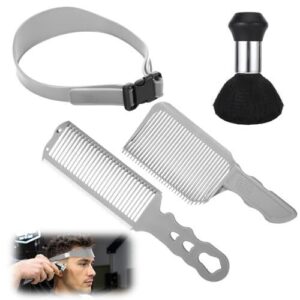
This kit ships with two fade combs featuring denser taper teeth designed for precise blending at the hairline—exactly where low fades need the cleanest work.
The adjustable silicone neck band fits a wide range of head sizes and locks the combs in place during self-cuts. A cleaning brush removes hair residue after each pass, keeping teeth sharp and ready.
Durable plastic construction resists bending during fades, and the kit pairs with most standard clippers that accept guide combs.
| Best For | DIY enthusiasts and budget-conscious guys who want to maintain clean fades at home between barber visits. |
|---|---|
| Material | Silicone |
| Design Type | Silicone Band & Combs |
| Use Case | DIY Fades |
| Key Benefit | Professional-Grade Fades |
| Skill Level | DIY/Barber Use |
| Weight | Not Specified |
| Additional Features |
|
- Two combs with taper teeth help blend hairlines more precisely than standard guide combs
- Adjustable silicone band keeps combs stable on your head during solo cuts
- Includes a cleaning brush to clear hair buildup and maintain tooth sharpness
- Silicone band can slip off for some head shapes and sizes
- Bulkier than regular guide combs, which some users find uncomfortable
- Won’t replace professional barber skills—there’s still a learning curve
8. Fade Comb For Men Haircut Tool
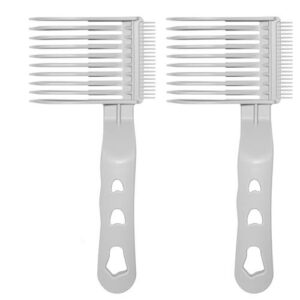
This single-piece tool gives you full control over fade placement without juggling multiple guards. Its curved teeth follow the natural shape of your head to create smooth transitions between guard lengths, and the triangular ruler imprint helps you line up both sides for symmetrical fades every time.
The hollow handle reduces hand fatigue during longer sessions, and anti-static ABS plastic prevents hair from sticking between the teeth.
It works with any clipper brand, making it adaptable for home or professional setups.
| Best For | Home users and barbers who want consistent, symmetrical fades without constantly switching clipper guards. |
|---|---|
| Material | ABS Plastic |
| Design Type | Fade Guide Comb |
| Use Case | Home/Salon Styling |
| Key Benefit | Neat Hairstyle Boundaries |
| Skill Level | Novice to Professional |
| Weight | 2.89 oz |
| Additional Features |
|
- Curved teeth follow your head’s shape for smoother transitions between lengths
- Triangle ruler markings make it easy to match both sides evenly
- Hollow handle design reduces hand strain during longer cuts
- Takes some practice to get clean results if you’re new to fading
- Won’t fix mistakes from unsteady hands or incorrect angles
- Quality can be inconsistent based on user reviews
9. Dliojhl Gradient Hair Fade Comb
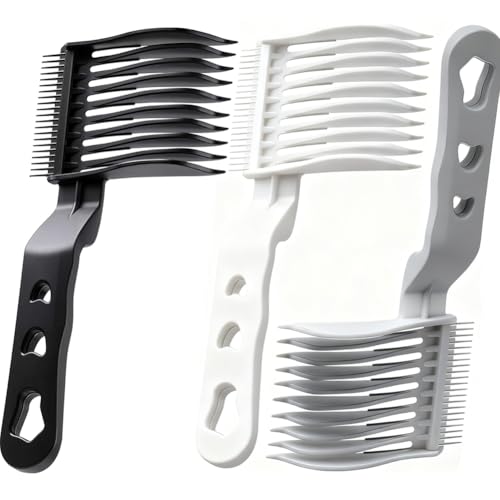
This three-piece set gives you black, white, and grey combs so you can pick whichever shows up best against your hair color. The gradient tooth design creates uniform transitions without guessing guard steps, and at 3.3 inches long it fits comfortably in your palm during tight blends around the ears.
Heat-resistant plastic won’t warp under clipper friction, though some users report cracking with heavy pressure. Works with any trimmer to guide consistent fade lines from skin up to about 3mm.
| Best For | Home barbers and DIY enthusiasts who want clean fade transitions without memorizing clipper guard numbers. |
|---|---|
| Material | Plastic |
| Design Type | Gradient Combs |
| Use Case | Home/Barbershop Use |
| Key Benefit | Uniform Gradient Effect |
| Skill Level | Easy to Use |
| Weight | 4.48 oz |
| Additional Features |
|
- Three color options help you see the comb teeth clearly against any hair shade
- Gradient design takes the guesswork out of creating smooth fade lines
- Compact 3.3-inch size fits comfortably in your hand for tight work around ears and necklines
- Plastic construction can crack under heavy pressure according to some users
- Learning curve required if you’re new to cutting hair or creating fades
- Struggles with very thick or coarse hair types
10. Blend Friend Hair Fade Comb Tool
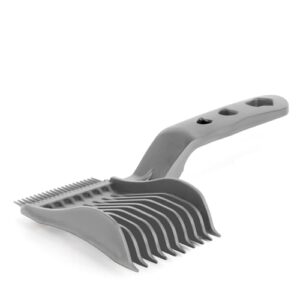
At 8 inches long, this lightweight ABS comb uses a curved gradient surface to position your blade at precise taper angles without free-handing the blend. It’s compatible with Wahl, Andis, and Oster clippers right out of the box—no adapters needed.
The anti-static finish reduces frizz while you work the blending zone from a Grade 1 base upward. Hold it at a slight angle and use short passes to minimize hard lines.
Rinse with warm water after each session; avoid boiling or you’ll warp the gradient.
| Best For | Home users and barbers who want salon-quality fades without the guesswork of free-hand blending. |
|---|---|
| Material | ABS Plastic |
| Design Type | Curved Fade Comb |
| Use Case | Home/Professional Use |
| Key Benefit | Precise Length Control |
| Skill Level | Beginner-Friendly |
| Weight | 1.45 oz |
| Additional Features |
|
- Works with major clipper brands (Wahl, Andis, Oster) without needing extra adapters
- Curved gradient design helps you hit consistent taper angles for cleaner blends
- Anti-static finish keeps hair manageable and reduces frizz during cuts
- Takes practice to master, especially if you’re cutting your own hair
- Not great for very short styles like crew cuts
- Can be tricky to use on curly or wavy hair textures
Frequently Asked Questions (FAQs)
What length should a low fade be?
Your low fade should start about one inch above the ear and taper down to skin or guard 1 at the bottom, creating a subtle, conservative blend that stays low and tight.
What are the measurements for a low fade haircut?
Your barber measures from skin at the bottom to roughly half an inch around your ears, then blends upward using zero through guard four—creating that crisp, gradual shift you’re after.
What is the 5 inch rule?
The 5 inch rule guides fade placement by measuring from the top of your ear upward. This measurement helps barbers determine where your low fade should start for balanced proportions.
What does 1/2 3/4 mean in haircuts?
You’re speaking clipper guard language. Those fractions—1/2 and 3/4—translate to half-inch and three-quarter-inch hair lengths. Guard 4 delivers the 1/2 inch mark, while guard 5 or 6 hits 3/4 inch.
Can low fades work with thinning hair?
Yes. A low fade works well with thinning hair because it keeps more length on top while creating subtle contrast at the sides. The gradual blend hides sparse areas without exposing your scalp.
How does head shape affect fade placement?
One size never fits all. Your skull’s curves dictate where the fade line lands—oval heads handle mid-to-low placements, round shapes need higher starts, and square jaws demand elevated fades to sharpen angles.
Whats the ideal fade length for professionals?
For professionals, a low fade that starts around one inch above the ear and blends to a zero or guard 1 delivers a clean, conservative appearance without requiring daily upkeep.
Do low fades require special shampoo or conditioner?
Despite what some barbers claim, you don’t need special shampoo for a low fade. Your regular lightweight formula works fine—just wash every 1–3 days and skip heavy oils near the fade line.
Can you transition from high to low fade?
You can shift from a high fade to a low fade by letting your sides grow out for three to six weeks, then asking your barber to blend the new line just above your ears.
Conclusion
Your barber doesn’t eyeball your fade—he runs precise low fade length measurements from guard 0 at the skin to guard 3 at the break point. That 6mm difference controls how fast your hairline disappears and how long the cut stays clean.
Master the guard progression yourself or keep guessing why your fade looks uneven by week two. The measurements don’t lie. Your mirror will prove it every time.