
This site is supported by our readers. We may earn a commission, at no cost to you, if you purchase through links.
Most men think a patchy beard is a problem to fix. It’s not—it’s a starting point.
Around 45% of men deal with uneven facial hair growth, and the ones who look best aren’t the ones who grew the fullest beards. They’re the ones who figured out their beard’s actual shape and worked with it.
Genetics control your follicle density, your DHT response, your cheek-to-chin gradient—none of that changes overnight.
But how you trim, train, and style what you have? That’s entirely in your hands.
Knowing how to maintain a patchy beard style is the difference between looking unfinished and looking intentional.
Table Of Contents
- Key Takeaways
- Why Patchy Beards Are Common
- Choosing The Right Patchy Beard Style
- Shaping and Trimming for Patchy Beards
- Grooming Routines for Patchy Beards
- Styling Tips to Enhance Patchy Beards
- Natural Methods to Improve Beard Growth
- Mistakes to Avoid With Patchy Beards
- Maintaining Beard Health and Confidence
- When to Seek Professional Beard Advice
- Frequently Asked Questions (FAQs)
- How to style your beard if it’s patchy?
- Can you actually fix a patchy beard?
- Is a patchy beard attractive?
- Can beard oils speed up patchy beard filling?
- How does stress impact patchy beard growth?
- Does shaving frequently make patchy beards thicker?
- Which beard colors hide patchiness most effectively?
- How long before a patchy beard looks intentional?
- Conclusion
Key Takeaways
- Your beard’s genetics and follicle density—so stop fighting your natural pattern and start styling around it instead.
- Sharp necklines, clean cheek lines, and a consistent trim schedule (once a week max) do more for a patchy beard than any product ever will.
- Styles like short stubble at 4mm, a goatee, or a Van Dyke work with sparse zones rather than exposing them—pick the one that matches where you actually grow well.
- If you want to push growth further, microneedling with a 0.5mm derma roller twice weekly and 5% minoxidil applied daily are the only options with real clinical backing.
Why Patchy Beards Are Common
Most men deal with patchy beards at some point — and it’s rarely about effort.
Genetics, hormones, and timing play a bigger role than most people realize — and understanding what actually drives beard growth can save you months of frustration.
Your genetics, age, and follicle distribution quietly run the show behind the scenes.
Here’s what’s actually driving those gaps.
Genetic Factors Influencing Beard Growth
Genetics runs the show here. Your AR gene variants control how well your follicles respond to DHT — and DHT sensitivity is the real driver behind beard thickness, not just testosterone levels. CAG repeat length in that same gene directly affects receptor activity.
Add in puberty timing genes and ethnic follicle distribution, and you’ve got a deeply personal blueprint — one no grooming hack can override.
Research shows that creatine’s effect on DHT isn’t strongly linked to beard thickness.
Beard Growth Patterns and Follicle Distribution
Your face isn’t one uniform canvas — it’s zones. The chin and upper lip pack 70–120 hairs per square centimeter. Your cheeks? Sometimes half that.
This Cheek‑Chin Gradient explains most patchy beard causes right there.
Follicle Density Zones, Vellus‑to‑Terminal Ratio, Hair Grain Mapping, Regional Growth Cycles — these all shape your beard density before genetics even enters the room.
Understanding facial hair growth factors like genetics and hormones can further explain these variations.
Choosing The Right Patchy Beard Style
The right style does half the work for you. Instead of fighting your patches, you work around them — and that starts with picking a shape that fits what you’ve actually got.
Here are the best options to review.
Best Styles for Patchy Cheeks

Patchy cheeks don’t limit your options — they just narrow the smarter ones.
Short Stubble Coverage at 1–3mm blends sparse spots by reducing skin‑hair contrast.
Short Boxed Style uses sharp lines to add structure without needing dense cheek coverage.
Chin Strap Emphasis skips the cheeks entirely.
Beardstache plays up your mustache.
Faded Cheek Blends soften harsh gaps with graduated lengths.
Goatee and Van Dyke Options
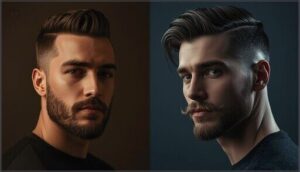
Both goatee and Van Dyke styles work smart for a patchy beard — they build around where you actually grow well.
A goatee concentrates density at the chin, letting you skip bare cheeks entirely. The Van Dyke disconnects the mustache from the chin beard, creating two clean focal points. Chin length variations, mustache shape choices, and facial shape matching all determine which one fits you best.
Stubble and Short Beard Looks

Stubble is one of the best patchy beard styling tips nobody talks about enough. At 4 millimeters, overlapping hairs soften gaps naturally — no tricks needed.
Guard blending techniques let you taper sparse cheeks against denser zones, so texture enhancing products do less heavy lifting. Minimalist beard shapes work best here.
Match the length to your facial geometry, and your beard grooming routine stays simple.
Shaping and Trimming for Patchy Beards
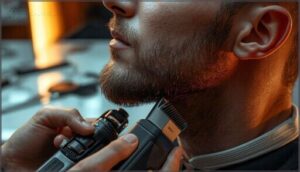
Shaping your beard is where the real difference gets made.
Done right, clean lines and careful trimming can make a patchy beard look intentional — even sharp.
Here’s what you need to know to get it there.
Defining Necklines and Cheek Lines
Two lines define everything — your neckline and cheek line. Get them wrong, and patches look worse. Get them right, and your beard looks intentional.
- Neckline Height — Place it 1.5 inches above your Adam’s apple for cheek coverage balance.
- Cheek Line Shape — Follow natural growth; lower lines hide sparse upper patches.
- Soft Edge Technique — Tapered borders blend gaps better than harsh cuts.
- Guard Length Balance — Use longer guards under the jaw, shorter on cheeks.
- Symmetry Check — Step back after every pass during beard shaping.
Precision Trimming Techniques
Precision trimming transforms patchy beards—but only when you nail the technique.
Guard Selection: use a No. 3 guard (10 mm) on sparse cheeks, longer on fuller zones for a Graduated Length balance.
Grain Direction first, then try a gentle Flicking Motion to blend gaps.
Blade Sharpening so every pass stays clean and controlled.
Avoiding Over-Trimming Mistakes
Over-trimming is the fastest way to make patchiness worse — one extra pass and you’ve got nothing left to work with.
- Always trim dry — Dry Trimming shows your true length and texture
- Use Pre‑Trim Planning to map neckline and cheek lines first
- Guard Selection matters — go longer on sparse areas
- Lighted Mirror Use catches uneven spots before they become mistakes
- Take a Post‑Trim Pause — walk away, reassess
Grooming Routines for Patchy Beards
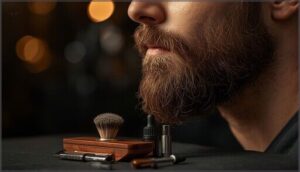
A solid grooming routine is what separates a sharp patchy beard from a messy one. It doesn’t take long — just a few consistent habits done right.
Here’s what actually moves the needle.
Washing and Conditioning Tips
Your grooming routine lives or dies by one simple habit: washing right.
Stick to frequency guidelines — two to three times weekly for most guys, using a beard shampoo with lukewarm rinse to protect natural oils. Understand the ingredient benefits in your conditioner — argan oil, jojoba, biotin.
Nail your application timing by leaving conditioner on for one to two minutes. Don’t skip post-wash moisturizing.
Brushing to Train Beard Growth
good beard brush does more than tidy things up — it actively trains your hair to grow where you want it.
upward strokes to stimulate blood flow and distribute beard oil evenly from roots to tips. Then finish downward to align everything.
boar bristle brush three times weekly for short beards.
patchy beard solution.
Managing Uneven Hair Lengths
Brushing addresses direction — but uneven lengths are a separate fight. Trim every 10 days, targeting flyaways without touching slower patches.
Use a guard gradient: start at 6mm on dense areas, step down to 3mm where needed. For bulk around the jaw, scissor angles do the heavy lifting.
Length synchronization takes patience — don’t rush the growth cycle timing.
Styling Tips to Enhance Patchy Beards
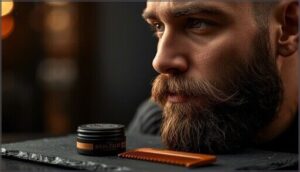
Styling a patchy beard isn’t about hiding what you’ve got — it’s about working with it.
A few practical techniques can make a real difference in how full and intentional your beard looks.
Here’s what actually works.
Creating Clean Edges
Sharp beard edges change everything—even sparse patches look intentional when the lines are clean. Start with pre‑trim skin moisturizing: a few drops of beard oil soften hair and reduce drag. Then use guardless trimmer tips to sketch your cheek and neckline before committing.
- Symmetrical line guides keep both sides even
- Stubble edge sharpening defines sparse areas instantly
- Post‑trim edge maintenance every three to five days locks in the shape
Blending Patchy Areas
Clean edges set the stage—now blending does the heavy lifting.
The Guard Gradient Technique starts with the number 3 on thick sections, dropping to 1 on sparse cheeks.
The Flick Angle Control angles your trimmer outward with short upward strokes, creating smooth Length Change Zones.
The Layered Fade Strategy builds dimension pass by pass.
| Technique | What It Does |
|---|---|
| Guard Gradient | Balances dense and sparse zones |
| Flick Angle Control | Removes harsh lines naturally |
| Layered Fade Strategy | Adds depth across patches |
| Brush Direction Training | Guides hairs into empty spots |
Adding Volume With Styling Tools
Blending patches creates the illusion of density — but volume takes it further.
Work a dime-sized Volumizing Cream into a damp beard, then use the Blow Dryer Technique against your growth direction for maximum lift. Follow with a Boar Bristle Brush to distribute beard oil evenly. For extra fullness, the Round Brush Lift and Sea Salt Spray add texture fast.
Natural Methods to Improve Beard Growth

Some patches aren’t just about style — they’re about growth potential you haven’t unlocked yet.
The good news is your daily habits have more influence than you might think.
Here are a few natural methods worth adding to your routine.
Nutrition and Supplements
What you eat directly feeds your follicles. Patchy areas often respond to targeted nutrition before anything else.
- Biotin Benefits — 2,500–5,000 mcg daily helps keratin production, strengthening each beard shaft.
- Zinc Role — 11 mg daily aids follicle repair; beef and oysters are solid sources.
- Vitamin D Impact — 2,000 IU triggers testosterone, which drives growth.
Protein intake, collagen support, and omega‑3 fatty acids round out your beard growth supplements stack.
Microneedling With Derma Rollers
Microneedling with a derma roller is one of the more effective patchy beard solutions available without a prescription. The process is straightforward — roll a 0.5 mm derma roller over clean, dry skin for beard growth stimulation.
Needle Size Selection matters: 0.5 mm hits the sweet spot for most guys. Roller Material Benefits are real too; titanium needles stay sharp longer.
Post-Roll Serum Application boosts absorption dramatically. Follow Frequency & Recovery Guidelines — twice weekly max.
Facial Massage Techniques
Massage does more than relax — it actively wakes up slow follicles.
Circular Jaw Massage using your fingertips in small firm circles along the jawline for 5–10 minutes daily. Pinch‑Stimulus Technique over patchy cheeks. Lymphatic Flow Strokes to sharpen your jawline outline. Oil‑Infused Massage — 3–6 drops of beard oil worked into the skin seals your beard care routine perfectly.
Mistakes to Avoid With Patchy Beards

Even with the right style and a solid grooming routine, a few common habits can quietly work against you.
Most guys don’t realize they’re making these mistakes until the damage is already done.
Here’s what to watch out for.
Over-Shaving or Over-Trimming
Too much trimming is the fastest way to keep your patchy beard stuck. Here’s what to stop doing:
- Trimming every couple of days — new growth never catches up
- Dropping below 3mm on sparse cheeks — bare spots become impossible to hide
- Setting your neckline above the jawbone — you lose the bulk that creates fullness
- Re-shaving irritated areas — skin never heals, patches look redder
- Chasing symmetry by cutting both sides — you’ll end up thinner overall
Stick to trimming once a week max. Sharp tools, clean passes, and patience are your best beard grooming tips for growth cycle timing that actually works.
Forcing Unsuitable Beard Styles
Picking the wrong style doesn’t just waste time — it chips away at your confidence and shifts how others see you.
Forcing full cheek coverage when your growth clusters around the chin creates patches that no beard grooming tips can fix.
It spikes maintenance time, drives product overuse, and causes skin irritation from constant manipulation.
Work with your natural pattern, not against it.
Neglecting Regular Grooming
skip your beard care routine for a few weeks and you’ll notice the damage fast. patches look wider. hairs go rogue.
odor build-up sets in from trapped sweat and dead skin. skin irritation follows — flaking, itching, breakage. tool contamination spreads bacteria back into the follicles every trim.
unkept appearance isn’t the goal. consistent beard maintenance, even five minutes every few days, keeps everything in check.
Maintaining Beard Health and Confidence

A great beard style means nothing if the skin underneath is suffering.
Healthy habits keep your beard looking sharp and feeling comfortable day to day. Here’s what you need to focus on to stay consistent and confident.
Managing Itchiness and Dry Skin
Itching and dry skin come with the patchy beard territory — but they don’t have to stay. A simple Oil Hydration Routine fixes most of it fast.
Apply 3–5 drops of beard oil on a damp beard daily, then follow with beard balm at night as your Nighttime Moisturizer. Add Gentle Exfoliation twice weekly with a boar bristle brush, run a Humidifier during dry months, and fuel your skin with Dietary Skin Support — avocados, nuts, water.
Your beard care routine takes care of the rest.
Preventing Ingrown Hairs
Dry skin handled — now let’s talk ingrowns.
They sneak up on you, especially in patchy areas where hairs curl back into the follicle.
Gentle exfoliation two to three times weekly clears the path.
Use proper blade angle — always shave with the grain.
Moisturizing post-shave with aloe or beard oil benefits your skin immediately.
Regular skin hydration keeps follicles clear and happy.
Embracing Your Unique Beard Look
Your patchy beard isn’t a flaw — it’s part of your personal identity. About 55% of men deal with uneven growth, yet they own it confidently. That’s the real move.
A patchy beard is part of your unique identity—over half of men embrace uneven growth with confidence
- Treat it as signature style, not a setback
- Build beard confidence through a consistent beard care routine for patchy beards
- Use beard styling techniques for patchy beards as self-expression and cultural expression
Own it.
When to Seek Professional Beard Advice

Sometimes your beard needs more than a good routine — it needs an expert eye. Knowing when to call in a pro can save you months of guesswork.
Here’s when it makes sense to get outside help.
Consulting a Barber for Styling
A good beard barber doesn’t just trim — they problem-solve.
Bring photo references so your barber matches your desired length and your face shape, matching your actual growth.
They’ll map beard shaping techniques around your thin spots and build a maintenance schedule planning your visits every 2–4 weeks.
That structure, paired with their product recommendations, turns a beard trimming guide into real results.
Considering Dermatologist Guidance
Sometimes patchiness runs deeper than genetics. A dermatologist can run Diagnostic Skin Tests and Hormone Level Evaluation bloodwork to pinpoint what’s actually blocking your growth. Here’s what that process looks like:
- Dermoscopy examines follicle health up close
- Blood tests check testosterone and DHT levels
- Skin biopsies confirm alopecia barbae
- Custom Skincare Plans address your exact condition
- Follow‑up Appointment Scheduling tracks progress every 4–6 weeks
Evaluating Medical Beard Growth Options
If you want real results, medical options are worth knowing. Minoxidil efficacy is well-documented — apply 1 mL of 5% solution twice daily, and terminal hairs develop within 4–6 months. Pair it with microneedling protocols using a 0.5 mm derma roller weekly for a 400% absorption boost.
PRP cost‑benefit makes sense for serious gaps — expect $500–$1,200 per session. DHT blocker impact on beards is minimal, so skip finasteride. Beard transplant remains the permanent fix.
Frequently Asked Questions (FAQs)
How to style your beard if it’s patchy?
Style your patchy beard by embracing what grows.
Focus on beard trimming for clean lines, use facial hair products to add texture, and pick patchy beard styles that work with your natural pattern—not against it.
Can you actually fix a patchy beard?
Partially, yes. Patchy beards partly come down to genetics — you can’t reprogram your follicles. But Minoxidil Use, Lifestyle Changes, and smart grooming can genuinely improve what you’re working with.
Is a patchy beard attractive?
Yes — a patchy beard can absolutely be attractive.
Grooming level matters more than density. Clean edges, confident wear, and the right length often outshine a thick but neglected beard every time.
Can beard oils speed up patchy beard filling?
Beard oil won’t create new follicles — clinical evidence is clear on that. It promotes follicle health, softens hair, and reduces breakage. Manage your user expectations: it improves appearance, not density.
How does stress impact patchy beard growth?
Stress quietly hijacks your beard. Rising cortisol levels suppress testosterone, slowing follicle activity.
Poor blood circulation, immune inflammation, sleep deprivation, and weak lifestyle habits all disrupt your beard growth cycle — making patchy spots noticeably worse.
Does shaving frequently make patchy beards thicker?
No, shaving frequently won’t thicken your patchy beard.
The follicle growth cycle and DHT sensitivity determine density — not blade contact. Shaving creates a perceived density illusion through blunt tips, but hormonal regulation controls real growth.
Which beard colors hide patchiness most effectively?
Dark shades are your best friend here.
Medium to dark brown beard dye adds density by making fine hairs visible—closing gaps without effort.
Match your skin tone for natural contrast, and patchy spots almost disappear.
How long before a patchy beard looks intentional?
Most guys quit at week three. Don’t.
The three‑month rule exists for a reason — hit that 90‑day assessment mark and visible fullness usually surprises you.
Patience period wins every time.
Conclusion
What separates a polished beard from a forgettable one? Intention. When you maintain a patchy beard style with consistency—clean lines, smart shaping, the right length—patchiness stops being a flaw and starts being a feature.
Your genetics set the foundation, but your routine builds the look. Wash it, brush it, trim it on schedule. Give it structure and it’ll give you confidence. Your beard doesn’t need to be fuller. It needs to be yours.
- https://bigfootgrooming.com/blogs/news/5-tips-for-overcoming-a-patchy-beard
- https://in.braun.com/en-in/male-grooming/the-world-of-styling-and-trimming/how-to-fix-a-patchy-beard
- https://au.braun.com/en-au/male-grooming/beard-care/how-to-fix-a-patchy-beard
- https://www.dove.com/us/en/stories/tips-and-how-to/grooming-tips/how-to-fix-a-patchy-beard.html
- https://thebeardclub.com/blogs/beard-culture/shaping-your-beard-step-by-step