This site is supported by our readers. We may earn a commission, at no cost to you, if you purchase through links.

That fresh fade you walked out of the barbershop with? It’s already changing — and not in the way you want. Hair grows roughly a third of an inch every month, which means your sharp lines start blurring within days, not weeks.
The blend softens, the edges lose their definition, and suddenly you’re halfway between “fresh cut” and “needs attention.” Maintaining a fresh fade look comes down to knowing exactly when to act and how to act.
The right routine — paired with the correct tools and habits — keeps your cut looking tight long after your last appointment.
Table Of Contents
- Key Takeaways
- How Often Should You Trim Your Fade?
- Daily Grooming Routine for Fade Maintenance
- At-Home Touch-Ups Between Barber Visits
- Scalp and Skin Care for a Fresh Look
- Lifestyle Habits That Support Fade Longevity
- Frequently Asked Questions (FAQs)
- How to keep fade fresh?
- What is the 3 2 1 rule for haircuts?
- How long does a fresh fade last?
- Do fades look better after a few days?
- Can a fade work with any hair type?
- What hairstyles transition well from fades?
- How do seasonal changes affect fade maintenance?
- Can coloring or dyeing impact a fades appearance?
- Is a fade suitable for a professional workplace?
- Conclusion
Key Takeaways
- Your fade starts losing its edge within days—not weeks—so locking in a trim every 2 to 4 weeks is the single most important habit you can build around keeping it sharp.
- Daily grooming isn’t optional: washing with lukewarm water, brushing at the right angle, and matching your styling product to your actual hair texture are the basics that keep your fade looking fresh between cuts.
- At-home touch-ups can bridge the gap between barber visits, but only if you’re using the right tools and respecting your natural hairline—mess it up twice, and it’s time to let a pro fix it.
- What you do away from the mirror matters just as much—staying hydrated, eating protein-rich foods, moisturizing your scalp daily, and protecting your hair from heat damage all directly extend how long your fade stays tight.
How Often Should You Trim Your Fade?
Here’s the deal—your fade maintenance won’t maintain itself, and timing is everything. Hair grows at its own pace, so knowing when to book that chair separates a sharp cut from a grown-out mess.
Brushing up on popular taper fade haircut styles can help you nail down exactly which look you’re trying to maintain between visits.
Let’s break down exactly what you need to know about keeping your fade fresh.
Understanding Hair Growth Rates and Timing
Usually, your hair grows about a third of an inch each month—roughly one centimeter—driven by the anagen growth cycle phases and your unique genetic influences. Follicle health, seasonal variations, and hormones all shape that pace.
Understanding these hair growth patterns helps you nail down fade maintenance timing. If you want razor-sharp edges and a crisp look, tracking your hair’s rhythm is essential for effective haircut maintenance and overall haircare.
For a deeper dive into factors influencing hair growth, consider how diet, age, and genetics play major roles as well.
Scheduling Regular Barber Appointments
Once you know your growth rate, lock in your barber visits. Most pros recommend booking every 2 to 4 weeks—short fades need closer intervals around 2 to 3 weeks, while medium fades hold 3 to 4 weeks. Regular trims keep symmetry sharp and prevent uneven regrowth from wrecking your fade maintenance game.
- Weekly touch-ups for clients chasing that constantly crisp edge
- Biweekly appointments balancing fade maintenance with busy schedules
- Monthly visits for low-maintenance fades and longer tops
- Package plans offering discounted rates for consistent barber scheduling
- Standing appointments with your preferred barber for impeccable consistency
Signs Your Fade Needs a Touch-Up
Between scheduled barber visits, watch for telltale growth cues that signal it’s touch-up timing. Check your fade edge—when that sharp line along your hairline starts blurring, your taper fade needs attention.
Increased scalp visibility means the blend’s fading fast. Run quick symmetry checks in the mirror; uneven sides scream overdue fade maintenance. Catching these haircut maintenance signals early keeps your edge maintenance game strong and your look dialed.
Daily Grooming Routine for Fade Maintenance
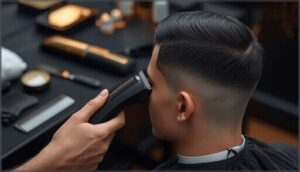
A sharp fade doesn’t maintain itself—you’ve got to put in the work every single day.
From the right products to a solid routine, the key tips for keeping your fade fresh make all the difference.
The good news? Your routine doesn’t need to be complicated or time-consuming.
Here’s what you need to lock in daily to keep that fade looking crisp.
Washing and Conditioning Your Hair Properly
A solid haircare routine starts in the shower—and water temperature matters more than you think. Use lukewarm water to open the cuticle, then massage in a quarter-sized dollop of shampoo for 20 to 30 seconds.
Rinse thoroughly, follow with conditioner on the mid-lengths, and finish with a cool rinse. That scalp massage boosts circulation while conditioner benefits include smoother strands and less frizz.
Brushing and Combing Techniques
Your brush stroke matters just as much as your barber’s clippers—wrong technique means uneven fading and scalp irritation. Here’s how to master this daily grooming routine:
- Start with a wide tooth comb to detangle, then switch to fine tooth for crisp hairline definition
- Hold your brush at 45 degrees, lifting roots without digging into skin
- Brush crown to tips in short controlled strokes, not long heavy passes
- Clean your hair tools weekly to prevent oil buildup
- Replace brushes every 3 to 6 months when bristles shed
Different comb types suit different hair texture—boar bristle for fine strands, vented for quick drying. And that scalp massage during brushing? It boosts circulation while distributing natural oils for healthier growth. These haircare tips keep your fade sharp between barbering appointments, giving you control over your look every single day.
Choosing The Right Styling Products
Your styling products arsenal decides whether your fade looks fresh or flat—and hair texture drives every choice. Match formula types to your needs:
| Hair Texture | Best Product Type |
|---|---|
| Fine strands | Lightweight cream or lotion |
| Thick coarse hair | Heavy pomade or wax |
| Wavy medium | Medium hold paste |
| Curly textured | Curl-defining cream |
| Straight sleek | Matte clay or gel |
Check product ingredients for alcohol-free options, and pick hold levels based on your daily routine—not Instagram hype.
Understanding your hair type and needs is essential to finding the right products.
At-Home Touch-Ups Between Barber Visits
You don’t need to run to the barber shop every time your fade starts looking a little fuzzy—there’s plenty you can handle on your own. With the right setup and a steady hand, home maintenance keeps you sharp between appointments and saves you time.
Let’s break down what you need, how to clean up those lines safely, and when it’s smarter to let a pro take over.
Essential Tools for Home Maintenance
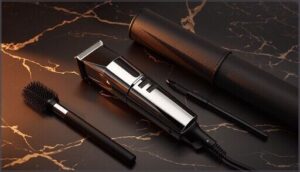
You can’t expect barbershop-level precision without the right hair tools in your arsenal. Your must-have hair tools for home maintenance include:
- Quality clippers with adjustable guards for blending zones
- A detailer or trimmer for crisp edge work and tight lines
- A handheld mirror to check your back and sides clearly
- Safety gear like a neck brush to sweep away loose hair
- Toolbox organization keeps everything accessible when you need it
Cleaning Up Edges and Necklines Safely

Lining up your own hairline demands the same respect you’d give a sharp blade—one wrong move and you’ve crossed the point of no return. Start with a higher guard like a 1.5 or 2 when cleaning edges; it keeps you from cutting too far into the fade haircut.
Skin protection comes from stretching the neckline taut with your free hand, letting your detailer glide smoothly without tugging or nicking. Use short strokes instead of long aggressive passes—your neck skin will thank you.
Follow your natural hairline maintenance curve rather than forcing boxy corners that grow out awkward. Match guard lengths on both sides to keep temple edges symmetrical, and always work with the grain on your first neckline shaping pass to dodge razor bumps. Respect cowlicks at the nape by trimming with their direction, not against.
Edge trimming isn’t about speed; it’s about control and reading what your hair’s already telling you.
When to Skip DIY and See a Professional
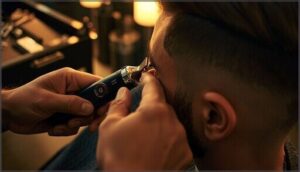
Know when to put the clippers down. Head to your barber when you spot:
- Razor Burns or irritation lasting past 24 hours
- Uneven fade lines after just two attempts
- Skin Conditions near your scalp flaring with DIY
Salon Visits for Fade Corrections beat guessing. Professional Trims keep Maintaining a Fade Haircut sharp—Barbering and Grooming pros handle what home touch-ups can’t.
Scalp and Skin Care for a Fresh Look

Most guys focus all their energy on the cut and skip what happens to the skin underneath.
But here’s the thing—dry skin can make even the sharpest fade look rough.
Here’s what actually keeps your scalp and hairline looking clean and fresh.
Moisturizing Your Scalp and Hairline
Your scalp is the foundation everything else is built on. Moisturizing your hairline isn’t optional—it’s part of the game. A dime-sized amount of a gentle, non-comedogenic moisturizer, worked in with circular strokes for about 30 seconds, keeps your scalp health and moisture balance locked in tight.
| Product Type | Application |
|---|---|
| Hyaluronic acid serum | 1% concentration, applied after washing |
| Light oil (argan/jojoba) | 3–4 drops per scalp area |
| Panthenol hydration spray | Spritzed along the hairline daily.” |
And here’s the move—layer light products first, heavier ones after. That way your hairline care stays clean, your grooming routine stays sharp, and your scalp hydration does the heavy lifting between visits.
Preventing Dryness and Flakiness
Keeping that moisturizer routine locked in is only half the battle. Dryness and flakiness can quietly ruin even the freshest fade haircut—and dry, flaky skin around your hairline tells everyone your scalp health needs attention.
So here’s the fix: use a ceramide-rich moisturizer right after washing, while your skin’s still damp. That seals your skin barrier, keeps hydration tips working overtime, and keeps your grooming routine tight.
Selecting Non-Irritating Products
Now that you’ve got dryness under control, picking the right products matters just as much. For sensitive skin, scan those product labels carefully—look for fragrance free options, and check preservative types like phenoxyethanol, which sits easy on most scalps.
Your grooming routine and hair maintenance stay tight when your ingredient lists skip alcohols, parabens, and harsh dyes. Always patch test first.
Lifestyle Habits That Support Fade Longevity

Your fade doesn’t live or die just in the barber’s chair—what you do outside of it matters just as much.
The stuff you eat, how you treat your hair with heat, and how much water you’re actually drinking all play a role.
Here’s what to focus on to keep that fade looking sharp between cuts.
Nutrition for Healthy Hair Growth
Nutrition is the silent foundation of every sharp fade. Your protein intake fuels keratin—the stuff your hair’s actually made of.
Nutrition is the silent foundation of every sharp fade—protein fuels the keratin your hair is actually built from
Iron supplements help keep blood flow strong to your follicles, and omega balance from fatty fish promotes scalp health. Watch out for zinc deficiency, as it stalls hair growth and texture.
Add vitamin boosters through a varied diet, and your hair maintenance routine practically takes care of itself.
Protecting Hair From Heat Damage
While food fuels your hair growth from the inside, heat is one of the fastest ways to undo that work on the outside. Heat Protectants act as a shield—silicone-based formulas cool the strand and slow Thermal Styling damage before it starts.
Your hair maintenance routine should include Damage Prevention basics: use the lowest effective setting, section your hair for even coverage, and skip repeated passes. Smart Styling Techniques paired with the right hair products keep your hairstyle looking sharp without the Hair Repair headaches.
Hydration and Overall Hair Health
Often overlooked, Water Intake is the foundation of Hair Moisture and Elasticity Care. Your hair is roughly 25 percent water—so when you’re dehydrated, it shows. Dry strands lose strength, and your fade starts looking rough.
Think of Scalp Balance as the base layer everything else builds on. Pair smart Hydration Tips with the right hair products, and your Hair Growth and Care routine takes care of the rest naturally.
Frequently Asked Questions (FAQs)
How to keep fade fresh?
A sharp fade maintenance can unravel fast—but keeping it fresh is surprisingly simple.
Trim every two to four weeks, moisturize your scalp daily, and master your edge maintenance. These fade maintenance tips are your real fresh cut secrets.
What is the 3 2 1 rule for haircuts?
The 3 2 1 rule is a haircut maintenance schedule—trim every three weeks, touch up at two, and tidy edges at one.
It keeps your fade haircut looking crisp by aligning barber visits with natural hair growth patterns.
How long does a fresh fade last?
A fresh fade haircut can look immaculate for barely a week before hair regrowth starts creeping in.
Realistically, your fade duration peaks around days seven to fourteen—fade longevity tips and style maintenance become essential after that.
Do fades look better after a few days?
Actually, yes—your fade haircut generally looks better after a couple of days.
Skin healing clears razor irritation, hair texture settles into place, and edge definition sharpens naturally.
That’s when true fade appearance and freshness factors hit their peak.
Can a fade work with any hair type?
Think any hair type can’t pull off a fade? Wrong. Whether you’ve got straight, curly, or thick texture, the right taper techniques and fade styles adapt to your hair growth patterns — men’s grooming just got easier.
What hairstyles transition well from fades?
Several haircut styles shift well from fades. A skin fade pairs beautifully with a brushed-up quiff for Cut Contrast and Facial Framing, while textured crops offer great Style Versatility.
Your Hair Texture guides the best Fade Shift match.
How do seasonal changes affect fade maintenance?
Seasons mess with your fade more than you’d expect. Humidity blurs your lines, UV fades your pigment, and dry air flakes your scalp.
Master weather adaptation through seasonal trims, humidity control, UV protection, and scalp balance—and your taper fade stays sharp year-round.
Can coloring or dyeing impact a fades appearance?
Yes—dyeing can absolutely mess with your fade haircut. Color fading and pigment loss alter hair texture unevenly, and dye damage from bleaching makes regrowth look inconsistent. Your barber can help with color correction between visits.
Is a fade suitable for a professional workplace?
Absolutely—a fade haircut fits right into most professional settings. Workplace acceptance depends on the style, though.
A low or tapered fade reads as polished in corporate grooming standards, making it a smart choice for office etiquette and business attire.
Conclusion
A sharp fade is like a fine blade kept in its sheath — it stays razor-sharp only when you treat it right. Maintaining a fresh fade look isn’t about chasing flawlessness every single day; it’s about building a consistent routine that does the heavy lifting for you.
Trim on schedule, keep your scalp moisturized and healthy, and clean up those edges between barber visits. Put in that work, and your cut will always speak for itself.
- https://www.instagram.com/Dc_the_barber/?utm_source=wordpress&utm_medium=blog&utm_campaign=fade_haircut_last_longer
- https://styleseat.com/?utm_source=wordpress&utm_medium=blog&utm_campaign=fade_haircut_last_longer
- https://www.elegancegel.com/brands/Elegance-USA.html?utm_source=wordpress&utm_medium=blog&utm_campaign=fade_haircut_last_longer
- https://www.primermagazine.com/2024/learn/shaving-trimming-facial-hair-tips
- https://www.healthline.com/health/beauty-skin-care/shaving-against-the-grain