
This site is supported by our readers. We may earn a commission, at no cost to you, if you purchase through links.
Your scalp maintains a delicate acidic environment with a pH between 4.5 and 5.5, a range that determines whether your hair thrives or struggles with issues like breakage, excess oil, and persistent flaking. This protective acid mantle regulates sebum production, shields against harmful bacteria and fungi, and keeps the cuticle layer sealed for stronger, healthier strands.
When harsh shampoos, chemical treatments, or environmental stressors disrupt this balance, your scalp’s defenses weaken, triggering a cascade of problems that affect both comfort and appearance.
Recognizing the signs of pH imbalance and selecting products formulated within your scalp’s ideal range can restore this critical equilibrium and transform your hair health from the follicle up.
Table Of Contents
Key Takeaways
- Your scalp maintains optimal health within a narrow pH range of 4.5 to 5.5, where the protective acid mantle regulates sebum production, prevents harmful microbial overgrowth, and keeps hair cuticles sealed to minimize breakage and maintain structural integrity.
- pH imbalances stem from alkaline shampoos, chemical treatments that push scalp pH to 8-11, overwashing that strips protective oils, and environmental stressors, all of which compromise your scalp’s barrier function and trigger symptoms including excessive dryness, oiliness, persistent dandruff, inflammation, and accelerated hair thinning.
- You can test your scalp pH at home using pH strips designed for the 4-7 range, and you should seek professional evaluation if you experience severe dandruff unresponsive to treatment, hair loss exceeding 100 strands daily, signs of infection, or chronic inflammation despite pH-balancing efforts.
- Restoring ideal scalp pH requires selecting products explicitly formulated between pH 4.5 and 5.5, incorporating natural remedies like diluted apple cider vinegar rinses and aloe vera gel, establishing a consistent routine with gentle cleansing two to three times weekly, and using leave-in treatments that support your scalp’s acid mantle continuously.
What is Scalp PH and Why It Matters
Your scalp’s pH level determines whether your hair thrives or struggles, yet most people don’t realize how this single measurement affects everything from oil production to the strength of each strand.
Understanding how to maintain this balance often involves choosing the right products, and hair grease can support both scalp health and hair growth when pH levels are properly managed.
The pH scale measures hydrogen-ion concentration on a range from 0 to 14, and your scalp functions optimally within a narrow acidic window.
Choosing a low-pH shampoo designed for scalp health helps maintain that delicate balance and prevent irritation.
Understanding the ideal pH range, how it influences hair and scalp function, and its role in maintaining a healthy scalp microbiome will give you the foundation needed to address common hair concerns effectively.
One effective way to restore this balance is through natural remedies like apple cider vinegar rinses for hair loss prevention, which help rebalance scalp pH and support healthier hair growth.
The Ideal PH Range for Scalp Health
Your scalp’s ideal pH level sits between 4.5 and 5.5, creating an acidic environment that’s essential for scalp health benefits. This slightly acidic pH balance importance extends beyond comfort—it protects your skin barrier, aids natural oil production, and maintains ideal scalp pH balance.
Understanding the scalp pH and dandruff connection helps explain why disrupting this balance often triggers flaking and irritation.
Studies confirm that this range promotes hair growth while preventing bacterial overgrowth, making pH balance tips foundational to your hair care routine. Understanding the pH balance concept is vital for maintaining a healthy scalp and promoting hair growth.
How PH Affects Hair and Scalp Function
When pH shifts beyond the 4.5–5.5 range, your hair and scalp respond immediately through measurable changes in structure and function. Understanding the importance of pH balance helps you recognize why this matters for scalp health and hair care.
Key impacts of pH on your hair:
- Cuticle health: pH levels between 5 and 7 keep cuticle scales smooth and closed, minimizing breakage during styling, while alkaline conditions above pH 8 lift cuticles and increase surface roughness.
- Keratin structure: Extreme acidic or alkaline exposures (pH 3 or above 8) trigger deamidation of keratin proteins within your hair shaft, weakening fiber integrity.
- Hair porosity: Elevated pH increases swelling and allows chemicals to penetrate deeper into your cortex, altering porosity and moisture retention.
- Scalp microbiome: Maintaining acidic conditions fosters beneficial bacteria while limiting opportunistic organisms that thrive when pH rises toward neutral or alkaline ranges.
These pH-dependent mechanisms directly affect everything from daily manageability to long-term scalp pH balance and hair growth outcomes. Research on hair proteome changes highlights the importance of maintaining ideal pH levels for healthy hair.
Role of PH in Scalp Microbiome
Your scalp’s pH doesn’t just affect hair structure—it actively shapes which microorganisms colonize your skin, determining whether beneficial bacteria thrive or harmful pathogens gain a foothold. The acidic range between 4.5 and 5.5 creates an inhospitable environment for fungi like Malassezia, which trigger dandruff when pH regulation fails, while supporting commensal bacteria that protect your scalp ecosystem through competitive exclusion and antimicrobial peptide production.
Your scalp’s acidic pH between 4.5 and 5.5 actively determines which microorganisms colonize your skin—favoring beneficial bacteria while blocking dandruff-causing fungi
| pH Level | Microbiome Impact |
|---|---|
| 4.5–5.5 (Ideal) | Beneficial bacteria flourish, fungal control maintained, scalp microbiome balanced |
| 6.0–7.0 (Neutral) | Bacterial growth shifts toward opportunistic species, increased Malassezia colonization |
| Above 7.5 (Alkaline) | Pathogenic organisms proliferate, disrupted pH balance and hair growth, compromised scalp health and hair care |
This delicate pH balance and hair growth relationship explains why alkaline shampoos often precede flaking—you’re inadvertently creating conditions that favor fungal overgrowth.
Causes of Scalp PH Imbalance
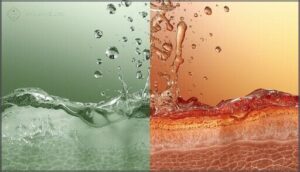
Your scalp’s pH balance doesn’t shift on its own; it reacts to external forces and internal changes that you encounter every day.
From the products you apply to your hair to the water you wash with, multiple factors can push your scalp away from its ideal acidic range of 4.5 to 5.5.
Understanding these common causes helps you identify what might be disrupting your scalp’s natural protective barrier and take corrective action.
The good news is that you can test your scalp’s pH at home using affordable pH strips to see if your barrier is compromised.
Effects of Hair Care Products
Think of your shampoo bottle as either a friend or foe to your scalp’s delicate ecosystem. Products containing sodium lauryl sulfate strip away protective surface lipids, increasing transepidermal water loss and triggering scalp irritation.
Alkaline shampoos, those with pH above 5.5, generate negative electrical charge on hair fibers, promoting friction, cuticle damage, and breakage.
You’ll maintain ideal scalp pH by choosing pH-balanced products formulated near your skin’s natural acidic range.
Environmental and Lifestyle Factors
Beyond the bottles in your shower, factors like Air Pollution and UV Radiation directly disrupt Scalp pH Balance by introducing oxidative stress and particulate matter. Climate Change intensifies humidity-driven protein degradation, while poor Dietary Habits and inadequate Stress Management alter your scalp microbiome through hormonal shifts and immune compromise.
Each element—from urban contaminants to cortisol spikes—degrades your scalp care routine’s effectiveness, triggering scalp irritation and microbial imbalance.
Chemical Treatments and Overwashing
Chemical treatments—coloring, bleaching, perming—push your scalp pH to 8–11, opening cuticles and triggering Chemical Damage that persists without pH Restoration.
When you overwash with alkaline shampoos afterward, you strip protective oils and prolong Scalp Irritation, increasing Hair Porosity and flaking.
These Alkaline Effects compound barrier breakdown, demanding pH balanced products and a disciplined scalp care routine to restore your scalp pH.
Signs Your Scalp PH is Unbalanced
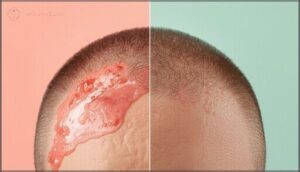
Your scalp will send clear signals when its pH balance shifts out of the healthy range, though these signs often mimic other common hair and scalp concerns. Recognizing these symptoms early allows you to take corrective action before the imbalance leads to more serious complications, such as chronic inflammation or persistent hair loss.
The most common indicators fall into three categories that affect both your scalp’s appearance and your hair’s structural integrity.
Dryness, Oiliness, and Dandruff
When your scalp’s pH shifts out of its ideal 4.5 to 5.5 range, the most common warning signs manifest as persistent dryness, excessive oil production, or visible dandruff flakes. A disrupted pH level compromises scalp moisture retention, leading to dehydration and flaky skin, or triggers compensatory sebum overproduction that creates greasy, flat hair.
These imbalances disrupt your scalp care routine and indicate that your scalp health requires immediate attention through targeted pH balance restoration.
Itchiness, Irritation, and Redness
Persistent itching, burning sensations, and visible redness signal that your scalp’s barrier has been compromised by pH imbalance. When scalp pH rises above the ideal 4.5 to 5.5 range, you’ll experience increased transepidermal water loss and activation of inflammatory pathways that trigger itch relief needs and scalp inflammation.
These irritation triggers often coincide with dandruff, as elevated pH allows Malassezia yeast overgrowth, which metabolizes scalp oils into irritating compounds that worsen redness causes and demand immediate skin barrier repair.
Hair Breakage and Thinning
Hair fiber damage becomes visible when your scalp pH drifts from its protective 4.5 to 5.5 range, causing cuticle layers to lift and fracture along the shaft.
You’ll notice increased hair breakage during detangling as elevated pH reduces hair elasticity and moisture retention, while scalp inflammation from barrier disruption weakens follicle anchorage and accelerates thinning.
Breakage prevention requires immediate cuticle repair through pH balance restoration.
How to Test Scalp PH at Home
Testing your scalp’s pH at home doesn’t require specialized equipment or a laboratory setting, as simple tools available at most drugstores can provide reliable measurements. The process involves collecting samples from your scalp, applying the testing materials, and observing the color changes that indicate your pH level.
Understanding how to perform this test correctly, interpret the results accurately, and recognize when professional evaluation becomes necessary will help you maintain ideal scalp health.
Using Litmus Paper or PH Strips
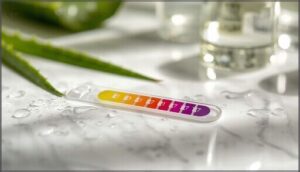
Testing your scalp’s pH level at home is straightforward when you use litmus paper or pH strips designed for skin applications. You’ll need strips that measure the 4 to 7 range for better resolution near your scalp’s natural pH balance of 4.5 to 5.5.
Before testing, wash and dry your scalp thoroughly to remove residual pH-balanced products, sebum, and sweat that can affect pH strip accuracy and compromise reliable strip application techniques.
Interpreting Test Results
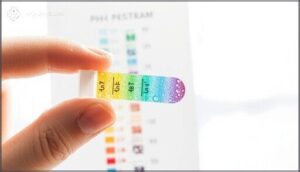
Once you’ve applied the strip and observed the color change, you’ll need to match it against the reference scale to determine your scalp pH.
Readings between 4.5 and 5.5 indicate a healthy acid mantle protecting your scalp’s barrier function. Values above 5.5 signal alkaline effects that can damage cuticles and increase dryness, while readings below 4.5 suggest excess acidity causing irritation and altered hair texture.
When to Seek Professional Help

While home testing provides valuable baseline data, certain symptoms warrant consultation with a dermatologist or trichologist who can perform thorough scalp analysis and rule out underlying medical conditions.
Seek professional consult if you experience persistent hair loss exceeding 100 strands daily, severe dandruff unresponsive to over-the-counter treatments, signs of scalp infection including pustules or oozing lesions, or chronic inflammation that disrupts your daily comfort and scalp health despite pH-balancing efforts.
Steps to Maintain Healthy Scalp PH
Once you’ve identified a pH imbalance, restoring your scalp’s natural acidity requires a strategic approach that tackles both product selection and daily care habits.
The following steps provide a thorough framework for maintaining ideal scalp pH levels between 4.5 and 5.5, which aids your scalp’s protective barrier and promotes healthy hair growth.
These evidence-based recommendations focus on three key areas that work together to create lasting scalp health.
Choosing PH-Balanced Hair Products
You should examine product labels carefully, looking for explicit claims like “pH balanced” or formulated to a pH range between 4.5 and 5.5, which aligns with your scalp’s natural acidity.
pH-balanced products, particularly sulfate-free and color-safe formulas, help preserve the acid mantle while supporting scalp pH stability.
Avoid shampoos containing strong alkaline agents like sodium hydroxide, which disrupt hair care pH balance markedly.
Incorporating Natural Remedies
Beyond pH-balanced products, you can use natural oils and herbal remedies to support scalp pH balance. Consider these evidence-based options:
- Dilute 1–2 tablespoons apple cider vinegar in one cup water for a weekly rinse
- Apply aloe vera gel directly to soothe and hydrate your scalp
- Mix 1–2 drops tea tree oil per teaspoon carrier oil for antifungal benefits
- Use green tea extracts to reduce inflammation
- Try alcohol-free witch hazel to normalize oiliness
Establishing a Scalp Care Routine
Consistent scalp care, performed at regular intervals throughout the week, helps you maintain ideal pH balance and prevent issues before they develop into chronic conditions.
Incorporate gentle cleansing with pH-balanced products two to three times weekly, followed by scalp massage to stimulate circulation and distribute natural oils.
Add exfoliation techniques monthly to remove buildup, and apply targeted treatments addressing your specific scalp health needs between washes.
Best Products and Ingredients for PH Balance
Selecting the right products and ingredients plays a critical role in maintaining your scalp’s ideal pH range of 4.5 to 5.5, which maintains the skin barrier and prevents microbial overgrowth.
pH-balanced formulations work by restoring acidity to the scalp after alkaline disruptions from cleansing or chemical treatments, while specific active ingredients provide additional therapeutic benefits.
The following categories outline essential product types and key components that effectively support scalp pH homeostasis.
Shampoos and Conditioners for PH Balance
Selecting shampoos and conditioners with pH balanced formulas helps maintain your scalp’s natural acidity between 4.5 and 5.5, which maintains barrier function and reduces irritation. Look for products listing explicit pH ranges on packaging, gentle surfactants that minimize disruption to scalp pH, and buffering agents that stabilize acidity during use.
These hair care products close the hair cuticle after cleansing, providing scalp soothing benefits while preventing frizz and damage.
Leave-in Treatments and Masks
Leave-in serums and hair masks formulated between pH 4.5 and 5.5 deliver continuous support to your scalp’s acid mantle, helping prevent microbial overgrowth and barrier disruption. Acidic formulations smooth the hair cuticle while pH balanced masks maintain structural integrity.
Consider these approaches for scalp pH balance:
- Apply scalp exfoliants weekly to remove buildup without alkaline stripping
- Choose leave-in treatments specifying pH near 5.0 on labels
- Use conditioning masks at pH 4.5 for cuticle closure
- Select anti-dandruff leave-on products processed within pH 4-8 ranges
Key Ingredients: Apple Cider Vinegar, Aloe Vera, and More
Diluted apple cider vinegar rinses at pH 4–4.5 lower your scalp pH after alkaline shampoos, smoothing cuticles and reducing frizz.
Aloe vera strengthens your scalp barrier through moisturizing polysaccharides, while niacinamide benefits include enhanced ceramide production and sebum regulation for pH balance.
Antifungal agents like piroctone olamine suppress Malassezia overgrowth, and botanical extracts—juniper, sage, chamomile—tone follicles, supporting microbiome-friendly scalp health with pH-balanced products.
Frequently Asked Questions (FAQs)
Can diet alone fix scalp pH imbalances?
Diet alone won’t fix scalp pH imbalances, though nutrient deficiency and dietary influences affect scalp health indirectly.
You’ll need pH-balanced products alongside proper scalp nutrition to restore ideal scalp pH balance and support lasting hair health.
How often should I test my scalp pH?
You should test your scalp pH every one to four weeks when adjusting treatments or monitoring new products.
Stable routines only require testing every one to three months to confirm pH balance maintenance.
Do scalp massages affect pH levels?
Scalp massages don’t directly alter pH levels, which depend on chemical composition rather than mechanical stimulation.
However, they improve circulation and support scalp health when paired with pH-balanced products for ideal hair growth.
Can hard water permanently damage scalp pH?
Hard water won’t permanently damage your scalp pH balance, though calcium and magnesium temporarily raise pH during washing.
Your scalp naturally restores equilibrium through skin turnover, making pH reversal methods like chelating shampoos effective solutions.
Are there pH differences between hair types?
Your hair texture influences sebum distribution along the shaft, creating subtle scalp pH variations across curl patterns, porosity levels, and ethnic hair types.
Though these variations exist, the healthy range remains consistently acidic, between 5 and
Conclusion
Your scalp’s pH acts as a gatekeeper, determining what enters and what’s kept at bay. When this barrier functions properly, maintaining healthy scalp pH level becomes your foundation for lasting hair vitality.
The products you choose, the frequency you wash, and the treatments you apply all shift this critical balance in measurable ways.
By implementing the targeted strategies outlined above, you’ll restore your scalp’s protective acid mantle and create conditions where healthy hair growth becomes inevitable rather than aspirational.