This site is supported by our readers. We may earn a commission, at no cost to you, if you purchase through links.
Your skin loses about 1% of its collagen each year after age 30, which means that by 50, you’ve already shed roughly 20% of the structural protein keeping your face firm. That’s not a cosmetic issue—it’s a biological shift you can measure and, more importantly, slow down.
The catch is that most people reach for expensive creams when the most effective natural remedies for aging skin work from the inside out. Sun protection, antioxidant-rich foods, collagen-boosting supplements, and even the quality of your sleep all play measurable roles in how quickly your skin shows its age.
The good news is that combining these approaches doesn’t require a dermatology degree or a trust fund, just a clear understanding of what actually moves the needle.
Table Of Contents
- Key Takeaways
- Natural Remedies for Aging Skin
- Causes of Wrinkle Formation and Collagen
- Natural Treatments for Skin Rejuvenation
- Role of Diet in Skin Health
- Top 5 Natural Remedies for Aging Skin
- Hydration and Gut Health for Skin Health
- Supplements for Anti-Aging
- Herbs for Skin Tightening and Rejuvenation
- Essential Oils for Wrinkles and Aging Skin
- Combining Natural Remedies for Optimal Results
- Frequently Asked Questions (FAQs)
- Can you really remove wrinkles?
- How can I reduce my skin aging naturally?
- What are the best home treatments for aging skin?
- What is the Japanese home remedy for wrinkles?
- What is the best natural ingredient for aging skin?
- How does sleep quality impact skin aging?
- What role does genetics play in skin aging?
- Can facial exercises reduce wrinkles naturally?
- How does urban pollution affect skin health?
- Are there risks with natural skin remedies?
- Conclusion
Key Takeaways
- UV exposure drives about 80% of visible facial aging, so daily broad-spectrum SPF 30+ sunscreen—reapplied every two hours outdoors—matters more than expensive creams for slowing collagen breakdown and wrinkle formation.
- Your body loses roughly 1% of its collagen yearly after age 30, but combining antioxidant-rich foods (berries, leafy greens), collagen peptides (3-5g daily), and proper hydration (2-2.5 liters water) can measurably improve skin elasticity and firmness within 8-12 weeks.
- Natural remedies like aloe vera and turmeric show real clinical results—aloe boosts collagen synthesis by up to 100% and reduces wrinkles by 11% in eight weeks, while curcumin enhances skin firmness by over 11% in just four weeks when used topically and orally.
- Sleep quality, smoking, and sugar intake directly accelerate skin aging through oxidative stress and glycation—poor sleep doubles visible aging signs, smoking advances wrinkles by decades, and excess sugar creates collagen-stiffening compounds that cause sagging.
Natural Remedies for Aging Skin
You might think expensive creams and procedures are the only way to keep your skin looking younger, but nature offers some powerful alternatives. The truth is, protecting your skin from damage and supporting it from the inside out can make a real difference in how it ages.
Let’s look at three key approaches that can help you maintain healthier, more resilient skin naturally.
Delaying Aging With Sunscreen and Protection
Because UV exposure drives roughly 80% of visible facial aging, your daily sunscreen choice matters more than you might think. A broad-spectrum sunscreen with SPF 30 or higher blocks both UVB and UVA radiation—the deep-penetrating rays that break down collagen and create wrinkles. Pair it with protective clothing, wide-brimmed hats, and sun avoidance between 10 a.m. and 3 p.m. for real results. A study showed that daily sunscreen use slowed skin aging by 24 percent.
Daily habits that protect your skin:
- Apply sunscreen every morning, even on cloudy days or indoors near windows
- Reapply every two hours when you’re outside, especially after sweating
- Choose improved formulations with antioxidants like vitamins C and E for enhanced protection
Effects of Diet and Lifestyle on Skin Health
Beyond sunscreen, your daily choices shape how your skin ages. Poor sleep quality more than doubles visible aging signs—fine lines, uneven tone, slower healing. Smoking starves skin of oxygen and nutrients, accelerating wrinkles through collagen breakdown. Alcohol depletes antioxidants like carotenoids that defend against damage.
Meanwhile, dietary antioxidants from berries and leafy greens, plus regular exercise, boost circulation and protect against oxidative stress. Regular exercise can also help stimulate collagen production levels. Nutrition and lifestyle changes aren’t optional—they’re your skin’s foundation.
Internal Factors Affecting Skin Rejuvenation
While diet shapes your skin from outside in, internal processes run a parallel track. Your genetics set the stage—up to 60% of skin aging ties to inherited factors like collagen breakdown speed. Hormonal changes hit hard too; skin collagen drops 30% in the first five post-menopausal years. Add oxidative stress from cellular damage, telomere shortening that limits cell renewal, and chronic inflammation markers, and you’ve got a complex aging process influenced by:
- Sleep quality and stress levels
- Nutrition and antioxidant balance
- Genetic predisposition to collagen loss
Causes of Wrinkle Formation and Collagen
Wrinkles don’t just appear out of nowhere—they’re the result of specific processes happening beneath your skin’s surface. Understanding what causes these changes helps you make smarter choices about prevention and treatment.
Let’s look at the main factors that break down collagen and lead to visible aging.
Environmental Factors and Dehydration
Your skin faces a relentless battle against environmental forces. UV exposure accounts for up to 80% of visible aging, triggering free radicals that destroy collagen and boost TEWL increase.
Indoor humidity below 45% strips moisture from your skin’s barrier, while pollution effects compound the damage through cellular stress.
Together, sun damage and low environmental moisture accelerate dehydration, making antioxidants and proper skin hydration essential defenses.
Collagen Breakdown and Oxidative Stress
Once sun exposure and pollution strike your skin, reactive oxygen species (ROS) launch an assault on your collagen network. UV radiation damage generates free radicals that fragment collagen fibers and trigger a feedback loop—broken collagen actually creates more oxidative stress. Glycation effects worsen this by cross-linking proteins, while your antioxidant defenses struggle to neutralize the damage. The result?
- Doubled protein damage markers in aged skin
- Fragmented type I collagen throughout the dermis
- Elevated enzyme activity breaking down collagen
- Reduced fibroblast function and collagen production
- Progressive loss of skin elasticity and firmness
Importance of Collagen for Skin Elasticity
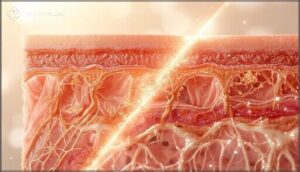
Your skin’s structural framework depends on collagen—the protein making up 70-80% of your dermis. When collagen synthesis slows (about 1-1.5% annually after early adulthood), elasticity decline follows.
Environmental damage from UV rays accelerates breakdown, while dropping estrogen levels during menopause can slash collagen production by 30%.
The good news? Supplement benefits are real: collagen peptides with vitamin C support skin firming and help restore that natural bounce.
Natural Treatments for Skin Rejuvenation
Your skin has its own repair system, and certain natural ingredients can give it a real boost. Some of these treatments work by reducing inflammation, while others help your body rebuild collagen and strengthen the skin barrier.
Let’s look at a few options that have actual research behind them.
Coconut Oil and Turmeric Benefits

For antiaging skin care, coconut oil and turmeric work like a powerful combination for your complexion. Research shows coconut hydration can boost collagen density by over 30% in just two weeks, while turmeric’s curcumin mechanisms fight UV damage and inflammation.
You can use these natural remedies in oil formulations or homemade masks, though safety concerns exist—coconut may clog pores, so patch-test first for best skin health.
Lemon Balm Leaf Tea and Aloe Vera Effects
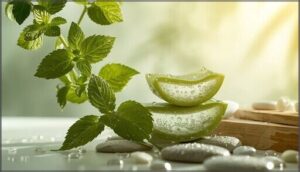
You’ve probably overlooked two gentle powerhouses that actually deliver measurable results. Lemon balm benefits include rosmarinic acid, which clinical trials show boosts collagen production by roughly 44% and visibly softens crow’s-feet wrinkles over eight weeks.
Aloe vera hydration goes deeper—its sterols double collagen synthesis in your skin cells while strengthening your skin barrier and reducing wrinkle depth.
Both natural remedies offer antioxidants and anti-inflammatory effects with minimal adverse effects. Just remember: topical aloe vera works beautifully for skin care, but don’t ingest aloe latex products long-term.
Comfrey and Horsetail for Skin Health
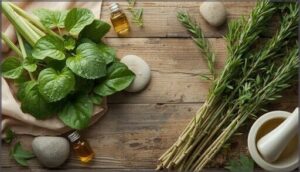
You’re about to discover two herbs backed by actual lab studies, not just folklore. Comfrey and horsetail offer real skin health benefits through different pathways:
- Comfrey benefits: Allantoin in comfrey root stimulates skin cell regeneration, and clinical evidence shows 20% comfrey cream speeds wound healing considerably in controlled trials.
- Horsetail silica: This plant concentrates silicon in its tissues, supporting collagen production and skin firmness from within.
- Topical safety: Modern comfrey creams manufactured with minimal alkaloid exposure pose very low systemic risk when applied correctly to intact skin.
- Natural remedies that work: Both herbs belong in your antiaging toolkit, delivering measurable improvement without harsh chemicals.
Role of Diet in Skin Health

What you eat shows up on your skin faster than you might think. Your diet directly affects collagen production, cellular repair, and how quickly visible aging sets in.
Let’s look at three dietary factors that can either protect your skin or speed up the aging process.
Sugar Consumption and Glycation
Every bite of sugar you take starts a chain reaction in your skin called glycation. When blood glucose spikes, it binds to collagen, creating late glycation end products—dietary AGEs—that cause collagen crosslinking. This stiffens your dermis, leading to wrinkles and the dreaded “sugar sag.”
Glycemic control matters: tight blood sugar management reduces new glycated collagen by 25%, protecting skin elasticity and slowing the aging process naturally.
Benefits of Antioxidant-Rich Foods
While sugar attacks your collagen, antioxidant-rich foods fight back. Dietary patterns emphasizing berries, leafy greens, and citrus fruits deliver powerful antioxidant protection against free radicals that accelerate aging.
Research shows these foods boost skin carotenoids, improve collagen support, and provide UV protection from within. Vitamin C from a healthy diet strengthens your skin’s defenses, measurably improving elasticity and reducing wrinkles over time—skin health truly starts on your plate.
Effects of Smoking and Secondhand Smoke
Cigarette smoke delivers a devastating blow to your complexion, aging your face decades faster than normal. Adults who smoke heavily show wrinkle severity in their 40s matching non-smokers in their 60s. Smoking skin damage stems from oxidative stress and free radicals that trigger collagen and elastin loss while choking off the blood flow your skin needs. The aging process accelerates as environmental damage compounds daily. Even secondhand smoke effects harm your complexion, so lifestyle changes matter for everyone around smokers—skin damage doesn’t require holding the cigarette yourself.
Cigarette smoke ages your face decades faster, with heavy smokers in their 40s showing wrinkles matching non-smokers in their 60s
Five ways smoking ravages your skin:
- Cuts oxygen delivery by 30–40%, starving cells
- Spikes enzymes that shred collagen and elastin
- Doubles fine wrinkles compared to non-smokers
- Drains vitamin C needed for skin repair
- Weakens your moisture barrier, increasing dryness
Top 5 Natural Remedies for Aging Skin
After covering the foods that nourish your skin from within, let’s look at specific supplements and products that can support your anti-aging efforts.
The following five natural remedies combine nutrients your body needs with ingredients that target common signs of aging.
These options can work alongside a healthy diet to help you maintain healthier, more resilient skin.
1. Natural Anti Aging Multivitamin Supplement
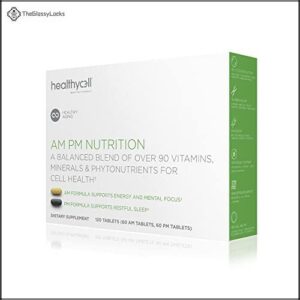
Most adults hit a point where their skin starts showing the years, and a good multivitamin can actually help. Healthycell’s AM/PM formula delivers over 90 nutrients designed to fight aging from the inside out.
Clinical trials show real results: 89% of users report better sleep, 75% feel more energized, and 64% notice sharper mental focus. The supplement includes vitamin C for collagen production, vitamin E for antioxidant protection, and zinc to support skin repair.
These bioactive forms absorb efficiently, targeting cellular health and gene expression. It’s vegetarian, gluten-free, and non-GMO—though pricier than basic multivitamins, the thorough antiaging approach may justify the investment for long-term use.
Best For: Adults looking for a comprehensive anti-aging supplement that addresses energy, sleep, and skin health with clinically backed ingredients.
- Dual AM/PM formulas optimize nutrient timing—morning tablets boost energy and focus, while evening tablets support restful sleep and cellular repair
- Contains 90 bioavailable vitamins, minerals, and antioxidants including vitamin C for collagen synthesis and vitamin E for protecting skin from oxidative damage
- Clinical studies show measurable improvements in wrinkle reduction, skin elasticity, and radiance after 8-12 weeks of consistent use
- Significantly more expensive than standard multivitamins, which may be a barrier for long-term daily use
- Some users report side effects like headaches or digestive discomfort, and results can vary considerably between individuals
- Requires 8-12 weeks of continuous use before visible anti-aging benefits appear, and long-term efficacy data beyond 6-12 months remain limited
2. Collagen Probiotic Gut Health Supplement
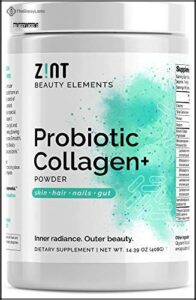
Your gut and your complexion are more connected than you might think. Through the gut-skin axis, this grass-fed collagen supplement paired with 40 billion CFU probiotic strains works on multiple levels—studies show collagen absorption can boost skin elasticity by up to 22% after 12 weeks, while probiotics reduce wrinkle depth by suppressing collagen breakdown.
The formula dissolves easily in coffee or smoothies, delivering nutrients that support collagen production and skin hydration from within.
For those pursuing antiaging results through natural herbs and supplements, this combination tackles both gut health and skin renewal in one convenient scoop.
Best For: People looking to improve skin elasticity and reduce wrinkles while supporting gut health through a combination of grass-fed collagen and high-potency probiotics.
- Clinical backing shows up to 22% improvement in skin elasticity and significant wrinkle reduction after 12 weeks of use
- High-potency 40 billion CFU probiotic blend works through the gut-skin axis to boost hydration and collagen production from within
- Unflavored powder dissolves easily in beverages like coffee and smoothies, making it simple to add to your daily routine
- May clump or dissolve poorly in hot liquids, requiring extra effort to mix properly
- Some users report breakouts or allergic reactions to the probiotic strains
- Price can fluctuate, potentially affecting the overall value depending on when you buy
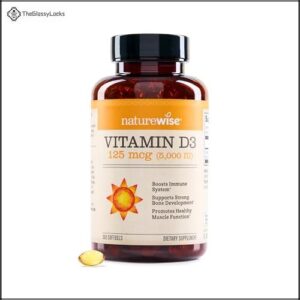
3. NatureWise Vitamin D3 Softgels
Your body can’t manufacture vitamin D without sun exposure, yet 70% of adults fall short of ideal levels—a deficiency that shows up in your skin’s appearance. NatureWise Vitamin D3 softgels deliver 5,000 IU per dose, formulated with organic olive oil to boost absorption.
Research links higher vitamin D levels to reduced wrinkle depth and improved collagen synthesis, while the supplement attenuates oxidative stress in photoaged skin.
The 360-count bottle offers convenient year-round support, and with over 174,000 reviews averaging 4.7 stars, users consistently report improvements in energy and overall wellness alongside potential antiaging benefits for skin health.
Best For: Adults who want to address vitamin D deficiency while supporting skin health, collagen production, and overall wellness with a high-potency, easy-to-absorb supplement.
- Contains 5,000 IU of vitamin D3 with organic olive oil for superior absorption, helping correct deficiency and maintain optimal levels year-round
- Research shows links to reduced wrinkle depth, improved collagen synthesis, and decreased skin aging markers—potentially taking years off your skin’s biological age
- Excellent value with 360 softgels lasting a full year, backed by 174,000 positive reviews praising energy improvements and easy-to-swallow capsules
- High 5,000 IU dose may be too strong for some people and could require medical guidance to avoid exceeding safe upper limits
- Results vary by individual, and skin benefits depend on baseline deficiency levels and consistent long-term use
- Not suitable for those with certain medical conditions like hypercalcemia, and may interact with medications—consultation with a healthcare provider is recommended
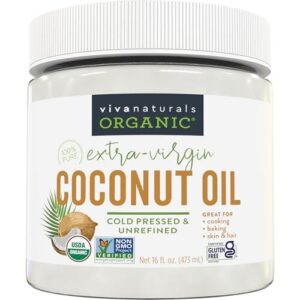
4. Organic Extra Virgin Coconut Oil
With proven clinical results, virgin coconut oil offers more than kitchen convenience—it’s backed by dermatology research. In a 4-week study, daily application increased skin hydration by nearly 149% while reducing transepidermal water loss (TEWL) by 37%, meaning your skin barrier actually gets stronger.
The secret lies in lauric acid, which comprises up to 53% of coconut oil’s fatty acids and delivers anti-inflammatory benefits alongside natural moisturizers like vitamin E and polyphenols. You’ll notice smoother texture and improved elasticity within weeks.
However, there’s a comedogenic risk: coconut oil can clog pores if you’re acne-prone. For body skin and mature complexions, it’s a star performer in antiaging skin care. Always patch-test first, and consider mixing it with lighter natural ingredients for skin if your face tends toward oiliness.
Best For: People with dry, mature, or eczema-prone body skin who want clinically-proven hydration and barrier repair—but should skip it if you’re acne-prone or have oily facial skin.
- Backed by clinical data showing 149% increase in skin moisture and 37% reduction in water loss after just 4 weeks of daily use
- Packed with lauric acid (up to 53%) plus vitamin E and polyphenols that fight inflammation and oxidative stress linked to aging
- Safe and well-tolerated in multiple dermatology studies, with measurable improvements in elasticity and texture within a month
- Highly comedogenic, meaning it can clog pores and worsen acne if you use it on oily or breakout-prone facial skin
- Patch testing is a must before widespread use, especially if you have sensitive skin or a history of contact dermatitis
- Research focuses mainly on body hydration and barrier repair—direct evidence for wrinkle reduction or facial anti-aging remains limited
5. Dr Tobias Triple Strength Omega
When your skin barrier weakens with age, omega-3 fatty acids become essential allies. Dr Tobias Triple Strength Omega delivers 1,400 mg of omega-3s per serving—three times more than standard fish oil—with 800 mg EPA and 600 mg DHA that support skin hydration and reduce inflammatory responses tied to aging.
Clinical studies show omega-3 supplementation can improve skin barrier function and decrease transepidermal water loss, addressing age-related dryness.
These wild-caught fish softgels also offer cardiovascular health benefits and may slow cognitive aging. The enteric coating minimizes fishy aftertaste, though supplement safety requires checking with your doctor if you’re on blood thinners.
Best For: People over 40 who want to support skin hydration and barrier function from the inside out while also getting cardiovascular and cognitive benefits.
- Delivers triple the omega-3s of standard fish oil (1,400 mg per serving with 800 mg EPA and 600 mg DHA), so you take fewer capsules to reach therapeutic doses shown to improve skin barrier function and reduce age-related dryness.
- Sourced from wild-caught fish and purified to remove heavy metals and contaminants, with an enteric coating that cuts down on the fishy burps common with regular fish oil.
- Research-backed for multiple aging concerns—clinical trials link omega-3 supplementation to reduced facial wrinkles, better skin hydration, lower triglycerides, and slower cognitive decline in older adults.
- May increase bleeding risk if you’re on blood thinners or anticoagulants, so you’ll need to check with your doctor before starting.
- Uses ethyl ester form of omega-3s (from chemical concentration process) rather than natural triglyceride form found in whole fish, which some prefer to avoid.
- Mild side effects like fishy aftertaste or stomach upset can still occur despite the enteric coating, especially when first starting the supplement.
Hydration and Gut Health for Skin Health

You mightn’t think about your gut when you’re worried about wrinkles, but what happens inside your body shows up on your skin.
Drinking enough water and keeping your gut healthy work together to support firm, hydrated skin from the inside out.
Here’s what you need to know about these two simple but powerful factors.
Importance of Water Intake for Skin
Want younger-looking skin? Your water bottle holds the answer. Drinking 2 to 2.5 liters daily strengthens your skin barrier and boosts hydration elasticity by up to 30%. Water’s impact shows in fewer wrinkles and better skin radiance. When daily intake falls short, dehydration effects appear fast—dullness, deeper lines, weakened defenses. Among natural remedies for skin moisturization and skin health, this one’s free and proven.
| Daily Intake | Skin Hydration Benefits | Visible Results |
|---|---|---|
| 2.0-2.5 liters | 20-30% hydration increase | Reduced wrinkle depth |
| Under 1.5 liters | Weakened skin barrier | Dull, saggy appearance |
| 2.25+ liters | Enhanced density & thickness | Firmer, plumper skin |
| Consistent drinking | Improved blood flow | Natural glow returns |
Benefits of Probiotics for Gut Health
Your gut and skin share a surprising connection that science can’t ignore. Probiotics strengthen that link by enhancing microbiome diversity and supporting immune modulation throughout your body. These helpful bacteria work as natural remedies with anti-inflammatory properties that benefit skin health while preventing AAD during antibiotic use. Here’s how probiotics fight aging from within:
- Gut barrier reinforcement – reducing inflammation and improving nutrient absorption
- Inflammation reduction – lowering inflammatory markers linked to premature skin aging
- Skin microbiome balance – supporting healthy bacteria that protect against external stressors
Effects of Hydration on Skin Elasticity
Water intake does more than quench thirst—it directly influences skin elasticity and fights aging skin. Studies show that adding 2 liters daily improves hydration and biomechanical properties, especially if you’ve been under-hydrated.
Natural remedies like collagen peptides, hyaluronic acid, and ceramides work alongside proper skin moisturization by binding water within your skin, reducing TEWL impact, and visibly softening wrinkles while restoring firmness.
| Hydration Strategy | Primary Benefit | Timeframe for Results |
|---|---|---|
| Increased water intake | Enhanced skin hydration | 2–4 weeks |
| Collagen peptides | Improved skin elasticity | 8–12 weeks |
| Hyaluronic acid | Moisture retention & plumping | 2–8 weeks |
| Ceramides supplements | Strengthened barrier function | 12 weeks |
Supplements for Anti-Aging

Your skin needs more than what you put on the surface—it also needs the right nutrients from within. Certain supplements can support collagen production, protect against oxidative damage, and improve overall skin health as you age.
Here are three key supplements worth considering for your anti-aging routine.
Coenzyme Q10 and Collagen Peptides
Two powerhouse supplements deserve your attention when fighting visible aging: Coenzyme Q10 and collagen peptides. Clinical trials show that applying CoQ10 cream twice daily reduces wrinkle depth around your eyes within four weeks, while oral collagen supplementation—usually 3 to 5 grams daily—markedly improves skin hydration and elasticity after 8 to 12 weeks.
These combination therapies work because CoQ10 protects your cells from oxidative stress while collagen peptides rebuild your skin’s structural framework. Studies confirm that consistent use delivers measurable antiaging results you can actually see.
Vitamin D and Omega-3 Fatty Acids
Your skin needs two nutrients to stay resilient: vitamin D and omega-3 fatty acids. Vitamin D boosts collagen synthesis and fights oxidative stress, while omega-3s improve skin hydration and elasticity by strengthening your barrier.
Together, they tackle inflammaging—that low-grade inflammation accelerating wrinkles and sagging. Aim for vitamin D levels around 30–50 ng/mL and 1–2 grams of omega-3s daily to see real improvements in firmness and smoothness.
Green Tea and Dark Chocolate Benefits
Beyond vitamin D and omega-3s, your morning cup of green tea or afternoon dark chocolate square delivers serious antiaging benefits. Green tea’s catechins boost collagen synthesis and shield your skin from UV damage—one study showed participants needed double the UV exposure to develop sunburn after 12 weeks of daily intake. High-flavanol cocoa improves skin hydration and thickness while fighting free radicals. Both deliver potent antioxidants that protect against oxidative stress, giving you three clear advantages:
- Enhanced UV protection through increased resistance to sun damage
- Improved skin elasticity and reduced wrinkle depth
- Better barrier function that locks in moisture
Herbs for Skin Tightening and Rejuvenation

Nature has provided some powerful herbs that can actually help your skin look firmer and more youthful. These aren’t miracle cures, but they do contain compounds that support collagen, fight inflammation, and protect against damage.
Let’s look at two standout options that have real science backing them up.
Turmeric and Curcumin Effects
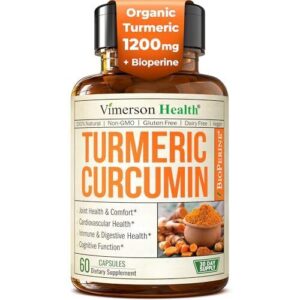
Turmeric stands out for its effectiveness in addressing aging skin, thanks to curcumin—the compound responsible for its potency. Clinical studies demonstrate that combining oral and topical curcumin can enhance skin firmness by over 11% in just four weeks, while also reducing wrinkle volume. Its anti-inflammatory properties work by soothing skin inflammation and protecting against UV damage. Additionally, the antioxidants in curcumin combat oxidative stress and safeguard collagen, maintaining skin suppleness. However, it’s important to note that curcumin’s bioavailability can be low, so opting for enhanced formulations with natural ingredients like black pepper can significantly improve absorption and ensure tangible results.
| Benefit | Mechanism | What You’ll Notice |
|---|---|---|
| UV protection | Blocks harmful rays and oxidative damage | Less sun damage and pigmentation |
| Collagen protection | Reduces breakdown enzymes | Firmer, more elastic skin |
| Anti-inflammatory | Calms irritation pathways | Reduced redness and swelling |
| Antioxidant defense | Neutralizes free radicals | Brighter, healthier complexion |
| Barrier support | Decreases water loss | Better hydration and smoothness |
Porphyra Red Algae and Aloe Vera Benefits
From the ocean comes Porphyra red algae, which shields your skin from harmful UV rays while fighting oxidative stress that accelerates aging. Studies show a 5% extract can reduce sun damage as effectively as synthetic filters, and it also improves firmness—a bonus for sagging skin.
Aloe vera works differently: its sterols ramp up collagen and hyaluronic acid production inside your skin cells. When women over 40 took aloe daily, crow’s-feet width dropped about 11% in eight weeks.
Together, these natural remedies deliver layered antiaging skin care, combining algae UV protection with aloe’s collagen boost for visible results.
Essential Oils for Wrinkles and Aging Skin
Essential oils have become popular in skin care, and some do show promise for aging skin when used correctly. They work by delivering concentrated plant compounds that can support skin health, though they’re not miracle workers.
Let’s look at a few oils that research and clinical experience suggest may help reduce the appearance of wrinkles and support your skin’s natural renewal process.
Lemon Essential Oil and Sandalwood Oil
When your skin shows signs of aging, essential oils offer research-backed support. Lemon essential oil’s antimicrobial and antioxidant properties help reduce skin inflammation while enhancing the delivery of vitamins A and C into your skin. Sandalwood oil protects collagen and inhibits the enzyme that breaks it down. Both work well in natural remedies and anti-aging skincare, but lemon juice and essential oils carry oil phototoxicity risks—always dilute with carrier oils and skip daytime use.
Why These Oils Stand Out:
- Lemon fights oxidative damage – Studies show it reduces inflammatory markers that accelerate aging, rivaling vitamin C’s protective effects.
- Sandalwood blocks collagen breakdown – It inhibits the enzyme responsible for wrinkles and lost elasticity, keeping skin firmer longer.
- Both calm inflammation – They lower the cytokines and free radicals that degrade skin structure and promote uneven tone.
- Smart pairing matters – Mix with jojoba or rosehip carrier oil to deliver benefits safely without irritation or sun sensitivity.
Clary Sage Essential Oil and Frankincense
When you pair clary sage essential oil with frankincense, you’re tapping into natural remedies backed by real science. Clary sage’s linalyl acetate delivers antioxidant and anti-inflammatory effects that protect collagen from oxidative stress, while frankincense has shown photoaging outcomes in clinical studies—improving UV-damaged skin’s appearance.
Together, they support dermal structure and skin elasticity. Always dilute in carrier oils (1–3% for facial use) to meet safety considerations and avoid irritation on aging skin.
Carrier Oils for Wrinkle Treatment
Think of carrier oils as delivery vehicles that don’t just sit on your skin—they actively penetrate to support collagen and strengthen your skin barrier. These plant oils, rich in fatty acids, provide hydration benefits while helping active ingredients reach deeper layers where aging happens.
Jojoba oil reduces inflammation by 30% while boosting pro-collagen production, giving wrinkles less room to form. Argan oil improved skin elasticity in postmenopausal women by measurable degrees within 60 days. Rosehip oil calmed post-surgical redness in 73% of patients.
Combining Natural Remedies for Optimal Results

Your best defense against aging skin isn’t a single product—it’s a tailored regimen that targets multiple pathways at once. Research shows that synergistic formulas combining topical antioxidants with oral supplements deliver better results than either approach alone.
Here’s how to build a multimodal protocol:
- Layer protection daily: Apply broad-spectrum sunscreen with vitamin C serum for enhanced photoprotection against UV damage.
- Support from within: Take collagen peptides alongside antioxidant-rich foods like berries to boost dermal density.
- Lifestyle integration: Prioritize sleep, hydration, and stress management—they boost every natural antiaging remedy you use.
This topical + oral strategy tends to oxidative stress, collagen breakdown, and barrier integrity simultaneously for lasting skin health improvements.
Frequently Asked Questions (FAQs)
Can you really remove wrinkles?
Can you completely erase wrinkles? Not really. Treatments reduce their depth and visibility—sometimes by 20% or more—but permanent wrinkle removal remains elusive. Collagen restoration has limits, and aging continues despite our best efforts.
How can I reduce my skin aging naturally?
Your daily habits matter most. Apply broad-spectrum SPF 30 sunscreen, and load up on berries and leafy greens for dietary antioxidants. Drink plenty of water, and use natural skin care strategies like aloe or coconut oil for hydration importance in antiaging skin care.
What are the best home treatments for aging skin?
Home remedies like topical retinoids, plant oils, and green tea extracts deliver measurable antiaging results—backed by evidence. Sun protection remains your strongest defense, while dietary impact from antioxidants promotes lasting skin health from within.
What is the Japanese home remedy for wrinkles?
Rice water benefits come from centuries-old Japanese wisdom. Fermented rice bran contains antioxidants that support skin elasticity and firmness.
Apply it with a gentle facial massage to help natural ingredients brighten and smooth your complexion.
What is the best natural ingredient for aging skin?
Aloe vera ranks among the most effective natural antiaging remedies. Clinical evidence shows it reduced facial wrinkles after 90 days while improving elasticity.
You’ll find it works gently across skin types, making it ideal for long-term use.
How does sleep quality impact skin aging?
Sleep deprivation disrupts collagen synthesis and barrier function, worsening skin inflammation and dark circles. Poor sleep doubles aging markers—stress and circadian rhythm dysregulation accelerate wrinkles, dullness, and sagging, while quality rest encourages natural repair.
What role does genetics play in skin aging?
Your genetics account for roughly 40–60% of how your skin ages—think wrinkles, firmness, and texture. Pigmentation genes and molecular pathways set the stage, but sun exposure and lifestyle choices ultimately steal the show.
Can facial exercises reduce wrinkles naturally?
Facial exercises can improve muscle tone and skin elasticity, potentially making you look younger. Studies show modest improvements in wrinkle severity and firmness after consistent practice, though high-quality evidence remains limited.
How does urban pollution affect skin health?
Urban pollution triggers oxidative skin damage through free radicals, causing inflammation and cellular senescence. Particulate matter disrupts your skin barrier, accelerates collagen breakdown, and increases hyperpigmentation.
Research links traffic exposure to deeper wrinkles and inflammatory skin diseases.
Are there risks with natural skin remedies?
Natural remedies aren’t risk-free. Allergen potential is high, and skin irritation or redness can develop—especially with essential oils.
Photosensitivity risks, microbial contamination, and misleading labels all add up. Always patch-test topical remedies to avoid unexpected skin damage or systemic interactions.
Conclusion
Think of your skin as a garden—neglect it, and weeds take over; nourish it consistently, and it thrives for decades. Natural remedies for aging skin don’t require flawlessness, just persistence.
Sun protection, collagen-rich foods, hydration, and targeted supplements create a foundation that compounds over time. The mirror won’t lie, but neither will your daily habits.
Start small, stay consistent, and let biology do what expensive creams can’t: rebuild from within.
- https://pmc.ncbi.nlm.nih.gov/articles/PMC12318760/
- https://www.heraldopenaccess.us/openaccess/anti-aging-effects-of-hydrolyzed-collagen-beverage-with-herbal-extracts-on-facial-skin-a-double-blind-randomized-placebo-controlled-trial
- https://www.frontiersin.org/journals/nutrition/articles/10.3389/fnut.2023.1232229/full
- https://www.nature.com/articles/s41598-023-32738-7
- https://www.ncbi.nlm.nih.gov/pmc/articles/PMC6266229/