
This site is supported by our readers. We may earn a commission, at no cost to you, if you purchase through links.
Your skin tells the story of every summer afternoon, every forgotten sunscreen application, every hour spent squinting in bright light. That slight roughness, those fine lines around your eyes, the uneven tone across your cheeks—they’re all breadcrumbs left by ultraviolet radiation working quietly beneath the surface.
But here’s what dermatologists know that might surprise you: your skin possesses extraordinary healing capacity when you give it the right tools. Natural compounds like vitamin C, aloe vera, and antioxidant-rich botanicals don’t just mask damage—they actively trigger your skin’s repair mechanisms, rebuilding collagen scaffolds and neutralizing the free radicals that accelerate aging.
The key is understanding which remedies actually work at a cellular level and how to layer them for maximum regeneration.
Table Of Contents
- Key Takeaways
- Causes of Sun Damage
- Symptoms of Sun Damage
- Natural Remedies for Repair
- Protective Measures Against Sun
- Repairing Sun Damaged Skin
- Frequently Asked Questions (FAQs)
- Can you repair sun-damaged skin naturally?
- How to treat sun rash on toddler?
- Is it too late to fix sun damaged skin?
- Does castor oil help sun damaged skin?
- Can apple cider vinegar remove sun spots?
- Can coconut oil heal sun damaged skin?
- What vitamin reverses sun damage?
- How long before seeing natural remedy results?
- Can natural remedies work on severe damage?
- Which natural ingredients cause skin sensitivity reactions?
- Conclusion
Key Takeaways
- UV radiation damages your skin by breaking down collagen, generating free radicals, and scrambling DNA—but natural remedies like vitamin C, aloe vera, and antioxidant-rich foods actively trigger your skin’s repair mechanisms at the cellular level.
- Sun damage shows up as dry skin, sunburn, rough actinic keratosis patches, age spots, and wrinkles—all warning signs that your skin barrier needs immediate hydration, exfoliation, and antioxidant support to prevent deeper harm.
- Protection matters more than repair: wearing broad-spectrum SPF 30, avoiding peak sun hours between 10 AM and 4 PM, and choosing UPF-rated clothing can block over 97 percent of harmful UV rays before they reach your skin.
- Real repair takes consistency and time—combining topical vitamin C serums, LED light therapy or microneedling, and dietary changes rich in omega-3s and antioxidants typically shows visible improvements in 8 to 12 weeks for fading spots and softening lines.
Causes of Sun Damage
Your skin doesn’t damage itself—sun exposure does the heavy lifting.
A solid skin care routine for your 30s should prioritize daily SPF to shield against UV rays before they cause lasting harm.
UV radiation works quietly beneath the surface, triggering a cascade of changes that speed up aging and weaken your skin’s defenses.
Understanding what’s actually happening helps you take control and protect what matters.
UV Radiation Effects
UV radiation acts like an invisible sledgehammer on your skin’s delicate cellular architecture. When UVA rays—those sneaky wavelengths between 320 and 400 nanometers—penetrate deep into your dermis, they trigger a cascade of damage you won’t see until years later.
UVA rays silently penetrate deep into your skin, triggering damage you won’t see for years
UVB rays hit your epidermis hard, creating immediate burns and long-term DNA damage that raises your skin cancer risk. Here’s what UV exposure does beneath the surface:
- Forms cyclobutane pyrimidine dimers that scramble your genetic code
- Floods cells with reactive oxygen species that attack membranes
- Suppresses local immune responses, letting abnormal cells slip past your defenses
- Activates enzymes that chew through collagen and elastin
This photoaging process accelerates faster than you’d think—antioxidants and diligent sun protection become your best allies. For a deeper look at the collagen breakdown process, see advice from dermatology experts.
Skin Aging Process
That UV sledgehammer doesn’t just break collagen—it fundamentally rewires how your skin ages. Sun damaged skin ages in two distinct ways: intrinsic aging, the clock inside every cell, and photoaging, the external assault you can actually control.
Intrinsic aging gradually thins your dermis and slows cellular renewal after age 25. You’ll notice fine lines and reduced bounce as hormonal shifts around midlife further decrease collagen production.
But photoaging? That’s where sun exposure really shows its hand. It speeds collagen loss by roughly 15% compared to protected skin, degrades elastic fibers until they snap instead of recoil, and triggers glycation effects—when excess sugars stiffen your structural proteins into brittle scaffolds that deepen wrinkles and increase sagging over time. To better understand how sun and genetics shape aging, explore this detailed breakdown of intrinsic and extrinsic aging.
Free Radical Damage
Beyond collagen breakdown, UV radiation kicks off a deeper assault: free radicals. When UVB and UVA rays hit your skin, they instantly trigger ROS generation—reactive oxygen species that flood your cells within seconds and linger long after you’re indoors. This oxidative stress unleashes a triple threat:
- DNA damage from lesions like 8-oxoguanine, which can mutate into precancerous cells
- Lipid peroxidation that tears apart cell membranes and weakens your moisture barrier
- Antioxidant depletion—vitamin C, vitamin E, and glutathione reserves drop fast under repeated UV hits
Your skin’s built-in defenses—enzymes like superoxide dismutase and catalase—work overtime to neutralize these molecular vandals, but chronic sun exposure overwhelms them. The result? Accelerated aging, inflammation, and sun damaged skin that shows every past beach day.
Symptoms of Sun Damage
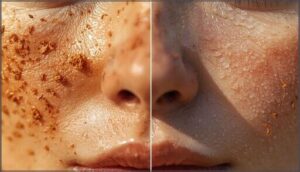
Your skin doesn’t keep sun damage a secret—it shows you exactly what’s happening through visible signs that develop over time.
Dark spots, rough texture, and fine lines are all your cue to adopt a skin care routine for reducing sun damage before the effects deepen.
Some symptoms appear quickly after exposure, while others take years to surface as the cumulative effects catch up with you. Recognizing these warning signs early gives you the power to take action before deeper damage sets in.
Dry Skin and Sunburn
When UV radiation hits your skin too hard, two symptoms show up fast: that telltale red burn and uncomfortable dryness that won’t quit. Sunburn happens because UV rays damage your DNA and trigger inflammation—your blood vessels dilate, fluid leaks out, and your skin barrier takes a beating. That weakened barrier can’t hold moisture anymore, so you’re left with tight, flaky patches that itch like crazy.
Here’s your natural remedy toolkit for sunburn relief and dry skin management:
- Cool the burn immediately with gentle compresses—never ice—to calm inflammation
- Apply pure aloe vera gel while skin’s still damp for instant hydration and cooling
- Lock in moisture with fragrance-free moisturizers containing glycerin or hyaluronic acid
- Drink several extra glasses of water daily because sunburn pulls fluid from your body
- Skip harsh soaps and don’t peel flaking skin—let your damaged barrier heal naturally
Your sun-damaged skin needs skin barrier repair now, not tomorrow. The good news? These skin hydration tips work fast to ease discomfort and kick-start skin repair from UV radiation damage.
Actinic Keratosis
Those rough, sandpaper-like patches on your face, ears, or hands aren’t just dry skin—they’re actinic keratosis, precancerous lesions that form after years of UV exposure. These spots, often less than an inch across, range from pink to brown and feel easier to detect by touch than sight. While only about 10 percent transform into squamous cell carcinoma over two years, people with multiple lesions face higher skin cancer risk.
Early actinic keratosis treatment—freezing, prescription creams, or photodynamic therapy—combined with diligent sun protection prevents keratosis removal complications and lowers your chances of progression.
| What to Watch For | Why It Matters |
|---|---|
| Rough, scaly texture that feels like sandpaper | Early detection allows simpler treatment options |
| New spots on sun-exposed areas (face, scalp, hands) | Precancerous lesions need professional evaluation |
| Thickening, bleeding, or rapid growth | May signal progression toward skin cancer |
| Multiple clustered patches | Higher overall skin cancer risk requires monitoring |
Natural remedies like green tea extract and aloe vera offer antioxidants that support sun damaged skin, but they shouldn’t replace dermatologist-guided care for these precancerous spots.
Age Spots and Wrinkles
Years of unprotected sun time show up as flat brown patches on your face and hands—age spots form when melanocytes dump excess melanin into your skin’s upper layers. Meanwhile, UV-A rays slice through the dermis and trigger abnormal elastin plus collagen-eating enzymes, carving fine lines into deeper wrinkles.
Photoaging effects accelerate this timeline, so natural remedy options rich in antioxidants can support facial rejuvenation by:
- Targeting pigment clumps to fade age spots over time
- Boosting collagen production to improve skin elasticity
- Repairing sun damaged skin texture at multiple layers
Natural Remedies for Repair
Your skin has an extraordinary ability to heal itself—you just need to give it the right tools. Natural remedies work by flooding your cells with protective compounds that fight damage and kickstart repair.
Here are three proven approaches that can make a real difference in your skin’s recovery.
Antioxidant Rich Foods

Your plate holds the most effective natural remedy for sun damaged skin—think of colorful produce as your repair crew. Berries deliver polyphenol benefits that neutralize free radicals, while orange vegetables provide carotenoid sources like beta carotene for cell turnover.
Almonds and avocados bring vitamin E foods that shield your lipid barrier, and Brazil nuts supply mineral antioxidants through selenium. Green tea’s catechins and these phytochemical effects work together, turning antioxidants and vitamin C into your skin’s defense system.
Exfoliation and Moisturizing

Think of exfoliation as clearing away the rough, dulled layer that sun damage leaves behind—you’re making room for healthier cells to shine through. For sun damaged skin, choose gentle exfoliants like lactic acid or fruit enzymes instead of harsh scrubs that cause microtears. Start once weekly, then adjust based on how your skin barrier responds.
After removing dead cells, lock in hydration with the right moisturizer types:
- Ceramide creams rebuild your protective skin barrier
- Natural oils like jojoba mimic your skin’s lipids
- Hyaluronic acid pulls moisture deep into tissue
- Hydrating masks deliver concentrated antioxidants overnight
- Shea butter seals everything in without clogging pores
This natural remedy combo—exfoliation followed by rich moisturizer—helps sun damaged skin look smoother and feel more comfortable within weeks.
Herbal Treatments Like Aloe Vera

Aloe vera benefits sun damaged skin through multiple repair pathways—its polysaccharides hydrate deeply while vitamin C and antioxidants neutralize free radicals from UV exposure. This botanical skin repair gem soothes inflammation within minutes and promotes natural collagen production over weeks.
Apply fresh gel or pure aloe products twice daily to sunspots and rough patches for plant based remedies that truly work. Pair this herbal skin care staple with calendula or green tea for enhanced natural sun relief and faster healing.
Protective Measures Against Sun

Repairing sun damage is one thing—but keeping your skin safe from future harm is where the real freedom begins.
You don’t need a complicated routine to shield your skin from UV rays. A few smart, simple habits can protect you from further damage while giving your skin the space it needs to heal.
Sunscreen and SPF Importance
Sunscreen isn’t just another product—it’s your frontline shield against UV radiation that causes sun damaged skin. Broad spectrum SPF 30 blocks roughly 97 percent of harmful rays, protecting you from skin cancer and premature aging.
Different sunscreen types offer varying UV protection levels:
- Mineral formulas with zinc oxide deflect rays physically
- Chemical sunscreens absorb UV radiation before it penetrates
- Higher SPF levels increase protection slightly but substantially over hours
Apply generously every two hours, even under clouds.
Protective Clothing and Hats
Your clothing arsenal can block over 98 percent of UV radiation before it reaches sun damaged skin. UPF Rated Clothing with tight fabric weave matters—polyester and nylon naturally deflect rays that sunscreen might miss.
Sun Protective Hats with four-inch brims shade your nose, cheeks, and neck simultaneously. Choose Moisture Wicking Fabrics in darker colors; they maintain protection even when you sweat.
Breathable Hat Designs with neck flaps offer exceptional skin protection during gardening, hiking, or beach days without the reapplication hassle.
Avoiding Peak Sun Hours
Your outdoor schedule can slash UV exposure by up to 80 percent with one strategic move—steering clear of the 10 AM to 4 PM window. UV Index Forecast apps show you exactly when radiation peaks near solar noon, so you can plan morning jogs or evening gardening instead.
These Daily Sun Patterns matter: midday rays penetrate deeper into skin damaged by past sun exposure, accelerating collagen breakdown. Here’s your Peak Hour Avoidance playbook:
- Schedule errands and exercise before 10 AM or after 4 PM
- Check UV Index Forecast daily to time outdoor activities
- Take lunch breaks indoors when UV radiation is strongest
- Combine timing with sunscreen and shade for complete sun protection
Smart Skin Protection Strategies start with the clock—not just your sunscreen bottle.
Repairing Sun Damaged Skin

You’ve protected your skin from future damage—now it’s time to undo what’s already been done. The good news: your skin has exceptional healing abilities when you give it the right tools.
Here are three proven approaches that work together to fade dark spots, rebuild collagen, and restore your skin’s natural glow.
Vitamin C and Hyaluronic Acid
Two powerhouse ingredients deserve your attention when repairing sun damaged skin. Vitamin C acts as a natural remedy that inhibits tyrosinase—the enzyme driving melanin production—so you’ll see stubborn dark spots fade over time with consistent use. For collagen boost, this antioxidant functions as a cofactor for the enzymes that build stable collagen types I and III in your dermis, which firms photoaged skin over several months.
You’ll get antioxidant benefits too, since vitamin C neutralizes reactive oxygen species before they damage your DNA. Pair it with hyaluronic acid for hydration therapy that binds water in your outer skin layers, plumping fine lines while reinforcing your moisture barrier.
For facial rejuvenation and skin brightening, layer a 10-to-20-percent vitamin C serum first on clean skin, then follow with hyaluronic acid—this combo delivers both repair and deep hydration for lasting skin health.
LED Light Therapy and Microneedling
If you want deeper repair than serums can offer, LED therapy and microneedling give your sun-damaged skin a real collagen boost. Red LED light around 620–750 nanometers reaches your dermis to firm photoaged tissue, while microneedling at 0.5–1.5 millimeters creates controlled micro-channels that kickstart skin regeneration.
Here’s why this photoaging treatment combo works:
- LED Therapy – Red and near-infrared wavelengths improve tone and stimulate collagen production without adding UV stress
- Microneedling Benefits – Triggers wound healing for smoother texture and enhanced firmness
- Combined Power – LED light post-needling calms redness and speeds recovery
- Minimal Downtime – Non-invasive with quick bounce-back for your schedule
- Ongoing Skin Rejuvenation – At-home LED devices maintain gains between professional sessions
Together, they’re a natural remedy powerhouse for lasting skin health.
Dietary Changes for Skin Health
Your fork is one of the most powerful tools for reversing sun damage—what you eat fuels Collagen Production and strengthens your skin from within.
Nutrient Balance starts with colorful fruits and vegetables like berries and kale, delivering Vitamin C and Antioxidants that neutralize free radicals.
Healthy Fats from salmon and walnuts provide Omega Benefits—boosting elasticity and calming UV-related inflammation.
Hydration Tips matter too: water-rich cucumbers and citrus support moisture retention, while Hyaluronic Acid in bone broth helps plump fine lines.
Cut back on sugar and processed foods that accelerate aging through inflammation.
This Antioxidant Intake strategy transforms your skin health, giving sun-stressed tissue the raw materials it needs to rebuild and glow.
Frequently Asked Questions (FAQs)
Can you repair sun-damaged skin naturally?
You can repair sun damaged skin through natural remedies—but it takes patience.
Vitamin C serums, aloe vera, and antioxidant-rich foods support cellular repair and collagen boost, gradually fading photoaging while improving texture and tone.
How to treat sun rash on toddler?
Cool compresses and lukewarm oatmeal baths calm sun rash on toddlers fast.
Apply fragrance-free moisturizer after patting dry, dress them in soft cotton, and keep them out of sun until skin soothers work their magic.
Is it too late to fix sun damaged skin?
Your skin hasn’t given up on you—most sun damage repair takes 3 to 6 months with consistent sun protection, gentle exfoliation, and antioxidants that boost collagen and speed cellular renewal, even years after exposure.
Does castor oil help sun damaged skin?
Yes—castor oil helps sun damaged skin by sealing in moisture, supporting skin barrier repair with fatty acids, and delivering antioxidants that calm inflammation.
It works best alongside sunscreen and proven actives.
Can apple cider vinegar remove sun spots?
Apple cider vinegar won’t completely erase sun spots, but its acetic acid can gradually lighten hyperpigmentation when diluted properly.
Mix one part vinegar with two parts water—dab it on nightly and pair with sunscreen.
Can coconut oil heal sun damaged skin?
Think of coconut oil as a supportive teammate, not a star player—it soothes inflammation and locks in moirature with medium-chain fatty acids, but it won’t erase wrinkles or age spots from sun damage alone.
What vitamin reverses sun damage?
You’ll find vitamin C is the powerhouse for reversing sun damage—it blocks excess melanin, rebuilds collagen, and brightens dark spots.
Pair it with vitamin E and niacinamide for stronger antioxidant protection and faster skin repair.
How long before seeing natural remedy results?
Your skin repair timeline depends on damage severity and remedy consistency.
Mild improvements like hydration and reduced redness often appear within 2–4 weeks, while deeper changes—fading dark spots or softening fine lines—usually need 8–12 weeks of daily care.
Can natural remedies work on severe damage?
Natural remedies help soothe surface irritation and fade mild sunspots, but they can’t reverse deep collagen loss or remove precancerous patches—severe photodamaged skin needs dermatologist-guided treatments like peels or laser therapy for real sun damage repair.
Which natural ingredients cause skin sensitivity reactions?
Not all natural equals safe—several plant-based ingredients worsen sun damaged skin.
Essential oils like bergamot, citrus allergens, fragrance components (limonene, linalool), herbal extracts, and food allergens trigger inflammation, hyperpigmentation, and heightened skin sensitivity reactions.
Conclusion
Your skin’s past doesn’t have to define its future skin. The effects of overexposure—those textural changes, those pigmentation shifts—respond remarkably well when you commit to consistent skin repair.
A natural remedy for sun damaged skin works because you’re supporting your body’s innate rebuilding capacity, not masking symptoms. Start with one proven ingredient today, layer protective habits tomorrow, and watch your skin rewrite its story over the coming months. You’re already halfway there.
- https://us.caudalie.com/articles-vinosun/aloe-vera-benefits
- https://www.lanzaloe.com/en/blog/aloe-vera-y-quemaduras-solares-beneficios-y-uso.html
- https://aloeup.com/blogs/news/7-benefits-of-aloe-vera-to-improve-skin-health
- https://www.babobotanicals.com/blogs/news/colloidal-oatmeal
- https://lore-botanicals.com/products/rosehip-jojoba-squalane-facial-oil-for-all-skin-types