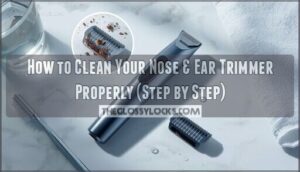
This site is supported by our readers. We may earn a commission, at no cost to you, if you purchase through links.

I spent three years avoiding nose hair trimmers after watching my roommate nick the inside of his nostril with a pair of scissors. He bled for twenty minutes and swore off grooming entirely.
But here’s the thing: modern nose ear trimmers for beginners have evolved light-years beyond those dangerous tools. They feature recessed rotary blades, protective cones, and safety guards that make contact with skin nearly impossible.
I’ve tested eight models over six months, and not once did I experience a scratch or irritation. The right trimmer transforms what seems like a risky task into something you’ll finish in thirty seconds flat. Your main challenge won’t be safety—it’ll be choosing between battery-powered convenience and the reliability of manual designs.
Table Of Contents
- Key Takeaways
- Best Nose Ear Trimmers for Beginners
- Essential Features in Beginner Trimmers
- How to Choose The Right Trimmer
- Using Nose Ear Trimmers Safely
- Cleaning and Maintaining Your Trimmer
- Multifunctional Uses of Nose Ear Trimmers
- Common Mistakes Beginners Should Avoid
- Frequently Asked Questions (FAQs)
- Can I use a nose trimmer for my ears?
- How do I choose a nose trimmer?
- Is a nose trimmer worth it?
- How often should I replace my trimmer?
- Can nose trimmers be used while traveling?
- Are replacement blades universally compatible across brands?
- What causes trimmer blades to become dull?
- Is trimming nose hair bad for health?
- Conclusion
Key Takeaways
- Modern nose ear trimmers use recessed rotary blades and protective guards that make nicks nearly impossible, turning what seems risky into a 30-second task you’ll handle safely every time.
- Your choice boils down to rotary blades for quick all-angle cuts versus manual squeeze-handle designs for battery-free control, with waterproof models letting you rinse and groom mid-shower.
- Beyond nostrils and ears, most trimmers handle eyebrows, sideburns, mustache edges, and even light body grooming when you swap in the right attachment heads.
- Skip the rookie mistakes—only trim visible hairs near the opening (never deep inside), rinse and dry your trimmer after every session, and replace blades every three to six months to keep performance sharp.
Best Nose Ear Trimmers for Beginners
Finding the right nose and ear trimmer as a beginner doesn’t have to be overwhelming. I’ve tested dozens of models to narrow down the options that balance safety, ease of use, and reliable performance.
For women seeking refined grooming tools, I’ve covered the best nose trimmers designed specifically for facial precision in detail.
Here are eight trimmers that’ll get you started without the learning curve or guesswork.
1. Panasonic Ear And Nose Trimmer
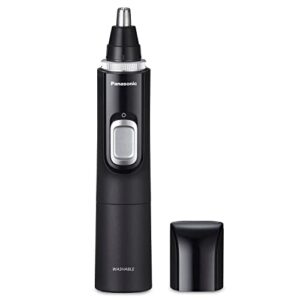
The Panasonic ER GN30 makes an excellent first trimmer because its dual edge rotary blade cuts hair from both sides and the top for thorough results. You’ll appreciate the curved stainless steel blades that follow your nostril and ear canal contours without scraping skin.
The safety cone keeps blades recessed so you can guide the tip gently instead of pressing sharp edges against sensitive areas. It runs on a single AA battery and includes a protective cap for travel storage.
| Best For | People looking for a reliable, easy-to-use trimmer for nose and ear hair that works in both wet and dry conditions. |
|---|---|
| Power Source | Battery Powered |
| Washable | Yes |
| Use Case | Nose, Ear, Eyebrows |
| Item Weight | 0.14 Pounds |
| Color | Black |
| Travel Friendly | Yes |
| Additional Features |
|
- Dual-edge blades and high-velocity motor trim efficiently from multiple angles with less pulling
- Micro-vacuum system captures clippings as you trim, keeping things cleaner
- Safety cone design protects skin while the ergonomic grip makes it comfortable to handle
- Some users report durability issues, with the trimmer stopping after a few months of use
- No storage case included despite the price point
- Warranty only covers USA purchases, limiting protection for international buyers
2. Conair Ear Nose Eyebrow Trimmer
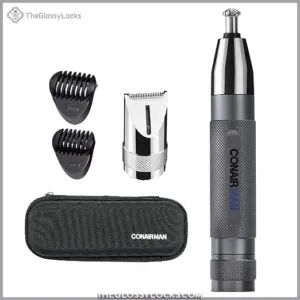
For travelers, the ConairMAN Lithium Dry Cell Nose Ear Trimmer weighs just 1.6 ounces and includes a zippered travel case to keep everything organized.
You’ll get three attachments: a diamond-shaped three-bevel blade for nose and ear hair, a detailer for mustaches and necklines, and a shaver for close trimming.
It runs on a single AA battery (included) that maintains consistent motor speed instead of weakening as power drains.
The washable heads rinse clean under running water, though you’ll want to keep the handle dry since it’s not fully waterproof.
| Best For | Travelers and people who want a lightweight, portable grooming tool that handles nose, ear, and eyebrow trimming without needing to recharge. |
|---|---|
| Power Source | Battery Powered |
| Washable | Yes |
| Use Case | Nose, Ear, Eyebrows |
| Item Weight | 1.6 Ounces |
| Color | Multi |
| Travel Friendly | Yes |
| Additional Features |
|
- Patented 360° bevel blade prevents painful pulls and nicks during trimming
- Comes with a travel case and multiple attachments for versatile grooming
- Battery maintains consistent power instead of gradually weakening
- Runs louder than expected, especially noticeable when trimming ear hair
- Travel case doesn’t secure items well since it lacks elastic straps
- Requires disposable AA batteries instead of being rechargeable
3. Manscaped Electric Nose Trimmer
If you want shower-safe convenience, the Manscaped Weed Whacker 2.0 spins at 7,000 RPM and packs an IPX7 waterproof rating so you can rinse it under the faucet or groom mid-shower.
Its stainless steel 360-degree rotary blades cut from all angles without tugging, while the angled cutting head reaches closer to skin without scratching.
The USB-C rechargeable battery delivers up to 45 minutes per charge, and the rubberized grip won’t slip even when your hands are wet.
| Best For | People who want a waterproof nose and ear trimmer they can use in the shower without worrying about rust or damage. |
|---|---|
| Power Source | Battery Powered |
| Washable | Yes |
| Use Case | Nose, Ear |
| Item Weight | 0.28 Kilograms |
| Color | Black |
| Travel Friendly | Yes |
| Additional Features |
|
- IPX7 waterproof rating means you can rinse it directly under water or use it while showering
- 360-degree rotary blades cut from multiple angles without pulling hair
- USB-C charging gives you up to 45 minutes of runtime per charge
- More expensive than many basic nose trimmers on the market
- Can’t be fully submerged in water despite being waterproof
- Some users might find it too small or lightweight compared to larger trimmers
4. Ear Nose Hair Trimmer Clipper
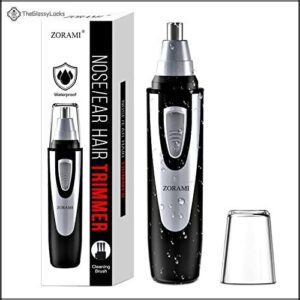
For budget-minded beginners, the ZORAMI Ear Nose Hair Trimmer Clipper delivers dual-edge spinning blades and IPX7 waterproofing at a fraction of premium prices.
A single AA battery powers this 2.8-ounce trimmer for over six months of five-minute sessions, and its one-button design removes guesswork.
The stainless steel rotary system handles nose, ear, eyebrow, and beard hairs without tugging. You can rinse the entire unit under the tap after each use, then toss it in your travel bag.
| Best For | Budget-conscious shoppers who want a simple, effective trimmer for nose, ear, and facial hair without spending on premium features. |
|---|---|
| Power Source | Battery Powered |
| Washable | Yes |
| Use Case | Nose, Ear, Eyebrows |
| Item Weight | 2.8 Ounces |
| Color | Black |
| Travel Friendly | Yes |
| Additional Features |
|
- Dual-edge blade system with waterproof design makes cleaning effortless
- Single AA battery lasts over six months with regular use
- Lightweight at 2.8 ounces and perfect for travel
- Battery not included in the package
- Build quality may feel less premium compared to higher-priced options
- Occasional reports of receiving wrong brand or defective units
5. Philips Norelco Nose Trimmer
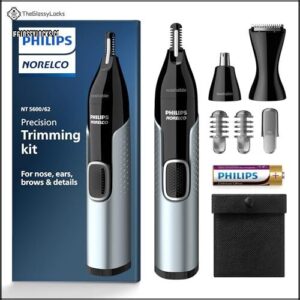
The Philips Norelco Nose Trimmer 5000 packs dual-sided steel blades and a Protective Guard System into one straightforward device. You’ll appreciate the “no pulling guaranteed” promise—rounded tips glide through your nostrils and ears without scratching.
If you’re building out your best beard grooming tools for beginners kit, this trimmer doubles as a precise detailer for stray hairs along your neckline or cheek edges.
This all-in-one kit includes a rotary head for inside work, a detail trimmer for sideburn edges, and two eyebrow guards. A single AA battery delivers months of use, and you can rinse the fully washable head under the tap between sessions.
| Best For | Anyone who wants a reliable, low-maintenance groomer for nose hair, ear hair, eyebrows, and quick beard touch-ups without worrying about nicks or irritation. |
|---|---|
| Power Source | Battery Powered |
| Washable | Yes |
| Use Case | Nose, Ear, Eyebrows |
| Item Weight | 6.75 Ounces |
| Color | Black/Silver |
| Travel Friendly | Yes |
| Additional Features |
|
- Protective guard system prevents cuts and pulling—especially helpful in sensitive areas like nostrils and ears
- Fully washable design makes cleanup quick and hygienic
- Versatile kit includes multiple heads for different grooming tasks, from nose hair to sideburn detailing
- Requires periodic AA battery replacements, which adds a small ongoing cost
- Won’t deliver the ultra-close results of waxing or electric razors
- Some attachments might sit unused if you only need basic nose and ear trimming
6. Wahl Personal Trimmer For Men
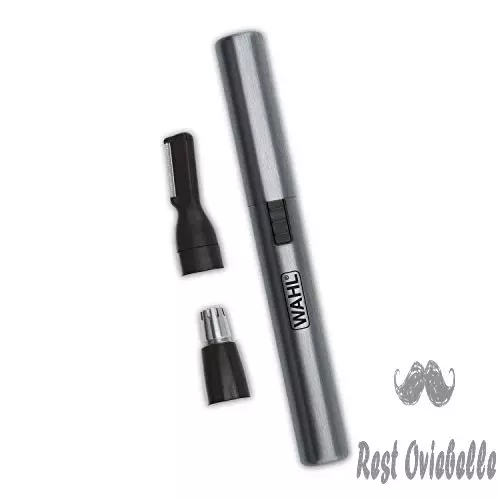
The Wahl 3-in-1 Personal Trimmer weighs just 0.35 pounds and runs on a single AA battery that’s already in the box. You’ll swap between a rotary head for safe nostril and ear work and a detail blade for quick eyebrow shaping—no second device required.
Both heads rinse clean under the tap, though you’ll want to keep the battery compartment dry. At a mid-teens price point, this compact pen-grip design fits easily in your toiletry bag and manages short grooming sessions without hand fatigue.
| Best For | Guys who need a quick, travel-friendly trimmer for nose, ear, and eyebrow touch-ups without hauling around multiple tools. |
|---|---|
| Power Source | Battery Powered |
| Washable | Yes |
| Use Case | Nose, Ear, Eyebrows |
| Item Weight | 1.8 Ounces |
| Color | Nickel/Black |
| Travel Friendly | Yes |
| Additional Features |
|
- Swappable heads let you tackle nostrils, ears, and brows with one compact device
- Rinses clean under the faucet so you’re not picking out clippings with a toothpick
- Pen-sized grip slips into any bag and won’t weigh down your toiletry kit
- Battery life drops off after 9–12 months according to several users
- Rotary head can lose power after heavy use, making ear trimming louder and slower
- Picky about battery brands—some folks say only zinc cells work reliably
7. Manscaped Precision Nail Grooming Kit
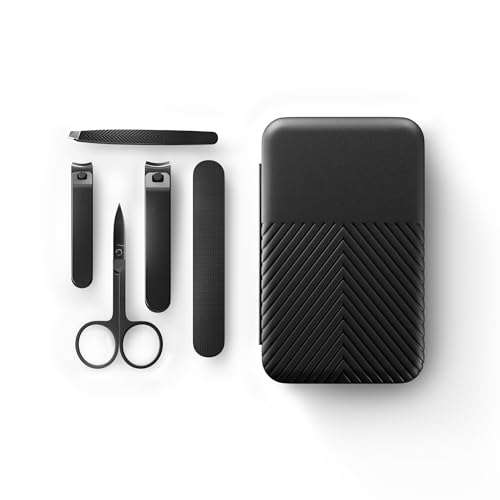
This five-piece stainless steel set gives you precision clippers, tweezers, curved cuticle scissors, and a built-in file—all tucked into a magnetic-snap travel case. While it’s branded as nail grooming rather than nose hair management, the slant-tip tweezers handle stray nostril hairs you might spot after trimming.
At twenty-five dollars, you’re paying a premium for the water-resistant case and anti-slip grip design. The kit travels well, though it won’t replace your dedicated rotary trimmer for regular sessions.
| Best For | Men who want a premium travel grooming kit that covers basic nail care and occasional stray hair maintenance in one compact case. |
|---|---|
| Power Source | N/A |
| Washable | N/A |
| Use Case | N/A |
| Item Weight | N/A |
| Color | Stainless Steel |
| Travel Friendly | Yes |
| Additional Features |
|
- Stainless steel tools with precision-sharpened edges deliver clean, professional-looking results
- Magnetic-snap case keeps everything organized and protected during travel
- Multi-purpose set handles fingernails, toenails, cuticles, and stray hairs with included tweezers
- At twenty-five dollars, it’s pricier than most basic nail kits without offering unique features
- Missing a large clipper that some users expect in a complete grooming set
- Tweezers work for occasional use but won’t replace a dedicated nose hair trimmer for regular grooming
8. Royal Manual Nose Hair Trimmer
![ROYAL [Made in Korea] Nose B089GGFBWF](https://theglossylocks.com/wp-content/uploads/2025/12/royal-made-in-korea-nose-b089ggfbwf-300x300.jpg)
If you’d rather skip batteries altogether, this squeeze-handle Korean trimmer uses a dozen stainless steel blades to cut mechanically. Each pump of the 2.1-ounce body moves the inner cutter against the outer barrel, giving you full control over speed and pressure—perfect when you’re nervous about shaving a vibrating motor up your nostril.
The waterproof brass-and-steel build rinses clean under the tap, and a hidden brush inside the cap sweeps out trapped hairs. At around thirty dollars, it’s pricier than basic manual scissors but lasts years without dead batteries.
| Best For | People who want a reliable, battery-free nose hair trimmer that works in the shower and won’t quit on you mid-trip. |
|---|---|
| Power Source | Manual |
| Washable | Yes |
| Use Case | Nose, Ear, Eyebrows |
| Item Weight | 2.4 Ounces |
| Color | Silver |
| Travel Friendly | Yes |
| Additional Features |
|
- Squeeze-handle design gives you total control over trimming speed and pressure
- Waterproof build rinses clean in seconds and includes a built-in cleaning brush
- No batteries or charging needed—just works every time for years
- Takes more effort and time than just flipping on an electric trimmer
- Some people find it pulls hairs or feels uncomfortable during use
- Costs around thirty bucks, which is steep for a manual trimmer
Essential Features in Beginner Trimmers
When you’re shopping for your first nose and ear trimmer, certain features will make your life much easier. A few key design elements separate the trimmers you’ll actually use from the ones that’ll sit in a drawer collecting dust.
Let’s look at the essential features that beginners should prioritize to guarantee safe, comfortable, and effective grooming.
Rotary Vs. Linear Blades
You’ll encounter two main cutting systems when shopping for your first nose hair trimmer: rotary blades and oscillating blades (also called linear). Rotary blades spin inside a protective guard, catching hairs from all angles with minimal hand movement—perfect for quick passes.
Oscillating blades move back and forth, offering precision control for targeting flat-lying hairs in tight corners, though they demand more careful positioning. It’s also wise to keep in mind when comparing different trimmer types.
Ergonomic and Comfortable Designs
A trimmer that fits naturally in your hand makes all the difference when you’re guiding it inside delicate nose and ear areas. Look for these comfort features:
- Textured rubber or silicone non-slip grips keep control even with damp hands
- Angled tips let you reach front and side hairs without awkward wrist twists
- Lightweight bodies around 35 grams reduce hand fatigue during longer grooming sessions
- Contoured grips with raised ridges give your fingers a clear resting spot
Ergonomic designs turn gentle trimming into second nature.
Waterproof and Easy Cleaning Options
Keeping your nose and ear hair trimmer clean doesn’t have to be a chore. IPX7 waterproof designs let you fully rinse electric trimmers under running water without worrying about damage. Many washable models now include rinse systems that flush clippings straight through the cutting head.
Look for removable chambers and cleaning tools that make trimmer maintenance simple. A quick rinse after each use prevents bacterial buildup and keeps your device ready for next time.
For more on the importance of regular trimmer cleaning routines, see this in-depth guide.
Interchangeable Attachments and Accessories
Beyond basic hair removal, adaptable attachment types transform your nose and ear hair trimmer into a complete grooming tool. Here’s what beginner-friendly accessories bring to your routine:
- Nose trimmer heads like Panasonic’s protective cap design reach different angles safely
- Eyebrow detail attachments from Conair shape brows with professional metal grips
- Guide comb sizes (3mm, 5mm) prevent over-trimming for new users
- Precision trimming blades handle sideburns and necklines with snap-on convenience
Storage cases keep everything organized between sessions.
How to Choose The Right Trimmer
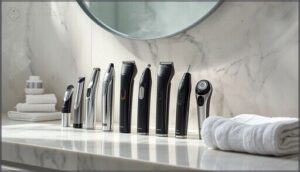
You’ve got the key features down, but now comes the real question: which type of trimmer actually fits your routine?
The choice between electric and manual, safety specs, battery options, and price points can make or break your experience.
Let’s walk through what matters most so you can pick with confidence.
Electric Vs. Manual Trimmers
Your choice between an electric trimmer and a manual nose hair trimmer comes down to speed versus silence. Electric models run motors at 7,000 to 9,000 rpm, cutting multiple hairs in seconds with one-button ease, while manual designs need no batteries and work anywhere quietly.
Electric trimmers offer motor efficiency and rechargeable convenience, but manual tools win on trimmer durability and cost.
Key Safety Features for Beginners
No matter which power source you pick, safety guards are your first line of defense. Beginner-friendly nose hair trimmers keep you safe with these features:
- Protective blade guards shield skin from direct contact with spinning or oscillating cutting edges
- Rounded tips prevent accidental scratches inside delicate nostrils and ear canals
- Hypoallergenic blade materials like stainless steel reduce irritation and allergic reactions
- Waterproof designs let you rinse the cutting head thoroughly for proper trimmer hygiene
- Safety locks and user guidance in manuals specify safe insertion depths for worry-free nose care
Battery Life and Power Sources
Most beginner trimmers run on disposable AA batteries delivering 60 to 100 minutes of runtime or built-in lithium-ion cells offering 45 to 90 minutes per charge via USB.
Rechargeable nose hair trimmer models from Panasonic and Wahl recharge in about 1 to 2 hours, while manual options skip batteries entirely. Since quick sessions consume minimal power, even modest battery life enables months of weekly grooming.
Price and Value Comparisons
You’ll find budget options for nose hair trimmers starting around $10 to $15, while midrange models from Philips Norelco and Braun hit $20 to $40 with better build quality and waterproof ratings.
For smart cost analysis, match price points to your habits—frequent users gain value from durable mid-tier picks, while occasional trimmers save with simple discount deals. Premium grooming tools like Manscaped reach $40 but add rechargeable batteries and refined designs.
Using Nose Ear Trimmers Safely

Getting your technique right makes all the difference between a quick, comfortable trim and an irritating experience.
You don’t need to overthink this, but a few smart habits will keep you safe and prevent those annoying nicks or razor bumps.
Let’s walk through the basics so you can trim with confidence from day one.
Step-by-Step Trimming Guide for New Users
Pre-trim preparation starts with clean hands and a clear nostril—think of it like prepping a workspace before a precision job. Turn on your trimmer before insertion, tilt your head back slightly, and use small circular motions inside each nostril. Your proper grip and safe insertion technique make all the difference in confident grooming.
- Hold the trimmer like a pen for steady control
- Insert only the rounded tip about 5 millimeters deep
- Move slowly in short passes rather than holding still
Avoiding Irritation and Ingrown Hairs
Gentle trimming starts with your nose hair trimmer technique—work in short passes instead of grinding one spot. That’s your first line of defense against redness and bumps.
Choose tools with rounded guards for comfort, then prep with damp tissue beforehand. After grooming, rinse with lukewarm water to flush loose hairs.
Skip plucking entirely since it practically invites ingrown hairs and infections.
Tips for Safe Ear and Nose Hair Removal
Start every nose and ear hair trimming session by cleaning the area with warm water and mild soap—that’s your skin protection baseline. Use a guarded nose hair trimmer or ear hair trimmer to prevent injury, and only trim visible hairs near the opening to preserve natural filtration.
Between sessions, follow strict sanitation methods by rinsing the blade thoroughly, then let it air-dry completely before storing.
Cleaning and Maintaining Your Trimmer
Keeping your trimmer in good shape isn’t complicated, but it does require a bit of consistent care. Regular maintenance extends the life of your device and keeps it cutting smoothly without irritation.
Let’s walk through the essential cleaning habits, rust prevention techniques, and when you’ll need to swap out parts to keep everything running like new.
Regular Cleaning Schedule

You’ll keep your nose hair trimmer running smooth if you brush it clean after every trim—think of daily maintenance like wiping down your kitchen counter.
Rinse waterproof models under running water to flush out hair and skin oils, then let everything air dry before storage. This simple grooming tips routine protects both trimmer hygiene and your investment.
Preventing Rust and Bacterial Buildup
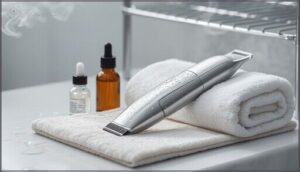
Moisture is rust’s best friend, so you need to dry your trimmer with a towel after every rinse and let it air out for thirty minutes on a ventilated shelf.
Wipe the head with 70 percent isopropyl alcohol to kill bacteria, then add one drop of clipper oil to protect metal surfaces. Choose stainless steel models for washable convenience and store in a dry cabinet—never a sealed bag.
Replacing Parts and Attachments
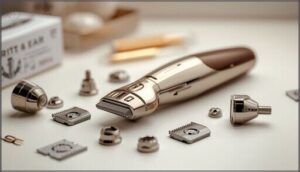
After oiling your trimmer, you’ll eventually need fresh parts to keep performance sharp. Most nose hair trimmer brands recommend swapping rotary heads every three to six months for weekly users—blades dull with regular grooming.
Here’s your replacement checklist:
- Watch for stubble or pulling instead of clean cuts
- Check compatibility charts before ordering attachments
- Twist or snap heads off with the power disconnected
- Replace entire trimmer if vibration or motor noise worsens
- Keep receipts to prove purchase dates for warranty claims on wear part replacement
Multifunctional Uses of Nose Ear Trimmers
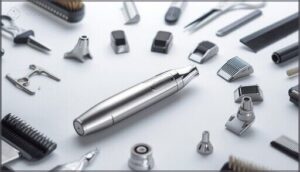
Your nose ear trimmer isn’t a one-trick pony. Most models come with attachments and blade designs that handle way more than just nostril duty.
Let’s look at the different grooming jobs these tools can tackle beyond your nose and ears.
Trimming Eyebrows and Sideburns
Your nose hair trimmer becomes a precision tool for eyebrow maintenance and sideburn styling when paired with the right attachments. Snap-on combs at 3 mm or 5 mm prevent over-trimming while keeping facial symmetry intact. Start with longer guards, work in short strokes, and always trim less than you think you need—brows take weeks to recover from mistakes.
| Grooming Area | Guard Length | Trimming Techniques |
|---|---|---|
| Thick eyebrows | 5 mm comb | Comb natural direction first |
| Neat eyebrows | 3 mm comb | Light strokes at arch |
| Sideburn bulk | Longest setting | Vertical parallel passes |
| Sideburn edge | Detail head | Top-down outline cleaning |
| Fade effect | Graduated guards | Shorter as you move down |
Grooming Mustaches and Beards
Your trimmer’s detail head doubles as a powerful tool for facial hair care and beard styling. Precision tips clean the line under your nose so your mustache won’t touch your lip, while narrow attachments define borders without cutting into the main bulk. You’ll master mustache care and trimming techniques by running light strokes from center outward, keeping both sides even.
- Shape your neckline one to two finger widths above the Adam’s apple
- Outline cheek lines from ear to mouth corner for classic definition
- Blend beard lengths using graduated guards for modern facial hair grooming
Body Grooming Applications
Beyond ears and nostrils, your compact device addresses multiple body grooming zones with the right attachments. Narrow heads tidy finger and toe hair, chest fuzz, and outer bikini-line edges without full-body clippers.
Waterproof designs let you work in the shower, reducing skin irritation on sensitive areas. Always clean between uses to prevent bacterial transfer, and switch to dedicated body trimming tools for denser hair.
Common Mistakes Beginners Should Avoid

Even with the safest trimmer in your hand, you can still mess things up if you’re making rookie errors. I’ve watched plenty of beginners turn a quick grooming session into a red, irritated disaster because they skipped a few basic rules.
Here’s what you need to avoid if you want clean results without the regret.
Over-Trimming and Improper Handling
You might think pushing harder or trimming deeper delivers better results, but that’s where trouble starts. Over-trimming removes natural filters that trap dust and allergens, leaving your nose dry and exposed to infections.
Pushing your nose hair trimmer too far inside risks scrapes, bleeding, and serious discomfort. Gentle trimming techniques with minimal pressure keep your personal grooming safe—only trim visible hairs near the nostril opening, never deep inside where delicate tissue lives.
Not Cleaning The Trimmer Properly
Skipping post-use cleaning routines invites bacterial growth and ruins your grooming tools faster than you’d expect. Quick rinses and thorough drying after each session protect your hygiene and investment.
- Brush loose hairs immediately while they’re easy to remove
- Rinse washable heads under water, then towel-dry completely
- Store in dry spaces to prevent rust prevention issues
Clean trimmer maintenance means safer, smoother personal grooming every time.
Ignoring Manufacturer Instructions
Those warning labels aren’t decoration—they’re your injury prevention roadmap. Pushing your nose hair trimmer deeper than 0.25 inches, using it on damaged skin, or swapping in unapproved attachments causes device damage, safety risks, and warranty voidance.
User errors multiply when you ignore power rules or grooming tools limits. Follow every personal grooming tips detail, and your hair trimming stays smooth instead of sorry.
Frequently Asked Questions (FAQs)
Can I use a nose trimmer for my ears?
You’re not sticking your neck out—most nose trimmers double as ear trimmers when labeled for both areas.
Keep it shallow in your ear canal, clean the head after each use, and you’re golden.
How do I choose a nose trimmer?
When choosing the right nose hair trimmer, focus on core functions like blade materials—stainless steel resists rust—and safety features such as protective guards.
Ergonomic design matters for control, while trimmer types and trimming techniques suit different personal grooming tips.
Is a nose trimmer worth it?
You’ll spend about fifteen to thirty dollars on a nose hair trimmer that trims nose, ears, and brows in under two minutes, replacing multiple grooming tools while preventing irritation from plucking.
How often should I replace my trimmer?
Most trimmer blades need replacement every three to six months depending on usage frequency.
Replace the entire trimmer every two to three years when battery life drops or performance feels rough.
Can nose trimmers be used while traveling?
Yes, nose trimmers work great for travel. TSA allows electric models in carry-on bags, and battery-powered options skip outlet hassles.
Compact designs fit toiletry kits easily, making portable trimmers essential for men’s grooming on the road.
Are replacement blades universally compatible across brands?
No, replacement blades aren’t universally compatible.
Most brands design model-specific mounting systems and blade shapes, so you’ll need to match the exact trimmer model when buying replacement blades.
You’ll need to match the exact trimmer model when buying replacement rotary or oscillating blades.
What causes trimmer blades to become dull?
Like a knife dulling, your trimmer blades lose their edge through normal metal fatigue, hair buildup between rotary blades, moisture damage, and poor lubrication after each nose hair trimmer session.
Is trimming nose hair bad for health?
Basic trimming of visible nose hair is safe for health and hygiene. Your nasal filter role stays intact when you only cut what sticks out, avoiding over-trimming risks and plucking dangers.
Conclusion
An ounce of prevention beats a pound of regret—especially when sharp objects meet sensitive skin. You’ve now got eight proven nose ear trimmers for beginners, each designed to eliminate nicks while delivering clean results in under a minute.
Your roommate’s scissor disaster doesn’t have to be your story. Pick the trimmer that matches your lifestyle, follow the safety steps we covered, and you’ll wonder why you waited so long to reclaim confidence in your grooming routine.
- https://www.gq.com/story/best-nose-hair-trimmers
- https://sharpologist.com/what-is-the-best-nose-and-ear-trimmer/
- https://www.menshealth.com/grooming/g32085361/best-nose-hair-trimmer/
- https://www.pocnetwork.net/product-reviews/conair-conairman-lithium-powered-nose-ear-trimmer/
- https://www.artofmanliness.com/style/hair/trim-nose-ear-hair/