This site is supported by our readers. We may earn a commission, at no cost to you, if you purchase through links.
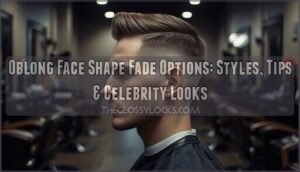
An oblong face shape gives you sharp angles and clean lines, but without the right fade, that length can feel more like a liability than an asset. The trick isn’t covering up those proportions—it’s working with them to create balance.
A well-placed fade can add width where you need it, break up vertical lines, and turn what feels like too much length into a commanding silhouette. Whether you’re after subtle refinement or a bold contrast cut, the right oblong face shape fade options transform your natural structure into something purposeful. You’re about to discover how different fade heights, textures, and styling approaches reshape your look from the ground up.
Table Of Contents
- Key Takeaways
- Best Fade Styles for Oblong Faces
- Layering and Texture to Enhance Width
- Bangs and Fringes That Shorten Face Length
- Styling Tips for Oblong Face Fades
- Celebrity-Inspired Fade Looks
- Frequently Asked Questions (FAQs)
- What haircut suits an oblong face?
- Is barber’s cut good for an oblong face?
- Is drop fade good for oblong face?
- How often should I trim my fade haircut?
- Can oblong faces pull off undercut styles?
- What beard styles complement oblong face fades?
- Do buzz cuts work for oblong face shapes?
- Should I avoid center parts with fade haircuts?
- Conclusion
Key Takeaways
- A well-executed fade haircut adds width to oblong faces by creating horizontal emphasis at the temples and sides, counterbalancing vertical length without adding height to the top.
- Low to mid fades offer the most balanced proportions for oblong faces, while high fades and skin fades require careful pairing with textured, moderate-length tops to avoid elongating the face further.
- Layering and texture, as well as strategic bangs—like side-swept fringe or curtain bangs—break up vertical lines and visually shorten face length, creating width where you need it most.
- Styling techniques like deep side parts, volumizing products at the crown, and blow-drying with horizontal lift transform your fade from a basic cut into a commanding, proportionally balanced silhouette.
Best Fade Styles for Oblong Faces
When you’ve got an oblong face, the right fade can completely change your look—adding width where you need it and balancing out those longer proportions.
A well-executed fade haircut adds structure to oblong faces by creating visual width at the sides while keeping the top balanced.
Different fade styles work with your features in different ways, so knowing your options helps you walk into the barbershop with confidence. Let’s break down the five fade styles that work best for your face shape and what makes each one worth considering.
Low Fade for Balanced Proportions
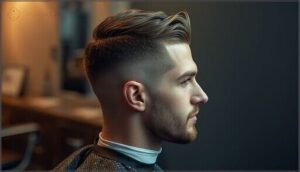
A low fade gives you proportional balance without sacrificing edge. Starting about 1.5 inches from your ear, this fade technique transitions smoothly from skin to hair, creating natural face symmetry that works with your oblong face shape.
- Keeps top length balanced for overall face shape and symmetry harmony
- Subtle gradient prevents elongating your face further
- Works with any hair texture—straight, wavy, or curly
- Pair with styling products for textured, controlled movement
- Perfect hairstyle inspiration for guys wanting understated sharpness
For more on how fades are adaptable for different face shapes, check out these fade haircut style tips.
Mid Fade to Add Structure
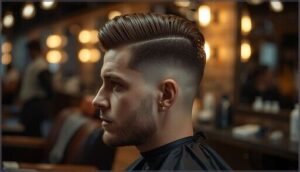
When you want definition with punch, a mid fade delivers. Starting at your temple line, this fade builds structural balance by keeping the sides clean while your top holds volume. It’s your power move for taming an oblong face shape—face framing that works with any hair texture.
| Feature | Benefit |
|---|---|
| Temple-level start | Creates horizontal emphasis |
| 2.5–4 inch top | Prevents face elongation |
| Textured styling | Breaks vertical lines |
For hairstyle inspiration and styling tips that enhance face shape and symmetry, a midfade gives you control. You can discover more about the advantages of specific to oblong face shapes.
High Fade for a Bold Statement
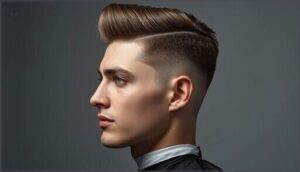
Going higher takes guts and pays off. A high fade exposes more skin along your sides, creating horizontal emphasis that counters length.
Pair it with a rounded, textured top and you’re balancing facial proportions like a pro. This bold haircut thrives on high contrast, so keep top height moderate and consider a soft fringe to tame your forehead. It’s statement styling with serious facial balance built in.
For more detailed guidance on choosing the right textured top fade for your unique face shape, check out this complete textured top fade styling guide.
Taper Fade for a Classic Look
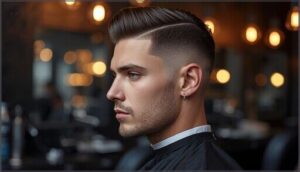
If you’re after something timeless, a taper fade delivers refined face symmetry without the drama. This classic style gradually reduces length from your top down to the neckline, making it one of the most adaptable tapered haircuts for oblong face shapes.
Keep your top medium to long with texture to add width, and ask your barber for a neat side part. It’s hairstyle advice that never goes out of style.
Skin Fade for a Sleek Finish
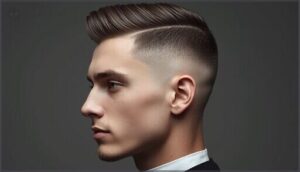
A skin fade brings extreme contrast that sharpens your silhouette and highlights width on top. Here’s how to nail this sleek style for your oblong face shape:
- Keep your top moderate—2.5 to 4 inches with texture prevents elongation
- Sharp temple lines define modern fade maintenance standards
- Light-hold styling products maintain natural hair texture
- Pair with brushed-back or structured haircut styles for balanced proportions
Layering and Texture to Enhance Width

When you’re working with an oblong face, the right layering and texture can completely change the game by adding width where you need it most. Think of it as building dimension on the sides while keeping things balanced—this isn’t about hiding your face shape, it’s about making it work harder for you.
Here are four powerful approaches that’ll give you that perfect horizontal emphasis.
Textured Crop With Fades
You can’t go wrong pairing a textured crop with any fade technique—low, mid, or high.
The choppy, textured layers on top bring instant hair volume that widens your oblong face shape, while the fade keeps your sides clean and proportional. Use a matte styling product to grip those textured layers and enhance dimension.
This haircut delivers bold structure without looking overdone.
Layered Top for Volume
Layered haircuts with crown layers deliver the volume techniques you need to widen an oblong face. Keep your top layers 1–2 inches shorter than the longest strands, then add hair texture with point cutting to encourage lift.
A root-lifting spray and blow-dry routine lock in hair volume, while a light pomade maintains flexible movement. Layering techniques like these reshape proportions with confidence.
Messy and Tousled Styles
Forget rigid structure—messy layers and tousled texture build soft volume that transforms oblong faces. Your fade works harder when you pair it with beachy waves or a laid-back style on top.
Use sea salt spray and scrunch while drying to create irregular textures that add width. A light fringe or side-swept bangs shortens perceived length, giving you hairstyles that reshape proportions without looking overdone.
Curly and Wavy Fade Options
Curly hair brings natural width right where your oblong face needs it—stacked on top of a clean fade that sharpens your silhouette. Wavy haircuts with a mid or low fade create dimension without adding height, while curl enhancement products keep each coil defined and bouncy.
- Keep top curls 2 to 4 inches for visible texture
- Use leave-in conditioner to prevent frizz during fade maintenance
- Try a curly bob cut with tapered sides for balanced proportions
- Refresh fade every 2 to 4 weeks to preserve contrast
Bangs and Fringes That Shorten Face Length
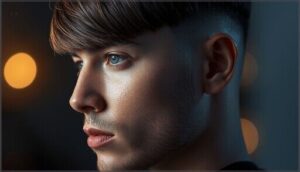
If your face runs long, bangs are your secret weapon. They break up vertical space and create a visual stop that draws the eye across instead of down.
Here’s how to use fringes with fades to shorten your face and add balance.
Side-Swept Bangs With Fades
Side-swept bangs with fades create diagonal lines that visually chop down face length—perfect for oblong face shapes looking to balance proportions.
The fade techniques keep sides tight while your bangs sweep across, adding face framing width right where you need it. Ask your stylist for soft layering in the hair texture to avoid harsh horizontals. This hairstyle works whether you’re rocking straight or wavy hair, giving you command over your look.
Light Fringe for Softer Features
A light fringe resting just above your eyebrows cuts forehead height instantly—shortening your face shape without heavy commitment. This soft fringe placement works magic on oblong faces through wispy, feathered hair texture that frames features gently.
Keep layers airy to avoid piling on crown volume, and choose styling tips that emphasize natural movement. Think face framing bangs that break up length while complementing your fade—not competing with it.
Curtain Bangs to Balance Proportions
Want instant facial balance? Curtain bangs split down the center and sweep outward—creating horizontal breaks that shorten your oblong face shape naturally. Here’s how to nail this face framing move:
- End longest sections near cheekbones for added width
- Keep a soft, rounded bend over your forehead
- Blend bangs styling seamlessly with surrounding hair texture
- Trim regularly to maintain gentle shape
- Avoid boxy cuts that emphasize length
These proportion tips deliver hairstyles that work.
Styling Tips for Oblong Face Fades
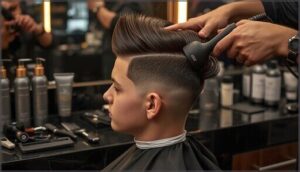
Getting the right fade is only half the battle—you’ve also got to style it like you mean it.
The way you part, product up, and blow-dry your hair makes all the difference in widening your face and owning that bold, balanced look you’re after. Let’s break down the three game-changing techniques that’ll help you nail it every single time.
Choosing The Right Parting
The parting you choose shapes everything. For oblong face shapes, a deep side part creates asymmetry that visually widens your forehead and temples—exactly what you need.
Skip the center part; it reinforces length. Instead, try a diagonal or zigzag parting to add texture and break up vertical lines. Pair it with curtain bangs or face-framing layers, and watch your fade transform your proportions with hairstyles that command attention.
Using Products for Volume
Volume boosters are your secret weapon. Grab a volumizing mousse or root lifting spray—apply it at the crown while your hair’s damp, and you’ll see lift that lasts hours.
Texture sprays work wonders for oblong face shapes, adding width without weight. Hair thickening products create fullness at the sides, balancing your proportions. Layer a lightweight foam with a texturizing powder for maximum impact.
Blow-Drying Techniques for Width
Grab your round brush and aim for horizontal lift—start at the roots, working in sections from ear to ear.
The diffuser attachment tames frizz on curls while maintaining body. Control your air flow at medium heat to avoid flattening texture.
Proper blowout techniques transform your fade by building width where you need it most, perfectly balancing your oblong face shape.
Celebrity-Inspired Fade Looks
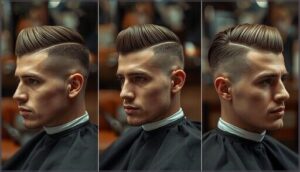
You don’t need to reinvent the wheel in terms of finding a fade that works for your oblong face. Some of the most stylish people out there—actors, athletes, musicians—have already figured out what works, and their barbers know how to make those fades look fantastic.
Let’s break down a few standout looks you can bring to your next appointment and make your own.
Iconic Fades on Oblong Faces
Think Zayn Malik’s sharp high fade or Adam Levine’s textured mid fade—both rock oblong face shapes with confidence.
These celebrity inspirations show how fade techniques paired with the right hair texture tips create width without adding height. Whether you’re after a sleek skin fade or a classic taper, studying these haircut styles for face shapes gives you real barber advice for your own oblong face shape fade.
How Celebrities Style Their Fades
On the red carpet, celebrities don’t just show up—they bring precision. Zayn Malik relies on strong-hold pomade to sculpt his high fade’s angular top, while Adam Levine uses lightweight styling products for that easy, textured finish.
Analyzing celebrity hairstyles reveals that men’s grooming success hinges on matching product to fade height. These celebrity fade trends prove that oblong face shape fades demand intentional styling, not guesswork.
Adaptable Trends for Personal Style
Borrow a celebrity’s energy, but make the fade yours. Personal Style Evolution happens when you merge Face Shape Analysis with Fashion Forward Thinking:
- Start with a celebrity fade you admire, then adjust the fade height to suit your oblong proportions
- Swap trendy hair accessories like headbands to add horizontal width
- Test different textures until you discover your signature look
- Build Stylish Confidence Boosters through consistent men’s grooming tips and maintenance routines
Frequently Asked Questions (FAQs)
What haircut suits an oblong face?
Your oblong face shape deserves a total makeover: haircuts that add width through layering and texture.
Curtain bangs, side-swept fringe, and voluminous tops balance your features beautifully while softening vertical length.
Is barber’s cut good for an oblong face?
A barber’s cut absolutely works for oblong face shapes. Your barber can customize fades, texture, and length to widen your face visually.
Facial structure enhancement through proper fade hairstyles balances proportions perfectly.
Is drop fade good for oblong face?
A drop fade works beautifully for oblong faces because it draws attention sideways, creating width across the temples.
This styling trick balances proportions perfectly, making it a smart fade choice for your face shape analysis and maintenance routine.
How often should I trim my fade haircut?
Most fades demand a refresh every two to three weeks—your hair grows half an inch monthly.
High fades need attention weekly, while taper fades stretch to four weeks before lines blur and styling effects fade.
Can oblong faces pull off undercut styles?
Absolutely—you can rock an undercut if you balance it right.
The key is using layering techniques and textured styling on top to add width, preventing your face shape from looking overly narrow or stretched.
What beard styles complement oblong face fades?
Your best move is horizontal fullness—think textured stubble or a wide cheek beard with fade.
Sideburn styles flowing into facial hair add jawline enhancement and hair volume, creating facial symmetry that balances oblong face shape naturally.
Do buzz cuts work for oblong face shapes?
Buzz cut styles can be challenging for oblong face shapes since they expose the full face length.
However, pairing a buzz cut with a textured fade or fringe can balance proportions and improve width perception.
Should I avoid center parts with fade haircuts?
Ironically, the parting that promises the most symmetry can make your face look even longer.
Center parts draw vertical lines that emphasize length, so a deep side part with fade techniques adds width and balances oblong face shapes better.
Conclusion
Your face isn’t a problem to solve—it’s architecture waiting for the right blueprint. The oblong face shape fade options laid out here give you precision tools to engineer balance, add dimension, and own your proportions instead of fighting them.
Whether you’re leaning into textured volume, strategic fringes, or clean tapers, you’re not just getting a haircut—you’re commanding presence. Step into that chair knowing exactly what you want. That’s when transformation happens.
- https://www.instagram.com/mckenzielehmann/
- http://saloninspirekc.com/
- https://www.fresha.com/providers/chaps-co-dyg2gplf?_gl=1*1wwl97m*_gcl_au*MjEzOTgxMjQ3Mi4xNzM2NTAxNzY1*_ga*MzE2NjE2NDkuMTcyMDQ0OTE4Ng..*_ga_X7BJ0V8WRB*MTczNjUwMTc2NS4yOS4xLjE3MzY1MDI2MzIuMjcuMC4xNjc1Mzc2ODA0&_ga=2.192943659.729263631.1736501766-31661649.1720449186