
This site is supported by our readers. We may earn a commission, at no cost to you, if you purchase through links.
Most shaving problems trace back to one variable most people never think to adjust—blade angle. Not a dull edge, not cheap cream, not the wrong razor. The angle.
Hold it too steep, and the blade digs into skin instead of hair. Too shallow, and it skims right over stubble like it’s not even there.
That narrow window between those two extremes—roughly 30 degrees for most razors—is where clean, irritation-free shaving actually happens.
This best shaving angle guide breaks down exactly how to find it, hold it, and adapt it for every razor type you’ll ever pick up.
Table Of Contents
Key Takeaways
- Blade angle — not dull blades or cheap cream — is the root cause of most shaving problems, and nailing that 30-degree sweet spot changes everything.
- Every razor type plays by different rules: safety razors need a 40–45° handle tilt to hit 30°, straight razors demand 20–30° with spine control, and cartridge pivots do the adjustment work for you.
- Your razor gives real-time feedback — a clean "zzzt" sound means you’re on, harsh scraping means you’ve gone too steep, so listen and adjust mid-stroke.
- Skin prep isn’t optional: warm water, a wet towel soak, exfoliation, and quality lather soften hair before the blade arrives, making angle control far more forgiving.
Why Shaving Angle Matters for a Smooth Shave
Most shaving problems don’t come from a dull blade — they come from holding your razor at the wrong angle.
Getting that angle right makes all the difference, and this guide on shaving angle tips for beginners breaks down exactly where most people go wrong.
A small adjustment in how you tilt that handle changes everything: fewer nicks, less burn, smoother skin.
Here’s exactly what angle control does for your shave.
Preventing Cuts and Skin Irritation
Holding the blade at the wrong angle is the real culprit behind most nicks — not a dull edge. Razor blade angle control determines whether the blade shears cleanly or digs in.
Steep angles pull skin into the edge; shallow ones tug hair instead of cutting it. Combined with proper pressure control and pre‑shave hydration, dialing in your angle eliminates razor burn and skin irritation before they start.
Mastering blade angle, pressure, and hydration is the secret to preventing razor burn and irritation before they ever begin
applying shaving gel gently can further reduce irritation.
Achieving a Close, Comfortable Shave
Angle does more than prevent cuts — engine behind shave quality. Lock in that 30-degree blade angle, and each pass through the multi-pass technique removes more hair with less effort.
Pair that with proper skin hydration, pre‑shave exfoliation, and smart lubrication choice, and your razor glides instead of drags. Blade sharpness maintenance keeps razor blade angle control predictable — no surprises, no razor burn.
The multi‑pass shaving technique uses gentle passes to reduce irritation.
Minimizing Ingrown Hairs
Wrong blade angle doesn’t just cause razor burn — it’s the main driver of ingrown hairs. When you shave against the grain at a steep angle, hair gets forced below the skin surface and curls inward.
Pre-shave exfoliation lifts trapped hairs before your blade arrives.
Pair that with hair direction awareness, blade sharpness maintenance, and a solid skin hydration routine, and ingrown hairs drop by half.
Finding The Optimal Angle for Each Razor Type
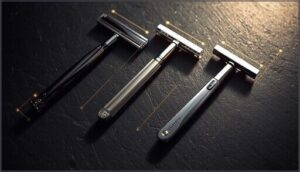
Not every razor plays by the same rules — and that’s where most people go wrong.
Angle that works for a safety razor will wreck your shave with a straight razor.
Each type actually needs.
Safety Razors and The 30-Degree Rule
Safety razors don’t forgive guesswork — 30 degrees is your target, full stop. That’s the blade angle where the razor cuts whiskers cleanly without scraping skin. Handle position matters here: tilt it 40–45 degrees from your face, and the blade naturally lands at 30. Blade exposure, grip pressure, and skin preparation all influence your angle feedback.
- Keep the handle roughly 40–45 degrees from your face
- Let blade maintenance guarantee predictable, consistent edge contact
- Light grip pressure prevents you from digging past 30 degrees
- Use proper shaving technique: both cap and guard touching skin simultaneously
- Listen — a quiet chatter confirms your razor blade is seated correctly
Straight Razors and Angle Control
Straight razors demand the most from you — and reward precision in kind.
Shaving angle sits between 20 and 30 degrees, shaped directly by spine lift and bevel geometry.
Full hollow grind sharpens easily but punishes sloppy blade angle instantly.
Grip variations like the pinch or push grip help maintain control.
Listen for that clean, whispering cut — that’s your feedback technique confirming correct razor blade contact.
Cartridge and Electric Razor Considerations
Cartridge razors take the guesswork out of shaving angle — pivot mechanism design automatically adjusts up to 40 degrees to follow your jaw and chin. Multi-blade spacing lifts and cuts hair in fewer strokes, while blade lubrication strips reduce drag by 30%.
Electric razors split into two camps: foil angle optimization demands a strict 90-degree hold, and rotary head flexibility manages circular motions at the same flat angle.
Your shaving technique still matters — razor maintenance keeps both predictable.
Step-by-Step Guide to Perfect Razor Angle
Knowing the right angle means nothing if you don’t know how to get there in the first place.
The good news — it’s a repeatable process, and once it clicks, it stays with you. Here’s exactly how to work through it, step by step.
Preparing Your Skin and Hair

Shave preparation starts well before the razor touches your face. Begin with skin cleansing using lukewarm water to open pores and strip away oil.
Then apply warm towel softening for 1–2 minutes — this relaxes the hair shaft considerably.
Follow with gentle exfoliation techniques to lift stubble, work in pre‑shave oil, then focus on lather building with shaving cream.
Proper prep eliminates unnecessary skin irritation and ingrown hairs.
Positioning The Razor Handle Correctly

Your grip is the foundation — get it wrong and no amount of technique saves you.
- Finger Placement: Pinch the knob end with thumb, index, and middle fingers — pencil-style.
- Grip Pressure: Keep pressure at the handle base, never the blade.
- Cap Positioning: Rest the top cap flat against your cheek first.
- Handle Tilt: Lower the handle until the razor blade engages at 30 degrees.
- Wrist Alignment: Lock your wrist — let razor weight do the cutting.
Adjusting Angle During Each Stroke

The angle doesn’t stay fixed — it shifts with every curve on your face.
Use the Short Stroke Reset method: keep strokes to 2–3 cm, resetting blade contact at each inch. Apply Zone‑Specific Shifts — flatter on cheeks (30–35°), slightly steeper along the jaw (40–45°).
| Zone | Blade Angle | Stroke Length |
|---|---|---|
| Cheeks | 30–35° | 3 cm |
| Jawline | 40–45° | 2 cm |
| Neck | 25–30° | 2 cm |
Real-Time Feedback: Sound, Feel, and Skin Response
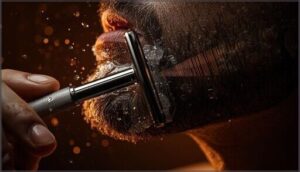
Your razor talks — you just need to listen. A proper shaving angle produces a clean "zzzt" sound; harsh scraping means you’re too steep. Master this feedback loop quickly:
- Auditory cues — a light, consistent hiss confirms correct shaving angle
- Tactile resistance — smooth glide consistency means the blade’s skimming, not dragging
- Skin tension cues — taut skin eliminates razor burn before it starts
Top 7 Tools for Mastering Shaving Angle
Knowing the right angle matters — but having the right tools makes it stick.
The gear you use shapes how quickly you build that muscle memory and how forgiving the learning curve feels.
Here are seven tools worth having in your kit.
1. Dovo 6/8 Black Straight Razor
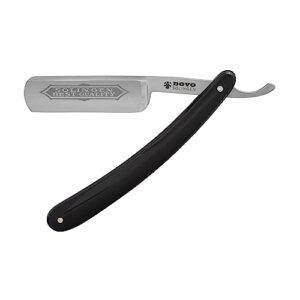
Picking the right straight razor is half the battle. The Dovo 6/8 Black delivers where it counts — a full hollow grind that flexes just enough against your skin, producing that satisfying hum when your angle is dialed in at 30 degrees.
The 6/8-inch carbon steel blade manages thick, coarse hair without dragging. Its ribbed tang keeps your grip firm even with wet fingers. German-engineered, stylist-approved, and built to last — if you maintain it.
| Best For | Men with thick, coarse facial hair who want a classic straight razor shave — whether they’re just starting out or already know their way around a strop. |
|---|---|
| Material | Steel blade, synthetic handle |
| Primary Use | Straight shaving |
| Skill Level | Beginner to expert |
| Maintenance Required | Yes, stropping and honing |
| Weight | 1.76 oz |
| Country/Standard | German-made |
| Additional Features |
|
- German-engineered blade with a full hollow grind that gives a close, comfortable shave without pulling
- Ribbed tang keeps your grip solid even with wet hands
- Built to last for years with proper maintenance — a real long-term investment
- May not arrive shave-ready, so you might need to strop or sharpen it before the first use
- The handle has been known to feel flimsy and can crack over time
- Pricier than most modern shaving options, and occasional quality control issues mean you might get a unit that needs extra attention
2. DOVO Inox Straight Razor Olive Wood
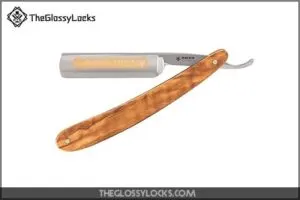
If carbon steel isn’t your thing — maintenance anxiety is real — the DOVO Inox Straight Razor in olive wood solves that. The 1.4034 stainless steel blade resists soap, water, and steam without fussing. That factory edge carries a 2-year sharpness guarantee, so you’re not fumbling with a strop on week one.
The 5/8-inch full hollow grind still delivers that satisfying feedback at 30 degrees. And the olive wood handle? Harder than oak, naturally water‑resistant, and honest‑looking.
| Best For | Guys who want the straight razor experience without the stress of babying a carbon steel blade. |
|---|---|
| Material | Stainless steel, olive wood |
| Primary Use | Straight shaving |
| Skill Level | Intermediate to expert |
| Maintenance Required | Yes, honing and stropping |
| Weight | 0.35 oz |
| Country/Standard | International |
| Additional Features |
|
- Stainless steel blade shrugs off rust and moisture — way less fuss between shaves
- That 2-year sharpness guarantee means you can actually enjoy it before worrying about maintenance
- Olive wood handle looks great and holds up well to water over time
- Not the friendliest starting point if you’ve never used a straight razor before
- You’ll eventually need a strop or sharpening stone, which adds to the cost
- Some users have had mixed feelings about the handle’s construction quality
3. Norton Japanese Waterstone 4000 8000 Grit
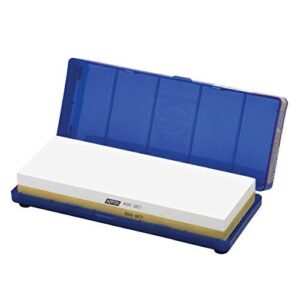
A sharp razor demands a sharp stone. The Norton 4000/8000 waterstone gives you both grits in one block — no juggling separate stones.
Start on the 4000 side after a 10-minute soak; it removes metal fast and resets your bevel. Flip to the 8000 for a mirror-polished edge.
The corundum abrasive cuts clean, and the included case doubles as your water tray. At 8 inches long, you get full blade strokes without rushing.
| Best For | Home cooks and serious knife enthusiasts who want one stone that handles both edge refinement and final polishing without buying a full set. |
|---|---|
| Material | Corundum stone |
| Primary Use | Blade sharpening |
| Skill Level | Beginner to expert |
| Maintenance Required | Yes, soaking before use |
| Weight | 2.05 lbs |
| Country/Standard | JIS-certified |
| Additional Features |
|
- Two grits in one block — the 4000 side sharpens, the 8000 side polishes, so you go from dull to razor-sharp in one session
- Corundum material cuts efficiently and the slurry it builds up actually helps the sharpening process
- Comes with a holder and case that doubles as a soaking tray, so setup is quick and cleanup is easy
- Needs a 15–20 minute soak before you can use it, so it’s not a grab-and-go option when you’re in a hurry
- At just over 7 inches, longer blades like chef’s knives or cleavers may feel a little cramped
- Doesn’t come with a coarse grit side, so if your knife is really damaged or needs serious reprofiling, you’ll need a separate stone for that first step
4. Fromm Razor Strop Blade Sharpener
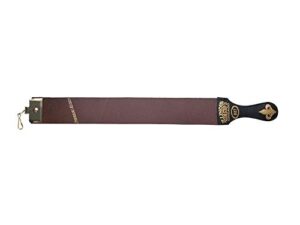
Once your edge is polished on the waterstone, a strop keeps it that way. The Fromm IRS127 gives you two working surfaces in one — 16 inches of top grain cowhide leather on one side, zinc oxide-impregnated canvas on the other.
Canvas first to abrade and realign, leather last to straighten the edge without removing steel.
At 2.5 inches wide with a smooth swivel, it stays controlled in your hand.
Handcrafted in the USA.
Built to last.
| Best For | Wet shavers and woodworkers who already know their way around a blade and want to keep a straight edge razor or fine tool in peak condition. |
|---|---|
| Material | Cowhide leather, canvas |
| Primary Use | Blade stropping |
| Skill Level | Intermediate to expert |
| Maintenance Required | Yes, occasional dressing |
| Weight | 6.4 oz |
| Country/Standard | Handcrafted in USA |
| Additional Features |
|
- Two surfaces in one — canvas abrades and realigns, leather finishes and polishes
- Handcrafted in the USA from top grain cowhide, so it’s built to hold up
- Eco-friendly way to extend the life of your blades instead of tossing them
- Hardware feels a bit cheap for the price point
- Leather can be stiff out of the box and needs conditioning before it’s ready to use
- Not beginner-friendly — you’ll need proper stropping technique to get good results
5. Porter Badger Shaving Brush
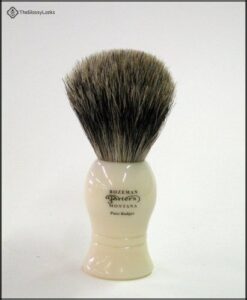
Lather is your razor’s runway — and the Porter Badger Shaving Brush builds it right. Pure badger bristles hold heat and water, producing thick, cushioned lather that softens whiskers before your blade even touches skin. That prep work matters.
Softened hair offers less resistance, so your razor rides at a consistent 30 degrees without dragging. The molded plastic handle stays secure in wet hands. At $35, it’s a practical upgrade that directly enhances cleaner, more controlled strokes.
| Best For | Anyone who wants a reliable, no-fuss shaving upgrade that cuts down on razor burn without spending a fortune. |
|---|---|
| Material | Badger hair, plastic |
| Primary Use | Lather application |
| Skill Level | Beginner to expert |
| Maintenance Required | Yes, rinse after use |
| Weight | 2 oz |
| Country/Standard | Standard import |
| Additional Features |
|
- Pure badger hair holds heat well and builds thick, cushioned lather fast
- Softens hair before the blade hits, which means less drag and fewer nicks
- At $35, it’s a solid step up from a cheap brush without breaking the bank
- The plastic handle feels lightweight and may show casting marks
- Bristles can shed over time with regular use
- Runs smaller than some buyers expect — worth checking the dimensions first
6. Taylor Old Bond Street Sandalwood Shaving Cream
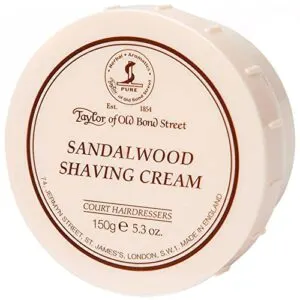
Lather quality is half the battle — and Taylor of Old Bond Street’s Sandalwood Shaving Cream delivers. small almond-sized amount builds into dense, cushioned foam that shields skin and softens beard hair before your blade contacts it.
That cushion keeps your razor gliding at a consistent angle without dragging or skipping.
Glycerin hydrates as you shave, reducing irritation on sensitive skin.
At $19.99 for 150g, it’s precise prep in a bowl.
| Best For | Men with sensitive skin who want a premium, close shave with a rich lather and classic fragrance. |
|---|---|
| Material | Cream formula |
| Primary Use | Shave lubrication |
| Skill Level | Beginner to expert |
| Maintenance Required | No |
| Weight | 5.3 oz |
| Country/Standard | Paraben-free formula |
| Additional Features |
|
- Builds a dense, cushioned lather that protects skin and softens beard hair for a smooth, close shave
- Glycerin keeps skin hydrated throughout the shave, cutting down on irritation
- Paraben-free formula works for all skin types and holds up well for daily use
- The sandalwood scent is bold — if you’re sensitive to strong fragrances, it might be a bit much
- At $19.99, it costs more than most drugstore shaving creams
- The bowl packaging isn’t the most durable, and some users have reported receiving it damaged
7. Facón Straight Razor Kit
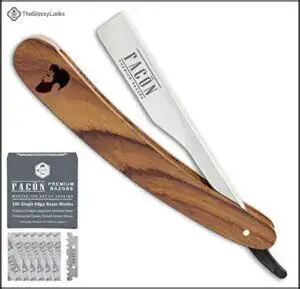
Facón Straight Razor Kit bundles everything a beginner needs to start shaving at the right angle — no guesswork, no sourcing parts separately.
swing lock blade system holds a half double-edge blade securely, mimicking a traditional straight razor’s exposed-blade feel.
angle discipline fast.
100 platinum-coated Japanese steel blades, each good for 200-plus shaves.
2.4 ounces, the handle stays balanced without feeling flimsy.
Precision and consistency — right out of the box.
| Best For | Barbers and everyday guys who want a clean, close shave with pro-level precision — no experience required to get started. |
|---|---|
| Material | Stainless steel |
| Primary Use | Straight shaving |
| Skill Level | Beginner to expert |
| Maintenance Required | Yes, blade replacement |
| Weight | 2.4 oz |
| Country/Standard | Barber-grade |
| Additional Features |
|
- Comes with 100 platinum-coated blades, so you’re stocked up for a long time
- Stainless steel build with an ergonomic grip makes it feel solid and comfortable in hand
- Works great for shaping beards, cleaning up sideburns, or going fully clean-shaven
- Takes some practice to nail the angle — beginners may nick themselves early on
- The lightweight feel can come across as flimsy to some users
- Blade exposure might feel like too much for anyone with smaller hands
Troubleshooting and Advanced Angle Techniques

Even when you nail the basics, small angle mistakes can quietly wreck an otherwise solid shave.
Knowing how to troubleshoot those moments — and when to push into more sophisticated technique — separates a decent shave from a great one.
Here’s what to work through.
Avoiding Common Mistakes With Angle
Most angle mistakes fall into two camps: too steep or too flat.
Steep angle risks hit hard — anything past 40 degrees digs in, feels grabby, and causes nicks.
Flat angle issues are sneakier, scraping instead of cutting and leaving diffuse redness.
Stroke angle drift is equally dangerous — mid‑stroke tilting catches skin unexpectedly.
For sensitive zone adjustments, go shallower.
Avoid overlap stroke errors by completing one clean pass first.
Riding The Cap Vs. Riding The Guard
Two techniques split most safety razor users: cap riding and guard riding.
Cap technique benefits include a shallower blade angle — around 20 to 25 degrees — with the top cap flat against skin, stretching it lightly for smoother glide.
Guard technique advantages kick in for three‑plus‑day growth, tilting the razor blade to 35 to 40 degrees for deeper blade exposure.
Match your razor compatibility choices to growth length.
Adapting Angle for Sensitive Skin
Sensitive skin punishes bad angles fast.
Drop to a shallow blade tilt — around 25 degrees — and you’ll cut razor burn risk considerably.
For neck angle adjustments, keep strokes under two inches and angle the handle at 45 degrees.
Mild razor settings like R1 reduce blade exposure without sacrificing closeness.
Proper hydration softens hair, making shaving technique forgiving.
Trust your feedback sound cues — smooth scraping means you’re safe.
Razor Maintenance and Consistent Performance
Your razor’s geometry only stays consistent when you maintain it. A solid blade rinsing routine — every few strokes, front-to-back — keeps cutting channels clear and blade angle predictable. Air-dry storage beats towel-wiping every time; friction damages edges fast.
- Stropping frequency: before every straight razor session
- Honing schedule: roughly once yearly with consistent stropping
- Cartridge alignment check: never tap cartridges on the sink
- Replace safety blades every 5–10 shaves
Razor maintenance protects blade exposure and razor sharpness simultaneously.
Frequently Asked Questions (FAQs)
How does facial hair growth direction affect shaving?
Your facial hair doesn’t grow uniformly — grain mapping reveals distinct zones.
Jawline angle shifts and neck hair patterns demand directional stroke adjustment.
Chin density considerations further dictate blade angle, making hair growth awareness essential to any shaving technique.
Can shaving angle vary by body area?
Yes — shaving angle varies by body area. Your legs handle 35–40°, underarms need constant angle adjustments, the bikini line stays shallow around 20–25°, and scalp shaving tilt shifts constantly across curves.
Does shaving cream thickness change the ideal angle?
You’re not overthinking it—Shaving Cream thickness doesn’t change Effective Angle Window, Cushion Effect, Slickness Impact, and Hair Exposure alter Razor Angle feel, forcing a Comfort Tradeoff that ties Shaving Angle, Shave Quality, and Shaving Techniques.
How often should beginners practice angle technique?
Daily sessions beat sporadic practice every time. One shave per day builds the muscle memory you need — most beginners nail consistent razor angle and shaving technique within 30 days.
Does skin stretching improve razor angle accuracy?
smooth path beats a rough one every time.
stretching skin is a core shave preparation move — taut skin locks your shaving angle, cuts snag risk, and keeps blade contact consistent across every stroke.
Conclusion
Funny how the smallest adjustments change everything—a fraction of a degree between a clean stroke and a raw, irritated jaw. That’s the whole game.
This ideal shaving angle guide gives you the exact framework to stop guessing and start controlling every pass. Lock in your 30-degree hold, listen for that clean whisper against skin, and trust the feedback your razor gives you. Master the angle, and you’ve mastered the shave.
- https://hendrixclassics.com/blogs/articles/best-razor-blade-angle-for-optimum-efficiency
- https://hensonshaving.com/pages/technical-data
- https://cutthroatclub.co.uk/blogs/instructions/how-to-use-a-double-edge-razor
- https://www.razorus.com/10-common-mistakes-wet-shavers-make
- https://www.stjamesshavingemporium.co.uk/blogs/the-barbers-chair/safety-razor-aggressiveness