This site is supported by our readers. We may earn a commission, at no cost to you, if you purchase through links.

Most guys blame the razor when a shave goes wrong. A dull blade, they say—or cheap drugstore cream.
But after years behind the barber chair, I can tell you the real culprit is almost always the lather.
Too thin, and your razor drags across dry skin. Too thick, and it clogs the blade, killing every pass.
Perfect shaving cream consistency sits right in the middle—a dense, creamy foam that glides like silk and holds its shape stroke after stroke.
Get that texture dialed in, and everything else falls into place.
Table Of Contents
- Key Takeaways
- What is The Perfect Shaving Cream Consistency?
- Essential Ingredients for Optimal Lather
- Choosing The Right Cream for Your Skin Type
- Tools Needed for Perfect Lather Consistency
- Step-by-Step Guide to Achieving Ideal Consistency
- Spotting and Fixing Bad Shaving Cream Lather
- Maintaining Lather Quality Throughout Your Shave
- Frequently Asked Questions (FAQs)
- Conclusion
Key Takeaways
- Your lather is almost always the reason your shave goes wrong—not your razor—so getting a dense, silky, medium-thick consistency is the single most important thing you can dial in.
- The right ingredients matter more than most guys think: look for glycerin and aloe vera for cushion and hydration, and avoid sodium lauryl sulfate, denatured alcohol, and propellant gases that wreck your lather before it even hits your face.
- Water temperature (85–95°F), a proper shaving brush, and a 1:3 cream-to-water ratio are the three tools that turn mediocre foam into a smooth, protective layer that holds up through every pass.
- Bad lather is almost always fixable—thin lather needs a tiny scoop of cream, thick paste needs a few drops of warm water, and warming your brush for five minutes before you start makes consistent results the rule, not the exception.
What is The Perfect Shaving Cream Consistency?
Before you can get a barbershop-level shave at home, you need to know exactly what the “sweet spot” shaving cream consistency feels like.
That texture — lathery but not runny, dense but not stiff — is worth dialing in before anything else, and finding the right shave cream consistency for your skin type makes all the difference, especially if your skin runs sensitive.
Too thick or too runny, and your skin will tell you about it later.
Let’s break down what perfect lather really is, and how it changes your shave, step by step.
Key Characteristics of Ideal Lather
Think of perfect Lather as Shaving Cream with discipline: a rich, Creamy Texture that spreads easily without clumps. With your Shaving Brush, you’re loading dense Microbubble Density that holds its shape. You want Slick Lubrication, not airy foam, plus deep Hydration for the skin.
That combo builds a Protective Cushion and real Shave Longevity from first stroke to last, always. The formula also features Triple Cushion technology for extra protection.
How Consistency Affects Shave Quality
rich Shaving Cream you imagined matters because consistency really shapes how the blade feels on your skin.
- Medium lather boosts Blade glide and Hair softening, so hairs cut cleanly.
- Balanced water improves Irritation control and Lather durability through each pass.
- Smart Shaving Cream Application sharpens Pass visibility, guiding Shaving Technique, Shaving Tips, and Shaving Cream Selection.
Remember that more lather doesn’t improve shave quality.
Essential Ingredients for Optimal Lather
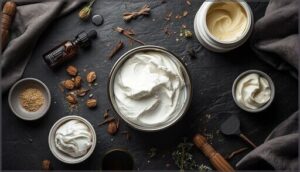
Getting the right lather isn’t just about how you whip it, it starts with what’s actually in your shaving cream.
Certain ingredients help your lather stay slick, cushioned, and comfortable, while others quietly work against you.
Here’s what to look for on the label, and what to leave on the shelf, so your cream performs at its best.
Moisturizing Agents (Glycerin, Aloe Vera)
Getting your lather dialed in starts with understanding two quiet workhorses: Glycerin and Aloe Vera.
Glycerin Hydration Benefits include softer beard hair and Moisture Barrier Formation that guards against razor burn.
Aloe Soothing Mechanism calms redness fast, perfect for Sensitive Skin or Hypoallergenic needs.
Use this Skin Compatibility Guide and Ingredient Synergy Tips for smarter Shaving Cream Selection every time.
Nourishing Oils and Vitamins
Once Glycerin and Aloe Vera have your base covered, nourishing oils and vitamins push your shave to the next level of comfort.
Vitamin E Benefits support glide and calm redness; Jojoba Oil Cushion and Argan Oil Soothing keep the blade skimming, while Shea Butter Hydration and Panthenol Skin Barrier make Shaving Cream feel like Skin Care Tips for Hypoallergenic skin.
For best results, pair these nourishing ingredients with the right lather technique — building a rich, cushioned shaving lather keeps the blade gliding smoothly without stripping the skin’s moisture barrier.
Ingredients to Avoid for Best Texture
Many Shaving Cream formulas hide landmines.
Harsh surfactants like sodium lauryl sulfate strip oils, drying alcohols such as denatured alcohol crack the lather, and propellant gases whip it into weak foam.
Add alkanolamine toxicity and silicone antifoams like dimethicone, and sensitive skin pays the price.
Choose hypoallergenic creams loaded with glycerin and Aloe Vera instead for lasting cushion and glide.
Choosing The Right Cream for Your Skin Type

Getting the consistency right is only half the battle—your cream also has to match your skin.
Different textures and ingredients are needed for different skin types to stay comfortable and protected. Let’s break it down so you can pick the right kind of cream for your face, not just any cream off the shelf.
Best Consistency for Dry Skin
Picture your ideal Shaving Cream lather like yogurt: dense, glossy, and slow to drip.
For dry or sensitive skin, aim for a 1:3 cream‑to‑water Shea Butter Ratio with Glycerin and Aloe Vera in a Hypoallergenic base. Use warm Water Temperature Gradient, gentle Air Incorporation Technique, and quick Brush Water Dips for Lather Humidity Control that keeps skin calm and cushioned.
Ideal Creams for Oily and Sensitive Skin
How do you keep oily skin calm without smothering it? Look for Shaving Cream with a Light texture, Non‑comedogenic formulas, and clearly Hypoallergenic labels.
Gel‑style or Brushless application lets you see blemishes, perfect for Shaving Techniques for Sensitive Skin.
Prioritize Sebum balancing and Soothing irritants like aloe or chamomile—smart Skin Type Considerations for truly Sensitive Skin that prevent clogged pores.
Options for Normal and Combination Skin
Got normal or combo skin that changes its mind daily?
Reach for Shaving Cream that gives Lightweight Hydration with Glycerin and a gentle Coconut Oil Boost for all‑day suppleness.
Add Aloe Vera Cool and Lavender Soothing to balance shine and calm patches.
These Skin Type Considerations support clean Shaving Techniques and Balancing Oil from shave to shave with Aloe Vera.
Tools Needed for Perfect Lather Consistency

Even the best shaving cream won’t perform without the right tools backing it up.
Your gear does a lot more heavy lifting than most people realize — from building the lather to keeping it alive through the whole shave.
Here’s what you actually need to get it right.
Shaving Brushes and Bowls
Think of your Shaving Brush and Shaving Bowl as the engine of your shave.
Brush Material Types and Knot Size Impact decide how quickly you build Lather from Shaving Cream. Synthetic vs Natural knots change backbone and product loading.
Bowl Heat Retention and Bowl Design Features, like ridges, support smoother Shaving Techniques and more controlled passes with less irritation overall.
Water Temperature and Quality
Warm Water quietly controls how your Shaving Cream whips into Lather with your Shaving Brush and Shaving Bowl.
Lukewarm water benefits appear around 85–95 °F, so use temperature‑adjustment strategies and watch for:
- Lukewarm Water Benefits: around 85–95 °F, softer whiskers, creamier lather.
- Hard Water Impact: weaker foam, more product and whipping.
- Chlorine Effects: tighter, drier skin, more post‑shave sting.
- Filtered Water Tips, Temperature Adjustment Strategies: use filtered water.
Razor Type and Its Impact
Once your water game is sorted, the Razor becomes the boss. Match Shaving Cream to that head, focus on calm Shaving Cream Preparation, and you’ll cut Razor Burn while sharpening your Shaving Techniques and Tips.
| Razor | Focus / Blade Exposure Adjustment |
|---|---|
| Safety | Safety Razor Lather rich |
| Cartridge | Cartridge Razor Fluidity slick |
| Straight | Straight Razor Cushion dense |
| Electric | Electric Razor Foam light |
Step-by-Step Guide to Achieving Ideal Consistency
Now that you know the tools, let’s walk through exactly how to build that perfect, pillowy lather every single time. We’ll start with how much cream and water to use, then move into simple techniques you can repeat without thinking.
Along the way, you’ll see the most common mistakes and how to fix them fast so your shave stays smooth and controlled.
Measuring Cream and Water Ratios

When you treat Shaving Cream Preparation like a science experiment, consistency gets easy.
Start with Scale Calibration, weighing 1 gram of Shaving Cream, then add water slowly, watching Dropper Accuracy in 0.1‑gram steps. Note ratios in a Ratio Logbook, including Water Hardness Impact, Temperature Adjustments, and how glycerin‑rich creams change lather feel under your Shaving Brush every single time.
Lathering Techniques (Bowl, Palm, Face)

Once your Shaving Cream ratio is set, technique finishes the job.
With a Shaving Bowl, use a Shaving Brush, Circular Motion Timing, gentle Brush Pressure Variation, and Warm Water for rich Lather. Palm and face work great too when Water Temperature Control and Lather Aeration Methods stay consistent for Travel‑Friendly Lather.
- Bowl: circles.
- Palm: loading.
- Face: scrub.
- All: glossy Lather.
Common Mistakes and How to Fix Them

Even great Grooming Techniques fall apart with small slip-ups.
Water Ratio Errors top the list — too much turns your Shaving Cream soupy, too little leaves a stiff paste.
Temperature Imbalance is sneaky too; anything above 100°F thins lather fast.
Product Underload causes drag and Razor Burn.
Canned Foam Issues can be skipped entirely by ditching aerosols.
Hydration Mismatch can be fixed by adding water drop by drop.
Spotting and Fixing Bad Shaving Cream Lather

Even the best shavers run into lather that’s just not cooperating — too watery, too stiff, or somewhere in between.
The good news is that bad lather is almost always fixable once you know what to look for. Here’s how to spot the problem and dial things back in.
Signs of Overly Thin or Thick Lather
Bad lather betrays itself fast — you just need to know what to look for.
- Bubble size and lather breakdown: Large, airy bubbles mean your lather is too thin, offering almost no cushion against the blade, which spikes skin irritation and razor burn.
- Razor skipping and clogging: Thick, goopy lather jams the razor and causes blade skipping mid-stroke.
- Skin tugging: Over-thick lather dries instantly, creating that dreaded drag and cushion loss before you finish your first pass.
Adjusting Water or Product Amounts
Once you spot bad lather, fixing it takes just small, deliberate moves.
| Problem | Cause | Fix |
|---|---|---|
| Watery, thin lather | Too much warm water | Add tiny brush load of cream |
| Thick, goopy paste | Heavy cream, low water | Incremental additions of warm water, 3–5 drops |
| Dries mid-shave | Water hardness stripping lubrication | Dip shaving brush tips repeatedly |
| Bubbles, no gloss | Poor consistency tweaks | Rebuild with temperature impact adjustments |
| Razor drag | Uneven shaving cream load | Rebalance water-to-cream ratio gradually |
Tips for Consistent Results Every Time
Consistency comes down to repeatable habits. Warm your shaving brush for five minutes before building lather—that single brush warm-up routine changes everything.
Warm your brush for five minutes and great lather stops being luck
Control water temperature, keep your product ratio adjustments small and deliberate, and time your lathering to 30–60 seconds.
Clean and dry your tools after every session. Lock these shaving best practices into your grooming routine, and great lather stops being luck.
Maintaining Lather Quality Throughout Your Shave

Getting a great lather going is only half the battle — keeping it that way through the whole shave is where most guys drop the ball.
A little know-how goes a long way toward staying comfortable from the first stroke to the last.
Here’s what you need to focus on.
Rehydrating Lather Mid-Shave
Lather doesn’t stay perfect forever — it dries out mid-shave, and that’s when things get rough. Master these quick fixes to keep your shaving cream slick from start to finish:
- Drop Water Technique: Drip 3–4 drops of warm water onto your lather, working it in with circular relather strokes to restore creamy lubrication instantly.
- Brush Rewet Timing: Dip your shaving brush tip under the faucet for 2–3 seconds — shake off excess, then reapply.
- Brush Size Effects: A 24mm knot holds enough lather for three full passes, reducing how often you need to rehydrate.
Watch for dry lather symptoms — flaking, stickiness, or razor tug — and act fast.
Preventing Drying or Separation
Think of your lather like fresh whipped cream — leave it exposed too long and it collapses. Keep bathroom humidity between 50–60% and store your shaving cream below 20°C to preserve its structure. Bowl-whipping centralizes lather, cutting air exposure dramatically.
For sensitive skin, glycerin and aloe vera in hypoallergenic formulas slow evaporation. Nail your water ratio — 1 part cream to 3 parts water — and separation becomes a non-issue.
Post-Shave Care for Skin and Tools
Your shave isn’t over when the razor drops. Splash cold water for 20–30 seconds to close pores, then gently pat dry — never rub. Got a nick? Glide an alum block over it, or dab a styptic pencil for stubborn bleeds.
Finish with an alcohol-free aftershave balm packed with aloe vera. Rinse blades, air-dry your brush, and store tools clean.
Frequently Asked Questions (FAQs)
Can shaving cream help acne?
Yes, the right shaving cream can actually help.
A non-comedogenic formula with glycerin, aloe vera, or a salicylic acid boost creates an oil-free barrier that calms post-shave inflammation — especially on sensitive, acne-prone skin.
How long should I let shaving cream sit?
Let it sit for 1 to 3 minutes. Fine hair needs just one minute, while coarse or dry skin benefits from the full three. That wait softens hair and prevents razor burn.
Which shaving cream types suit travel best?
Solid sticks win for carry-on travel—no liquid limits, no leaks. Travel tubes under 100ml handle aerosol limits perfectly. Brushless gels and compact packaging make grooming stress-free through any checkpoint.
Can shaving cream expire or go bad?
shaving cream does expire. Most last two to three years unopened, but once opened, you’ve got six to twelve months before shelf life drops.
Trust your nose and eyes for Visual Spoilage signs.
How does climate affect shaving cream performance?
Climate wrecks your lather faster than a dull blade. High humidity keeps it rich longer, but heat above 30°C thins it out. Dry air? Your lather flakes off mid-shave.
Are natural creams better than synthetic formulas?
Natural creams win on ingredient purity and sensitive skin protection—glycerin and aloe beat synthetic alcohols every time.
Synthetics last longer but carry hormone disruption and irritation risk.
Your best personal grooming advice? Match the formula to your skin, not the trend.
Does shaving cream differ for body versus face?
Yes — face and body shaving creams differ considerably.
Facial formulas use higher glycerin levels and gentler fragrance intensity to protect sensitive skin, while body versions prioritize broader lubrication needs with stronger formulations.
Conclusion
Funny how the smallest detail ruins the whole experience—and the smallest fix saves it.
Guys spend serious money on premium razors, vintage strops, artisan aftershaves.
Then they rush the lather, slap on watery foam, and wonder why their face looks like a battlefield.
Perfect shaving cream consistency isn’t a bonus step—it’s the foundation every other tool builds on.
Nail that dense, silky texture first, and your razor finally gets to do what it was built for.
- https://www.gents.com/text/how-to-get-the-perfect-shaving-lather
- https://www.wilkinsonsword.com/blogs/mens/how-to-apply-shaving-cream
- https://www.imperiumshaving.com/blogs/news/first-post
- https://www.gentlemansgazette.com/shaving-cream-guide/
- https://www.barristerandmann.com/blogs/our-blog/how-to-lather-shaving-soap