
This site is supported by our readers. We may earn a commission, at no cost to you, if you purchase through links.
A fresh fade walks out of the barbershop looking clean, tight, and sharp—then a week later, it starts telling a different story. Hair grows roughly half an inch per month, but a fade doesn’t grow out evenly.
The blended sections blur first, the skin fade loses its contrast, and suddenly that crisp cut looks soft around the edges. Most people think the problem is their barber or their hair type, but the real culprit is almost always maintenance—or the lack of it.
Knowing how to prevent a fade from growing out starts with understanding what’s actually happening between cuts, and then building habits that work with your hair, not against it.
Table Of Contents
- Key Takeaways
- What Causes a Fade to Grow Out?
- Choosing The Right Fade for Longevity
- Essential Tools for Fade Maintenance
- Daily Care Habits to Prevent Fade Fading
- Best Products for Keeping Fades Sharp
- How to Touch Up Your Fade at Home
- Professional Maintenance Strategies
- Tips for Managing Awkward Grow-Out Phases
- Frequently Asked Questions (FAQs)
- Conclusion
Key Takeaways
- Your fade style choice matters more than you think — skin fades demand a touch-up every 1–2 weeks, while low tapers can stretch to 3–4 weeks before they start looking rough.
- Hair texture is the hidden factor in how fast your fade blurs — fine hair shows regrowth in days, while coily textures can hold a clean edge past two weeks.
- Daily habits between cuts — washing 2–3 times a week, brushing in your growth direction, and using lightweight products — do more to preserve your fade than any single barber visit.
- Home touch-ups on just the neckline every 7–10 days, using the same guard sequence your barber uses, can seriously stretch the life of your cut without you needing to rebook constantly.
What Causes a Fade to Grow Out?
A fresh fade doesn’t stay sharp forever — and that’s not a flaw, it’s just how hair works.
Most fades—whether it’s a skin fade or just a soft taper—use specific clipper guard numbers to control length and blend, which is exactly why knowing them helps you maintain the look longer between cuts.
A few key factors speed up how fast your fade loses its clean look. Here’s what’s actually driving that grown-out appearance.
Natural Hair Growth Rate
Your hair growth journey starts at the follicle, where scalp health directly influences how fast regrowth blurs your fade.
On average, hair grows about half an inch monthly — enough to soften a sharp line in one to three weeks.
Understanding your hair growth cycle and regrowth patterns helps you stay ahead of it. Better follicle care means more predictable, even growth speed every time.
Research highlights how differences in hair growth rates can impact the fullness and appearance of hair volume.
Fade Style and Placement
Growth rate matters, but where your fade starts matters just as much. Fade techniques and hairline design play a direct role in how fast your cut loses its edge.
- Low fades start just above the ear, keeping contrast subtle longer
- High fades begin above the temples, showing regrowth faster
- Skin fades hit zero guard — expect trims every one to two weeks
- Burst fade styles curve around the ear, creating a unique grow-out pattern
- Mid fades balance cut precision and longevity right down the middle
Edge crafting and style customization determine everything — choose your fade haircut styles wisely, because a taper fade grows out more forgivingly than a skin fade haircut. Understanding the key differences between fades can help you choose the right maintenance routine.
Hair Texture and Thickness
Your hair texture and thickness shape how long a fade stays sharp just as much as placement does. Fine strands blur the line within five to seven days, while coily curl patterns can hold a clean silhouette past two weeks.
Fine strands blur a fade in days, while coily hair holds its shape for weeks
Hair density, strand thickness, and hair porosity all affect fade haircut maintenance — so understanding your hair texture is step one of smart hair care.
Choosing The Right Fade for Longevity

Not all fades are created equal, and the one you choose has a bigger impact on how long it stays sharp than most people realize.
Some styles naturally hold their definition longer based on where the blend sits and how your hair grows. Here’s what to keep in mind before you sit down in that chair.
Low Vs. High Fades
Fade placement is one of the biggest decisions you’ll make for longevity. A low taper fade keeps most of the length on the sides, so grow-out blends naturally — ideal if haircut maintenance visits are spaced three to four weeks apart. A high taper fade looks sharp but demands more upkeep.
Consider your priorities:
- Face shape: Low fades suit narrow or long faces; high fades flatter round ones
- Hair texture: Straight or fine hair shows high fade grow-out faster
- Styling tips: High fade haircuts pair best with bold, statement-driven looks
- Maintenance costs: High taper fades need touching up every one to three weeks
- Daily commitment: Low taper fades forgive a skipped barber visit better
Skin Vs. Taper Fades
The skin fade vs. taper fade comparison comes down to one question: how often can you realistically get to the barber?
If you’re stretching time between cuts, pairing the right fade with gentle curly hair styling habits can keep your style looking intentional, not overgrown.
Skin fades hit bare skin, so even 1–2 millimeters of regrowth shows fast — expect edge maintenance every 1–2 weeks.
Taper techniques leave a little stubble at the base, softening grow-out and stretching haircut maintenance comfortably to three weeks.
Matching Fade to Hair Type
Your hair texture is the deciding factor in which fade styles actually last. Fine straight hair shows hair growth lines fast, so a low taper fade or mid fade keeps things cleaner longer.
Thick hair accommodates high fades well without looking patchy. Curly haircuts and coily fades stay sharp longer naturally, since the curl volume absorbs minor regrowth — matching your hair type to the right fade haircut makes all the difference.
Essential Tools for Fade Maintenance
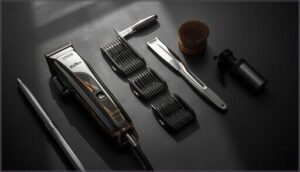
Having the right tools makes all the difference between a fade that holds its shape and one that looks neglected by week two.
You don’t need a full barbershop setup, but a few key items will let you stay on top of things between appointments. Here’s what you actually need to keep your fade looking sharp.
Clippers and Trimmers Features
The right tools make all the difference between a clean fade and a blurry mess. Here’s what to look for in your clippers and trimmers:
- Motor Types — Pivot motors handle coarse hair better; magnetic motors deliver smoother cuts.
- Taper Levers and Adjustable Guards — These let you bridge length gaps without swapping blades constantly.
- Blade Sharpness and Cordless Clippers — Sharp blades cut cleanly; cordless freedom helps you reach everywhere.
Grooming Accessories for Precision
Good clippers mean nothing without the right accessories backing them up. Precision trimmers, fade combs with graduated tooth spacing, and color-coded guard systems let you see exactly where one length ends and another begins.
Detailing tools like razor pencils and sectioning clips isolate trouble spots cleanly. Keep your blades sharp with a compact clipper maintenance brush, and every pass stays consistent.
Home Touch-Up Techniques
Your clippers are only as useful as how you use them. For home trimming and edge cleanup, start by tackling just the neckline every 7 to 10 days — that alone keeps things looking intentional.
Use the clipper lever for half-step blending instead of swapping guards constantly. DIY styling and at-home touchups work best when you stay minimal, avoid overcorrecting, and always cut dry hair for accuracy.
Daily Care Habits to Prevent Fade Fading

What happens between barber visits matters more than most people think.
A few simple daily habits can slow down how fast your fade loses its edge and keep it looking clean for longer. Here’s what to work into your routine.
Washing and Conditioning Frequency
How often you wash your fade matters more than most guys think. Scalp care is crucial, and shampooing 2–3 times per week helps keep it on point without stripping natural oils dry.
- Use sulfate-free shampoo types for safer daily care routine
- Match wash frequency to your sweat and activity level
- Conditioner use after each wash protects hair moisture
- Over-conditioning kills fade contrast — keep it light
Scalp Moisturization Tips
Keeping your scalp hydrated is just as important as how often you wash. Dry scalp makes a fade look ashy and aged fast.
For your daily routine, use a lightweight moisturizer — apply a fingertip amount on slightly damp skin after showering. Glycerin or aloe vera works well for scalp hydration without greasy buildup that blurs your fade blending.
Brushing and Detangling Methods
Brush techniques matter more than most people think for fade maintenance. A soft boar bristle brush works well for short, fine hair, while coarse or thick textures need a firmer boar-nylon mix.
Brush daily in your natural growth direction — short strokes from top toward the faded sides. For detangling tips on longer tops, always comb damp hair section by section, working ends to roots.
Best Products for Keeping Fades Sharp
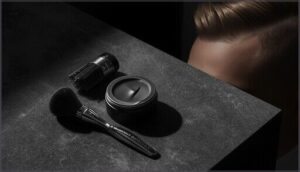
The right products can make or break how long your fade stays sharp between visits.
What you put in your hair matters just as much as how often you trim it.
Here’s what actually works.
Shampoos and Conditioners for Fades
The right products make a real difference. Sulfate free fade shampoos clean without stripping your scalp or roughing up the blend line.
Wash two to three times a week and follow up with gentle conditioners containing jojoba or panthenol — they add moisture without weighing short hair down. These simple hair care tips keep your fade haircut looking sharp between cuts.
Lightweight Styling Products
Now that your wash routine is dialed in, styling products are where you lock everything in. For a fade haircut, hold levels matter — too much weight and the blend disappears.
Stick to lightweight options like:
- Water-based pomades for finish control without buildup
- Matte styling creams that work with your hair texture
- Sea salt sprays for flexible hold and natural movement
Products to Avoid
Some hair styling products work against you. Greasy pomades loaded with petrolatum trap sweat along the fade line, making new hair growth look dull almost immediately. Drying sprays with harsh chemicals strip moisture and cause frizz right where the blend should look smooth.
Comedogenic oils clog pores at the hairline, causing bumps that wreck clean edges. For solid fade haircut maintenance tips, skip heavy products entirely.
How to Touch Up Your Fade at Home
You don’t need to run to the barber every time your fade starts looking a little rough around the edges. With the right clippers and a steady hand, you can keep things clean between appointments.
Here’s what to focus on when touching up at home.
Cleaning Up Edges and Neckline

The neckline is where a fade haircut either holds its shape or quietly falls apart. For clean edge trimming and neckline maintenance, set up two mirrors so you can see the back clearly, then trace your existing line — don’t create a new one.
- Use short, upward strokes for precise clipper techniques
- Clean up every 7–10 days for consistent haircut maintenance tips
- Apply aftershave balm post-touchup to prevent irritation
Maintaining Side and Back Taper
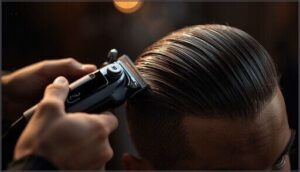
Taper maintenance on the sides and back is where most at-home fade blending either holds together or quietly unravels.
Use your clipper settings methodically — work with the same guard sequence your barber uses, stepping from a 0 near the hairline up through a 1, then 2 or 3. Your taper fade stays sharp when you keep that progression consistent every touch-up.
Avoiding Harsh Lines or Steps
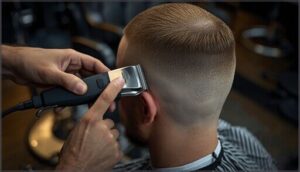
One wrong swipe and your fade haircut goes from clean to choppy fast. Mastering clipper control means using the taper lever — open to half to closed — in small passes for gradual line softening, not sudden steps.
For smooth fade blending and step prevention:
- Use the clipper corner for edge cleanup
- Flick outward, never drag straight up
- Blend in short, overlapping strokes
- Match guard sizes in tight sequences
- Check results in bright light from multiple angles
That’s how haircut maintenance stays flawless.
Professional Maintenance Strategies
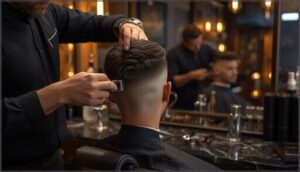
Home touch-ups can only take you so far — your barber does the heavy lifting in maintaining that fade crisp. Knowing when to book, what to say, and what to expect makes the whole process smoother.
Here’s what to keep in mind regarding professional maintenance.
Ideal Barber Visit Schedule
Most guys wait too long between visits and wonder why their fade looks rough by week three. For fade maintenance, the sweet spot is every two to three weeks.
Skin fades need barber visits closer to every one to two weeks — hair growth blurs that blend fast. Book your next appointment before you leave the chair. That simple habit keeps your haircut maintenance schedule on track.
Communicating Desired Fade Sharpness
Your barber isn’t a mind reader — clear fade description saves you from a bad haircut. Nail your barber communication every visit with these sharpness levels and visual references:
- Say “super sharp fade” for high contrast, crisp edge styling
- Use guard numbers like “no lower than a 1“
- Bring photos showing your ideal fade styles
- Mention your touchup routine and hair maintenance schedule
Cost and Time Considerations
Once you’ve locked in your sharpness level, budget planning becomes the next priority. A low fade runs about $25–$35 per visit, while a skin fade can hit $55. Every 2–3 weeks adds up fast.
| Fade Type | Avg. Annual Cost |
|---|---|
| Low Fade | $900–$1,100 |
| Mid Fade | $1,155–$1,430 |
| Skin Fade | $1,300–$1,700 |
Smart maintenance scheduling — including home touch-ups — cuts those numbers down noticeably.
Tips for Managing Awkward Grow-Out Phases
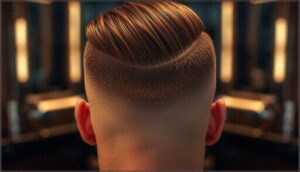
Every fade phase goes through an awkward phase — that’s just part of the process.
The good news is there are a few simple ways to stay looking put-together while your hair finds its footing again. Here’s what actually helps during the in-between stretch.
Styling to Conceal Growth
When your fade haircut starts blurring, smart styling keeps things looking intentional.
Volume tricks like blow drying upward at the temples and texture hacks using matte clay or salt spray disguise regrowth fast.
Style adjustments — pushing the top forward or sweeping it sideways — act as natural hair camouflage. These hair styling tips make growth concealment seamless during any hair growth journey.
Setting a Goal Style for Transition
Styling tricks buy you time, but they work better when you already know where you’re headed. Before your next barber consultation, pick a goal style — textured crop, medium flow, whatever fits your life.
That decision shapes every phase of your haircut evolution. With a clear target, your barber can map out growth tracking milestones and make each awkward stage feel like progress, not a mess.
Embracing Temporary Fade Adjustments
Once your goal style is locked in, give yourself room to adjust. Switching from weekly edge ups to every three or four weeks is a smart Fade Transition Tips move — your barber undertakes light touchup work on the neckline while your fade haircut softens naturally.
That Growth Mindset shift, combined with Flexible Styling and Softening Techniques, makes the whole Maintenance Schedules process feel manageable, not frustrating.
Frequently Asked Questions (FAQs)
How long until a fade grows out?
Picture a razor-sharp line slowly going soft — that’s your fade after about 7 to 10 days.
Hair regrowth blurs fade growth rates fast, impacting style longevity and your maintenance schedules sooner than most expect.
What happens if you let a fade grow out?
Skip haircut maintenance, and your fade haircut quietly shifts into something else.
The clean gradient softens, sides bulk up, and what was once a sharp taper fade starts reading like a grown out taper fade.
What is the 3:2:1 buzz cut rule?
The 3:2:1 buzz cut rule uses clipper guards in a simple sequence — a number 3 on top, number 2 on the sides, and number 1 around the edges — creating a clean, natural-looking taper fade without much effort.
How to keep a fade for longer?
Keeping a fade sharp longer comes down to three things: regular touch-ups every two to three weeks, daily brushing, and using lightweight longevity styling products that help your hair lay flat and maintain definition.
Can diet affect how fast fades grow out?
What you eat fuels what grows. Nutrient intake directly shapes your hair growth rate — protein benefits keratin production, vitamin balance promotes follicles, and healthy fats keep your scalp primed for steady, even hair growth.
Does weather or humidity impact fade definition?
Yes, humidity hits fade definition hard. When moisture swells each strand, those clean edges near your temples and neckline go soft fast — sometimes within hours on a muggy day.
How does sweat affect a fade between washes?
Sweat breaks down styling products, leaves salt buildup on the hair shaft, and congests the scalp.
All three speed up how fast your fade haircut loses its sharp, clean definition between washes.
Conclusion
A sharp fade is like a well-kept blade—it only stays effective when you maintain it consistently. Every habit covered here, from your wash routine to your touch-up technique, works together to prevent your fade from growing out before its time.
Skip the maintenance, and even the cleanest cut loses its edge fast. Stay on schedule with your barber, keep your tools ready at home, and your fade will keep doing exactly what it’s supposed to do.
- https://neofollics.com/blogs/articles/how-fast-does-hair-grow
- https://www.bootleggedbarberco.com/blog/haircut-with-skin-fade
- https://www.tonysbarberbayview.ca/how-often-should-get-fade-haircut-to-maintain-the-style.php
- https://www.mrwinstons.com/blog/how-long-does-a-fade-haircut-last-essential-care-tips-for-longevity
- https://www.pallmallbarbers.nyc/new-york/how-to-keep-your-fade-haircut-fresh-between-barbershop-visits/