This site is supported by our readers. We may earn a commission, at no cost to you, if you purchase through links.
Sensitive skin and a sharp blade make uneasy partners. For millions of people, shaving triggers a cascade of micro-injuries—stratum corneum erosion, lipid depletion, disrupted pH—that leave skin raw, reactive, and slower to recover with each pass.
Most don’t realize the razor itself is often the last culprit; it’s the dull blade, the alcohol-laden aftershave, and the rushed prep that quietly dismantle the skin barrier before the first stroke lands. Mastering proper shaving technique for sensitive skin isn’t about finding a miracle product—it’s about understanding what your skin actually needs, then building a routine that works with its biology instead of against it.
Table Of Contents
- Key Takeaways
- What is Sensitive Skin and Why Does Shaving Irritate It?
- How to Assess Your Skin Before You Shave
- Pre-Shave Preparation for Sensitive Skin
- Choosing The Right Razor for Sensitive Skin
- Shaving Creams and Gels: What to Use and Avoid
- Step-by-Step Shaving Technique for Sensitive Skin
- Post-Shave Care to Calm and Protect Sensitive Skin
- Frequently Asked Questions (FAQs)
- Should you shave your sensitive skin?
- Should you shave your hair if you have sensitivity?
- Should you shave every day?
- Should you use a shave blade if you have sensitive skin?
- Can you shave your face with PCOS?
- Is it better to shave wet or dry for sensitive skin?
- Can diet affect shaving sensitivity and skin reactions?
- Does shaving order matter for face versus neck?
- How does climate impact sensitive skin while shaving?
- Are natural razors better than synthetic for sensitivity?
- Conclusion
Key Takeaways
- Shaving irritates sensitive skin mainly by damaging an already weak skin barrier, which increases water loss, friction, redness, and slows recovery.
- The biggest avoidable triggers are dull blades, fragranced or alcohol-heavy products, and poor prep, while warm water, gentle cleansing, and good lubrication reduce drag before shaving starts.
- A safer shave starts with knowing your skin, mapping your hair growth, using light pressure and short strokes, shaving with the grain first, and limiting yourself to one or two passes.
- Recovery matters just as much as technique, so use a cold rinse, alcohol-free moisturizer or balm, give the skin 48 to 72 hours between shaves when needed, and see a dermatologist if irritation keeps coming back.
What is Sensitive Skin and Why Does Shaving Irritate It?

Sensitive skin isn’t just a label — it’s a sign that your skin’s protective barrier isn’t holding up the way it should. Shaving cuts right through that barrier twice a day, and for reactive skin, that kind of repeated disruption adds up fast.
Over time, that daily wear shows — and knowing how to prep irritated skin before shaving can make a real difference in keeping flare-ups at bay.
Here’s what’s actually happening beneath the surface.
How The Skin Barrier Becomes Compromised
Because daily shaving scrapes living skin more than most people realize, your skin barrier can fail before you ever see a cut.
- Stratum corneum erosion thins protection quickly
- Friction trauma strips surface cells repeatedly
- Lipid depletion disrupts moisture seals badly
- pH imbalance slows recovery after shaving
- Water loss after exfoliation weakens skin barrier protection, causing skin irritation and razor burn.
Increased transepidermal water loss can occur after aggressive shaving methods.
Common Triggers: Razors, Fragrances, and Alcohols
Once your barrier is already stressed, three triggers tend to make things worse fast: the razor itself, fragrance ingredients, and drying alcohols.
| Trigger | Why It Irritates | Safer Alternative |
|---|---|---|
| Blade dullness | Tugs hair instead of cutting cleanly | Replace after 5–7 shaves |
| Fragrance sensitizers | "Parfum" hides multiple reactive chemicals | Fragrance-free moisturizer or balm |
| Alcohol denat. dryness | Strips moisture, worsens razor burn | Alcohol-free balms |
| Blade Coating Chemistry | Worn coating increases friction considerably | Coated single-blade safety razors |
| Scent Masking Misconceptions | "Unscented" may still contain masking fragrance | Check for Fragrance Label Ambiguity carefully |
Razor Blade Weight and balance also matter — heavier grips reduce the pressure you instinctively apply.
Skin Conditions That Worsen Shaving Sensitivity
If fragrance or alcohol already sting, underlying disease often makes shaving worse.
An Eczema Flare or contact dermatitis leaves hyperreactive skin prone to burning and microcuts.
Psoriasis Plaques bleed easily, while Rosacea Redness intensifies with heat and pressure.
Folliculitis Infection can spread after shaving.
Ingrown Hair Bumps, common in rosacea, eczema, and pseudofolliculitis barbae, keep irritation cycling for many men.
How to Assess Your Skin Before You Shave

Before you pick up a razor, it helps to know exactly what you’re working with. Your skin has a story to tell—you just need to learn how to read it.
three things worth checking before every shave.
Nail these habits and you’ll also sidestep irritation for good—here’s a deeper look at minimizing shaving rash on your neck if that’s been a recurring problem.
Identifying Your Sensitivity Level and Symptoms
Not all sensitive skin reacts the same way. Track your redness patterns after each shave — scattered bumps signal different triggers than streaky razor burn.
Note burning intensity, itch frequency, and bump morphology: are they flat, raised, or pustular?
Dryness and tightness point to a weakened barrier.
Understanding skin sensitivity means recognizing your specific skin irritation triggers before reaching for any blade.
Mapping Your Facial Hair Grain
Mapping facial hair grain before shaving isn’t guesswork — it’s a clinical step.
Let stubble grow for two to three days, then use Grain Direction Arrows sketched in a mirror for each zone.
Zone Identification matters because Symmetry Mapping reveals your left and right sides often differ.
Jawline Variation is common, and Neck Pattern Analysis is essential, since irregular neck growth demands careful shaving techniques to reduce irritation and help you consistently shave with the grain, never blindly against the grain.
Tracking Problem Areas Prone to Razor Burn
Once you’ve mapped your grain, track where things go wrong. Keep an irritation diary — a simple problem area log noting razor burn, razor bumps, and ingrown hairs after each shave.
Think of it as your personal burn heatmap. Zone tracking and symptom mapping let you see patterns: the neck, jawline, and pubic area are consistently high-risk.
That data shapes your shaving technique going forward.
Pre-Shave Preparation for Sensitive Skin

What happens before the blade ever touches your skin matters more than most people realize.
Sensitive skin needs a specific setup—one that softens hair, protects the barrier, and cuts down on friction before shaving even begins. Here’s what that preparation actually looks like, step by step.
Cleansing and Softening Hair With Warm Water
Warm water does more than feel comfortable — it’s doing real work before your blade ever touches skin. The right Water Temperature Range sits between 35°C and 40°C, delivering Pore Opening Benefits and Hair Shaft Hydration without stripping protective oils.
Your shave prep routine should include:
- Rinse with warm water for a minimum of 60 seconds
- Use a gentle cleanser to complete the Impurity Removal Process
- Shave immediately after a hot shower when possible
- Keep Warm Water Timing brief — two minutes maximum
- Pat dry before applying any warm water preshave product
This preshave skin preparation technique softens stubble by up to 30%, cutting friction considerably.
Applying Pre-Shave Oil or Lubricating Products
Think of pre-shave oil as a protective film between your blade and skin. Application Timing matters: apply a few drops of pre-shave oil to damp skin, spread it thin, then layer your lather on top. This Layering with Lather technique maximizes glide.
| Feature | What to Look For |
|---|---|
| Slip Enhancing Ingredients | Jojoba, grapeseed, sweet almond oil |
| Non-Greasy Formulas | Lightweight, absorbs quickly |
Compatibility Testing helps confirm your chosen shaving lubricants won’t irritate sensitive skin.
Safe Exfoliation Without Over-Irritating The Skin
Gentle exfoliation before shaving helps lift dead cells and reduce ingrown hairs, but sensitive skin can’t take daily scrubbing. Schedule it once or twice a week, using mild acid selection options like lactic or mandelic acid in wash-off formulas.
Apply with light application pressure, never rub aggressively.
Finish with barrier moisturizers and post-exfoliation sun protection, SPF 30 minimum, to keep your skin barrier function intact.
Choosing The Right Razor for Sensitive Skin
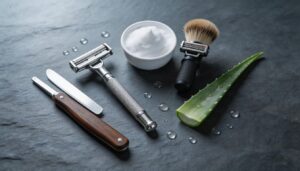
The razor in your hand matters more than most people realize, especially when your skin pushes back after every shave. Not every blade or handle is built the same, and for sensitive skin, those differences are the line between a clean shave and a red, stinging mess.
Here’s what to look for when choosing the right razor for you.
Single-Blade Safety Razors Vs. Cartridge Razors
Your razor choice shapes every shave. A single-blade safety razor cuts hair at the surface without the lift-and-cut mechanics of cartridge razors, which often slice below the skin line and trigger ingrown hairs. Cartridge razors feel easier initially, but that learning curve pays off with safety razors through blade cost efficiency, reduced razor burn, and lower environmental impact.
A single-blade safety razor often shaves cleaner, with less irritation, lower cost, and fewer ingrown hairs than cartridges
- Single-blade razors minimize repeated skin contact per stroke
- Cartridge blades clog more easily, forcing harder pressure
- Blade sharpness matters more than blade count for clean cuts
- Grip ergonomics on safety razors allow precise angle control
- Maintenance routine is simpler — blades rinse cleaner and replace cheaply
Electric Foil and Rotary Shavers as Gentler Alternatives
If cartridges still upset sensitive skin, consider electric shaver alternatives.
A foil model with Foil Skin Guard suits control, while Rotary Contour Adaptation helps along the jaw and neck.
Wet/Dry Mode Benefits add cushion, Pressure Sensor Technology limits heavy hands, and Interchangeable Head Design improves flexibility.
In the electric vs manual shaver debate, an electric razor aids razor burn prevention.
How Blade Sharpness Affects Friction and Irritation
Whether you go electric or manual, blade condition matters just as much as razor type.
Dull blades increase the friction coefficient against your skin, generating heat build-up and microabrasion risk with every stroke.
Sharp blades, by contrast, cut cleanly at the hair base, reducing drag and razor burn.
Follow the blade wear cycle — replace after 5–7 shaves — for consistent friction reduction and less skin irritation.
Shaving Creams and Gels: What to Use and Avoid

what you put on your face before shaving matters just as much as how you shave. The right cream or gel creates a protective layer that helps the blade glide without grinding against your skin, while the wrong one can quietly make things worse.
Here’s what to look for — and what to leave on the shelf.
Soothing Ingredients to Look for (Aloe, Allantoin, Shea Butter)
When choosing a shaving cream for sensitive skin, three ingredients do the heaviest lifting: aloe vera, allantoin, and shea butter.
Aloe hydration kicks in immediately, cooling inflammation and restoring moisture without grease. Allantoin repair follows by accelerating cell turnover and smoothing razor-stressed skin. Shea butter protection seals everything in.
Their ingredient synergy delivers real anti-inflammatory benefits, making hypoallergenic products and fragrance-free moisturizer formulas the smarter choice.
Ingredients to Avoid (Alcohol, Synthetic Fragrance, SLS)
Those soothing ingredients only work if the rest of the formula doesn’t undermine them. Ethanol barrier stripping, isopropyl burn, and denatured alcohol additives all accelerate moisture loss and inflame freshly shaved skin.
Synthetic fragrance allergens trigger contact dermatitis without warning, and SLS surfactant harshness breaks down your skin’s lipid layer. Ingredient analysis for shaving creams matters — stick to alcohol-free balms and hypoallergenic products that skip synthetic fragrance and sodium lauryl sulphate entirely.
Lather Application Techniques for Even Coverage
Even the right shaving cream fails if the lather isn’t built correctly. Start brush loading balance by dampening your shaving brush, then swirl it into your shaving cream or shaving soap until the bristles are evenly coated. Use circular brush motion across your face, adding water in small steps for water ratio control.
Bowl consistency checks help you spot runny or stiff lather before it touches skin. Coverage verification — no thin or transparent patches — keeps every wet shaving pass properly cushioned.
Step-by-Step Shaving Technique for Sensitive Skin
Getting the technique right is where everything comes together. Even the best razor and the gentlest cream won’t protect your skin if you’re shaving the wrong way.
Here’s exactly how to move through each step without triggering irritation.
Shaving With The Grain on The First Pass

The first pass sets the tone for everything that follows. Align your razor with the grain—meaning the direction your hair naturally grows—to minimize first pass friction and support blade glide optimization. Warm water timing matters here; shaving right after a shower makes the hair far easier to cut.
- Map grain direction on cheeks, jaw, and neck separately
- Use warm water timing to soften hair fully beforehand
- Maintain consistent blade angle control throughout each stroke
- Follow the with the grain shaving technique without shortcuts
- Keep shaving pass count to one complete, methodical sweep
This single grain-aligned pass removes most visible stubble while protecting your barrier.
Using Light Pressure and Short Controlled Strokes

Once the grain direction is set, let the razor’s weight do the work—pressing harder won’t improve results, but it will compromise your skin barrier. Keep strokes short, around one to two inches, for blade angle consistency and grip stability.
This stroke rhythm control gives you pressure feedback in real-time, so you can adjust before irritation starts. Maintain skin tension management by stretching the skin slightly with your free hand.
Limiting Passes and Reapplying Lather When Needed

Each additional pass compounds friction — that’s the core principle behind pass count optimization. For sensitive skin, one to two passes is usually enough.
- Shave with the grain on pass one to reduce resistance.
- Use lather refresh timing — reapply shaving cream before any second pass.
- Apply skin recovery intervals of 30–60 seconds between passes.
- Maintain blade glide consistency by rinsing the blade frequently.
Post-Shave Care to Calm and Protect Sensitive Skin

The blade is done, but your skin’s recovery is just getting started. What you do in the next few minutes matters more than most people realize, especially if your skin often reacts.
Here’s what a solid post-shave routine actually looks like.
Cold Rinse, Alum Block, and Alcohol-Free Balm Routine
The three-step sequence after shaving works like a reset button for stressed skin.
Start with a cold water rinse — Cold Shock Benefits here are real: cold water constricts blood vessels, reduces inflammation, and removes cream residue.
Next, glide a wet alum block across shaved areas for Alum Antiseptic Action that tightens pores and stops minor nicks.
Finish with alcohol-free balms containing Glycerin Moisture Lock, aloe vera, and chamomile for Herbal Anti-Inflammatory Boost.
Moisturizing to Restore The Skin Barrier After Shaving
Moisturizing isn’t optional—it’s how your skin actually recovers. After the alum block, apply a post-shave balm or moisturizer within two minutes while the skin is still slightly damp. Here’s what works:
- Ceramide Enrichment rebuilds the lipid layer, reducing water loss by up to 20 percent.
- Niacinamide Boost (5%) speeds barrier recovery and cuts post-shave stinging over weeks.
- Hyaluronic Hydration draws moisture deep into freshly shaved skin without greasiness.
- Squalane Seal plus an Occlusive Barrier locks everything in for lasting aftershave care and barrier protection.
How Often to Shave and When to See a Dermatologist
Once your barrier is supported, shaving frequency becomes the next lever to control. Sensitive skin generally needs 48 to 72 hours of recovery interval between sessions — daily shaving strips cells faster than they can rebuild.
If razor burn, ingrown hairs, or redness persist beyond four weeks despite proper technique, those are clear dermatology referral signs. Pus, swelling, or spreading redness are infection warning indicators requiring prompt evaluation.
Frequently Asked Questions (FAQs)
Should you shave your sensitive skin?
Yes, you can shave sensitive skin safely.
Understanding skin sensitivity, applying proper shaving techniques, and choosing shaving products for sensitive skin transform a daily irritant into a manageable routine that promotes long-term skin health.
Should you shave your hair if you have sensitivity?
You can shave with sensitive skin.
Focus on pre-shave preparation, post-shave care, and shave less often to protect your skin barrier.
Shave your most sensitive areas last, using skin sensitivity as your guide.
Should you shave every day?
Usually, shave frequency recommendations for sensitive skin favor Recovery Interval; lower razor burn helps improve skin hydration and postshave moisturization.
Growth Rate, Lifestyle Impact, Economic Cost, and Trim Alternatives may guide you to shave less.
Should you use a shave blade if you have sensitive skin?
Can a blade actually work for sensitive skin? Yes — if you choose wisely.
Sharp blades, proper edge angle optimization, and smart blade hygiene practices reduce razor burn considerably better than dull blades ever will.
Can you shave your face with PCOS?
Hormonal hair growth from PCOS raises androgen levels, causing coarse facial hair.
Shaving is safe and effective for managing it, though sensitive skin needs careful technique to minimize ingrown hair risk.
Is it better to shave wet or dry for sensitive skin?
Wet shaving wins for sensitive skin. Water softens hair, boosts lubrication efficiency, and reduces friction dynamics between blade and skin — cutting irritation before it starts.
Skip dry shaving; it’s rarely worth the trade-off.
Can diet affect shaving sensitivity and skin reactions?
Yes, diet plays a real role.
Omega-3 consumption reduces post‑shave inflammation, Vitamin C intake helps barrier repair, and hydration status keeps skin pliable.
High sugar intake and food allergy triggers worsen skin sensitivity noticeably.
Does shaving order matter for face versus neck?
Shaving order matters: shave the face first, then shave the most sensitive areas on the neck last.
That improves Irritation Timing, respects Neck Sensitivity, steadies Pass Sequencing and Shave Rhythm, and reduces overall pressure during shaving.
How does climate impact sensitive skin while shaving?
Climate reshapes your skin barrier before the blade even touches your face.
Cold Dryness, Humid Sweat, Wind Desiccation, UV Damage, and Seasonal Variability each alter hydration levels, friction, and post-shave recovery in ways you can’t ignore.
Are natural razors better than synthetic for sensitivity?
Not necessarily—skin sensitivity, Material Allergies, Brush Bristle Types, Blade Coating Effects, Weight Distribution Impact, and blade dullness effects matter most.
doubleedge safety razor or singleblade razor is gentler than cartridge razors, despite Eco-friendly Considerations.
Conclusion
Imagine your skin as a delicate landscape, where every shave is a careful navigation. With the right approach, you can transform a potentially irritating ritual into a soothing experience.
Mastering proper shaving technique for sensitive skin is about understanding your skin’s unique needs and responding with precision. By following these steps, you’ll both reduce irritation and also cultivate a healthier, more resilient complexion that reflects your newfound care and attention.
- https://www.stylecraze.com/authors/khamis-maiouf/
- https://pubmed.ncbi.nlm.nih.gov/24252189/
- https://pmc.ncbi.nlm.nih.gov/articles/PMC10652890/
- https://ucrisportal.univie.ac.at/de/publications/effect-of-physical-and-chemical-hair-removal-methods-on-skin-barr/
- https://athenaclub.com/blogs/news/why-does-my-sensitive-skin-still-get-irritated-after-shaving-and-how-to-stop-it