
This site is supported by our readers. We may earn a commission, at no cost to you, if you purchase through links.

Most razor burn isn’t caused by sensitive skin—it’s caused by a dirty, dull blade dragging across your face. A razor that hasn’t been properly cleaned, dried, or replaced turns every shave into a slow scrape that strips more than stubble. Bacteria, oxidation, and residue build up faster than most people realize, and your skin pays the price.
The good news: a few consistent habits make the difference between a smooth shave and a red, burning mess. These five razor maintenance tips can prevent irritation before it starts.
Table Of Contents
Key Takeaways
- A dull, dirty blade causes most razor burns — rinse after every one to two strokes, disinfect with 70% alcohol after each shave, and replace the blade every 5–7 uses.
- Blade coatings like PTFE and platinum matter: they reduce friction and slow wear, so choosing quality blades protects sensitive skin before the razor even touches your face.
- Moisture is your blade’s enemy — always dry completely before storing, use an upright ventilated holder, and keep silica gel nearby to prevent rust and bacterial buildup.
- Build a simple weekly routine: check for dullness, sanitize, lubricate electric cutters, and swap worn foil heads on schedule — consistency is what keeps razor burn from becoming a pattern.
Choose a Skin-Friendly Razor
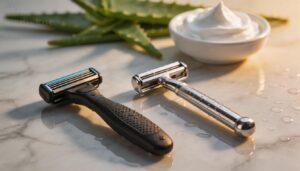
The razor you pick matters more than most people realize. Not every blade or shaver works the same way on your skin, and the wrong choice can set you up for irritation before you even start.
The same logic applies to prep — choosing the right pre-shave oil for your skin type can be the difference between a smooth shave and a red, irritated mess.
what to look for when choosing a razor that actually works with your skin.
Single-blade, Cartridge, and Electric Razor Differences
Each razor type works differently, and that affects your skin. single blade cuts hair at one clean contact point, while a cartridge razor stacks multiple blades — increasing blade count and friction per stroke. Blade dullness hits single blades fastest.
Electric shavers use a power source to drive oscillating or spinning cutters, so lather requirement drops and noise level rises.
Blade Quality and Coatings for Smoother Shaving
Blade type matters, but so does what coats the edge. Here’s what to look for:
- PTFE glide layers reduce friction so the sharp razor doesn’t tug.
- Ceramic hardness coatings slow wear and fight blade dullness.
- Platinum sharpness coatings help lubricated blades stay refined longer.
- Corrosion protection keeps edges clean between uses.
- Uniform coating thickness prevents chipping that makes shaves harsher.
A platinum coated blade can further reduce irritation on sensitive skin.
Flexible Heads That Reduce Repeated Passes
Beyond coatings, the head’s design shapes how many passes you need. A Pivoting Head Design uses a Constrained Flex Range to maintain Blade Edge Follow-through across jaw curves without lifting.
The Floating Cutter Carrier allows Low Resistance Contact across shaver heads, reducing shaving friction reduction demands on lubricated blades. Fewer passes mean less cumulative abrasion—and that directly limits blade dullness effects on your skin.
Adjustable Speed Settings for Sensitive Skin
Speed matters more than you’d think.
Shavers with Gentle mode passes reduce cutting intensity, which means pressure‑free operation across sensitive areas.
AutoSense adaptation reads beard density and adjusts power automatically, so turbo intensity control only kicks in where hair is thicker.
Sonic vibration keeps the action consistent without extra pressing.
For choosing the right electric shaver for sensitive skin, adjustable speed settings give you real control.
Avoiding Shavers That Run Too Hot
If you notice shaver feels hot, pause and let it cool. That’s your cue—Heat Generation in Electric Shavers and Skin Impact is real.
Choose models with Thermal Cutoff Mechanism, Cooling Airflow Design, and heat-dissipating shaver technology. Use blade lubrication and friction reduction techniques.
Pressure Monitoring Tips and Heat-Resistant Materials help prevent skin irritation caused by overheating and poor blade maintenance.
Clean The Razor After Every Use

A dirty razor is one of the fastest ways to end up with red, irritated skin after every shave. Hair, cream, and dead skin cells build up quickly, and that buildup drags across your face instead of cutting cleanly.
Here’s what you should be doing after every single use.
Rinsing Blades Every One to Two Strokes
Think of your razor like a paintbrush — it can’t perform when it’s clogged. Rinsing every one to two strokes is essential for skin irritation prevention and blade maintenance. Water flow direction matters: run water back to front to flush debris off the cutting edge. Then shake firmly.
For more on keeping every part of your routine dialed in, electric shaver maintenance tips and techniques cover everything from rinsing habits to knowing when your foil’s due for a swap.
A clogged razor drags instead of cuts — rinse every stroke, back to front, and shake clean
- Rinse timing keeps lather management under control throughout each pass
- Back-to-front water flow reduces blade dullness and razor burn risk
- The shake technique removes excess moisture, supporting blade lubrication between strokes
Removing Hair, Cream, and Dead Skin Buildup
Every stroke leaves behind hair, cream, and dead skin cells — and that buildup transfers right back to your face if you don’t clear it. Residue-free rinsing after each pass protects both blade maintenance and your skin. Pre-Shave Exfoliation helps reduce how much debris accumulates mid-shave.
| What Builds Up | Why It’s a Problem |
|---|---|
| Shaving cream residue | Clogs blade gaps, reducing cutting efficiency |
| Dead skin cells | Causes repeated dragging and micro-irritation |
| Cut hair fragments | Dulls the edge faster between strokes |
| Skin oils | Promotes bacterial growth on the blade |
Tap the razor firmly — don’t wipe. Wiping bends the edge. A shaving brush also loosens stubborn residue before it hardens. Post-shave care starts here.
Using Warm Water and a Soft Brush
Warm water is your first line of defense against razor burn. Run the blade under warm water for several seconds — this softens residue and loosens trapped hair before it hardens.
Then use a soft shaving brush with gentle bristle pressure, brushing outward from the blade for better blade maintenance. Keep your brush clean and dry between uses to avoid skin irritation.
Cleaning Electric Foils, Heads, and Attachments
Electric shavers need a different approach than traditional razors.
Start with tapping debris removal — tap the open side of the foil head to dislodge loose hair before rinsing. For foil head removal, pop off the head carefully and rinse the cutter bars directly.
Air drying protocol matters here: never reassemble while wet.
Always do an attachment compatibility check before snapping anything back in place.
Keeping Cleaning Stations Fresh and Sanitary
Your cleaning station is only as clean as its worst surface. Think of it in zones — keep the dirty side (where used razors land) separate from the clean side. Station Zoning like this stops cross‑contamination, cold.
Disposable Wipe Use beats shared towels every time.
Surface Material Choice matters too — sealed plastic or stainless steel wipes down fully.
Let disinfectants sit for full Contact Time Management.
Empty waste bins regularly; dried hair and skin flakes can resettle on blades and undo all your postshave cleaning work.
Disinfect and Dry Blades Properly
Rinsing your razor is only half the job. Bacteria left on the blade can cause real skin trouble, and moisture left behind speeds up rust faster than you’d think.
Here’s what proper disinfecting and drying actually looks like.
Sanitizing With 70% Rubbing Alcohol

After every shave, reach for 70% rubbing alcohol — it’s your best tool for true sanitizing. The water content slows evaporation, giving you the wet contact time needed to actually disinfect blade edges.
Follow these steps for full blade groove coverage:
- Spray application coats edges evenly without submerging parts
- Avoid immediate wiping — let it sit and work
- Check material compatibility before soaking plastic or coated components
- Air dry completely to support blade corrosion prevention and stop blade rust
Reducing Bacteria That Can Trigger Irritation
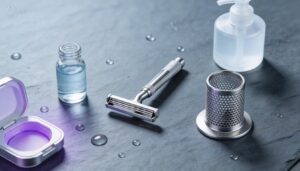
Alcohol performs surface kill, but bacteria don’t stop there. Left unchecked, moisture and residue create biofilm — a protective layer that makes contamination harder to remove with each passing shave.
That’s where consistent hygiene practices for personal grooming tools matter most.
| Practice | Why It Helps | Tool/Method |
|---|---|---|
| Personal Razor Assignment | Stops cross-contamination between users | Dedicated labeled razor |
| Biofilm Inhibition | Prevents bacterial layer buildup on edges | Rubbing alcohol soak |
| Antimicrobial Storage | Reduces recontamination between shaves | Ventilated antimicrobial stand |
| Hand Sanitization Pre-Shave | Limits bacteria transfer to blade | hand sanitizer |
| UV Blade Sterilization | Kills remaining microbes after rinsing | UV sanitizing devices |
Rinse immediately after shaving, never share your razor, and consider sanitizing techniques to reduce infection risk, like cleaning station usage or UV blade sterilization, for an extra layer of protection.
Drying Blades Completely Before Storage

Once bacteria are neutralized, moisture becomes your next concern.
Pat the blade dry using a clean towel — this Pat Dry Technique protects the edge without scraping it.
Then use the Shake Drain Method: tilt the razor so gravity pulls remaining droplets away.
Air Dry Timing matters too — give it a moment before storage.
Cartridge Venting works best with Elevated Blade Placement, so dry your razor thoroughly to avoid rust, and store your razor properly to prevent damage through consistent blade maintenance.
Preventing Rust, Residue, and Edge Damage
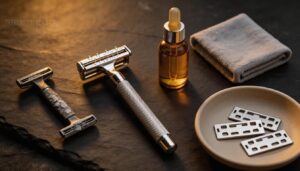
Drying your razor is just the start. Rust and residue sneak in fast, especially if you live in a hard water area — minerals left on the edge speed up metal corrosion.
Apply a low-residue oil or protective coating after each clean. Practice gentle blade handling and non-abrasive cleaning only. Dry your razor thoroughly to avoid rust and blade dullness.
Why Moisture Makes Razor Burn Worse
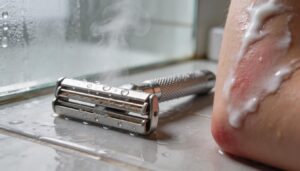
Wet skin feels softer, but that’s part of the problem. Sweat dilutes your shaving cream, triggering lubrication dilution that strips away the protective cushion between blade and skin.
Add barrier overhydration — where excess moisture loosens your skin’s outer layer — and even light shave friction causes redness.
Blade dullness, humidity speeds up, residue build-up increases, and swelling friction worsens every stroke.
Store Razors in a Dry Place

Where you store your razor matters just as much as how you clean it.
Bathroom humidity is one of the biggest reasons blades corrode and irritate skin faster than they should.
Here’s what you can do to keep your razor dry and ready to perform.
Keeping Razors Away From Bathroom Humidity
Your bathroom is basically a humidity trap — and your razor pays the price. Constant moisture speeds up metal oxidation and roughens the blade edge faster than most people realize.
Keep your razor out of the shower caddy entirely.
Consider these smarter storage habits:
- Use a dry cabinet or airtight container to limit humidity exposure
- Apply a protective oil coating after drying to block metal corrosion
- Try elevated storage away from splash zones and damp surfaces
- Place moisture indicator strips nearby to track humidity levels
Using Upright Stands and Ventilated Holders
store your razor matters as much as how you clean it. upright stand with smart airflow design keeps blades drying faster by lifting them off damp surfaces.
Look for vent placement near the head, moisture drainage channels, and solid stability features that prevent tipping. smooth, non-porous holders support clean maintenance of your shaver goals and promote genuinely hygienic storage solutions.
Preventing Corrosion on Blades and Metal Parts
Corrosion quietly destroys blades before you notice. Manufacturers apply protective layers — like a zinc galvanization process, manganese phosphate layer, or moisture barrier film — but water exposure erodes them fast.
Once metal oxidation starts, razor burn follows. Protect that coating by:
- Wiping blades dry immediately after use
- Applying a light anti-rust oil periodically
- Avoiding conditions that strip epoxy barrier coating through metal corrosion
Protecting Electric Shavers From Damp Storage
damp electric shaver stored in a sealed case is basically rust in the making.
Always use the air-dry setting before putting it away, and keep a protective travel cap on the head to block humidity. airflow drawer beats a closed cabinet every time.
Make sure your clean shaver is completely dry — metal oxidation starts faster than you’d expect.
Simple Moisture-control Tips Like Silica Gel
Silica gel placement is one of the simplest moves you can make. Drop a color indicator packet into your razor holder — when it shifts from blue to pink, it’s time for desiccant recharging.
Tuck a moisture barrier liner under the holder to block counter humidity. These effective storage methods to avoid razor corrosion are cheap, proven, and surprisingly easy to overlook.
Replace and Lubricate on Schedule
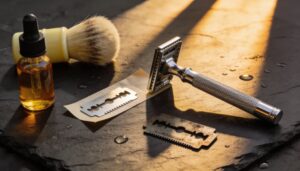
A dull blade is one of the fastest ways to turn a routine shave into a skin nightmare. Knowing when to swap out your blade — and how to keep your razor running smoothly — makes a real difference.
what to keep in mind.
Replacing Blades After 5–7 Shaves
Most blades hit their limit after 5–7 shaves — that’s your ideal shave interval. Scheduled blade swaps take the guesswork out of razor blade fatigue before it starts affecting your skin.
shave count logging with a simple tally on your mirror.
Blade freshness benefits your skin directly: less drag, less razor burn, less irritation. It’s also cost-effective blade management that protects both your face and your wallet.
Signs a Dull Blade is Irritating Skin
Your skin speaks before you do. A dull razor forces increased pressure, turning smooth strokes into drag. Watch for these warning signs:
- Redness after passes that linger beyond a few minutes
- Burning sensation or itchy, tender skin shortly after shaving
- Small razor bumps signaling repeated tugging instead of clean cuts
Switch blades immediately — sharp razor, calm skin.
Lubricating Electric Cutters for Less Friction
Electric shavers run hot — and heat plus friction equals irritation. A drop or two of clipper oil on your foil edges (Foil Edge Lubrication) keeps cutting action smooth.
Don’t forget Pop-up Trimmer Oil — that blade heats up fast.
Lubricant Compatibility matters too; wrong oils leave sticky Residue Management nightmares.
| Area | Oil Dosage Guidelines | Frequency |
|---|---|---|
| Foil edges | 1–2 drops | After each clean |
| Pop-up trimmer | 1 drop | Weekly |
| Rotary heads | 2 drops | Every 3–4 shaves |
Changing Foils, Heads, and Worn Attachments
Lubrication only goes so far — worn parts still drag. Follow the manufacturer’s Foil Replacement Interval (usually every 3–6 months) to keep shaving smooth.
Model-Specific Compatibility matters here; foil heads and cutter blocks aren’t interchangeable across lines.
Cutter Block Swapping is straightforward: pull the old block off, press the new one until it clicks. That snap-fit installation takes seconds.
Don’t skip Guard Frame Care either — a cracked frame misaligns the foil and irritates skin.
Creating a Maintenance Routine That Prevents Razor Burn
Think of razor maintenance like a skin hydration routine — skip steps and your skin pays the price.
Build a simple inspection checklist into your weekly schedule:
- Check for blade dullness and rust after every 5–7 shaves
- Clean and sanitize with alcohol, then dry completely
- Pack a travel kit with fresh blades and lubricant
Consistent shaving equipment maintenance keeps razor burn from becoming a pattern.
Frequently Asked Questions (FAQs)
Can HPV look like razor bumps?
Yes, HPV warts can mimic razor bumps, but wart morphology differs. Razor bumps appear hours after shaving near ingrown hairs.
HPV lesions persist, spread, and may cluster. Diagnostic cues and medical evaluation help confirm the difference.
Can shaving frequency worsen chronic skin sensitivity?
Shaving every day without rest doesn’t let your skin barrier recover. Cumulative shear from high shave frequency builds inflammation accumulation over time, which deepens chronic skin sensitivity.
Spacing shaves out helps break that cycle.
Does water hardness affect blade performance over time?
Hard water is a slow blade killer.
Mineral buildup roughens edges, lather reduction cuts lubrication, and corrosion acceleration dulls blades faster.
Rinse inefficiency and friction increase make irritation worse over time.
Should you shave differently after a sunburn?
After a sunburn, use reduced pressure, adjusted angle, and shorter strokes.
A cool water rinse pre‑shave softens skin gently.
Finish with a post‑sunburn moisturizer for post‑shave care that calms skin irritation effectively.
Can sharing razors increase skin irritation risks?
Sharing razors exposes you to cross contamination, bacterial transfer, and allergen residue, raising folliculitis risk and bloodborne exposure.
Even a clean-looking blade can trigger shaving rash or razor burn.
Always sanitize your razor to curb bacterial growth.
Does diet or hydration affect post-shave recovery?
Yes. Hydration levels, protein intake, vitamin C, and zinc benefits all support post-shave recovery. Antioxidant rich foods reduce inflammation. Proper hydration of skin speeds healing and strengthens skin barrier protection.
Conclusion
The next time you reach for your razor, ask yourself: are you setting yourself up for a smooth shave or a painful scrape? By incorporating these five razor maintenance tips into your daily routine, you’ll be on your way to a healthier, irritation-free shaving experience.
Effective razor maintenance prevents irritation, and with a little practice, you’ll be enjoying silky-smooth skin in no time, every time, with confidence and ease always.