This site is supported by our readers. We may earn a commission, at no cost to you, if you purchase through links.
You used to curl your hair in ten minutes flat, and those spirals would stick around all day. Now? They’re gone before you even leave the house. If your curls are dropping faster than your morning coffee cools, you’re not imagining things—and you’re definitely not alone.
Hair changes constantly, and what worked last year might be working against you now. The culprits range from sneaky product buildup to damage you can’t even see, plus a dozen environmental factors silently sabotaging your style.
Once you pinpoint what’s stealing your curl power, you can fight back with the right fixes and get those bouncy, lasting curls you remember.
Table Of Contents
- Key Takeaways
- Hair Health Issues That Affect Curl Hold
- Hair Texture and Type Challenges
- Styling Mistakes That Make Curls Fall Flat
- Product Problems Impacting Curl Longevity
- Environmental and Lifestyle Factors
- Frequently Asked Questions (FAQs)
- How can I prevent heat damage to my hair when curling?
- What are the characteristics of a good hairspray for holding curls?
- Are there any other styling mistakes that can affect the longevity of curls?
- How does hair length affect its ability to hold curls?
- Can diet or nutrition affect curl retention?
- Does brushing or combing ruin existing curls?
- Will wearing hats flatten my curls permanently?
- Can medications change how hair holds curls?
- Conclusion
Key Takeaways
- Your hair’s ability to hold curls crashes when the cuticle is damaged, dehydrated, or over-processed—basically, compromised strands can’t grip the shape you’re trying to create, no matter how good your technique is.
- Styling mistakes like skipping heat protectant, touching hot curls before they cool, or using the wrong products for your hair type sabotage curl longevity faster than any texture issue ever could.
- Environmental factors—humidity breaking hydrogen bonds, hard water leaving mineral buildup, chlorine stripping natural oils, and even cotton pillowcases creating friction—silently destroy your curl hold overnight.
- Product buildup from heavy oils and silicones coats your hair shaft and kills curl definition, so clarifying weekly and matching lightweight formulas to your actual hair type is non-negotiable for lasting results.
Hair Health Issues That Affect Curl Hold
Your hair’s health is the foundation for everything—including how well it holds a curl. If your strands are damaged, dried out, or compromised, they literally can’t grip the shape you’re trying to create. If you’ve been straightening your hair regularly and notice your curls have gone flat or limp, understanding how to get curls back after straightening can help you restore your hair’s natural elasticity and bounce.
Let’s break down the most common health issues that sabotage your curl game.
Damaged Cuticles and Hair Shaft
Mechanical damage from brushing and heat styling roughens your cuticle layer, breaking those disulfide bonds that give hair its strength. That’s when moisture loss kicks in hard.
Your strands become porous and brittle—zero curl memory left. Heat damage destroys your hair’s natural elasticity, so curls just won’t stick.
Focus on cuticle repair with protein treatments and gentler styling habits to rebuild your hair’s structure. If you’re unsure where to start, check out these curly hair product recommendations to find protein-rich formulas that work for your texture.
Dehydrated or Over-Processed Hair
When your hair’s parched, curl hold vanishes. Dehydration drops elasticity by 30%, and those cuticle scales lift and leak moisture like crazy.
Over-processing—bleach, relaxers, repeated color—cranks up hair porosity and weakens your internal structure. Your strands lose protein and can’t bounce back.
Fix it with deep conditioning masks overnight, pH-balanced cleansers, and protein treatments to restore moisture balance and cuticle damage. Pair these treatments with a curl-enhancing mousse suited to your hair’s porosity level—lightweight formulas work best for low-porosity curls, while high-porosity strands benefit from richer, more nourishing blends.
Split Ends and Lack of Regular Trims
Ignoring frayed ends sabotages curl retention fast. Split ends travel up your hair shaft, causing breakage and frizz that flattens any style you create.
Trim frequency matters—every 8–12 weeks keeps damage from progressing. Regular hair maintenance isn’t optional; it’s split end repair that protects curl retention and prevents further hair damage.
Skip trims? You’re fighting a losing battle with texture management and hair care basics. Regular trims actually help you understand why your hair curls at the ends by keeping weight distribution balanced and preventing damage that disrupts your natural curl pattern.
Chemical Treatments Altering Texture
Relaxers, perms, and keratin treatments break disulfide bonds—the structural glue in your hair shaft. That texture alteration changes your natural curl pattern, often permanently.
Chemical damage raises porosity, making strands lose moisture fast. Your hair can’t grip curls like it used to. Bond repair treatments help, but hair texture management means adjusting your routine. You’re working with different hair now—accept that and adapt your curl pattern expectations.
Hair Texture and Type Challenges
Sometimes your hair just isn’t built to hold curls—and that’s not your fault. Your natural texture, porosity, and even life changes like hormones can work against you. If you’re planning to refresh your look poolside, check out these summer hair dye ideas that work even when chlorine’s been tough on your strands.
Here’s what might be going on with your specific hair type and how to work with it instead of fighting it.
Naturally Straight or Fine Hair
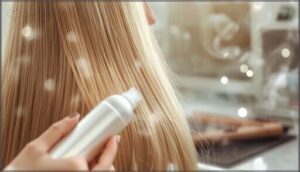
Here’s the truth: fine hair and naturally straight textures are basically curl kryptonite. Your strands lack the dense structure to grip heat styling, so curls slip out fast.
The fix? Work with lightweight mousses made for your hair type, master a tighter curling technique with smaller sections, and always—always—let those curls cool completely before touching them.
High or Low Porosity Hair
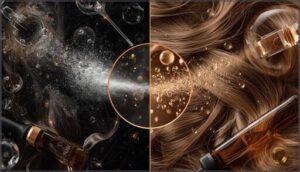
Porosity testing reveals how your cuticle health impacts moisture balance—and that affects everything. High porosity? Your hair absorbs fast but loses curl-holding hydration just as quick. Low porosity fights absorption altogether, creating buildup that weighs down your style.
The fix: match sealing products and heat protectant to your hair types. Build a hair care routine around your actual hair texture, not what you wish it was.
Hair Length and Curl Retention
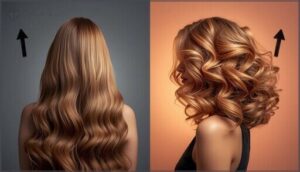
Gravity doesn’t play fair with long hair. The longer your strands grow, the more hair weight drags your curl pattern straight down—weakening curl hold and curl durability fast.
Here’s how length effects ruin your curl game:
- Extra weight flattens curls before they set properly
- Gravity impact increases mechanical strain during styling
- Curl enhancement products struggle against heavy ends
- Friction along the shaft kills springback
- Regular trims restore bounce by removing damaged weight
Match your curl maintenance to your hair type and actual hair length—not Instagram fantasies.
Changes Due to Hormones or Aging
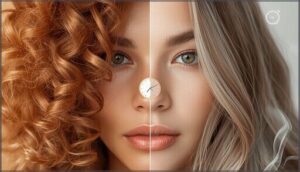
Your body’s hormonal shifts—menopause effects, thyroid influence, estrogen impact—can totally rewrite your hair type and texture overnight. Aging hair loses diameter and curl memory as disulfide bonds weaken. Your once-reliable curl pattern? Gone.
Hair health crashes when hormones mess with moisture retention and sebum production.
Fix it with targeted hair care routines: lightweight hold products, proper hair damage prevention, and moisture-sealing treatments that work with your changing strands.
Styling Mistakes That Make Curls Fall Flat
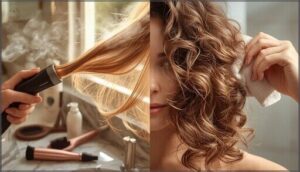
You could have the healthiest hair in the world, but bad styling habits will still sabotage your curls. Sometimes it’s not what you’re doing—it’s how you’re doing it.
Let’s break down the most common styling mistakes that are killing your curl game.
Over-Conditioning or Freshly Washed Hair
Ever wonder why your curls slip out right after a shower? Over-conditioning creates a slippery surface that kills curl grip and throws off moisture balance. Here’s what’s sabotaging your style:
- Silicone buildup from heavy conditioners blocks sebum distribution and weighs hair down
- Skip clarifying washes and product buildup accumulates, flattening curls before your curling iron even heats up
- Day-old hair holds better—natural oils create friction that fresh strands lack
Skipping Proper Heat Protection
Think heat protectant is optional? Think again. When you skip thermal protectants before heat styling, you’re inviting serious thermal abuse that destroys curl hold from the inside out.
Temperatures above 350°F torch your cuticles, triggering heat damage, curl breakage, and hair weakening that no amount of hairspray can fix.
Your frizz control game? Dead on arrival without that protective barrier.
Using The Wrong Curling Technique
Even with heat protection, sloppy curling techniques sabotage your results. Curl angle mistakes—like holding your curling iron horizontally instead of at that sweet 45-degree angle—cut curl longevity by 30%. Your barrel size errors and wrapping techniques matter too.
Master these sectioning methods for curl enhancement that lasts:
- Wrap 1-inch sections vertically around the barrel
- Hold for 5-8 seconds before releasing
- Curl away from your face for natural movement
- Keep consistent heat settings across all sections
Not Letting Curls Cool and Set
You just nailed the curling technique—but if you touch those hot curls immediately, you’re destroying your work. Cooling Time Matters: hair needs to lock in its new shape as hydrogen bonds reset.
Pin each curl while it cools, or better yet, let them hang loose for two full minutes. That pause gives you firmer curl hold and definition that actually lasts.
Product Problems Impacting Curl Longevity
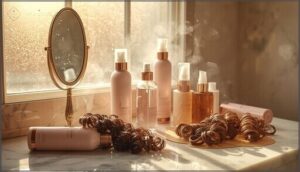
You can nail your curling technique and still watch those ringlets drop flat by lunchtime—and the culprit might be sitting on your bathroom shelf. The products you’re using (or skipping) can make or break your curl game.
Here’s what’s sabotaging your style and how to fix it.
Heavy Oils and Product Buildup
Oil residue from coconut or mineral oils can cake onto your hair shaft, sabotaging curl definition before you even start styling. Product buildup from silicone conditioners creates a slick hair film that kills moisture balance and makes curls slip right out.
Your styling products meant to help are actually smothering your hair texture.
Clarify weekly to strip away that gunky layer and reclaim your bounce.
Wrong Styling Products for Your Hair Type
Beyond buildup, you might just be using the wrong warriors in your curl battle. Fine hair drowns under heavy creams, while thick strands laugh at lightweight mousses. Product matching isn’t optional—it’s survival.
- Silicone serums suffocate fine hair types, killing volume and bounce
- Water-based curl enhancers work better on low-porosity hair texture than oils
- Volumizing foams beat heavy creams for maintaining curl hold on medium hair
Know your hair typing, then arm yourself accordingly.
Insufficient Use of Setting Sprays or Mousses
You skip the mousse application or forget setting spray tips, and your curls collapse by noon. Curl enhancement demands product layering—mousse on damp hair builds structure, then a misted setting spray locks it down.
These styling products create a polymer shield that boosts curl hold by 20–40%. Master these styling techniques, and you’ll own your texture instead of watching it vanish.
Improper Application of Hairspray
You mess up your spray distance—standing two inches away dumps gunk on your hair, while ten feet out barely dusts it. Product buildup from overapplication risks stiff, crunchy texture and zero curl hold. Nail the sweet spot: 8–12 inches, light mist on dry curls.
Wrong application timing kills hold duration—spray damp hair and watch your styling products slide right off.
Environmental and Lifestyle Factors

Sometimes the battle isn’t about what you’re doing to your hair—it’s about what the world is doing to it. Your environment plays a bigger role in curl failure than you might think.
Here’s what’s working against you and how to fight back.
Humidity and Weather Conditions
Humidity is your curl’s enemy number one—it breaks those hydrogen bonds that keep your style locked in place. When moisture hits your hair, you’ll see frizz, flatness, and curls that drop within hours.
Humidity breaks the hydrogen bonds that lock in your curls, triggering frizz and flatness within hours
Fight back with humidity-resistant setting sprays and heat protectant before styling. Check the weather forecast and seal your curls with lightweight products that block moisture without weighing them down.
Hard Water and Mineral Buildup
Hard water leaves mineral deposits—calcium and magnesium—that coat your strands like gunky armor, crushing curl definition and making products useless. This buildup messes with pH balance, wrecking your hair bonds and curl memory across all hair types.
Take control with these moves:
- Use chelating treatments monthly to strip away mineral deposits
- Switch to clarifying shampoos weekly to fight product buildup
- Install water filtration or rinse with distilled water for lasting results
Understanding the impact of methodological flaws can also help in addressing hair care issues.
Exposure to Chlorine or Saltwater
Swimming strips your hair of its natural oils—chlorine and saltwater wreck cuticle integrity, deposit minerals, and break down hair bonds that hold your curls. Fine or bleached hair shows damage fastest, losing texture and bounce after just one dip.
Fight back with pre-swim protection and immediate fresh-water rinses. Your hair restoration starts with hydrating masks and chelating treatments that remove buildup—don’t let humidity finish what the pool started.
| Damage Type | What It Does | Quick Fix |
|---|---|---|
| Chlorine Damage | Stiffens strands, blocks curl formation | Rinse immediately post-swim |
| Saltwater Effects | Draws out moisture, flattens pattern | Deep condition weekly |
| Mineral Buildup | Weighs down hair, kills hold | Use chelating shampoo |
| Cuticle Breakdown | Creates frizz, resists styling | Apply barrier cream pre-swim |
Sleep Habits and Pillowcase Materials
Your nighttime routine might be sabotaging your curl hold—cotton pillowcases create friction that flattens waves and triggers frizz by morning. Sleep position matters too; constant pressure crushes curl patterns overnight.
Switch to silk or satin fabric choices for friction reduction that protects hair texture and maintains hair health. Clean pillowcases weekly prevent oil buildup, and even high humidity can’t wreck properly protected hair care routines.
Frequently Asked Questions (FAQs)
How can I prevent heat damage to my hair when curling?
Want to keep your curls healthy? Always apply a heat protectant before styling, use your curling iron at 340–375°F, and curl small sections quickly—just 5–10 seconds per piece.
What are the characteristics of a good hairspray for holding curls?
You want a hairspray with flexible formulas that deliver medium to strong hold strength without crunchiness.
Look for humidity resistance, fine spray patterns for even coverage, and conditioning agents that won’t leave your curls heavy or flaky.
Are there any other styling mistakes that can affect the longevity of curls?
Yes—touching curls before they cool, skipping heat protectant, using curling irons on damp hair, or applying products unevenly can ruin curl setting.
Poor drying techniques and the wrong styling tools also shorten hold dramatically.
How does hair length affect its ability to hold curls?
Ever notice how your friend’s bob holds ringlets all day while your waist-length waves go limp by lunch?
Longer hair weighs down curls more than shorter cuts. That extra weight pulls curl pattern straight, reducing curl hold and longevity through gravitational force.
Can diet or nutrition affect curl retention?
Protein intake, omega benefits, biotin supplements, vitamin balance, and hydration levels directly impact hair health and growth. Poor nutrition weakens hair texture, reducing curl hold and making maintenance harder.
Does brushing or combing ruin existing curls?
Brushing through set curls disrupts the hair cuticle and flattens your curl pattern instantly. Wide-tooth combs minimize hair friction and preserve curl hold better than dense brushes.
Use detangling methods on damp hair before styling—never after.
Will wearing hats flatten my curls permanently?
Hats squash your curls temporarily, but they won’t ruin them forever. Hair memory and curl resilience bounce back with proper curl care—heat-free resets, lightweight hair styling products, and frizz prevention routines restore your texture after headwear effects fade.
Can medications change how hair holds curls?
Yes—certain prescription interactions and hormone influences can shift your hair’s moisture balance and follicle behavior.
Medication side effects may disrupt pharmaceutical textures, impacting hair curling problems and overall hair health and maintenance.
Conclusion
Next time you catch yourself wondering why your curls won’t hold, remember—your hair’s sweet spot is always shifting. The reasons your hair won’t hold curls anymore aren’t mysterious; they’re hiding in plain sight, from gunky buildup to sneaky humidity.
Tweak your routine, swap out what’s not working, and you’ll see those bouncy curls make a comeback. Your hair’s got personality, and with the right moves, you’re back in the driver’s seat—ready for curls that actually last.