This site is supported by our readers. We may earn a commission, at no cost to you, if you purchase through links. This content is for general informational and educational purposes only and is not a substitute for professional medical, dermatological, or nutritional advice.
You washed your hair twice, and it still looks like it lost a fight with a candle. Vaseline does that. Water slides right off it, so the harder you scrub, the more you spread it.
The good news is that grease dissolves when you treat it the right way. Skip the dish soap and the hairdryer, because both can leave your scalp burned or your hair worse off than before. You need a calm plan and a few kitchen staples.
Here’s how to remove Vaseline from hair safely, from the first blot to the last cool rinse, so your strands feel clean again.
Table Of Contents
- Key Takeaways
- Blot Excess Vaseline From Hair Before Washing
- How to Remove Vaseline From Hair With Clarifying Shampoo
- Cornstarch and Oil Options for Stubborn Vaseline
- Vaseline Removal Methods to Avoid: Harsh Cleaners, Talc, and Heat
- Condition Hair After Vaseline Removal and Prevent Buildup
- Frequently Asked Questions (FAQs)
- What will get Vaseline out of hair?
- Does Dawn dish soap get Vaseline out of hair?
- How long does it take to get Vaseline out of hair?
- What happens if Vaseline gets in hair?
- Can I use regular shampoo to remove Vaseline from my hair?
- What should I do if my hair becomes dry and damaged after removing Vaseline?
- Is Vaseline in hair harmful to the scalp?
- How long does Vaseline stay in hair unwashed?
- Can Dawn dish soap remove Vaseline from hair?
- How do I get Vaseline out of curly hair?
- Conclusion
Key Takeaways
- Blot the Vaseline with dry paper towels before any water touches your hair, and dust on cornstarch to soak up what’s left, because water just spreads it.
- Wash with a clarifying shampoo and warm water, rinsing for at least 60 seconds, since regular shampoo can’t break down petroleum jelly.
- Rewash only the slick patches, or add a few drops of olive or coconut oil to stubborn clumps, and repeat up to three times until your hair feels squeaky and the water runs clear.
- Keep hairdryers, flat irons, bleach, detergent and solvents away from your head because they can burn your scalp or damage your hair, then finish with conditioner on your ends and a cool rinse.
Blot Excess Vaseline From Hair Before Washing
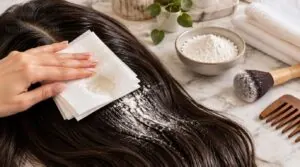
Grab a stack of dry paper towels and blot the Vaseline before any water touches your hair. Do it right away if you can, since petroleum jelly is still soft and easy to move at that point. Press firmly on the greasy sections and lift straight away. Don’t rub, because rubbing drives the product deeper into your strands.
If the Vaseline was part of protecting your skin during a bleaching session, check out this guide to the best bleach for hair to pick a strength that suits your hair’s condition.
Work in small sections so you don’t smear grease onto clean hair. Swap in a fresh towel each time the old one gets slick.
Next, sprinkle an absorbent powder like cornstarch or dry shampoo over the heavy spots. Baby powder works too. Massage it in gently, wait a few minutes, then brush it out. This cuts the amount of Vaseline you’ll have to wash away.
A fine, unscented pure cornstarch powder soaks up grease well and won’t leave your hair feeling gritty like heavier powders can.
How to Remove Vaseline From Hair With Clarifying Shampoo
Once you’ve blotted off the extra Vaseline, a clarifying shampoo is your next move, since it’s built to strip heavy residue. You’ll work through two steps below, and each one builds on the last. Follow them in order so you don’t leave a greasy film behind.
Shampooing and Rinsing With Warm Water
You’ll start by setting the water to a comfortable warm, since heat helps loosen Vaseline for hair cleansing. Keep it under 120°F so you don’t scald your scalp.
Once the Vaseline is out, a gentle formula like those in this roundup of best Japanese shampoos and conditioners can restore moisture without leaving hair feeling stripped.
- Wet hair completely before applying clarifying shampoo.
- Work it through the strands and into the roots.
- Massage your scalp for oil removal.
- Rinse 60 seconds or longer.
- Aim the spray from roots to ends.
Rewashing Stubborn Greasy Patches
Once you’ve rinsed, check your wet hair for translucent, slick patches. They usually hide at the crown, the nape, and near your scalp.
If those spots stretch like gum before snapping, your strands may be overloaded with moisture, and this guide on why your hair feels stretchy when wet explains the likely causes.
Apply clarifying shampoo straight onto those spots. Use your fingertips in small circles for 60 to 90 seconds, since friction breaks down the petroleum jelly.
Rinse with warm water between rounds. Repeat up to three times until your hair feels squeaky and water runs clear.
Cornstarch and Oil Options for Stubborn Vaseline
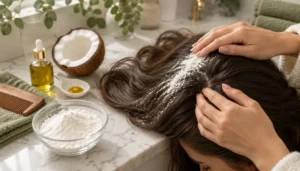
If a patch of Vaseline still feels tacky after shampooing, switch tactics. Cornstarch and oil each handle it differently, so pick the one that fits.
For surface residue, dust cornstarch over the greasy hair and pat it in with your fingertips. Don’t rub, since that spreads the petroleum jelly along the strand. Wait 10 to 15 minutes, then brush the powder out with a fine-tooth comb. Do this before you wet your hair, or the powder turns to paste.
If the powder leaves a greasy film behind, this step-by-step guide to getting Vaseline out of your hair covers the oil and shampoo follow-up that finishes the job.
For a thick, stubborn clump, massage a few drops of olive oil into it. Coconut oil works too. Use very little, because extra oil leaves a new greasy layer. Let it sit 10 to 15 minutes, then shampoo. Finish with a warm water rinse, because cold water can harden any Vaseline left in your hair.
Vaseline Removal Methods to Avoid: Harsh Cleaners, Talc, and Heat
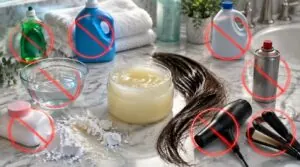
Skip anything that promises a shortcut, because the wrong product makes Vaseline harder to remove and hurts your scalp.
Keep dish soap, laundry detergent, and bleach away from your head. They strip sebum, upset your scalp’s pH, and can cause chemical burns. Bleach also damages the cuticle and won’t dissolve petroleum jelly. Goo Gone, adhesive remover, and any solvent for petroleum jelly belong off your scalp too.
Keep dish soap, detergent, bleach, and solvents off your scalp, because they strip natural oils and can cause chemical burns
Don’t shake baby powder into greasy hair. Talc clumps with Vaseline, resists rinsing, and can irritate your lungs if inhaled.
Never use a hairdryer or flat iron to loosen buildup. Heat melts Vaseline deeper into the strand and raises your burn risk. Rinse with warm water, not hot, so the grease doesn’t redeposit.
Condition Hair After Vaseline Removal and Prevent Buildup

A good conditioner puts back the moisture that clarifying shampoo and vaseline solvents strip out, so don’t skip this step. Apply it only to your mid-lengths and ends. Keep it off your roots, since that’s how hair product buildup starts.
Follow this routine:
- Squeeze out excess water, then apply a lightweight conditioner to your ends.
- Comb it through gently, working from the tips upward.
- Rinse with cool water to seal the cuticle.
- Use a weekly deep conditioning or moisturizing treatment under a shower cap for 10 to 20 minutes.
- Wash clarifying shampoo into your monthly scalp care, and rinse styling products out within 24 hours.
Next time, dab vaseline on your ends only, and sparingly. You’ll avoid a repeat.
Frequently Asked Questions (FAQs)
What will get Vaseline out of hair?
Blot the petroleum jelly with a paper towel first, then wash with clarifying shampoo and warm water. Skip dish soap, since it dries your scalp. If grease lingers, rewash only those spots. Baby shampoo is too gentle here.
Does Dawn dish soap get Vaseline out of hair?
Like a key cut for one lock, Dawn dish soap fits this job. Yes, it works. Its surfactants break down Vaseline so water can rinse the petroleum jelly away. Don’t use it often, though; it strips hair.
How long does it take to get Vaseline out of hair?
Plan on 15 to 30 minutes for most hair. Blot for 2–3 minutes, then wash once or twice with clarifying shampoo. Stubborn petroleum jelly takes longer, and cornstarch or baby oil adds 15–30 minutes of prep.
What happens if Vaseline gets in hair?
Vaseline turns your hair into a greasy, matted mess within minutes. It coats each strand, so hair clumps and looks limp. It also seals your scalp, causing hair follicle blockage and trapping bacteria.
Can I use regular shampoo to remove Vaseline from my hair?
Sure, regular shampoo will happily clean everything except the Vaseline. It can’t break down petroleum, so you’ll just rinse and repeat. Use clarifying shampoo instead, since its stronger detergents lift the greasy film for safe hair cleaning.
What should I do if my hair becomes dry and damaged after removing Vaseline?
Condition right away with a deep moisture-restoring mask, and leave it on for the time the label gives. This helps moisturize stripped strands. Then seal with leave-in conditioner, skip heat tools, and trim damaged ends for hair split end repair.
Is Vaseline in hair harmful to the scalp?
Picture a thin, waxy film sealed over your scalp. That’s Vaseline. Yes, it can harm your scalp. Petroleum jelly traps sweat and oil, clogs follicles, and feeds dandruff yeast, so itching, redness, and breakouts follow.
How long does Vaseline stay in hair unwashed?
Funny how something so easy to put on is so stubborn about leaving. Vaseline stays in your hair until you wash it out, because petroleum jelly won’t dissolve in water. Skip washing, and it lingers for weeks.
Can Dawn dish soap remove Vaseline from hair?
Yes, Blue Dawn can work for grease removal when Vaseline is stubborn. Its surfactants cut petroleum, but they’re harsh on hair. Use it once, rinse well, and don’t swap it in for shampoo.
How do I get Vaseline out of curly hair?
Vaseline clings to curls like wax on a candle wick. Blot it with dry paper towels, then massage clarifying shampoo into dry hair. Rinse with warm water. Repeat for stubborn greasy patches.
Conclusion
Picture a toddler’s Vaseline experiment ten minutes before picture day. Panic sets in, but the fix is simple. Blot first, then work clarifying shampoo through dry hair, and rinse with warm water.
If you need to remove Vaseline from hair that’s still slick, add cornstarch or a light oil and repeat. Leave the dish soap and hairdryer alone.
Finish with conditioner on the ends. Grease loses to patience, and your hair will soon bounce back.