
This site is supported by our readers. We may earn a commission, at no cost to you, if you purchase through links.

Your scalp holds roughly 100,000 follicles, but here’s the part most people don’t realize: those miniaturized wisps where you used to have thick hair aren’t necessarily gone forever. Dormant follicles retain their full cellular machinery—dermal papilla, stem cells, the whole growth apparatus—sitting in a state that looks like defeat but functions more like hibernation.
The difference between dormant and dead matters enormously: dead follicles collapse into scar tissue with zero regenerative potential, while dormant ones can reactivate under the right biochemical conditions. Whether you’re dealing with widening part lines or thinning patches that appeared over months, understanding how to restore dormant hair follicles means targeting the specific mechanisms—hormonal, vascular, nutritional—that pushed them into shutdown mode in the first place.
Table Of Contents
- Key Takeaways
- What Are Dormant Hair Follicles?
- Identifying Dormant Follicles on Your Scalp
- Key Factors Leading to Follicle Dormancy
- Natural Ways to Reactivate Dormant Follicles
- Medical Treatments to Restore Dormant Follicles
- Advanced Therapies and Emerging Research
- Diet and Nutrition for Follicle Revival
- Daily Habits to Prevent Follicle Dormancy
- Frequently Asked Questions (FAQs)
- How do you reactivate dormant hair follicles?
- What breakthrough drug wakes up hair follicles?
- What oils wake up dormant hair follicles?
- How long do hair follicles stay dormant?
- How long does follicle reactivation typically take?
- Can dormant follicles become permanently dead over time?
- Are there age limits for successful follicle restoration?
- Do hair transplants work on dormant follicles?
- Can women use the same treatments as men?
- Conclusion
Key Takeaways
- Dormant follicles retain full cellular machinery—dermal papilla, stem cells, growth apparatus—and can reactivate under the right biochemical conditions, unlike dead follicles that collapse into permanent scar tissue with zero regenerative potential.
- DHT elevation, chronic stress, nutritional deficiencies (iron, vitamin D, zinc, protein), and scalp inflammation are the primary mechanisms that push follicles into extended dormancy, each requiring targeted intervention rather than generic hair care.
- Clinical treatments like minoxidil (extends growth phase), finasteride (blocks 60-70% of scalp DHT), PRP therapy (delivers growth factors), and microneedling (creates controlled micro-injuries) address dormancy through distinct biological pathways and typically require 3-6 months for visible results.
- Natural approaches—scalp massage (5-10 minutes daily), essential oils like rosemary and peppermint (1-2% dilution), and improved circulation—can stimulate follicle reactivation when applied consistently, though severely miniaturized follicles may need 12+ months or medical intervention.
What Are Dormant Hair Follicles?
Your hair follicles don’t just disappear overnight—they can shift into a kind of hibernation mode that stops visible growth.
If your strands seem stuck in limbo, understanding what slows down the drying process can reveal whether damaged cuticles are part of the problem.
Understanding the difference between dormant and dead follicles is the first step toward choosing the right treatment.
Once you know whether your follicles can recover, exploring proven treatments for hair follicle inflammation can help you address the underlying issues and promote healthier regrowth.
Let’s break down what dormancy actually means, how to spot it, and what sends follicles into this resting state.
Difference Between Dormant and Dead Follicles
Dormant hair follicles still pack their full growth machinery—dermal papilla, stem cells, root sheath intact—while dead follicles lose those structures entirely to scar-like tissue.
Think of dormancy as a pause button on hair regeneration: you’ll often see wispy vellus hairs or uneven thinning where follicles simply rest.
Dormant follicles pause hair growth like a hibernating system, leaving behind wispy vellus hairs and patchy thinning instead of complete baldness
Dead zones? Smooth, shiny scalp with zero follicular openings—that’s permanent follicle damage requiring hair restoration surgery. For more details about key causes and signs, explore this overview of dead hair follicle symptoms.
Signs of Dormant Follicles
Spotting dormancy starts with your fingertips: run them across thinning zones and you’ll feel soft, almost invisible peach fuzz—vellus hair growth that’s shorter than 2–3 mm. Your part line widens, scalp inspection under bright light reveals increased follicle visibility between strands, and hair texture shifts from thick to fragile. Those miniaturization patterns—mixed thick and thin shafts—prove follicles still exist, stuck in extended rest rather than dead.
- Tiny vellus hairs replace your usual terminal strands, often translucent and barely visible
- Widening part lines show more scalp without complete baldness
- Softer, weaker texture when you rub hair between fingers
- Patchy light zones under camera flash or bright overhead lighting
- Visible follicle openings on close scalp inspection, not smooth scar tissue
Understanding the stages of the hair growth cycle phases helps explain why some follicles appear dormant rather than lost.
Causes of Follicle Dormancy
Once you spot that miniaturization, pin down why it happened—hormonal imbalance tops the list, with DHT binding to androgen receptors and shrinking growth windows. Genetic factors load the gun, then environmental stress, poor nutrition, and scalp inflammation pull the trigger. Even chronic cortisol or autoimmune flares can trap follicles in extended telogen, leaving your scalp stuck in standby mode.
| Trigger | Mechanism | Affected Phase |
|---|---|---|
| DHT elevation | Shortens anagen, prolongs rest | Telogen extended |
| Stress hormones | Blocks Gas6 signals | Anagen delayed |
| Autoimmune attack | T‑cell infiltration | Catagen rushed |
Identifying Dormant Follicles on Your Scalp
You can’t fix what you can’t identify—and spotting dormant follicles isn’t always straightforward. Some clues show up on your scalp’s surface, while others require professional equipment to detect.
Let’s break down what to look for at home, when to seek expert diagnosis, and which areas of your scalp are most vulnerable.
Visual and Tactile Clues
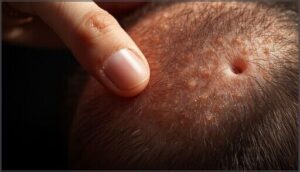
Your scalp often tells the story before you notice widespread thinning signs. Run your fingers against the grain—dormant hair follicles leave fine stubble in zones that look nearly bare, a tactile clue distinct from smooth, dead patches.
Catching these early signs of damaged hair follicles gives you a head start on adjusting your diet and habits before permanent loss sets in.
Check scalp texture under bright light: tiny pores and soft peach fuzz signal follicle health remains intact, waiting for follicle revival through proper hair follicle stimulation and improved scalp health.
Professional Diagnostic Methods

Five sophisticated tools pinpoint whether your hair follicle health truly facilitates regrowth or needs targeted follicle stimulation. Digital trichoscopy analysis magnifies follicular openings up to 100×, revealing yellow dots that mark dormant hair follicles still capable of revival.
Dermatology clinics pair this with scalp biopsy—a 4 mm sample distinguishing viable follicles from scar tissue. Phototrichogram tracks growth cycles over 72 hours, while manual testing and metabolic screening expose hormonal or nutritional blocks trichology experts address.
Common Scalp Areas Affected
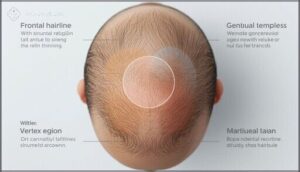
Frontal thinning and temporal loss usually announce dormant hair follicles first—men see M-shaped recession while women notice a see-through part.
Switching to a nutrient-dense diet rich in zinc and B vitamins can also help tackle scalp odor issues that sometimes accompany thinning hair.
Vertex balding creates circular zones on your crown; marginal thinning hugs your hairline edges when tight styles strain follicles.
Targeted scalp massage and professional scalp care address these vulnerable regions, restoring hair follicle health and jumpstarting hair regrowth where crown thinning dims your density.
Key Factors Leading to Follicle Dormancy

Your follicles don’t just decide to quit on their own—something pushes them into that extended sleep mode. Understanding what’s triggering the dormancy gives you real power to reverse it.
Let’s break down the four main culprits that send follicles into hibernation.
Hormonal Imbalances (DHT and Others)
When testosterone converts to dihydrotestosterone—DHT—through the enzyme 5-alpha-reductase, your androgen-sensitive follicles face a powerful adversary. This androgen binds to receptors in your frontal and vertex scalp, shortening your growth phase and triggering androgenetic alopecia.
Beyond DHT effects, cortisol management matters: chronic stress pushes follicles into early rest. Thyroid balance and estrogen levels also control your cycle timing, making hormonal balance critical for reversing dormancy.
Nutritional Deficiencies
Your follicles need fuel—and nutrient gaps can lock them into extended rest. Iron Deficiency slows oxygen delivery, triggering telogen effluvium and diffuse thinning.
Low Vitamin D prolongs resting phases, while Zinc Benefits include stronger protein synthesis in hair matrix cells. Inadequate Protein Intake forces your body to conserve resources, pushing follicles dormant.
Biotin Supplements support keratin production when dietary intake falls short. Achieving Nutritional Balance restores Hair Nutrition, giving dormant hair follicles the raw materials they need to reactivate.
Stress and Scalp Inflammation
Chronic stress floods your system with cortisol, triggering a Stress Response that shortens growth phases and extends dormancy across your scalp. Inflammation Causes—neurogenic factors like substance P—ignite local swelling around Hair Follicles, creating a hostile environment.
Oxidative Damage weakens barrier lipids, fueling itching and microbial imbalance. This Stress and Hair Growth connection undermines Scalp Health, leaving Dormant Hair Follicles trapped in extended rest.
Scalp Massage counters inflammation by boosting circulation.
Medication and Lifestyle Effects
Even hormone therapy and birth control pills with high-androgen progestins can trigger telogen effluvium, while chemotherapy effects often arrest growth abruptly.
Thyroid treatment corrects imbalances that disturb follicle cycling, yet smoking impact compounds DHT damage through oxidative stress. Finasteride and minoxidil offer rescue when hormonal balance and hair remain off-kilter, so lifestyle factors and hair loss intertwine more tightly than most realize.
Natural Ways to Reactivate Dormant Follicles

You don’t always need expensive procedures to wake up dormant follicles. Simple, research-backed techniques can improve blood flow to your scalp and shift follicles from their resting phase back into active growth.
Here are three natural methods that work—when you apply them consistently.
Scalp Massage Techniques
You can kick-start follicle stimulation and activation with simple finger massage—no fancy tools required. Try these three core techniques for scalp circulation:
- Circular strokes using medium massage pressure across all zones
- Scalp tapping to wake up nerve endings and boost hair follicle stimulation
- Kneading to mobilize tissue around dormant roots
Five to ten minutes daily promotes scalp health and wellness while encouraging hair growth.
Essential Oils and Herbal Remedies
After you’ve primed your scalp with massage, plant-based compounds can take follicle reactivation further. Rosemary essential oil delivers rosmarinic acid that blocks DHT—the same hormone behind most pattern loss. Peppermint essential oil drives menthol-fueled vasodilation, pulling nutrients toward starved roots. Meanwhile, saw palmetto and pumpkin seed oil inhibit 5α-reductase by roughly 50 percent, slowing miniaturization before follicles shut down.
| Botanical | Active Mechanism |
|---|---|
| Rosemary essential oil | Inhibits 5α-reductase, lowers local DHT |
| Peppermint essential oil | Menthol vasodilation, anagen promotion |
| Saw palmetto | Blocks type I & II 5α-reductase ~50% |
| Pumpkin seed oil | Phytosterols reduce DHT, boost density 40% |
Dilute each oil to 1–2 percent in a carrier like jojoba—about three drops per tablespoon—and apply two to three times weekly. Pair them with aloe vera gel or lavender extracts to soothe irritation while you wait for follicles to wake up over the next three to six months.
Improving Scalp Circulation
Once you’ve layered in botanicals, Blood Flow becomes your next target. Your scalp needs oxygen-rich nutrients reaching every Hair Follicle, and better Scalp Circulation makes that happen. Daily Scalp Massage—five to ten minutes with fingertip circles—dilates capillaries and warms dormant roots. Add a Warm Compress for ten minutes beforehand to widen vessels further, then follow up with regular Cardio Exercise to keep systemic flow strong.
Topical Niacinamide Benefits include enhanced microvascular delivery, supporting Scalp Health while reducing inflammation.
- Fingertip circles moving from hairline to crown, warming follicles under your touch
- A warm towel wrapped gently around your head, vessels opening like curtains at sunrise
- Morning jogs sending oxygen-rich blood pulsing through tiny scalp capillaries
- Niacinamide serum gliding over thinning zones, awakening sluggish microcirculation
- Alternating warmth and coolness creating a rhythmic pump effect beneath the skin
Medical Treatments to Restore Dormant Follicles

When natural approaches don’t deliver the results you’re after, medical treatments offer more direct intervention.
These clinically proven options work by targeting the biological mechanisms that keep follicles stuck in their resting phase. Here’s what actually works—backed by research and real-world results.
Minoxidil and Finasteride
You’ve got two heavy hitters here: Minoxidil extends the growth phase and boosts blood flow to dormant hair follicles, often showing visible hair regrowth after 3–6 months.
Finasteride slashes scalp DHT levels by 60–70%, halting miniaturization at its root. Combine them—1 mg finasteride daily plus topical or low-dose oral minoxidil—and you target both DHT blockers and follicle stimulation for enhanced hair restoration outcomes.
Platelet-Rich Plasma (PRP) Therapy
Your own blood becomes the catalyst for hair restoration with PRP therapy. Plasma injections concentrate growth factors—PDGF, VEGF, EGF—that push dormant hair follicles from resting telogen into active anagen.
Clinics usually recommend:
- Three monthly sessions upfront
- 5–7 mL per treatment targeting thinning zones
- Maintenance every 3–6 months
- Combined protocols with minoxidil or finasteride
Visible thickness improvements emerge after 3–6 months as follicle stimulation ramps up, though PRP efficacy hinges on having intact miniaturized follicles rather than dead ones.
Low-Level Laser Therapy (LLLT)
Red and near-infrared wavelengths—630 to 850 nanometers—penetrate your scalp to energize mitochondria in dormant follicles, kicking telogen cells back into anagen. LLLT devices deliver photobiomodulation without heat, triggering hair growth promotion through enhanced ATP synthesis and reduced inflammation.
| Device Type | Typical Wavelength | Session Frequency |
|---|---|---|
| Handheld laser | 650–680 nm | 3–4× weekly |
| LED cap | 630–850 nm | 15–30 min daily |
| Panel system | 600–1000 nm | Twice weekly |
Consistency over 4–6 months determines whether laser therapy reawakens miniaturized hair follicles or falls flat.
Microneedling Approaches
Three microneedling devices dominate scalp protocols: manual dermarollers at 0.5–1.5 mm, automated pens with adjustable needle depth, and stamp applicators. Rolling or stamping controlled micro-injuries triggers scalp stimulation and follicle activation while boosting minoxidil absorption through temporary microchannels.
- Dermaroller sessions every 4 weeks at 0.6–1.5 mm depth
- Combination therapies pair needling with topicals or PRP
- Treatment frequency spacing allows full healing between hair regeneration passes
Advanced Therapies and Emerging Research

Beyond the proven treatments you’ve already tried, a new wave of research is breaking open possibilities that were science fiction a decade ago.
These experimental therapies target the root biological signals that keep follicles locked in dormancy—and some are already showing results in clinical trials. Here’s what’s on the cutting edge of follicle reactivation.
JAK Inhibitors and Experimental Drugs
When your hair follicles refuse to wake up from their dormancy, JAK inhibitor therapy offers a major advancement—but only if you have alopecia areata, not pattern baldness. Drugs like baricitinib and ritlecitinib block immune attacks that trigger follicle dormancy, helping you restart hair growth phases.
Experimental drug trials are also testing Wnt modulators and DHT blockers to push follicle reactivation in androgenetic alopecia.
Stem Cell and Tissue Engineering Advances
Exosome Therapy delivers growth factors directly to your scalp, coaxing dormant follicles back into the hair growth phases—patients often see density improvements within 2–4 months.
Follicle Bioprinting and Scaffold Support systems embed cells in three-dimensional matrices that mimic natural follicle environments, while Signaling Pathways like Wnt activation drive cell regeneration and push resting follicles toward active growth.
Dermal Papilla Cell Reprogramming
Scientists are now reprogramming ordinary skin cells into dermal papilla–like units—the command centers that trigger hair induction and follicle regeneration.
Chemical cocktails containing CHIR99021 and forskolin flip fibroblasts into stem cell therapy candidates that express alkaline phosphatase and secretory factors, reawakening follicle dormancy. When combined with epithelial components, these reprogrammed cells demonstrate genuine hair follicle health and follicle stimulation in experimental grafts.
Diet and Nutrition for Follicle Revival

Your follicles need more than topical treatments—they need fuel from the inside out.
What you eat directly affects whether dormant follicles can shift back into active growth or stay stuck in extended rest.
Let’s break down the specific vitamins, foods, and supplements that give your scalp the building blocks it needs to restart hair production.
Key Vitamins and Minerals for Hair Health
Your body needs a steady stream of specific nutrients to keep follicles firing. Biotin drives keratin production—aim for 30 micrograms daily, though hair supplements often deliver 2.5 to 5 milligrams.
Vitamin D regulates follicle cycling and promotes anagen phase entry; target blood levels between 30 and 50 nanograms per milliliter. Zinc builds structural proteins, iron boosts oxygen delivery via ferritin, and omega-3s calm scalp inflammation.
Mineral deficiency shows up as shedding and slow growth, so dietary optimization paired with strategic hair supplements can restore nutrient absorption and reawaken dormant zones through vitamin balance.
Foods That Support Follicle Activation
Smart follicle activation starts on your plate. Load up on eggs for biotin and protein, spinach for iron-driven oxygen delivery, and salmon for omega-3s that quiet scalp inflammation.
Nuts, seeds, and berries deliver vitamin E, zinc, and collagen-boosting vitamin C—nutrient-rich foods that turn your hair growth diet into a natural follicle stimulant, supporting scalp health foods and nutrition for hair follicle health without a single pill.
Supplements for Hair Regrowth
When whole foods fall short, targeted supplements can help bridge the gap.
Biotin and zinc support keratin formation, omega-3s quiet scalp inflammation, and saw palmetto may counter DHT-related thinning.
Look for formulas combining vitamin therapy, mineral balance, fatty acid support, amino acid supplements, and herbal extracts—your hair nutrition and diet strategy becomes a powerful tool for follicle reactivation.
Daily Habits to Prevent Follicle Dormancy

Your daily routine either feeds your follicles or starves them—there’s no neutral ground. The habits you repeat every single day determine whether your hair growth cycles stay on track or slip into extended dormancy.
Here’s how to take control with three straightforward practices that protect your follicles from shutting down.
Scalp Care Routines
Your scalp deserves the same attention you give your face—daily care isn’t optional if you want healthy Hair Follicles. Start with Gentle Cleansing using sulfate-free formulas 2–3 times weekly, followed by Scalp Massage for 3–5 minutes to boost circulation.
Add Scalp Exfoliation once weekly to unclog follicles, then apply lightweight Hair Oil Therapy like jojoba. Daily Hydration through serums promotes your Hair Growth Cycle and maintains ideal Scalp Health.
Stress Management Techniques
Chronic tension silently chokes Hair Follicle activity by spiking cortisol—your body’s built-in saboteur. Break free with Mindful Breathing (inhale 4 counts, exhale 6) twice daily to activate Relaxation Therapy pathways that support Natural Hair Growth.
- 10-minute daily meditation cuts anxiety by 20% in 8 weeks—pure Stress Reduction
- Progressive muscle relaxation melts tension in 20 minutes
- Scalp Massage during breathing exercises doubles Emotional Balance benefits
- Aromatherapy with lavender modestly lowers perceived stress
Consistent Anxiety Management isn’t optional—it’s foundational for Hair Regeneration Techniques.
Avoiding Harmful Hair Practices
Daily heat styling can weaken your hair follicles and trigger hair breakage—up to 70% more damage in six months. Protect scalp health by skipping tight ponytails that cause hair loss through traction, spacing chemical damage treatments 6–8 weeks apart, and adopting gentle handling: wide-tooth combs on wet strands prevent strand fracture while supporting long-term hair growth and hair care resilience.
| Practice to Avoid | Follicle Impact | Safer Alternative |
|---|---|---|
| Daily high-heat tools | Weakens shafts 70% | Air dry; use lowest setting |
| Tight hairstyles | Traction alopecia risk | Loose styles; soft bands |
| Frequent chemical treatments | Keratin bond breakdown | Space 6–8 weeks; deep condition |
Frequently Asked Questions (FAQs)
How do you reactivate dormant hair follicles?
Think of reactivation as flipping a biological switch: topical minoxidil, microneedling, and low-level laser therapy deliver targeted follicle stimulation, while finasteride reduces DHT—each method interrupts dormancy through dermatological care pathways.
What breakthrough drug wakes up hair follicles?
A pioneering follicle activation drug targets signaling pathways to push resting hair follicles into anagen phase.
Early clinical trials show regrowth within weeks, though researchers stress the importance of strong long-term efficacy and safety data.
What oils wake up dormant hair follicles?
Rosemary oil and peppermint oil lead the pack for follicle stimulation—rosemary boosts scalp circulation while peppermint delivers menthol-driven blood flow.
Blend them with jojoba or castor oil during scalp massage for maximum rejuvenation effects.
How long do hair follicles stay dormant?
Your follicles take a brief sabbatical—usually two to four months in the Telogen Phase.
Scalp Health and hormonal shifts influence this Hair Growth Cycle. Once conditions improve, follicles re-enter Anagen Duration for Hair Regrowth.
How long does follicle reactivation typically take?
Reactivation speed varies wildly—most people notice new growth after 4–6 months of consistent scalp stimulation or treatment, though some follicles respond within weeks while severely miniaturized ones may require 12+ months.
Can dormant follicles become permanently dead over time?
Yes—chronic DHT exposure, prolonged inflammation, or severe nutritional deficits can push hair follicles past dormancy thresholds into cellular degeneration, replacing viable tissue with scar-like fibrosis that permanently ends follicle viability and hair cycle dynamics.
Are there age limits for successful follicle restoration?
Your chronological age doesn’t lock you out of hair restoration, but younger adults usually see faster, stronger follicle regrowth than older patients—especially when treatment starts within five years of noticeable thinning.
Do hair transplants work on dormant follicles?
Think of transplants as reinforcements arriving to occupy territory your own troops have abandoned—the surgical options don’t wake dormant follicles but instead add new, growing grafts that provide hair regrowth where restoration techniques alone can’t deliver follicle activation.
Can women use the same treatments as men?
Women can use minoxidil, PRP therapy, microneedling, and laser devices safely for hair restoration, but finasteride carries pregnancy risks and requires contraception.
Female patterns and hormone therapy options differ due to gender differences in alopecia.
Conclusion
Most people assume regrowth hinges on finding the perfect product—but your follicles respond to systems, not silver bullets.
To restore dormant hair follicles, you’ll need precision: targeting DHT pathways, fixing micronutrient gaps, restoring blood flow, reducing chronic inflammation. The methods outlined here work because they address root causes, not symptoms.
Start with one intervention, measure your baseline, then layer strategically. Your dormant follicles aren’t waiting for hope—they’re waiting for the right biochemical signal.