
This site is supported by our readers. We may earn a commission, at no cost to you, if you purchase through links.
Bleach doesn’t just lighten your hair—it hijacks your scalp’s chemistry. Within minutes, ammonia and peroxide dismantle the protective acid mantle that keeps your skin calm and balanced, pushing pH levels from a healthy 5.5 baseline toward alkalinity.
That shift triggers a cascade: itching, flaking, sensitivity, and hair that snaps at the slightest tension. Your scalp tightens, oils either vanish or flood the surface, and every product you’ve trusted suddenly stings.
The good news? You can guide your scalp back to equilibrium with targeted pH-restoring techniques—acidic rinses, strategic serums, and a simplified routine that prioritizes repair over quick fixes.
Table Of Contents
Key Takeaways
- Bleaching pushes your scalp’s pH from its natural acidic state to dangerously alkaline levels, disrupting the skin barrier and triggering irritation.
- Restoring balance requires pH-focused care: acidic rinses, sulphate-free shampoos, and targeted serums that rebuild moisture and comfort.
- Signs of alkaline imbalance—itching, flaking, oiliness, and breakage—demand immediate attention and consistent, gentle aftercare.
- Tracking your scalp’s recovery with pH strips and comfort logs helps you fine-tune your routine and prevent lasting damage.
Why Scalp PH Changes After Bleaching
Bleach doesn’t just strip color from your hair—it pushes your scalp into an alkaline state, sometimes reaching a pH of 10 or higher during processing. Your scalp normally sits at a slightly acidic 5.5, which keeps your skin barrier intact and your follicles functioning as they should.
When your scalp’s pH swings that high, it can temporarily weaken the same protective barrier that normally keeps moisture locked in—similar to how using harsh cleansers like body wash on your hair disrupts its natural acidity and leaves strands vulnerable.
Bleach strips color and pushes your scalp from its healthy pH of 5.5 to an alkaline 10, disrupting your skin barrier
When that balance shifts, everything from sebum production to your scalp’s protective function gets thrown off, and understanding why this happens is the first step toward fixing it.
One common culprit behind this imbalance is overuse of certain treatments, like the potential side effects of rice water on hair, which can disrupt your scalp’s natural ecosystem if not used carefully.
How Bleach Alters Scalp Acidity
Bleach disrupts your scalp’s natural acidity through a chemical assault you can’t ignore. Here’s what happens during that alkaline shift:
If you’re dealing with post-bleach discomfort, natural remedies to soothe scalp itchiness after bleaching can help restore balance without harsh ingredients.
- Ammonia and hydrogen peroxide dismantle your protective acid mantle
- Scalp pH climbs from its healthy 5.5 baseline toward alkalinity
- Your stratum corneum becomes porous, compromising barrier function
- Natural lipid protection gets stripped away
- Post-bleach residues neutralize surface acids temporarily
This alkaline environment demands deliberate pH balance restoration.
Natural remedies like tea tree oil or aloe vera can support this pH rebalancing process, especially when combined with effective scalp folliculitis home treatment strategies that reduce inflammation.
Signs of Unbalanced Scalp PH
Your scalp telegraphs pH imbalance through unmistakable signals. Itchy scalp and flaky skin appear first—those dandruff-like scales signal disrupted scalp pH and compromised barrier function.
You’ll notice increased sensitivity to products, excessive dryness, or that tight, uncomfortable sensation from altered lipid composition.
Hair breakage escalates when your scalp environment stays alkaline. These symptoms demand immediate attention to restore scalp health and hair acidity.
Impact on Hair and Scalp Health
Those shifts in comfort aren’t just surface annoyances. When bleaching pushes your scalp toward alkaline territory—above that healthy 4.5–5.5 range—enzyme activity ramps up, weakening keratin bonds in each hair shaft. Hair porosity climbs, moisture escapes faster, and scalp irritation digs deeper into barrier function.
Over time, you’re left facing:
- Brittle strands prone to breakage with every brush stroke
- Persistent sensitivity that resists even gentle hair care
- Thinning texture from repeated bleach damage and compromised hair acidity
Restoring pH balance and scalp health reverses this cascade.
Recognizing Symptoms of Alkaline Scalp
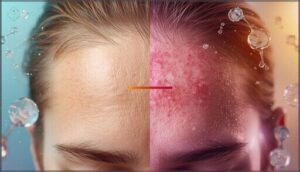
Your scalp won’t always announce its distress with a bright red flag, but the signs are there if you know what to look for. An alkaline scalp throws off a constellation of symptoms, some obvious, some quietly persistent.
Luckily, balancing your scalp’s pH naturally is easier than you might think with a few simple adjustments.
Here’s what happens when your scalp’s pH climbs too high after bleaching.
Dryness, Itching, and Sensitivity
You might feel your scalp pulling tight, see unexpected flaking, or experience constant itching—all signs of dryness and sensitivity after bleaching disrupts the natural barrier. Tingling or burning sensations when water or products touch your scalp signal deeper irritation.
This skin irritation stems from compromised ceramide levels and elevated water loss, making your sensitive scalp react to nearly everything. Itch relief starts with understanding these dryness causes.
Increased Oiliness or Flakiness
Your scalp can turn unexpectedly greasy or throw flakes despite oil control efforts—both reactions to hair bleaching disrupting sebum regulation. Scalp irritation from alkaline shifts triggers glands to overproduce oil, while inflammation interferes with normal skin shedding, creating flaky skin alongside that sheen.
Some experience pure dryness; others get the confusing combo. Gentle scalp exfoliation and targeted scalp care restore balance without aggravating either extreme.
Slowed Hair Growth and Weakness
Alkaline imbalance doesn’t just disrupt comfort—it sabotages the follicle environment where growth begins. When pH rises, you’ll see:
- Stunted hair growth cycles that plateau early
- Hair follicle repair mechanisms failing under stress
- Nutrient deficiencies blocking keratin synthesis
- Weak hair causes traced to compromised anchoring
- Hair strengthening impossible without acidic conditions
Bleached hair suffers doubly—fragile strands and stalled renewal.
Effective Ways to Restore Scalp PH
Restoring your scalp’s acidity after bleaching isn’t guesswork—it’s about using the right products and techniques consistently. You have several practical options, from ready-made formulas to simple kitchen-based solutions.
Here’s what actually works to bring your scalp back to its natural pH range.
Using PH-Balanced Shampoos and Conditioners

You can’t rebuild what keeps getting torn down. That’s why pH balanced formulas matter—they hold scalp conditions near 4.5 to 5.5, sealing cuticles shut and calming irritation.
Look for sulphate-free shampoo and conditioners designed for scalp care. They won’t strip what little oil you’ve got left.
Skip anything alkaline or harsh; those surfactants disrupt hair pH balance and health further, undoing your progress.
DIY Acidic Rinses (Apple Cider Vinegar, Lemon Juice)

Acidic rinse benefits center on restoring pH naturally—apple cider vinegar and lemon juice can shift an alkaline scalp back toward healthy acidity. But vinegar dilution matters. Don’t gamble with straight application.
- Mix ACV at 1:3 to 1:10 with water to prevent scalp irritation and chemical burns
- Rinse thoroughly after 30 seconds to 2 minutes—residue attracts dirt
- Skip lemon juice if sun exposure follows; photosensitivity spikes risk
- Patch test first; not all scalps tolerate natural remedies equally
These hair care tips offer real scalp care, provided you respect concentration limits.
Incorporating Scalp Serums and Tonics
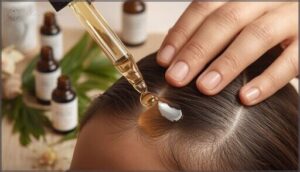
Scalp serum benefits go beyond surface-level moisture—targeted tonics with panthenol or niacinamide reach hair follicles directly, supporting skin repair and pH balance and health.
Application matters. Apply to dry or slightly damp scalp after cleansing, not soaking wet strands. Pair serum ingredients with gentle scalp massage techniques to boost absorption.
Dermatology-backed scalp treatment shows results in 2–4 weeks. Patch test first—even professional formulas can irritate post-bleach sensitivity.
Building a Scalp-Friendly Aftercare Routine

Restoring your scalp’s pH isn’t a one-time fix. It requires consistent, thoughtful care that maintains your scalp’s natural acidity without adding more stress.
Here’s how to build a routine that protects what you’re trying to repair.
Gentle Cleansing and Reduced Washing Frequency
Washing less often—every 2–3 days—gives your scalp the breathing room it needs to restore its natural acidity. Pair Reduced Frequency with sulphate-free shampoo and Mild Conditioners to support hair pH balance and health without stripping protective oils.
Gentle cleansing using fingertips and lukewarm Soft Water preserves your barrier, while a quick Scalp Massage boosts circulation.
This scalp and hair care approach keeps discomfort at bay and lets recovery happen.
Weekly Nourishing Scalp Treatments
Once or twice a week, apply a lightweight serum or non-silicone Oil Therapy directly to your scalp—Gentle Exfoliation beforehand helps actives penetrate.
Hydrating Masks with glycerin or aloe lock in moisture for 10–20 minutes, while a brief Scalp Massage boosts circulation and promotes hair pH Balance and Health.
Choose mildly acidic formulas with fruit acids; skip heavy petrolatum or high-alcohol Nourishing Serums that undermine natural hair care and hair hydration.
Avoiding Harsh Ingredients and Heat
After feeding your scalp nourishing serums, don’t undo your work with irritants. Fragrance-free, sulfate-free formulas—especially gentle shampoos with cocamidopropyl betaine—keep pH levels stable. Skip tools above 450°F; heat protection sprays can’t fully offset cuticle damage. Rough towel-rubbing spikes moisture loss, so:
- Choose sulfate-free shampoo or acidic shampoo varieties
- Pat—don’t scrub—hair dry
- Limit blow-dryer heat
- Pair scalp massage with natural oils
- Review hair care routines for hidden alkaline agents
Your hair pH balance and health depend on what you avoid, not just what you add.
Monitoring Progress and Maintaining Balance

Restoring your scalp’s pH isn’t something that happens overnight, and you won’t know it’s working unless you’re paying attention. Tracking your scalp’s response over the first few weeks helps you catch what’s improving and what still needs adjustment.
Here’s how to monitor your progress, recognize the signs of balance returning, and fine-tune your routine for results that stick.
How to Check Scalp PH at Home
Want hard numbers? Use a digital pH meter or test strips designed for skin—both deliver reliable readings when you follow the instructions. Calibrate your meter with buffer solution first, and keep a simple pH log tracking dates, products, and readings for clearer patterns.
Press the strip to your scalp behind the ear or at the crown, wait for stabilization, then log the result. Aim for 4.5–5.5.
Tracking Comfort, Moisture, and Oil Levels
Numbers matter, but so do sensations. Keep a simple log: rate scalp comfort weekly on a 0–10 scale—you should see irritation drop 30–50% within seven days of pH-balanced care.
Check moisture by touch; hydrated skin bounces back when pressed.
Track oiliness—sebum stabilizes in two to three weeks with gentle products, signaling restored hair pH balance and health.
Adjusting Your Routine for Lasting Results
Consistency drives scalp recovery. Commit to pH-balanced, sulphate-free shampoo and leave-in serums that support post-bleach care, spacing bleach sessions six to eight weeks apart—your hair regrowth depends on it.
| Routine Maintenance | Frequency | Benefit |
|---|---|---|
| pH-balanced prewash treatment | After each bleach | Stabilizes hair pH balance and health |
| Gentle cleansing | 2–3× weekly | Prevents alkaline shock, reduces bleach damage |
| Barrier-repair serum | Daily | Accelerates scalp comfort, strengthens hair care routine and hair repair |
Frequently Asked Questions (FAQs)
Are there supplements that support scalp pH recovery?
No magic pill fixes scalp pH directly—think snake oil in a capsule. Zinc, biotin, and omega-3s may support scalp health generally, but pH recovery needs topical treatments, not supplements. Consult professionals first.
How long before scalp pH fully normalizes naturally?
Your scalp usually rebalances within 24 to 72 hours after bleaching—if you use pH-balanced products. Repeated chemical damage or skipped aftercare can stretch that timeline to a full week.
Conclusion
Your scalp won’t reset overnight—pH restoration demands patience, not panic. But consistent acidic rinses, gentle cleansing, and pH-balanced products systematically rebuild the protective barrier bleach dismantled.
Track your comfort levels weekly: less itch, balanced oil, stronger strands. If sensitivity persists beyond three weeks, consult a trichologist to restore scalp pH after bleaching with targeted interventions.
You’ve already survived the chemical disruption. Now you’re engineering recovery, one measured step toward equilibrium.
- https://github.com/vinhphunguyen/how-to-write-a-paper/blob/master/how-to-write-paper.out
- https://www.scribd.com/doc/253194073/reasearch-methodology
- https://www.vogue.co.uk/beauty/article/how-to-take-care-of-bleached-hair
- https://www.aussie.com/en-us/total-miracle-detangling-spray
- https://www.instagram.com/juliaengletomczek_hair/