
This site is supported by our readers. We may earn a commission, at no cost to you, if you purchase through links.

Your scalp sheds roughly 500,000 dead cells every hour—and if you’re using styling products, applying dry shampoo, or living in an area with hard water, those cells aren’t going anywhere. Instead, they combine with sebum, silicones, and mineral deposits to form a waxy plug that suffocates each follicle opening.
You won’t notice it at first, but your scalp will telegraph the problem through persistent itching, tender spots that flare after workouts, and hair that feels thinner despite no obvious shedding. The follicle environment dictates whether your hair grows strong or struggles to emerge—and a compromised environment doesn’t repair itself through regular shampooing alone.
A targeted deep cleansing routine dismantles the buildup mechanically and chemically, restoring the oxygen flow and nutrient access your follicles require to function at capacity.
Table Of Contents
- Key Takeaways
- Signs Your Scalp Follicles Need Deep Cleansing
- Preparing for a Scalp Deep Cleansing Routine
- Step-by-Step Scalp Follicle Deep Cleansing
- Maintaining Clean and Healthy Scalp Follicles
- Precautions and Expert Tips for Scalp Cleansing
- Frequently Asked Questions (FAQs)
- How to deep clean hair follicles?
- How to clear clogged hair follicles on scalp?
- How to deep clean scalp build up?
- How often should you deep clean your scalp?
- How often should I deep cleanse my scalp?
- Whats the ideal water temperature for scalp cleansing?
- How long does a complete deep cleansing session take?
- Are there seasonal adjustments needed for scalp cleansing routines?
- Conclusion
Key Takeaways
- Your scalp sheds 500,000 dead cells hourly that combine with sebum and minerals to form waxy plugs—blocking follicle openings and suffocating hair growth at the root level.
- Clogged follicles compress developing hair shafts and cut growth cycles by 30–40%, producing mechanical thinning that appears patchy rather than uniform across your scalp.
- Deep cleansing requires sequential intervention—pH-balanced formulas with 2% salicylic acid, physical exfoliation tools used weekly maximum, and targeted scalp massage to restore oxygen flow without triggering rebound oil production.
- Maintenance protocols demand precision over intensity—washing every 2–3 days, rotating products every 4–6 weeks, and limiting deep cleansing to biweekly sessions prevents the barrier damage that worsens congestion within 48 hours.
Signs Your Scalp Follicles Need Deep Cleansing
Your scalp telegraphs distress signals through specific physical signals—and recognizing them early prevents permanent follicular damage. Most people dismiss these warning signs as minor annoyances, but clogged follicles don’t resolve without intervention.
Here’s what your scalp is trying to tell you when follicular blockage reaches critical levels.
If inflammation sets in alongside the blockage, targeted treatments can restore balance and prevent long-term damage to your hair follicle inflammation remedies.
Common Symptoms of Clogged Follicles
Your scalp follicles telegraph distress through five diagnostic markers—identifying them early prevents progression to folliculitis or permanent hair loss.
- Itchy Scalp and Red Inflammation — persistent prickling sensation that intensifies after sweating, with visible blotchy patches surrounding individual hairs
- Follicle Bumps — pimple-like pustules clustered at hairline or nape, ranging from barely raised to domed white-headed lesions
- Scalp Tenderness — soreness when touching problem areas, brushing, or lying on pillow
- Flaky Buildup — greasy yellow-white scales adhering in thick patches despite recent washing
Prompt diagnosis and treatment of scalp folliculitis symptoms can help prevent long-term complications such as scarring or hair loss.
Causes of Scalp Buildup
Five primary mechanisms trigger congestion at the root level—each operating through distinct pathways that require targeted intervention.
Sebum production intensifies during hormonal shifts, coating follicles with sticky oil that oxidizes into waxy plugs. Product buildup layers film-forming polymers directly onto your scalp when leave-in treatments and styling agents aren’t fully rinsed. Dead skin sheds constantly, and when turnover accelerates from Malassezia overgrowth, these flakes bind with oils to form thick, adherent scales that suffocate follicle openings.
| Buildup Trigger | Mechanism | Visual Indicator |
|---|---|---|
| Excess sebum | Oxidized oil forms waxy plugs | Greasy yellow coating |
| Heavy conditioners | Polymers bond to scalp surface | Dull, coated layer |
| Hard water quality | Mineral deposits mix with oils | Rough, grainy texture |
| Microbial imbalance | Yeast byproducts create sticky patches | Greasy white scales |
One important aspect to note is that, serving as a warning sign of underlying scalp health issues.
Scalp inflammation from unbalanced microbiomes speeds cell production, stacking layers that appear as persistent buildup. Infrequent cleansing allows sebum, sweat, and environmental particles to harden between washes—while over-washing triggers rebound oil production, creating a cycle that worsens clogged follicles. Hard water containing calcium reacts with shampoo surfactants to form soapy residue that refuses to rinse cleanly, compromising follicle health and overall scalp health. Understanding these pathways allows you to select scalp exfoliation methods that address your specific congestion pattern rather than applying generic treatments that fail to resolve scalp buildup.
Restoring proper scalp circulation to dormant hair follicles helps reverse congestion by delivering the nutrients needed to reset your scalp’s natural renewal rhythm.
Impact on Hair Growth and Health
Blocked openings compress developing shafts at the follicle base, slowing fiber formation and shortening your anagen phase—cutting growth cycles by 30–40% in congested zones. This mechanical restriction explains why thinning appears patchy, not uniform.
Your follicle health suffers measurable damage:
When follicles weaken, you’ll notice signs of damaged hair follicles like thinning strands, slower growth, and increased breakage.
- Reduced nutrient access starves matrix cells, producing brittle, narrow strands
- Inflammatory signals shift hair from active growth to premature shedding phases
- Impaired circulation limits oxygen delivery, weakening hair thickness at emergence
- Sebum imbalance creates environments where follicle stimulation fails
- Chronic buildup triggers scarring that permanently alters growth patterns
Clean follicles anchor hair 60% more securely, directly preventing hair loss through improved keratinization. Scalp rejuvenation restores the conditions necessary for hair regrowth—clearing pathways that sebum plugs and dead cells have choked for months.
Preparing for a Scalp Deep Cleansing Routine

You can’t detox a scalp that hasn’t been properly assessed—jumping into deep cleansing without the right products, tools, and baseline understanding of your follicle health is like performing surgery with a butter knife.
Preparation determines whether you’ll achieve genuine follicle liberation or simply redistribute buildup across your scalp’s surface, wasting time and potentially triggering inflammation.
Before you apply a single product, you need three foundational elements in place.
Choosing The Right Cleansing Products
Your follicles need pH-balanced shampoo (around 5.5) to avoid disrupting the scalp’s microbiome—imbalanced formulas trigger excess oil or irritation. For sensitive skin, choose gentle formulas with soothing agents like allantoin, non-comedogenic products that won’t trap debris, and clarifying shampoo containing salicylic acid (2% maximum) for scalp exfoliation without over-stripping.
Natural oils like tea tree cut through buildup—check product ingredients for humectants (glycerin) and avoid fragrance.
| Scalp Condition | Recommended Formula |
|---|---|
| Oily/buildup-prone | Foaming gel with salicylic acid |
| Dry/flaky | Cream cleanser with natural oils |
| Sensitive/reactive | Fragrance-free, pH-balanced |
| Combination | Balanced clarifying formula |
Tools Needed for Effective Cleansing
Your deep cleanse arsenal needs mechanical precision—five core implements physically dislodge trapped sebum, product residue, and keratin fragments where chemical agents alone can’t reach.
- Scalp brushes with soft, flexible bristles remove surface debris during wet application—replace every 3–6 months to prevent bacterial colonization.
- Silicone massager tools provide controlled exfoliation while boosting follicular blood flow during scalp massage.
- Clarifying applicators with targeted nozzles deliver salicylic acid formulas directly to congested zones without over-saturating hair shafts.
Pre-Cleansing Scalp Assessment
Before you apply any scalp treatment, map your baseline—visual inspection reveals follicle congestion patterns, inflammation zones, and density variations that dictate product selection. Press along your scalp topology to detect sensitivity, then examine hair density shifts indicating clogged follicles.
Document oilier patches, flaking regions, and tender areas—this scalp health inventory prevents over-exfoliation on compromised zones while targeting buildup where it’s worst.
Step-by-Step Scalp Follicle Deep Cleansing
Your scalp won’t clear itself—you need a systematic approach that tackles buildup at the follicle level, not just surface dirt.
The following techniques work in sequence, each targeting a specific layer of obstruction that conventional shampooing misses entirely. Execute these steps in order for maximum follicle penetration and debris extraction.
Gentle Cleansing Techniques

Your scalp detox starts with the foundation—gentle cleansing methods that won’t strip your scalp health bare. Think lukewarm water, pH-balanced formulas around 5.5, and sulfate-free options that preserve natural oils while executing a proper deep cleanse.
- Use light circular motions during scalp massage—1–3 minutes daily stimulates follicle stimulation without micro-damage
- Select noncomedogenic cleansers with mild surfactants like cocamidopropyl betaine for hair detox
- Rinse thoroughly to prevent residue buildup on scalp follicles
Scalp Exfoliation Methods

Beyond gentle washing, physical exfoliants and chemical peels facilitate deep scalp cleansing—breaking down compacted debris your shampoo can’t reach. Use scalp brushes or soft exfoliation tools in light circular motions once every 1–2 weeks, alternating with salicylic acid formulas that dissolve oily buildup. These gentle massages during scalp exfoliation restore scalp health without stripping protective barriers—essential for any scalp detox protocol.
| Method Type | Active Mechanism | Frequency Recommendation |
|---|---|---|
| Physical Scrubs | Micro-granules mechanically lift dead cells | Weekly for oily scalps |
| Salicylic Acid | Dissolves sebum within follicles | Every 1–2 weeks |
| Glycolic/Lactic Acids | Loosens surface flakes chemically | Bi-weekly for normal scalps |
| Scalp Brushes | Distributes product, stimulates circulation | Use during each exfoliation session |
| Exfoliating Mitts | Controlled abrasion for sensitive areas | Weekly, patch-test first |
Natural Remedies for Follicle Cleansing

Herbal treatments and essential oils bypass harsh chemicals—tea tree or aloe vera gel calms inflamed scalp follicles without stripping moisture, while diluted apple cider vinegar restores pH during your scalp detox.
Homemade masks combining honey with cinnamon or green tea rinses deliver natural exfoliants that support follicle health. These Ayurvedic remedies improve deep scalp cleansing when applied 10–15 minutes before rinsing, targeting buildup your regular shampoo misses.
Scalp Massage for Enhanced Circulation

Blood flow drives everything—your follicles starve without it, and massage techniques deliver oxygen-rich circulation that counteracts scalp inflammation while supporting hair growth.
- Circular fingertip motions across your crown for 3–5 minutes daily boost nutrient delivery to weakened follicles
- Light-to-medium pressure stimulates dermal papilla cells without traumatizing inflamed tissue
- Alternating tapping with kneading movements enhances scalp stimulation and lymphatic drainage
- Clean oil reduces friction, protecting scalp health during mechanical therapy
Maintaining Clean and Healthy Scalp Follicles
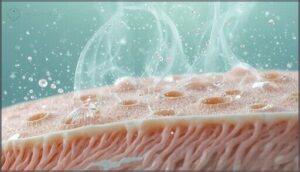
You’ve cleansed your follicles—now comes the harder part: keeping them that way. Your scalp doesn’t exist in a vacuum, and without ongoing maintenance protocols, sebum, dead keratinocytes, and product residue will re-clog those follicular openings within 72–96 hours.
The following practices form your non-negotiable defense against chronic buildup and inflammation.
Routine Scalp Hygiene Practices
Daily routines keep follicle health stable—wash your hair every 2 to 3 days if you’ve got dry or curly textures, every 24 to 48 hours for oily scalps. Use lukewarm water, massage for 60 to 120 seconds to lift debris and boost circulation, then rinse thoroughly in sections.
Weekly exfoliation with a gentle scrub prevents buildup without damaging scalp follicles or disrupting scalp balance.
Product Selection and Usage Tips
Once you’ve locked in your routine, product labels and ingredient safety become your filters—check for scalp toners and hair oils with pH 4.5–5.5 and free from harsh sulfates.
Gentle formulas with salicylic acid at 2% concentration unclog follicles without stripping scalp health.
Rotate your hair care products and ingredients every 4–6 weeks to prevent tolerance, pair scalp detoxification and cleansing with lightweight leave-ins, and store everything away from sunlight.
Preventing Future Follicle Blockages
Your scalp follicles demand more than reactive cleansing—blockage prevention starts with breathable fabrics and avoiding tight headwear that rubs follicles raw. Limit heavy oils on your scalp follicles, replace tools regularly to prevent microcuts, and sleep on fresh pillowcases to stop debris transfer.
Scalp maintenance means 1–2 weekly exfoliations with salicylic acid, cool rinses to preserve natural oils, and hydration from within—follicle health collapses without these mechanical safeguards.
Precautions and Expert Tips for Scalp Cleansing

You can’t fix damaged follicles by scrubbing harder—overaggressive cleansing strips your scalp’s protective barrier, triggering rebound sebum production that worsens the clog-inflammation cycle within 48-72 hours.
Aggressive scrubbing destroys your scalp’s protective barrier, triggering rebound oil production that worsens follicle blockage within 48 hours
The difference between therapeutic intervention and scalp trauma lies in recognizing when your DIY routine needs professional oversight, particularly if you’re working with compromised skin or persistent symptoms. Here’s what separates safe maintenance from common mistakes that derail your progress.
Avoiding Common Mistakes
Overwashing Effects destroy your scalp’s natural barrier—pushing beyond five washes weekly triggers compensatory oil production, creating the exact Product Buildup you’re fighting. You’re inflaming Scalp Follicles when clarifying treatments exceed biweekly intervals, weakening shafts around Clogged Follicles.
Exfoliation Frequency matters: weekly maximum prevents micro-tears that compromise Follicle Health. Aggressive Scalp Treatment worsens Scalp Irritation—Gentle Techniques preserve Scalp Health while clearing obstructions.
When to Seek Professional Help
When do Severe Symptoms demand Medical Intervention instead of home protocols? Persistent Hair Loss—beyond 100 strands daily for 14+ days—signals Folliculitis requiring Professional Guidance.
Your Scalp Health deteriorates when Scalp Treatment fails after two weeks—Mental Health suffers alongside physical distress, making clinical evaluation non-negotiable. Scalp Conditions like painful pustules, bleeding lesions, or fever necessitate Emergency Care.
Scalp Care for Sensitive Skin
Reactive Skin demands Precision—your scalp pH balance sits between 4.5-5.5, where deviations trigger inflammation and barrier compromise within 48 hours.
- Patch-test every formula 24 hours before scalp application to identify allergens
- Select fragrance-free, sulfate-free cleansers formulated specifically for sensitive skin conditions
- Limit gentle exfoliation to once weekly using fine-grain scrubs
- Apply natural oil remedies like jojoba post-cleanse for barrier restoration
- Monitor your daily scalp routine for irritation patterns—discontinue aggravating products immediately
Scalp care for sensitive skin requires methodical observation, not aggressive intervention.
Frequently Asked Questions (FAQs)
How to deep clean hair follicles?
You’d think oil and debris would just rinse away—yet trapped buildup demands clarifying shampoo with salicylic acid, gentle scalp exfoliation, targeted massage for follicle stimulation, and lukewarm rinses to restore scalp balance and hair renewal.
How to clear clogged hair follicles on scalp?
You’ll need salicylic acid shampoo twice weekly, gentle scalp massage during cleansing, and tea tree oil treatments to dissolve sebum plugs.
Deep scalp cleansing with consistent exfoliation restores follicle health and kickstarts hair growth.
How to deep clean scalp build up?
Your scalp is a battlefield layered with residue—apply a clarifying shampoo with salicylic acid in circular motions, then use a scalp scrub for buildup removal, followed by a purifying charcoal mask for deep scalp cleansing.
How often should you deep clean your scalp?
Your deep clean frequency depends on sebum production—oily scalps need weekly scalp detox methods, normal types every 2-4 weeks, dry or curly scalps every 6-8 weeks to protect follicle health and scalp pH balance.
How often should I deep cleanse my scalp?
Most people benefit from a deep cleanse every two to four weeks—oily scalps need weekly detoxification, while dry types stretch to monthly sessions, adjusting based on buildup, product use, and follicle health signals.
Whats the ideal water temperature for scalp cleansing?
Aim for lukewarm water—98°F to 100°F—to soften sebum without stripping your scalp’s pH balance, then finish with a cool rinse to seal cuticles and support follicle health.
How long does a complete deep cleansing session take?
Think of your routine as tuning a grandfather clock—consultation to final rinse spans 45 to 90 minutes depending on session complexity, with cleansing time, exfoliation methods, treatment processing, massage benefits, and scalp detox steps determining total duration.
Are there seasonal adjustments needed for scalp cleansing routines?
Your scalp reacts to humidity control shifts—winter cleansing demands gentler, hydrating formulas used less often, while summer shampooing requires frequent clarifying to manage sweat and oil, making seasonal scalp care essential for ideal scalp health.
Conclusion
Think of your scalp like a garden bed choked with debris—seeds can’t break through compacted soil. Your follicles operate the same way: buildup creates resistance that weakens every strand before it surfaces.
A scalp follicle deep cleansing routine doesn’t just remove residue—it resets the environment where growth begins. You’ve identified the problem, learned the mechanics, and now hold the protocol. What remains is execution, and your scalp will reflect that commitment within three wash cycles.