
This site is supported by our readers. We may earn a commission, at no cost to you, if you purchase through links.
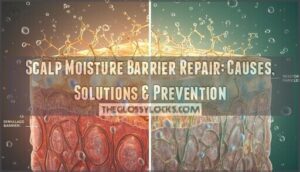
Your scalp’s moisture barrier doesn’t simply crack or dry out—it experiences a cascade of lipid depletion that fundamentally alters its architecture, triggering transepidermal water loss at rates that compromise both comfort and follicular health.
This complex defense system, composed of corneocytes embedded in a matrix of ceramides, cholesterol, and fatty acids, becomes destabilized through environmental oxidative stress, over-zealous cleansing routines, and thermal styling practices that routinely exceed 60°C.
When this barrier falters, you’ll notice persistent itching that intensifies with heat exposure, localized inflammation, visible flaking, and heightened sensitivity to products you previously tolerated without issue.
Scalp moisture barrier repair requires understanding the precise mechanisms of lipid disruption and implementing targeted interventions with barrier-identical ingredients, strategic hydration protocols, and modifications to your hair care practices that respect your scalp’s biochemical needs.
Table Of Contents
Key Takeaways
- Your scalp’s moisture barrier is a brick-and-mortar defense system where corneocytes act as protective bricks and a lipid matrix of ceramides, cholesterol, and fatty acids acts as sealing mortar—when this architecture breaks down through environmental stress, harsh cleansing, or heat styling above 60°C, you’ll experience persistent itching, inflammation, visible flaking, and heightened sensitivity to previously tolerated products.
- Repairing a compromised scalp barrier requires targeted interventions with barrier-identical ingredients in proper ratios—specifically ceramides, cholesterol, and fatty acids working together—combined with a strategic layering approach where humectants like glycerin pull moisture into the scalp surface and occlusives like dimethicone seal it in to prevent transepidermal water loss.
- Daily habits either reinforce or destroy your protective lipid layer, so maintenance demands gentle cleansing every 24-72 hours with sulfate-free products, protective low-manipulation styling that reduces mechanical trauma, limited heat exposure to once weekly, and regular scalp massage that boosts circulation by up to 120 percent while lowering stress hormones that compromise barrier function.
- Most barrier issues respond to consistent at-home care within one to eight weeks depending on damage severity, but persistent flaking despite treatment, pus-filled follicles, spreading redness with warmth, fever, or blistering requires immediate dermatological evaluation for prescription-strength medicated shampoos, topical steroids, or medical-grade ceramide formulations that address underlying infection or severe inflammation.
What is The Scalp Moisture Barrier?
Your scalp’s moisture barrier isn’t just skin—it’s a complex defense system that keeps water in and irritants out. When it’s functioning properly, you won’t think twice about it, but when it breaks down, you’ll notice dryness, itching, and inflammation that can affect your overall scalp health.
Rebuilding that barrier starts with understanding how to hydrate scalp tissue effectively, especially when stress has already compromised your skin’s natural defenses.
Understanding what this barrier is made of, how it works, and what happens when it fails gives you the knowledge you need to protect it.
A scalp follicle deep cleansing routine gives you the exact steps to strengthen this barrier and keep buildup from breaking it down.
Structure and Function of The Scalp Barrier
Your scalp barrier is a complex defense system built like a brick-and-mortar wall, where corneocytes act as protective bricks and a lipid matrix of ceramides, cholesterol, and fatty acids acts as the mortar sealing everything together. This five-layer scalp anatomy performs three critical functions:
When winter air compromises this barrier, targeted moisturizers for winter help restore the ceramide-rich lipid matrix that keeps your scalp hydrated and protected.
Your scalp barrier is a brick-and-mortar defense system where corneocytes form protective bricks and lipids act as the sealing mortar
- Moisture regulation by preventing transepidermal water loss
- Skin barrier function that blocks irritants and allergens
- Cell signaling that maintains your acid mantle at pH 4.5–5.5
A well-functioning scalp barrier is essential for.
Role of Lipids and Ceramides
Ceramide types, fatty acids, and cholesterol form your lipid balance—the trio that determines barrier function and scalp hydration. When these components align properly, they create tightly packed lamellar layers that lock in moisture and resist irritants.
Lipid depletion compromises this architecture, triggering transepidermal water loss and setting the stage for sensitivity. Restoring diverse ceramides aids skin barrier repair and restoration, ultimately promoting scalp health and hair growth.
Research shows that ceramide structure and function are central to maintaining the water permeability barrier of the skin.
Signs of a Compromised Scalp Barrier
When lipid depletion weakens your scalp’s architecture, barrier disruption manifests through specific, measurable signs: persistent itchy scalp episodes that intensify with heat, localized redness reflecting inflammation, visible flaking from transepidermal water loss, and heightened sensitivity to previously tolerated products.
These dryness symptoms signal compromised scalp health and care needs—left unaddressed, chronic scalp irritation can contribute to hair thinning by stressing follicles and disrupting the moisture barrier’s protective function.
Causes of Scalp Barrier Damage

Your scalp barrier doesn’t break down on its own—it’s under constant assault from forces you encounter every single day.
When microbes break down oils and proteins on your scalp, they produce sulfur compounds that smell shockingly similar to wet dog—here’s why your hair might smell like wet dog even after washing.
Some of these threats come from outside your body, while others stem from well-intentioned habits that actually do more harm than good.
Understanding what compromises your scalp’s protective layer is the first step toward reversing the damage and preventing future problems.
Environmental Stressors and Pollution
You can’t always see what’s attacking your scalp, but air pollution, UV radiation, and water contaminants quietly trigger oxidative stress that depletes essential lipids and accelerates transepidermal water loss.
Indoor toxins from cooking fumes and tobacco smoke compound the damage, disrupting scalp barrier function and fueling inflammation that undermines scalp health and hair growth in our changing climate.
Protecting your scalp from these environmental stressors is just as important as addressing genetic factors like receding hairline patterns that require targeted nutritional support.
Over-washing and Harsh Hair Products
Frequent washing strips your scalp’s natural lipids, accelerating transepidermal water loss and triggering compensatory sebum production that worsens dryness. Harsh surfactants like sodium lauryl sulfate disrupt the moisture barrier, inflame sensitive tissue, and compromise scalp health and hair growth.
Shifting your hair care routines toward gentle cleansing with sulfate-free shampoo alternatives preserves barrier integrity, reduces irritation, and promotes long-term scalp barrier function through thoughtful product ingredients selection.
Heat Styling and Chemical Treatments
Heat damage from flat irons can push your scalp’s surface temperature beyond 60°C, ramping up transepidermal water loss and stripping critical barrier lipids that defend against moisture barrier breakdown.
Chemical burns from dyes and relaxers disrupt your scalp barrier at a molecular level, inflaming follicles and accelerating hair loss. Prioritizing scalp protection with heat shields and fragrance-free formulas safeguards scalp health and prevents thermal repair emergencies.
Microbial Imbalance and Dandruff
Microbial dysbiosis fuels dandruff when your scalp ecosystem shifts toward fungal overgrowth, particularly Malassezia restricta and globosa, whose metabolic byproducts disrupt the scalp barrier and trigger inflammatory response pathways.
- Yeast abundance correlates with increased transepidermal water loss and persistent flaking
- Staphylococcus elevation accompanies reduced Propionibacterium, worsening itch intensity
- Fungal infections degrade ceramides, perpetuating moisture barrier breakdown
- Antifungal shampoos restore microbial balance and support barrier reconstruction
How to Repair a Damaged Scalp Barrier
Once you understand what’s compromising your scalp barrier, the next step is rebuilding it with targeted interventions that address the underlying lipid deficiency and inflammatory cascade.
Repairing a damaged barrier requires a methodical approach that combines specific biochemical ingredients, occlusive strategies, and the elimination of further irritant exposure.
The following evidence-based strategies will help you restore your scalp’s protective architecture and resolve symptoms like dryness, flaking, and discomfort.
Choosing Barrier-Repairing Ingredients (Ceramides, Fatty Acids, Cholesterol)

Your scalp barrier thrives when you choose products that mirror its natural lipid architecture—specifically, a balanced blend of ceramides, cholesterol, and fatty acids.
Look for formulations that explicitly list all three components rather than ceramides alone, since proper lipid ratios enable stable lamellar sheets that lock in moisture and restore barrier function.
This trio works synergistically to rebuild your scalp’s protective shield.
Benefits of Scalp Oils and Emollients

Applying emollient therapy through natural oils delivers profound scalp oil benefits by filling microscopic gaps between skin cells, reducing transepidermal water loss and reinforcing your moisture barrier.
Consider these hydrating advantages:
- Moisture lock – Oils seal your scalp surface, preventing dehydration while boosting elasticity.
- Hair nourishment – Fatty acids strengthen roots and smooth fibers for improved manageability.
- Barrier repair – Lightweight formulas restore lipid balance without greasiness.
Using Humectants and Occlusives for Hydration
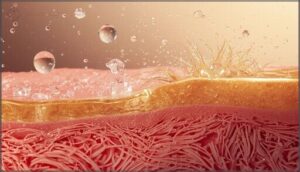
Your scalp’s moisture balance hinges on a strategic duo: humectants draw water into the barrier, while occlusive layers trap it there, preventing transepidermal water loss that undermines scalp health and hydration.
| Ingredient Type | Mechanism for Barrier Repair |
|---|---|
| Humectants (glycerin, hyaluronic acid) | Pull moisture from air or deeper layers into scalp surface |
| Occlusives (dimethicone, shea butter) | Form protective film that seals hydration inside barrier |
| Layering sequence | Apply humectant benefits first on damp scalp, then occlusive layers to lock moisture |
| Climate adjustment | Pair humectants with heavier occlusives in dry conditions for ideal scalp hydration |
Apply humectant-rich serums to damp scalp immediately post-cleansing, then seal with lightweight occlusives—this two-step approach fortifies your moisture barrier efficiently without weighing hair down.
Reducing Irritants and Fragrances

Locking in moisture means nothing if harsh chemicals continually strip your scalp barrier—fragrance-free products and gentle shampoos remove a major irritant that triggers redness and flaking in sensitive scalp care.
Natural skincare products with natural oils support barrier health without synthetic perfumes, and choosing cruelty-free formulas ensures you’re protecting both your moisture barrier and your values during scalp health repair.
Best Practices for Scalp Barrier Maintenance

Once you’ve repaired your scalp barrier, the real work begins—keeping it strong enough to resist future damage.
Your daily habits either reinforce that protective lipid layer or quietly chip away at it, often without you noticing until symptoms return. The following practices will help you maintain barrier integrity through consistent, science-backed routines that address cleansing, styling, circulation, and nutritional support.
Gentle Cleansing Routines
Don’t strip away your scalp’s natural defenses with harsh sulfates or overzealous washing. Choose mild surfactants and cleanse every 24 to 72 hours based on your scalp’s oiliness, applying the product with gentle circular motions—a scalp massage technique that boosts circulation without scratching.
Rinse thoroughly with lukewarm water, pat dry softly, and follow with a lightweight conditioner to lock in moisture and reinforce your scalp barrier.
Protective Styling and Reduced Heat Exposure
Beyond gentle washing, you need to protect your scalp from mechanical trauma and thermal trauma. Low manipulation styles—loose buns, twists, braids—reduce daily combing stress while preserving your natural sebum film.
Keep tension aware: tight ponytails and heavy extensions pull on follicles and inflame the moisture barrier. Limit heat styling to once weekly, favoring air drying and cool settings.
At night, friction reduction with satin bonnets or pillowcases helps your scalp retain its protective lipid layer.
Scalp Massage and Circulation
Regular fingertip massage triggers a profound circulation shift: blood flow jumps up to 120 percent, flooding follicles with oxygen and nutrients while clearing metabolic waste.
Light to medium pressure in small circles activates your parasympathetic system, lowering stress hormones that otherwise compromise the scalp barrier.
Three to four weekly sessions—each five to ten minutes—enhance relaxation effects without irritating your recovering moisture barrier.
Diet and Nutrients for Barrier Health
Your scalp barrier thrives when you fuel it from within—omega-3 fats from salmon and walnuts supply essential fatty acid balance, while vitamins A, D, E, and zinc deliver critical vitamin support and hair growth factors.
Antioxidant benefits from colorful produce neutralize free radicals that attack your moisture barrier, and consistent hydration tips like drinking enough water prevent nutrient deficiencies that weaken scalp integrity and compromise hair growth factors and nutrients.
When to Seek Professional Help

Most scalp barrier issues respond well to consistent at-home care, but some situations require a dermatologist’s expertise to prevent lasting damage or address underlying conditions.
Knowing when to escalate your concerns can save you weeks of frustration and protect your scalp from worsening inflammation or infection. Here’s what should prompt you to schedule a professional consultation.
Persistent Flaking or Itching
If you’ve tried home remedies for a few weeks and you’re still dealing with relentless flaking or itching, it’s time to consult a dermatologist. Your scalp barrier may need prescription-strength intervention, especially if dandruff stems from Malassezia overgrowth or deeper irritation management issues that over-the-counter antifungal shampoos can’t resolve.
- Daily flakes despite consistent moisture balance efforts signal a compromised barrier
- Intense itch that disrupts sleep or concentration requires scalp soothing beyond topical care
- Visible redness or spreading patches suggest underlying scalp health and care concerns
Signs of Infection or Severe Irritation
Certain infection symptoms demand immediate attention, as they indicate your scalp barrier has sustained damage beyond simple dryness or dandruff. Watch for pus-filled follicle infection, spreading scalp redness accompanied by warmth, or fever—systemic warning signs that bacteria or fungi like Malassezia have breached your defenses.
Severe irritation with blistering, foul odor, or rapidly enlarging sores requires urgent dermatological evaluation, not antifungal shampoos alone.
Dermatologist-Recommended Treatments and Products
When your barrier won’t heal with home care alone, dermatologists prescribe medicated shampoos containing ketoconazole or ciclopirox for dandruff-related disruption, sometimes paired with short-term topical steroids to calm severe inflammation.
In-office assessments guide tailored choices among:
- Medical-grade ceramide-rich barrier creams with higher lipid concentrations
- Prescription scalp serums targeting transepidermal water loss
- Gentle shampoos formulated at pH 4.5–5.5 to preserve barrier integrity
- Hair oils like squalane that lock moisture without clogging follicles
Follow-up visits confirm your scalp treatment progresses, adjusting Dermatologist Recommended Products and hair care maintenance as your scalp barrier strengthens.
Frequently Asked Questions (FAQs)
Can stress alone weaken the scalp barrier?
Yes, psychological stress directly undermines your scalp’s protective layer through elevated cortisol, which reduces ceramide production and triggers neurogenic inflammation, increasing transepidermal water loss and sensitivity even without external irritants.
How long does barrier repair typically take?
Your scalp recovery timeline depends on damage assessment—mild disruption may show healing process improvements in one to two weeks, while severe barrier dysfunction often requires four to eight weeks of consistent scalp barrier repair.
Does hard water affect scalp barrier health?
Think of hard water as an invisible film that settles on your skin—those mineral deposits strip natural oils, trigger dryness, and weaken your moisture barrier, making scalp irritation and flaking more likely over time.
Are scalp barrier issues related to hormones?
Hormone imbalance directly affects scalp health through shifts in sebum, moisture retention, and inflammation.
Androgen influence, estrogen levels, thyroid effects, and cortisol impact all modify barrier lipids, disrupting your scalp’s protective function.
Can over-conditioning damage the scalp barrier?
Absolutely—heavy conditioners can trap residue, shift scalp pH balance, disrupt your moisture barrier, and fuel product buildup that clogs follicles, increases dryness, and compromises long-term scalp health and care despite using barrier repair scalp serum formulations.
Conclusion
Think of your scalp as architecture requiring deliberate restoration—not hasty patchwork.
Scalp moisture barrier repair demands consistent application of barrier-identical lipids, strategic reduction of inflammatory triggers, and patience as ceramide-rich formulations rebuild what months of damage dismantled.
You’ve now learned the biochemical roadmap from lipid depletion to transepidermal water loss, and more importantly, the evidence-based interventions that reverse this cascade.
Your scalp’s resilience depends entirely on whether you’ll implement them.
- https://graziadaily.co.uk/beauty-hair/hair/how-to-get-rid-of-scalp-acne/
- https://www.harpersbazaar.in/beauty/story/are-we-focusing-on-scalp-skin-barrier-enough-1179615-2025-03-08
- https://nationaleczema.org/blog/get-the-facts-coconut-oil/
- https://www.dermatica.co.uk/skinlab/ask-a-derm-can-hyaluronic-acid-help-your-scalp-hair/
- https://us.upcirclebeauty.com/blogs/upcircle/natural-humectants-for-skin