
This site is supported by our readers. We may earn a commission, at no cost to you, if you purchase through links.

Most men shave the same way they learned as teenagers—without ever questioning if they’re doing it right. That unconscious routine might be the reason your skin rebels after every shave. The difference between smooth skin and razor burn often comes down to one simple choice: shave with or against the grain.
Your hair doesn’t grow straight down. It follows patterns that vary across your face and body, and working with those patterns instead of fighting them changes everything. Understanding grain direction isn’t just barbershop wisdom—it’s the foundation of proper technique that protects your skin while delivering the results you want.
Table Of Contents
- Key Takeaways
- Shaving With Vs. Against The Grain
- How to Determine Hair Growth Direction
- Step-by-Step Shaving Technique
- Preventing Irritation and Ingrown Hairs
- Top 10 Products for a Smooth Shave
- 1. La Roche-Posay Gentle Face Cleanser
- 2. Harry’s Exfoliating Face Wash Men
- 3. Baxter of California Exfoliating Face Scrub
- 4. Jack Black Face Buff Energizing Scrub
- 5. Cremo Sensitive Ultra Slick Shave Cream
- 6. Art of Shaving Sandalwood Pre Shave Oil
- 7. The Shop Aftershave Toner For Men
- 8. Bevel Aftershave Balm For Men
- 9. Jackfir Classic Daily Facial Moisturizer
- 10. Philips Norelco OneBlade 360 Trimmer Shaver
- Frequently Asked Questions (FAQs)
- What is the difference between shaving with the grain and against the grain?
- Shave With or Against the Grain: Which is Better?
- What are the risks of shaving against the grain?
- What are the benefits of shaving with the grain?
- How can I avoid razor burn when shaving with the grain?
- How can I avoid razor burn when shaving against the grain?
- What are some other tips for avoiding razor burn?
- Can I shave immediately after working out?
- How often should I replace my razor blade?
- Whats the difference between wet and dry shaving?
- Conclusion
Key Takeaways
- Shaving with the grain follows your hair’s natural growth direction and cuts irritation risk in half, while shaving against the grain delivers maximum closeness but increases your chances of razor burn, ingrown hairs, and skin barrier damage.
- Your facial hair doesn’t grow in one uniform direction—cheeks typically grow downward, neck hair often grows upward or sideways, and mapping these patterns with two to three days of stubble prevents you from fighting your skin’s natural grain.
- Proper technique matters more than direction alone: sharp blades, warm water prep, quality lubrication, light pressure, and alcohol-free post-shave care determine whether you walk away with smooth skin or irritation.
- Dermatologists consistently recommend starting with the grain to protect your skin barrier, then only adding selective against-the-grain passes on non-irritated areas if you need extra closeness—hybrid approaches balance results without unnecessary risk.
Shaving With Vs. Against The Grain
Shaving with the grain versus against it isn’t just about preference—it’s about understanding how each direction affects your skin and the closeness of your shave. The method you choose determines whether you walk away with smooth skin or irritation and razor bumps.
Let’s break down what each approach means, the trade-offs involved, and what dermatologists recommend for keeping your skin healthy.
What Does “With The Grain” Mean?
Shaving with the grain means moving your razor in the same direction your hair naturally grows from the follicle. Run your fingers across stubble—smooth indicates hair growth direction. This shaving technique reduces how deep the blade cuts, minimizing irritation and ingrown hairs. A key benefit is that it can help to minimize skin irritation.
Different facial zones require different strokes; your neck hair might grow sideways or upward, while cheek hair generally grows downward.
| Body Area | Common Hair Growth Direction |
|---|---|
| Cheeks | Downward toward jawline |
| Neck | Upward or swirling patterns |
| Upper Lip | Downward from nose |
| Jaw | Angled toward chin |
What Does “Against The Grain” Mean?
While with-the-grain strokes follow your hair’s natural path, going against the grain reverses this shaving technique entirely. You’re pushing the blade in the opposite direction to hair growth—if stubble grows downward, you shave upward. This approach changes the blade angle, cutting hair closer to or below the skin surface. It delivers greater shave closeness but considerably increases skin irritation risk. Shaving against the grain can lead to irritation and razor bumps, especially for sensitive skin.
| Shaving Technique | Skin Outcome |
|---|---|
| With the grain | Minimal irritation |
| Against the grain | Maximum closeness |
| Combination passes | Balanced results |
Pros and Cons of Each Method
Now that you understand how each shaving technique cuts hair, let’s weigh the practical outcomes you’ll experience. When you shave with the grain, you’re protecting your skin barrier and preventing skin irritation—reviews on pseudofolliculitis barbae confirm reduced razor bumps. Shave against the grain and you’ll gain closeness but risk barrier disruption, especially if your hair curvature makes ingrowns likely. Many barbers recommend hybrid routines: initial with-grain passes, then selective against-grain strokes only where needed.
| Shaving Direction | Benefit | Drawback |
|---|---|---|
| With the grain | Minimal barrier disruption | Moderate closeness |
| Against the grain | Maximum closeness | Higher irritation risk |
| Hybrid approach | Balanced results | Requires skill |
Dermatologist Recommendations and Skin Health
Professionals at the American Academy of Dermatology strongly advise shaving with the grain to protect skin health and reduce razor bumps. That’s especially important if you’re prone to ingrown hairs or already see redness after shaving. When you prioritize irritation prevention over extreme closeness, you’re safeguarding your skin barrier—dermatologist recommendations consistently link shaving direction to long-term skin sensitivity outcomes.
Dermatologists strongly recommend shaving with the grain to protect your skin barrier and prevent razor bumps, especially if you’re prone to irritation or ingrown hairs
| Skin Type | Recommended Direction | Post-Shave Care |
|---|---|---|
| Sensitive | With the grain | Alcohol-free balm |
| Acne-prone | With the grain, light pressure | Non-comedogenic moisturizer |
| Normal | Hybrid (with, then against) | Gentle hydrating lotion |
How to Determine Hair Growth Direction
Finding your hair’s grain is the foundation of a clean, irritation-free shave. Your hair doesn’t grow in one neat direction—it shifts across your face and body, and missing those patterns can lead to razor burn or ingrown hairs.
Here’s how to map your grain, use the right tools, and adjust your technique for every area you shave.
Identifying Hair Growth Patterns on Face and Body
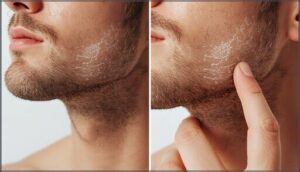
Your beard doesn’t follow a simple top-to-bottom pattern—facial hair mapping reveals that cheeks often grow downward while neck grain variation shows upward or sideways flows. Run your hand along your jawline and you’ll feel the difference between vellus vs terminal hair.
Body hair patterns on legs and chest follow their own rules, making evidence-based shaving technique essential for preventing irritation when you shave with the grain.
Tools and Techniques for Mapping Grain

To map hair growth direction, start with two to three days of stubble. Anything shorter than 1 mm makes the direction of hair growth hard to see.
Use your fingertips to stroke each zone in four directions; smooth means you’re moving with the grain, rough signals against.
For problem areas like your neck, bright lighting techniques and a hand mirror reveal swirls you’d otherwise miss.
Adjusting Technique for Different Body Parts

Across shaving different body parts, you’ll shift your shaving technique based on body hair texture and sensitivity. Facial hair grows in unpredictable swirls, so trace each patch individually.
Leg smoothness tolerates upward strokes better than your neck does. Underarm sensitivity and bikini irritation mean shorter, gentler passes with the direction of hair growth.
For torso grooming, work in small zones and adjust pressure as skin thickness changes.
Step-by-Step Shaving Technique

Getting the shave right isn’t just about which direction you choose—it’s about the entire process from start to finish. Your preparation, technique, and aftercare all determine whether you walk away with smooth skin or irritation.
Here’s how to execute each step with precision and control for the best results.
Pre-Shave Preparation for Smooth Skin
Before you pick up that razor, proper preparation makes all the difference. Start by washing your face with warm water—this softens whiskers and opens pores, reducing the cutting force needed.
Follow with gentle exfoliation to lift trapped hairs and clear dead cells. Then apply pre-shave oils to create a protective barrier that minimizes drag.
These preshave preparation steps condition your skin and set the foundation for a smoother, safer shave.
Proper Application of Shaving Cream or Gel
Think of your shaving cream as armor between blade and skin. Spread a 1–2 mm layer evenly across the area—enough to maintain coverage without waste.
Brush application works product into contours and lifts hair, creating denser lather that hydrates for 2–3 minutes. This hydration time softens whiskers by up to 30%, reducing cutting force.
Choose formulations with glycerin or plant oils for sensitive skin.
Shaving With The Grain: Technique and Tips
Shaving with the grain starts with a 30-degree blade angle and feather-light pressure—let the razor’s weight do the work. Take short, even strokes in the direction hair emerges, rinsing frequently to prevent clogging. This technique minimizes razor burn and ingrown hairs by cutting cleanly without tugging follicles.
Hydration and lather quality matter: well-hydrated hair shaves smoother with less irritation.
Shaving Against The Grain: When and How
Most shavers don’t need an against-the-grain pass, but if you’re after maximum smoothness, save it for last—after with- and across-the-grain passes.
Soften hair with warm water first, keep your blade angle at 30 degrees, and use single, controlled strokes without pressure.
Only try this technique on flat, non-irritated skin where hair growth is straight, not curly.
Rinsing and Razor Maintenance
Your blade’s cleanliness matters as much as technique. Rinse your razor under warm running water after every two or three strokes to clear debris and keep it sharp. At the end of your shave, tap excess water out, pat it dry, and store it upright in a ventilated spot—never in the shower. Replace cartridges every five to ten shaves.
- Rinse frequently to prevent clogging and maintain blade sharpness
- Dry thoroughly after each use to slow rust and bacterial growth
- Store in a dry, open area to preserve blade cleanliness and lifespan
Preventing Irritation and Ingrown Hairs

Razor burn, bumps, and ingrown hairs are common problems that can turn a clean shave into a painful experience. The good news is that most irritation comes down to technique and aftercare—issues you can control with the right approach.
Let’s walk through practical steps to protect your skin and keep it smooth long after you’ve put down the razor.
Minimizing Razor Burn and Bumps
To sidestep razor burn and ingrown hairs, use a sharp blade and shave with the grain—dermatologists consistently confirm this shaving technique reduces skin irritation.
Hydrate your face with warm water for at least ten minutes, apply lubricating gel, then take short, light strokes without pressing hard. Rinse your razor frequently and never shave the same spot repeatedly.
Best Practices for Sensitive Skin
If you have sensitive skin, choose mild cleansers and alcohol-free products to prevent stinging.
Switch to single-blade razors that won’t cut below the surface, then map your hair growth and shave with the grain using gentle strokes. Skip multiple passes over the same area—shaving techniques built around irritation prevention keep your skin calm and bump-free every time.
Post-Shave Care and Moisturizing
Right after your final stroke, rinse with cool water to close pores and lock in moisture. Pat dry, then apply an alcohol-free aftershave or moisturizer containing glycerin or hyaluronic acid—clinical trials show these ingredients boost skin hydration by up to 45%.
For the best postshave care:
- Skip alcohol-based products that strip natural oils
- Choose fragrance-free formulas to avoid allergens
- Use emollients with ceramides for barrier repair
- Moisturize daily to prevent ingrown hairs
- Apply soothing balms with aloe or vitamin E
Hydration importance can’t be overstated—proper skin care prevents bumps and irritation.
Treating Common Shaving Issues
When razor burn or ingrown hairs strike, act fast. Apply a cold compress for ten minutes, then dab on a low-potency hydrocortisone cream—topical corticosteroids reduce inflammation within hours. Aloe vera benefits include soothing irritation and speeding healing. For persistent bumps, use salicylic acid pads nightly to clear blocked follicles and prevent future issues.
| Issue | Treatment | Timeline |
|---|---|---|
| Razor burn | Hydrocortisone 1% + cold compress | 24–48 hours |
| Ingrown hairs | Salicylic acid pads + gentle exfoliation | 3–7 days |
| Post-shave irritation | Aloe vera gel + fragrance-free moisturizer | 12–24 hours |
Top 10 Products for a Smooth Shave
The right products make all the difference between a smooth shave and a frustrating one. You need tools that prepare your skin, protect it during the shave, and help it recover afterward.
Here are ten products that cover every step of the process and work for different skin types and shaving styles.
1. La Roche-Posay Gentle Face Cleanser
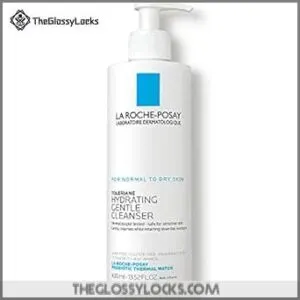
You need a cleanser that won’t sabotage your face before shaving with the grain. La Roche-Posay Toleriane Hydrating Gentle Cleanser preps facial skin without stripping away moisture.
It contains niacinamide and ceramide-3, ingredients that support your skin barrier while removing oils and debris that interfere with razor glide. This fragrance-free, soap-free formula hydrates as it cleanses, making it ideal for sensitive skin prone to irritation.
User reviews consistently praise its gentleness and hydration benefits. At around $20 for 13.5 ounces, it’s a practical pre-shave investment for smoother passes.
Best For: People with normal to dry or sensitive skin who need a hydrating, non-stripping cleanser before shaving with the grain.
- Contains niacinamide and ceramide-3 to support your skin barrier and reduce irritation
- Fragrance-free and soap-free formula that hydrates while removing oils and debris
- Wide availability at pharmacies and online for around $20, with consistently high user ratings
- May not remove heavy makeup or sunscreen effectively in one wash
- Some users with very sensitive skin report occasional stinging or redness
- Low-foaming texture might feel less “clean” if you’re used to traditional foaming cleansers
2. Harry’s Exfoliating Face Wash Men

Exfoliation before shaving lifts trapped hairs and clears follicle openings—think of it as prepping the runway for a smoother pass. Harry’s Exfoliating Face Wash uses volcanic rock (perlite) to gently exfoliate without aggressive abrasion, while aloe and glycerin keep skin hydrated. Its cooling eucalyptus and peppermint provide an invigorating finish.
Consumer reviews rate it 4.7 out of 5, with 99% recommending it. Daily use works for most, though those with high skin sensitivity should scale back to every other day to avoid cumulative irritation when combined with shaving.
Best For: Men with acne-prone, combination, or dry skin who want a gentle daily exfoliator that doubles as pre-shave prep without harsh scrubbing.
- Volcanic rock exfoliation removes dead skin and lifts trapped hairs before shaving, helping reduce ingrown hairs and razor bumps
- Aloe and glycerin keep skin hydrated while cleansing, preventing the tight, stripped feeling some face washes leave behind
- Cooling eucalyptus and mint leave skin feeling refreshed, with 99% of users recommending it based on 4.7/5 ratings
- Essential oils (peppermint, eucalyptus) can irritate fragrance-sensitive or rosacea-prone skin despite the gentle scrub particles
- Daily use may be too much for highly sensitive skin, especially when combined with regular shaving—scaling back to every other day prevents over-exfoliation
- Packaging can run out quickly according to some users, and eye contact causes irritation
3. Baxter of California Exfoliating Face Scrub
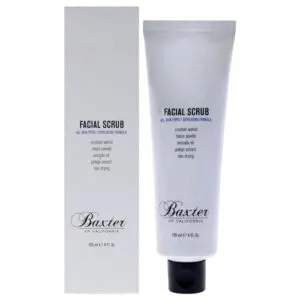
When dead skin cells blanket follicles, hairs can’t break through cleanly—especially after shaving against the grain. Baxter of California Exfoliating Face Scrub uses walnut shell powder and corn kernel meal to physically exfoliate one to two times per week, the recommended frequency for skin preparation without barrier damage.
Avocado oil, chamomile, and aloe soothe as you scrub, reducing redness. Apply to damp skin in light circles before your shave to lift whiskers and clear debris.
It’s effective for ingrown prevention, though sensitive types should ease into weekly use to avoid over-exfoliation.
Best For: Men who shave against the grain and need weekly exfoliation to prevent ingrown hairs without daily irritation.
- Walnut shell and corn kernel meal physically lift whiskers and clear pores before close shaves
- Avocado oil, chamomile, and aloe soothe skin while you scrub, reducing post-shave redness
- Sulfate-free formula works once or twice a week to maintain smooth skin without over-exfoliating
- Can be too abrasive for sensitive skin if used too frequently or with heavy pressure
- Expensive at $18.70 for 4 oz compared to other facial scrubs on the market
- Limited product volume means the bottle may not last long with regular use
4. Jack Black Face Buff Energizing Scrub
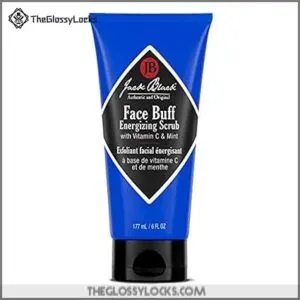
Biodegradable bamboo powder delivers mechanical exfoliation performance that clears follicles without plastic microbeads—key when preparing skin for shaving.
Jack Black Face Buff Energizing Scrub combines licorice extract and allantoin to calm irritation as you exfoliate, reducing the risk of razor burn. Peppermint creates noticeable sensory properties—a cooling, tingly feel that persists post-rinse.
The formulation exclusions matter: sulfate-free, paraben-free, and colorant-free for cleaner ingredient lists. Use this exfoliating face wash two to three times weekly to prevent ingrown hairs and open congested pores before your blade glides through.
Best For: Men who shave regularly and need a pre-shave scrub that prevents ingrown hairs while providing a deep clean without harsh chemicals.
- Bamboo powder exfoliates effectively without plastic microbeads, clearing pores and dead skin for a smoother shave
- Licorice extract and allantoin soothe skin during exfoliation, reducing irritation and razor burn risk
- Sulfate-free, paraben-free, and colorant-free formula makes it suitable for sensitive skin types
- At $30, some users find the price point steep compared to drugstore alternatives
- The strong menthol and peppermint sensation can feel too intense or tingly for sensitive skin
- Coarse scrubbing particles aren’t ideal for daily use—you’ll need to limit it to 2-3 times per week
5. Cremo Sensitive Ultra Slick Shave Cream
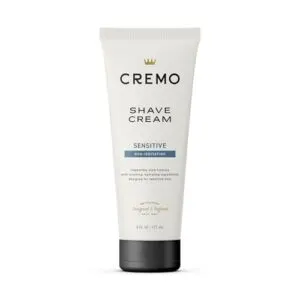
Cremo Sensitive Ultra Slick Shave Cream uses macadamia oil and aloe to create a low-friction glide that protects sensitive skin from razor burn. Chamomile and allantoin calm irritation as you shave, while the fragrance-free design sidesteps common allergens.
You’ll apply a pea-sized amount—less than traditional foams—because the concentrated formula spreads thin and stays slick through multiple passes. User reviews consistently praise the slickness comparison against gel competitors.
One 6 oz tube delivers roughly 90 days of daily shaving, positioning this shaving cream as practical value for your technique routine.
Best For: People with sensitive skin who want a slick, concentrated shave cream that reduces razor burn and stretches a single tube across three months of daily use.
- Ultra-slick formula with macadamia oil creates exceptional glide that minimizes nicks and tugging during multi-pass shaves
- Concentrated cream requires only a pea-sized amount per shave, making a 6 oz tube last roughly 90 days
- Fragrance-free design with aloe and chamomile soothes irritation without synthetic fragrance allergens
- Produces minimal lather compared to traditional foams, which some users find less satisfying
- Essential oils may still trigger reactions in extremely sensitive or fragrance-allergic skin
- High-oleic macadamia oil can be too occlusive for acne-prone facial areas
6. Art of Shaving Sandalwood Pre Shave Oil
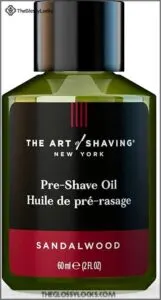
Pre-shave oils add a protective barrier that reduces friction before your blade touches skin. Art of Shaving Sandalwood Pre Shave Oil blends castor seed oil and olive fruit oil to soften tough whiskers and prep your face for a shaving technique that follows the grain.
Sandalwood oil benefits include soothing dry patches, while the formula stays free of parabens and common allergens.
You’ll apply a few drops to damp skin before lathering—this shaving preparation step cuts razor burn risk and improves glide, whether you’re using a safety razor or cartridge system.
Best For: Men with sensitive skin or coarse beards who want extra protection against razor burn and irritation during their shave.
- Creates a slippery barrier between razor and skin that cuts down on nicks and post-shave redness
- Castor and olive oils soften tough facial hair before you even lather up, making each pass smoother
- Paraben-free formula with sustainably sourced sandalwood works for most skin types, even sensitive ones
- Price runs higher than drugstore alternatives, which might not feel justified if you’re happy with basic prep
- Sandalwood scent can be strong for some users, and fragrance allergens like coumarin may bother truly sensitive skin
- Needs thorough rinsing between strokes or it’ll gunk up your razor blades quickly
7. The Shop Aftershave Toner For Men
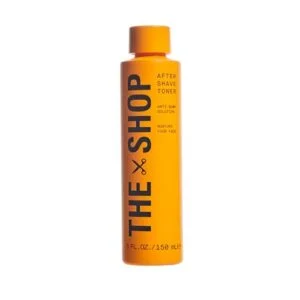
After you rinse your blade, an aftershave toner closes pores and calms irritation. The Shop Aftershave Toner for Men delivers skin hydration through glycerin and witch hazel, while lactic and glycolic acids keep follicles clear—key shaving tips for preventing ingrown hairs.
Ingredient benefits include niacinamide for evening tone and salicylic acid for exfoliation. The eucalyptus scent profile offers a fresh finish without overpowering your grooming routine.
Use it twice daily after cleansing; this usage frequency aids skin care beyond your shave, and its market positioning under ten dollars makes consistent aftershave application affordable.
Best For: Men looking for an affordable daily toner that soothes post-shave irritation, prevents ingrown hairs, and keeps skin clear between shaves.
- Combines gentle exfoliating acids with witch hazel and aloe to calm razor burn while clearing pores
- Works as both aftershave and daily toner, so you get multi-tasking value for under ten dollars
- Includes niacinamide and salicylic acid to fade dark marks from old bumps and prevent new breakouts
- Some users find it doesn’t work well for their specific skin type or irritation level
- The 5 oz bottle exceeds TSA carry-on limits if you travel frequently with only a personal item
- Eucalyptus scent may not appeal to everyone, especially if you prefer unscented or differently fragranced products
8. Bevel Aftershave Balm For Men
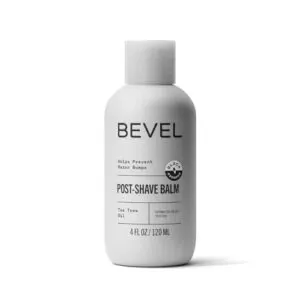
If you struggle with skin irritation and razor bumps, Bevel Aftershave Balm targets coarse, curly hair that’s prone to ingrown hairs—affecting up to 83% of Black men in clinical research.
Balm ingredients include shea butter, jojoba oil, and lactic acid to soothe and exfoliate without drying alcohol. User experience reports softer skin after four weeks, though some note a brief stinging sensation.
Skin benefits extend to barrier repair with niacinamide, while economic value sits around $12 for four ounces. Apply a nickel-sized amount after every shave for consistent results.
Best For: Men with coarse or curly hair who deal with razor bumps, ingrown hairs, and post-shave irritation—especially those with sensitive skin looking for an alcohol-free option.
- Contains proven actives like lactic acid, salicylic acid, and niacinamide that exfoliate and help prevent ingrown hairs while evening out skin tone
- Deeply moisturizing formula with shea butter and jojoba oil that leaves skin softer and smoother without the harshness of traditional alcohol-based aftershaves
- Dermatologist-tested and suitable for daily use, even on non-shave days, to maintain skin barrier and reduce irritation over time
- Some users experience a temporary stinging or burning sensation when first applied, likely due to the exfoliating acids
- The 4 oz bottle is on the smaller side and may run out quickly with daily use, especially if applying twice a day
- Mixed results reported for reducing existing dark spots or hyperpigmentation, so it may work better as prevention than treatment
9. Jackfir Classic Daily Facial Moisturizer
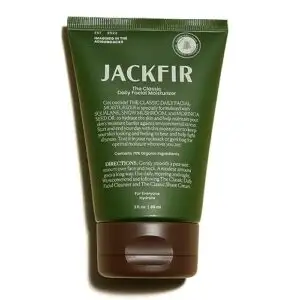
Hydration performance matters after every shave—that’s where Jackfir Classic Daily Facial Moisturizer earns its place. Ingredient analysis reveals squalane, snow mushroom extract, and niacinamide working together to repair your moisture barrier without clogging pores.
User reviews confirm all-day hydration with a matte finish, though the thick texture may overwhelm oily skin. Skin suitability extends to most types, backed by clean certification and dermatologist testing.
Apply twice daily to lock in moisture and reduce fine lines. At $46 for three ounces, it’s premium facial skin care built for consistent post-shave protection.
Best For: Men with normal to dry skin looking for a thick, hydrating moisturizer that absorbs to a matte finish and supports barrier repair after shaving.
- Squalane and snow mushroom extract deliver all-day hydration without feeling greasy, making it comfortable for 10-12 hour wear
- Niacinamide and vitamin C derivative work to reduce fine lines and improve skin texture with consistent use
- Clean certification with 70% organic ingredients, dermatologist tested, and cruelty-free for those prioritizing responsible skincare
- High price point at $46 for 3 ounces limits accessibility compared to drugstore alternatives
- Thick texture may be too heavy for oily or acne-prone skin, especially with high-comedogenicity ingredients like myristyl myristate
- Limited availability through direct-to-consumer and specialty channels may make repurchasing less convenient
10. Philips Norelco OneBlade 360 Trimmer Shaver
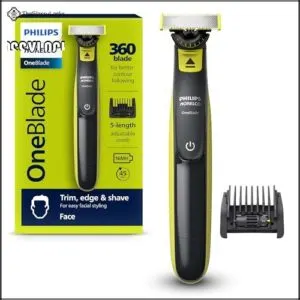
OneBlade Technology delivers 12,000 cuts per minute with a 360 Blade that flexes across facial contours, reducing strokes needed along your jawline. The dual protection system keeps skin comfortable whether you’re working with or against the grain—critical for electric shaver control.
Blade durability hits four months per replacement, while the waterproof design accommodates your preferred shaving methods. It won’t match a traditional razor’s closeness, but that trade-off minimizes nicks across different shaving techniques.
At its market impact scale—50 million razors sold—this electric razor proves hybrid grooming works.
Best For: Men who want a versatile grooming tool that handles trimming, edging, and comfortable shaving on both face and body without the irritation of traditional razors.
- Fast-moving cutter at 12,000 cuts per minute with a 360-degree flexing blade that maintains constant skin contact and reduces the number of strokes needed on curves like the jawline
- Dual protection system with glide coating and rounded tips makes it suitable for sensitive skin and reduces nicks, razor burn, and irritation compared to traditional blade razors
- Fully waterproof with wet or dry capability, includes a 5-in-1 adjustable comb for stubble control, and blades last up to four months before replacement
- Doesn’t shave as close as a traditional multi-blade razor, leaving hair slightly longer which may not suit those who prefer an ultra-smooth finish
- Replacement blades need to be purchased every four months, adding to ongoing maintenance costs over time
- Some users report inconsistent battery life, occasional charging issues, and variability in how long replacement heads actually last
Frequently Asked Questions (FAQs)
What is the difference between shaving with the grain and against the grain?
Shaving methods split at one crossroads: stroke direction. With-the-grain shaving follows hair growth, reducing friction and irritation.
Against-the-grain moves opposite, cutting closer but risking razor burn and ingrown hairs—especially with curly or coarse stubble.
Shave With or Against the Grain: Which is Better?
Most barbers recommend shaving with hair growth first—it cuts irritation and razor bumps by about half. Against the grain gives closeness but raises risk, so reserve it for touch-ups after your initial pass.
What are the risks of shaving against the grain?
Like tugging a rope the wrong way, shaving against the grain raises your odds of ingrown hairs, razor burn, skin irritation, razor bump causes, skin barrier damage, and infection risk—especially with curly hair. Dermatologist advice favors shaving in the direction of hair growth.
What are the benefits of shaving with the grain?
When you follow the direction of hair growth, your shaving technique reduces irritation and helps prevent bumps.
This approach protects your skin barrier, especially if you have sensitive skin, while delivering safer outcomes and a smooth shave.
How can I avoid razor burn when shaving with the grain?
To prevent skin irritation, you need sharp blades, quality lubrication, gentle pressure, and limited passes over each area.
Post-shave care with fragrance-free moisturizers helps your skin recover and reduces burning sensations.
How can I avoid razor burn when shaving against the grain?
Start with thorough pre-shave prep—warm water and quality cream reduce friction.
Use a sharp blade with light pressure, shave in short strokes, and finish with cool water plus alcohol-free moisturizer to calm sensitive skin.
What are some other tips for avoiding razor burn?
Sharp thinking keeps razor burn at bay. Replace dull blades regularly, moisturize daily between shaves, wear loose clothing post-shave, and skip shaving irritated skin—your barrier needs recovery time to prevent inflammation and discomfort.
Can I shave immediately after working out?
You shouldn’t shave right after exercise. Post-workout cleansing removes sweat and bacteria first, reducing irritation risk and folliculitis concerns.
Best practices include showering, cooling down, then following proper skin preparation for shaving.
How often should I replace my razor blade?
You notice tugging or discomfort? That’s your signal.
Replace razor blades every 5 to 7 shaves to protect skin health and maintain shaving safety, preventing infection risks from dull edges and trapped bacteria.
Whats the difference between wet and dry shaving?
Wet shaving uses water and lubricant to soften hair and reduce friction, delivering closer blade contact but requiring more time.
Dry electric shavers offer speed and convenience with less skin sensitivity, though they leave slightly longer stubble.
Conclusion
Your razor follows your hand, your hand follows technique, and technique follows the grain. That single principle separates confident shavers from frustrated ones.
Whether you shave with or against the grain depends on your skin’s tolerance and your desired closeness, but respecting hair direction always matters.
Master the mapping, improve your pressure, and let your skin guide your choices. The face you see in the mirror tomorrow starts with the decisions you make today.
- https://pmc.ncbi.nlm.nih.gov/articles/PMC6585396/
- https://www.aad.org/public/everyday-care/skin-care-basics/hair/razor-bump-prevention
- https://thebeardclub.com/blogs/beard-culture/razor-burn
- https://jamanetwork.com/journals/jamadermatology/fullarticle/524243
- https://www.healthline.com/health/beauty-skin-care/shaving-against-the-grain