
This site is supported by our readers. We may earn a commission, at no cost to you, if you purchase through links.

Most men who struggle with razor burn aren’t using the wrong blade—they’re using the wrong lather. A properly built lather softens beard hair by up to 40% and cuts razor drag in half, two things no premium razor can do on its own.
That kind of performance lives or dies with your brush technique. Master barbers spend years developing the muscle memory for this, but the fundamentals aren’t complicated once someone breaks them down clearly.
The right shaving brush lather technique turns a rushed daily chore into a genuinely close, comfortable shave—and this guide walks you through every step to get there.
Table Of Contents
- Key Takeaways
- Why Shaving Brush Lather Technique Matters
- Essential Tools for Effective Lathering
- Preparing Your Shaving Brush and Soap
- Building Lather: Bowl, Palm, and Face Techniques
- Perfecting Lather Consistency and Texture
- Applying Lather for The Best Shave
- Cleaning and Maintaining Your Shaving Brush
- Frequently Asked Questions (FAQs)
- Conclusion
Key Takeaways
- Proper lather — not the razor — is the real secret to eliminating razor burn, since it softens beard hair by up to 40% and cuts drag in half before the blade ever touches you.
- Your brush technique and water control make or break lather quality; add water drop by drop until it holds soft, glossy peaks with a yogurt-thick texture.
- Choosing the right brush matters — badger hair holds 30% more water than synthetic, giving you richer, more stable lather across multiple passes.
- A two-minute post-shave rinse and bristles-down drying routine is all it takes to keep your brush performing like new for a decade or more.
Why Shaving Brush Lather Technique Matters
Most guys don’t realize how much the lather itself affects the quality of their shave — not just the razor. Getting it right means better protection, healthier skin, and a whole lot less irritation. Here’s what you need to know before you pick up that brush.
If you want to nail the fundamentals, this guide on how to build a proper shaving lather walks you through everything that actually makes a difference.
Benefits of Proper Lather for Shaving
Good lather isn’t a luxury — it’s the foundation of every clean, comfortable shave. Here’s what proper lathering actually does for you:
- Cuts razor drag by up to 50% for smoother strokes
- Softens beard hair up to 40% for easier cutting
- Creates a 2mm cushion for skin protection
- Boosts razor efficiency — fewer passes needed
- Locks in lather stability so coverage never quits mid-shave
To achieve the perfect shave, understanding shaving lather techniques is essential for ideal results.
Impact on Skin Health and Comfort
Beyond a closer shave, your shaving brush does real work for your skin. The circular motion delivers gentle exfoliation benefits — lifting dead cells and reducing ingrown hairs before the blade ever touches you.
Glycerin-rich lather locks in skin hydration throughout each pass, so sensitive skin stays calm instead of raw. Done right, this shaving technique is legitimate skin care.
Glycerin-rich lather hydrates skin with every pass, turning your daily shave into genuine skin care
Using a shaving brush is part of a good shaving routine that promotes healthy skin.
Common Lather Mistakes to Avoid
Even great skin prep falls apart if your lathering technique breaks down at the basics. Most guys don’t realize small habits quietly kill lather quality before the razor even moves.
Watch for these common mistakes:
- Soap Loading under 30 seconds leaves barely enough product to work with
- Water Balance — adding too much at once creates runny lather with no structure
- Brush Damage from hard circular scrubbing breaks inner bristles over time
- Lather Consistency suffers when hot water dissolves your soap too fast
- Lather Formation stalls completely if you skip soaking natural-hair brushes first
Essential Tools for Effective Lathering
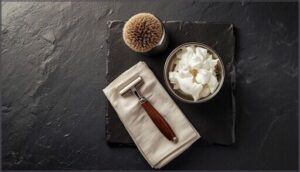
Before you build a single stroke of lather, you need the right tools in your hands. Getting this part right makes everything else fall into place — the technique, the consistency, the whole experience.
Here’s what you actually need to get started.
Choosing The Right Shaving Brush
Your shaving brush is the engine behind great lather building — pick the wrong one and even premium soap won’t save you.
Master the fundamentals with these proven tips for perfect shaving cream consistency and your brush will finally perform the way it’s supposed to.
| Feature | What to Look For |
|---|---|
| Bristle Types | Badger hair holds 30% more water than synthetic |
| Knot Sizes | 24mm is standard; 26mm suits multi-pass shavers |
| Loft Options | ~50mm loft gives firmer backbone |
| Handle Styles | Resin resists moisture best |
| Brush Materials | Two-band badger offers maximum stiffness |
Selecting Quality Shave Soaps and Creams
The soap or cream you pick sets the ceiling for your lather quality — no brush can fix a bad formula. Look for shaving soap with stearic acid and tallow high in the ingredient list; fat content above 30% gives you lather stability across multiple passes.
Prefer shaving cream? Its softer cream texture loads faster and matches dry or sensitive skin beautifully through added glycerin.
Importance of a Shave Bowl or Mug
A good shaving bowl or mug isn’t optional — it’s where great lather actually happens. The right vessel gives you full control over lather consistency, warmth, and hygiene from start to finish.
- Lather Consistency Control — adjust water drop by drop for perfect density
- Heat Retention Benefits — ceramic and stoneware mugs keep lather warm throughout your shave
- Textured Surface Traction — internal ridges build rich lather faster
- Containment and Hygiene — high sides prevent splatter and protect your soap puck
- Brush Rest Utility — integrated arms hold your brush safely between passes
Preparing Your Shaving Brush and Soap
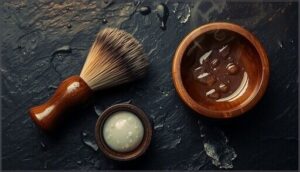
Before you build any lather, your brush and soap need a moment of proper prep — and getting this right changes everything.
It’s a short process, but the steps matter more than most people realize. Here’s exactly what to do.
Soaking The Brush Correctly
Think of soaking as your brush waking up. Fill your mug with warm water — ideal water temperature sits between 100 and 110°F — then submerge tips halfway up the knot. That’s your best knot soak depth.
Badger brushes need just 1 to 2 minutes; boar brushes want closer to 3 to 5. After soaking, give it two light shakes. Your brush type soaking time directly affects lather quality.
Loading The Brush With Product
Loading is where lather quality is won or lost. Press your shave brush firmly onto the soap puck — ideal loading pressure means flattening the tips just enough to reach the knot’s core.
Use a circular loading motion, swirling clockwise and back for 30 to 60 seconds. Watch for visual loading cues: brush tip saturation means your bristles clump, coated like paste — not foam. That’s your green light.
Adjusting for Hard or Soft Water
Water hardness awareness isn’t optional — it’s the invisible variable that explains why your shaving lather behaves differently on vacation versus home.
Hard water loading demands a drier brush start; shake out more water and build that thick paste first. Soft water adjustments are gentler — less product, fewer passes. The distilled water method solves stubborn hard-water collapse instantly.
Temperature tuning tips: stay around 38°C for consistent results.
Building Lather: Bowl, Palm, and Face Techniques
Now that your brush is loaded and ready, it’s time to actually build the lather — and this is where things get interesting.
There are three solid methods, and each one has its own feel and advantages depending on your preference.
Here’s how each technique works.
Bowl Lathering Step-by-Step
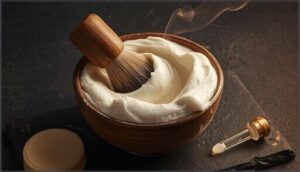
Bowl lathering is where most shavers find their groove — and it starts with smart bowl setup steps. Fill your shave bowl with hot water, soak your shaving brush for five minutes, then dump it, leaving just a thin layer at the bottom.
- Load your shaving brush on the shaving soap for 30 seconds using medium pressure
- Transfer to the shave bowl and use a circular whipping technique — clockwise, then counterclockwise
- Apply gradual hydration control, adding water drop by drop until lather holds soft, glossy peaks
Do your final lather assessment: a yogurt-thick texture means you’re ready.
Palm Lathering Method
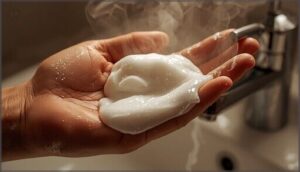
No bowl? No problem. Palm lathering strips the setup down to pure feel — a true minimalist shaving workflow. Cup your dominant hand slightly, elbow resting steady on the sink edge — that’s your palm setup ergonomics sorted.
Now work your loaded shave brush in tight circles on your palm. Add water one drop at a time until your shaving lather feels cool, slick, and just tacky enough to hold its shape. That tactile lather assessment — squeezing foam between fingers — tells you everything a mirror can’t.
Face Lathering for Maximum Preparation

Skip the bowl entirely — face lathering is where shave preparation gets serious. Your skin starts softening the moment the shave brush touches it. That’s Direct Face Conditioning doing real work.
- Pre‑Shave Hydration opens the pores first
- Brush‑Face Exfoliation lifts whiskers with each swirl
- Lather Thickness Control lets you feel every adjustment live
Multi‑Pass Re‑Lathering keeps lather quality fresh between passes.
Perfecting Lather Consistency and Texture
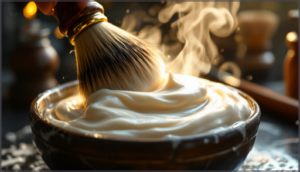
Getting the lather right comes down to texture — and once you know what to look for, you’ll dial it in fast.
A few small adjustments make the difference between a lather that performs and one that frustrates. Here’s what to watch for.
Recognizing Ideal Lather Qualities
Good lather texture isn’t a mystery — you’ll know it when you see it. Think thick meringue: dense bubbles packed tight, glossy, and smooth. Scoop it with a finger and it holds its shape for a second before settling.
Your shaving brush lather should grip the skin with real adhesion, not slide off. Those microscopic bubbles signal ideal hydration levels and lather quality.
Adding Water for Optimal Results
Water makes or breaks your lather — and it’s all about control. Use the Incremental Drip Technique: add drops one at a time while whipping, watching the lather slick up with each addition. Stop when it holds soft, glossy peaks.
Key Hydration Timing Cues to watch for:
- Lather looks matte? Add one drop, whip 20 strokes
- Peaks hold shape without running — you’re there
- Water Hardness slows progress; switch to distilled if foam collapses
- Synthetic brushes need more Controlled Brush Dips — they release water faster
Your Water-to-Soap Ratio and Pass-Specific Hydration ensure consistent Lather Quality every time.
Troubleshooting Runny or Dry Lather
Something off with your shaving lather? Nine times out of ten, it’s either too much water or not enough soap on the brush. Here’s a quick fix guide:
| Problem | Fix |
|---|---|
| Runny lather, big bubbles | Load brush 30 more seconds |
| Lather slides down neck | Reduce water, one drop at a time |
| Dry, flaky lather texture | Add drops; check soap selection for glycerin |
| Brush feels scratchy mid-shave | Soak longer; brush maintenance matters |
| Hard water killing lather balance | Switch to distilled; water hardness is real |
Applying Lather for The Best Shave
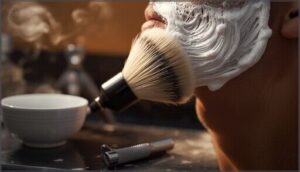
Getting the lather on your face is where everything you’ve built actually pays off. The way you move the brush, how evenly you spread it, and how you handle multiple passes all shape how comfortable that shave turns out.
Here’s what to focus on.
Brush Motions and Pressure
Think of your brush as having two jobs: loading and delivering. During loading, use firm loading pressure — swirl with circular brush motions for about 30 seconds to saturate the bristles properly.
Once you’re on your face, ease off. Light pressure control fans the badger tips just enough. Then shift into a painting stroke technique — smooth, back-and-forth motions for even lathering without clumping.
Ensuring Even Coverage
Even coverage starts with a Circular Coverage Technique — work your shaving brush in small circles for 20–30 seconds across cheeks, chin, and neck. Then switch to Paintbrush Even Layers using smooth side-to-side strokes to flatten the Shaving Lather uniformly.
Use Sectional Lather Application — cheeks first, then chin, then neck. Quick Spot Coverage Checks verify no dry patches before your razor touches skin.
Lathering for Multiple Passes
Each pass deserves fresh lather — that’s the heart of any solid multi-pass strategy. Load your shave brush once with shaving soap for 45–60 seconds at the start; the knot holds enough for three full passes.
Before each subsequent pass, add 2–3 drops of water and relather directly on your face using small circles. Lather control improves with every pass, and so does your shave optimization.
Cleaning and Maintaining Your Shaving Brush
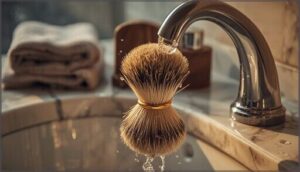
Your brush just did the hard work — now it’s your turn to return the favor. A little care after each shave is all it takes to keep it performing like day one.
Here’s what you need to know.
Rinsing and Drying After Use
Your shaving brush deserves the same respect as your blade. After lathering, rinse under warm water — not hot — keeping rinse water temperature around 30–40°C to protect the glue and bristles. Work your fingers through the knot for thorough knot rinsing until the water runs completely clear.
Then follow these post-rinse drying steps:
- Shake the brush firmly several times to fling out bulk water
- Gently squeeze the knot — never twist — to protect the fibers
- Blot the tips lightly on a clean towel
- Set up a bristle-down drying setup on a proper stand
- Keep it in a well-ventilated spot overnight
This simple shaving routine and maintenance habit is everything for preventing moisture damage and keeping your brush performing beautifully.
Proper Storage Tips
Where you store your shaving brush matters more than most guys realize. After drying, hang it bristles-down on a stand — chrome or stainless steel brush stand options resist bathroom humidity best. Bristles-down hanging keeps moisture from pooling at the glue knot. Choose ventilated drying spaces, never a closed cabinet. Low-humidity locations like a bedroom shelf are ideal.
A simple brush rotation schedule — two or more shaving brushes alternating — gives each one full recovery time between lathering sessions.
Extending Brush Lifespan Through Care
Good storage habits set the stage, but daily brush hygiene seals the deal. Rinse your badger hair shave brush under warm water — under 45°C — until it runs clear. Every few weeks, deep clean with mild soap.
Hard water management matters too; a monthly vinegar rinse prevents stiff bristles.
A brush rotation strategy gives each brush 48 hours to dry fully, easily extending lifespan a decade or more.
Frequently Asked Questions (FAQs)
How to make the best shaving lather?
Soak, load, and swirl — that’s the heart of great shaving lather. Use a damp shaving brush, load your shaving soap for 45 seconds, then build lather consistency checks as you add water drop by drop.
How should the hair be lathered for shaving?
Work the shaving brush in firm circles for 30 seconds — this lifts beard hairs and drives shaving lather deep into each follicle for real hair softening, skin protection, and smooth blade glide.
How to get slick shave lather?
Slick shaving lather comes down to your water-to-soap ratio. Add water drop by drop while whisking — stop when it feels like Greek yogurt.
Run the finger glide test: no drag means you’re ready.
Can electric shavers replicate wet shaving results?
Electric efficiency has real limits. Even the finest shaver technology cuts 1–5mm above skin, while wet shaving with proper lather quality delivers true razor glide and a baby-smooth shaving experience electric simply can’t match.
How often should shave soap be replaced?
Replace shave soap when you spot orange specks, smell something sour, or notice the scent has faded — usually after one to three years.
A dry-stored hard puck can honestly last much longer.
Are synthetic brushes better for sensitive skin?
Yes — synthetic brushes are a smart pick for sensitive skin. Their hypoallergenic fiber advantages, bacteria-resistant bristles, and ultra-soft synthetic tips deliver reduced irritation performance, making them a durable sensitive-skin option you’ll appreciate every morning.
Does lathering technique differ for head shaving?
Absolutely — head shaving demands more from your shaving brush. Scalp lather volume runs about 50% higher than face work, so lean into face lathering, smart scalp sectioning strategy, and steady scalp water adjustment throughout your multi-pass head routine.
Conclusion
The simplest part of your shave—loading a brush—is actually where most men quietly lose before the razor ever touches skin. Once your shaving brush lather technique clicks, everything else follows: less drag, fewer nicks, skin that actually feels better at noon than it did at 7 a.m.
That’s not a ritual for its own sake. That’s craft doing exactly what it promises. Pick up the brush tomorrow morning and feel the difference yourself.
- https://aegrooming.com/blogs/news/how-to-create-the-greatest-lather-of-your-life
- https://www.blacklandrazors.com/a/blog/how-to-use-shaving-soap-with-a-brush
- https://www.therazorcompany.com/blogs/the-benefits-of-wet-shaving/how-to-create-the-perfect-lather-shaving-soap-and-cream-techniques
- https://www.muehle-shaving.com/en/Blog/How-to-shave/How-to-lather-properly/
- https://docs.google.com/forms/d/e/1FAIpQLSft2CcQT7O59GB6mBpFvAxcuYez30sIROpeaOIM3LqzTmbG5g/viewform?usp=pp_url&entry.1452073181=Website