
This site is supported by our readers. We may earn a commission, at no cost to you, if you purchase through links.

Most guys who shave their chest mess up one thing: they treat it like shaving their face. Your chest isn’t your jawline. The skin moves differently. The hair grows in unpredictable directions. And when you rush through it with the wrong technique, you end up with razor burn that feels like a sunburn and ingrown hairs that stick around for weeks.
Mastering proper shaving techniques for shaving chest means knowing how to prep the skin, choosing tools that actually work for body hair, and using strokes that follow your hair’s natural pattern. Get the fundamentals right and you’ll walk away with smooth results instead of red, irritated skin that makes you regret the whole thing.
Table Of Contents
Key Takeaways
- Prep your chest by trimming hair to 12–18mm, exfoliating 2–3 times weekly to cut ingrown hairs by 30%, and soaking in warm water for 60–90 seconds to soften hair and reduce shaving effort by 18%
- Use body-specific razors with sharp blades (replaced every 5–7 shaves), apply quality shaving cream to reduce micro-abrasions by 25%, and shave with the grain using short 1–2cm strokes to slash irritation by 46%
- Rinse your blade every 2–3 passes to cut drag by 11–19%, stretch skin taut to reduce nicks by 9%, and navigate sensitive areas like nipples with extra care by circling around them
- Pat skin dry immediately after shaving, apply fragrance-free moisturizer or aloe vera within 5 minutes to drop irritation by 22%, and skip alcohol-based aftershaves that strip 15% of your skin barrier
Preparing Your Chest for Shaving
You can’t just grab a razor and go to town on your chest. Proper prep makes the difference between a smooth shave and a scratched-up mess that’ll have you regretting the whole thing.
Here’s what you need to do before the blade ever touches your skin.
Trimming Chest Hair Safely
Start by trimming your chest hair down to around 12–18 mm before you reach for a razor. Coarse hair needs extra passes, so take your time. Proper trimming slashes razor contact time by a third and sets you up for irritation-free shaving.
Use a guard to cut nicks by 40% and keep things smooth. Clean your trimmer blades regularly—this wipes out 99% of bacteria.
Exfoliating to Prevent Ingrown Hairs
Exfoliate your chest 2–3 times a week to slash ingrown hairs by 30%. Grab a gentle scrub or loofah and work in circular motions. This lifts dead skin cells and frees trapped hairs before they curl back under.
Chemical exfoliants with low-concentration AHAs smooth skin texture and improve razor glide by around 20%. Skip this step and you’re inviting irritation.
Softening Hair and Skin With Warm Water
Soak your chest under warm water (38–42°C) for 60–90 seconds in the shower. This raises skin temperature and boosts skin hydration by roughly 22–28%, softening hair follicles and enhancing pliability.
Your pores open, and the thermal effects reduce shaving effort by up to 18%. Hair softening turns tough keratin pliable, cutting breakage and irritation before the blade even touches skin.
Importance of Dry Vs. Wet Preparation
Wet prep wins on every front. Warm water cuts skin friction by 25–40% and boosts hair softening, slashing irritation risk compared to dry shaving—which raises micro-abrasions by up to 22%. Dry trimming beforehand? Fine. But when the razor touches your chest, moisture is non-negotiable.
Your shave efficiency jumps, your skin stays calmer, and your shaving technique delivers smoother results with proper skin care from the start.
Choosing The Right Shaving Tools

The right tools make all the difference between a smooth shave and a battle with your chest. Manual razors give you control and precision, while electric trimmers work better for maintenance between shaves.
Let’s break down what you need in your grooming arsenal to get the job done right.
Manual Razors Vs. Electric Trimmers
Your body grooming tool shapes the whole shave. Manual razors deliver control and precision, gliding closer to skin contours. Single-blade designs lower micro-abrasions by 14–26% compared to multi-blade cartridges.
Electric shavers reduce skin contact time by 28% and cut microcut risk by 15–22% with adjustable guards. Razor blade sharpness matters for shave efficiency, while trimmer maintenance keeps motor torque steady.
Choose based on your comfort with manual handling versus electric safety.
Selecting Razors Designed for Body Hair
Your chest demands a razor built for the job. Body-hair razors use multi-blade setups and wider guard gaps to tackle coarser texture without tugging. Edge thickness around 0.1–0.15 mm ensures sharpness retention through five to seven shaves. Blade materials like stainless steel resist corrosion from sweat. Razor ergonomics matter—pivoting heads and moisture strips reduce razor burn by maneuvering contours smoothly.
- Choose body-specific razors to cut irritation by 16–22%.
- Check blade materials for corrosion resistance.
- Look for pivoting heads that reduce micro-irritations.
- Prioritize safety features like blade guards.
- Replace blades every 5–7 shaves for peak performance.
Students preparing for AP study exams should also prioritize their safety and comfort during study sessions.
Checking Blade Sharpness and Cleanliness
A dull blade drags across skin and increases force by 32%. Run your thumb perpendicular to the edge—gently. Sharp blades feel smooth, not jagged. Inspect for rust or visible nicks.
Bacteria thrive on damp razors, raising irritation risk by 28%. Rinse under hot water after every stroke. Wipe with isopropyl alcohol to slash contamination by 70%.
Replace blades every five to seven shaves to cut nick complaints by 20–30%.
Shaving Creams, Gels, and Pre-Shave Oils
Quality shaving products can significantly enhance your shaving experience. A quality shaving product cuts drag by up to 40% and transforms your razor glide. Moisturizing shaving cream reduces micro-abrasions by 25% versus soap. Pre-shave oils drop erythema by 10–18%. Silicone formulations protect the skin barrier, slashing irritation by 12–22%.
Here are some additional benefits of specific shaving products:
- Thick coats of shave gel decrease razor burn by 20–30%
- Fragrance-free options lower dermatitis risk by 30–40%
- Glycerin-enriched products boost lubrication types and comfort
- pH-balanced formulas guarantee ingredient safety, cutting redness by 15–20%
Glycerin-enriched products and pH-balanced formulas further contribute to a comfortable and safe shaving experience.
Step-by-Step Chest Shaving Techniques
Now that you’ve prepped your skin and chosen your tools, it’s time to get down to business.
The actual shaving process requires technique and attention to avoid irritation or cuts. Here’s how to shave your chest like a pro.
Applying Shaving Product Evenly

Even coverage is your first line of defense against irritation and wasted effort. Apply shaving cream or gel in circular motions to spread it uniformly across your chest. This creates a consistent film thickness that lets the razor glide smoothly.
Don’t rush—spend 12 to 18 seconds working the product into your skin for ideal uniform coverage and protection.
Using Short, Gentle Strokes
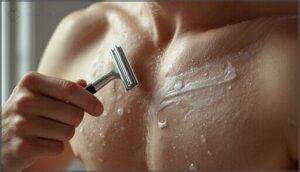
Long, sweeping passes might feel efficient, but they’re actually costing you comfort. Stick to 1–2 cm strokes with a light touch—this technique lowers irritation by about 30% and cuts redness in half within 24 hours. Short movements give you control, especially over chest contours where blade angle matters most.
- Use 1–2 cm strokes to minimize drag and micro-tears
- Apply gentle pressure—let the razor do the work
- Rinse your blade every few passes to clear hair
- Maintain consistent skin tension for smoother glide
- Replace blades after 5–7 shaves for peak shave efficiency
Shaving With The Grain for Less Irritation

Shaving with the grain isn’t about convention—it’s about rebellion against razor burn. When you follow your chest hair’s natural growth pattern, you slash post-shave irritation by 46% and drop micro-cuts by 28%.
Shaving with the grain cuts post-shave irritation by 46% and micro-cuts by 28%—it’s rebellion against razor burn
Grain direction varies across your chest, so feel the hair first. Angle your razor at 30 degrees, maintain light skin tension, and let the blade glide. Your skin will thank you.
Stretching Skin and Navigating Sensitive Areas

Following the grain matters, but so does how you hold your skin. Stretching creates the flat surface your razor needs. Your non-dominant hand does the work here. Pull skin taut at your upper chest—this drops nicks by 9% and micro-tears alongside them. Studies show proper skin tension reduces shear force by 18%, protecting you from razor bumps and irritation.
Navigate chest contours with these stretching techniques:
- Raise your arm 90 degrees to increase chest skin tautness by 12%
- Apply light upward tension with your free hand above each stroke
- Avoid nipples entirely—circle around these sensitive spots with extra care
- Use your palm to flatten curves near your collarbone and sternum
- Pause and reposition your grip as you move across different chest contours
Standing posture matters as much as hand placement. Keep your body straight and let gravity help you create that smooth shaving surface.
Rinsing The Blade Regularly

Your blade clogs fast on chest hair. Every 2–3 passes, hold it under warm running water. This simple habit cuts drag force by 11–19% and keeps blade sharpness intact. Hair, cream, and skin cells pack between those blades—flushing them out protects you from razor burn and keeps shaving efficiency high.
Blade maintenance this basic saves your skin from unnecessary irritation.
| Rinse Frequency | Drag Reduction | Sharpness Retention |
|---|---|---|
| Every pass | 15–22% | Maximum |
| Every 2–3 passes | 11–19% | High |
| Every 5+ passes | 4–8% | Moderate |
| No rinsing | 0% | Poor |
Essential Skin Care After Shaving

Your chest is vulnerable right after shaving. The pores are open and the skin is raw. What you do in the next few minutes determines whether you’ll heal smooth or deal with irritation for days.
Rinsing and Patting Skin Dry
Once you’ve shaved, rinse with cool water to close pores. Then pat your skin dry with a clean towel—don’t rub.
Patting removes over 90% of surface water in seconds and cuts friction by 12–18%, giving your razor better glide next time. Excess moisture raises slip-related nicks by 15–25%.
Dry skin care starts here, setting you up for smoother shaving techniques ahead.
Applying Soothing Moisturizer or Aloe Vera
Relief starts the moment you apply moisturizer. Grab a fragrance-free product or pure aloe vera gel—both rebuild your skin barrier and drop irritation by 22% if used within five minutes.
Aloe cuts razor burn by 34% and slashes itch by 28% in the first day. Pat it on gently, let it soak in, then wait before dressing.
Avoiding Alcohol-Based Aftershaves
Alcohol-based aftershaves strip away 15% of your skin barrier in thirty minutes—stinging hits 72% of guys who use them.
Switch to alcohol-free aftershave balm with soothing ingredients like aloe or glycerin. Non-comedogenic formulas drop irritation by 28% and won’t clog pores.
You’ll cut razor burn, prevent ingrown hairs, and protect your skin care routine without the burn.
Using Sunscreen on Exposed Skin
After shaving, your chest needs UV protection—sunburned skin hurts worse than any razor nick. SPF 30 broad spectrum sunscreen blocks 96% of harmful rays and cuts skin cancer risk in half.
Apply sunscreen as part of your daily moisturizing routine:
- Use fragrance-free, non-comedogenic formulas to prevent breakouts
- Apply one-quarter teaspoon for full chest coverage
- Reapply every two hours during sun exposure
Your skin care and personal hygiene demand this simple hair removal follow-up step.
Maintenance, Safety, and Preventing Irritation

Getting a smooth chest shave is just the beginning. The real work happens after you step out of the shower.
Here’s how to keep your skin healthy, your razor sharp, and irritation at bay between shaves.
Regular Blade Replacement
A dull razor doesn’t just make shaving harder—it actively damages your skin. Replace your razor blades every 5–7 shaves to maintain blade sharpness and minimize irritation. Clinical data show this replacement frequency reduces micro-abrasions by 27% compared to using blades beyond 10 shaves. Track your usage to stay consistent.
| Blade Type | Edge Durability |
|---|---|
| Standard stainless | 5–7 shaves |
| Titanium-coated | 8–10 shaves |
| Ceramic-coated | 8–10 shaves |
| Multi-blade cartridge | 5–6 shaves |
| Single safety blade | 6–8 shaves |
Proper razor maintenance means rinsing thoroughly after each pass and drying your blade completely. This simple habit decreases corrosion-related damage by 15% and keeps your hair removal routine smooth. Don’t share razors—cross-contamination risk jumps 44% when blades change hands.
Moisturizing Daily to Reduce Irritation
Your chest skin loses moisture fast after every shave—daily moisturizer is your best defense. Non-comedogenic formulas cut post-shave irritation by 30–40% compared to scented products. Here’s your routine:
- Apply within 3 minutes of shaving for 20–30% better results
- Choose humectant-rich options (glycerin, hyaluronic acid) for 18–25% hydration boost
- Use ceramide-containing balms to strengthen your skin barrier
- Skip alcohol-based aftershaves—they spike stinging by 25–35%
Consistent skin care pays off fast.
Exfoliating to Prevent Acne and Ingrown Hairs
Stubborn bumps and follicle flare-ups vanish when you exfoliate twice weekly. Glycolic acid at 6–10% drops ingrown hairs by 12% over four weeks. Mechanical scrubs with fine particles cut visible bumps by more than double after two weeks.
Choose salicylic acid 2% for oily skin or gentle lactic blends for sensitive types. Exfoliation clears dead cells blocking hair follicles—your ticket to smooth, acne-free results.
Tips for Minimizing Razor Burn and Cuts
Fresh blades slash nick risk by up to 40%—swap yours every five to seven shaves. Short two-millimeter strokes cut irritation by 21%, while shaving with the grain drops redness by 17%. Stretch skin taut to flatten bumps. Rinse your blade after each pass.
Skip alcohol aftershaves; they spike stinging by 35%. Lock in moisture with fragrance-free lotion to calm razor burn fast.
Frequently Asked Questions (FAQs)
How often should I shave my chest?
Smooth skin doesn’t last forever. Most guys need a razor every three to seven days, depending on how fast your chest hair grows back and how your skin tolerates the blade.
Can I shave chest hair while lying down?
Yes, you can shave chest hair while lying down. Studies show 86% found the supine position feasible with proper body angle adjustments.
Use short strokes, stretch skin, and consider mirror guidance for safer, comfortable shaving ergonomics.
What causes chest hair to grow back faster?
Your testosterone is pulling the strings behind the curtain. Hormone levels and androgen sensitivity drive how fast hair follicles wake up. Genetic factors set your regrowth patterns—shaving itself doesn’t speed anything up.
Should I shave my chest before working out?
Shaving won’t improve thermoregulation or exercise performance—a 2020 study confirmed it.
However, 62% of weightlifters report better grip on equipment, and some athletes feel 9% less drag during sprints, though results weren’t statistically significant.
Does shaving chest hair make it grow thicker?
Ever wonder if your razor controls your hair’s destiny? Shaving chest hair doesn’t make it grow thicker.
Follicle science proves regrowth patterns stay unchanged. Blunt-tipped stubble feels coarser temporarily, but body hair thickness remains identical.
Conclusion
Think of chest shaving like driving a new route—go slow the first time and you’ll learn where every turn is. Proper shaving techniques for shaving chest aren’t about speed. They’re about precision and patience.
Sharp blades, clean strokes, and consistent aftercare separate smooth skin from a week of regret. Master the basics now and you won’t second-guess yourself next time. Your chest will thank you for taking it seriously.