This site is supported by our readers. We may earn a commission, at no cost to you, if you purchase through links. This content is for general informational and educational purposes only and is not a substitute for professional medical, dermatological, or nutritional advice.

Curcumin, turmeric’s active compound, blocks the same inflammatory pathway, NF-κB, that drives follicle stress and scalp flare-ups. That’s a lab finding, not marketing spin, and it explains why so many of my clients ask whether turmeric for hair growth actually works or belongs in the same bin as other kitchen-shelf remedies.
Here’s the honest picture: the science is promising but young. Most claims rest on preclinical data, not controlled human trials, so knowing what turmeric can and can’t do matters before you mix your first mask.
Let’s separate the evidence from the hype, from inflammation control to DIY recipes that respect your scalp’s biology.
Table Of Contents
- Key Takeaways
- Does Turmeric Help Hair Growth? Evidence and Limitations
- Turmeric Benefits for Hair and Scalp Health
- How to Use Turmeric for Hair Growth
- Best DIY Turmeric Hair Mask Recipes
- Turmeric Side Effects, Staining, and Safety Precautions
- Frequently Asked Questions (FAQs)
- What are the big 3 for thinning hair?
- What do the Chinese use for hair loss?
- What happens if I put turmeric powder in my hair?
- Which spice is good for hair growth?
- What other uses does turmeric have beyond hair growth?
- What are the recommended doses of turmeric for hair growth?
- Are there any natural alternatives to minoxidil and finasteride?
- Can turmeric be used on color-treated hair?
- How long does turmeric take to show results?
- Is turmeric safe for children’s hair care?
- Conclusion
Key Takeaways
- Turmeric’s real value lies in scalp health: curcumin calms inflammation and fights microbes linked to dandruff, but evidence for actual hair growth remains preclinical and unproven in human trials.
- Treat turmeric as a supportive agent alongside clinically proven hair-loss treatments, not a replacement—benefits, if any, take weeks to months of consistent use.
- Oil-based masks applied to the scalp for 15–30 minutes work best since curcumin dissolves in fat, not water; always patch test first because turmeric can cause contact dermatitis.
- Curcumin temporarily stains hair yellow (especially blondes, grays, and color-treated strands), and oral supplements interact with blood thinners, so check with your doctor before taking them.
Does Turmeric Help Hair Growth? Evidence and Limitations
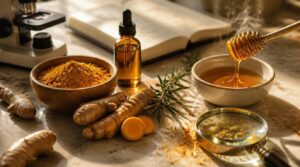
While turmeric appears in countless hair-care recipes, the evidence behind it deserves honest scrutiny. Direct human trials on turmeric and hair growth are limited, and most claims rest on lab data rather than controlled studies in people. Where positive outcomes exist, they’re usually secondary scalp measures, not validated growth endpoints like density or thickness.
For a closer look at what curcumin might actually do for follicle stem cells and scalp health, this guide to turmeric’s hair benefits separates the promising lab findings from the still-unproven claims.
What’s plausible? Curcumin, turmeric’s active compound, modulates inflammatory signaling and reduces oxidative stress, both of which shape the follicle microenvironment. Antimicrobial effects may also calm scalp irritation that contributes to dandruff and shedding.
Understand the boundaries. If benefits occur, they’d emerge after weeks of consistent use, matching hair-cycle timing, not days. Turmeric isn’t a proven replacement for clinically supported hair-loss treatments, especially where hormones, genetics, or immune pathways drive the process. Treat it as a supportive scalp agent, not a regrowth solution.
Treat turmeric as a supportive scalp agent, not a regrowth solution, since any benefits would take weeks and can’t replace proven hair-loss treatments
Turmeric Benefits for Hair and Scalp Health
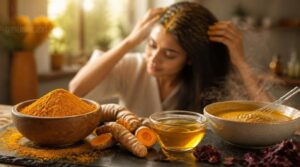
Curcumin, turmeric’s active compound, does more than support growth; it works across multiple scalp conditions and hair processes. Understanding these mechanisms helps you target treatments to your specific concerns, from inflammation to color preservation. Here are the five benefits worth knowing before you mix your first mask.
Scalp Inflammation Relief
A calm scalp is the foundation of healthy hair growth. Curcumin, turmeric’s active compound, suppresses NF-κB signaling, lowering interleukin-6 and TNF-α levels that drive follicle stress. It also inhibits COX-2 activity, easing prostaglandin-mediated swelling and redness.
Applied as a turmeric paste or hair mask, it delivers targeted antiinflammatory relief, while improved microcirculation helps healing.
Especially, curcumin works as a selective phosphorylase kinase inhibitor, blocking a key enzyme that activates NF-κB and drives inflammation after skin injury.
Dandruff And Flaking Control
Flaking and dandruff often follow that same inflammation. Turmeric’s antimicrobial and antifungal treatment properties target Malassezia-linked microbes driving scales, while its antiinflammatory action eases itch.
For a deeper dive into gentle, yeast-targeting approaches, this guide on natural dandruff treatments pairs turmeric with other remedies that calm flakes without harsh chemicals.
But results depend on formulation:
- Longer contact, like leave-on masks, outperforms quick rinses
- Thick, adherent flakes respond poorly
- Residue can mask or worsen flaking
- DIY batches vary in curcumin strength
- Evidence remains modest and scalp-specific
Among natural hair remedies, turmeric helps scalp health best as a complementary, not primary, antifungal treatment.
Hair Growth Support
Here’s where expectations need tempering. Turmeric’s hair growth support is mostly preclinical, not proven. Curcumin doesn’t regenerate follicles directly; instead, it may improve the follicle environment by reducing inflammatory stress that disrupts normal cycling.
Topical hair mask applications concentrate exposure where it matters, though penetration varies by formulation. Treat turmeric as a scalp health aid, not a growth stimulant.
Follicle Stress Protection
Protect your follicles by understanding what stresses them. Curcumin’s antioxidant properties may shield follicle cells from free-radical damage, while its antiinflammatory action helps scalp health. Consider these stress sources:
Pairing that protection with smart, budget-friendly choices matters too, so check out these affordable hair loss remedies that support your scalp without draining your wallet.
- Oxidative damage to follicle cells
- Chronic scalp inflammation
- Systemic metabolic stress
Evidence remains limited, so view turmeric as supportive hair follicle stimulation, not proven protection.
Natural Color Preservation
Because curcumin binds readily to keratin, turmeric can act as a mild natural hair dye, depositing yellow-orange pigment on the cuticle rather than achieving true hair shaft penetration. For blondes and gray hair, that warmth may linger, complicating hair color preservation.
Pair it with clarifying rinses so surface pigment doesn’t accumulate while you’re pursuing hair thinning prevention within your hair growth timeline.
How to Use Turmeric for Hair Growth
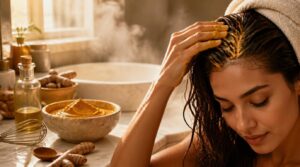
Now that you know what turmeric can do for your scalp, let’s talk application. You’ve got four practical options, from topical masks to supplements, and each suits a different routine and goal. Here’s how to choose the method that fits your hair care plan.
Hair Masks and Oils
An oil-based turmeric mask is the most effective DIY format, since curcumin dissolves in oil rather than water. Mix one teaspoon of turmeric with two tablespoons of warm coconut oil or olive oil, then strain the mixture to remove powder particles that otherwise leave visible residue on your hair shaft.
Apply directly to your scalp, not just your lengths. Massage for two to three minutes to extend contact time, then leave on for thirty minutes before shampooing. This delivers surface-level scalp nourishment rather than deep follicular stimulation, so pair it with consistent cleansing to prevent buildup.
Turmeric Scalp Rinse
Want the fastest way to put turmeric’s anti-inflammatory chemistry to work? Try a scalp rinse.
Simmer one teaspoon of turmeric in two cups of water for ten minutes, cool it, then pour it over clean, damp hair. Massage for three to five minutes to support blood circulation, then rinse thoroughly. Because curcumin dissolves poorly in water, keep contact time generous.
Don’t expect proven hair growth, but you may notice calmer, more comfortable scalp health.
Turmeric Hair Products
Store-bought turmeric hair products save you the mixing, but they’re not all equal.
A turmeric shampoo rinses quickly, so it’s gentler on sensitive scalps than leave-on oils. Check the label for standardized turmeric extract and a clear curcuminoid percentage; vague listings usually mean low potency.
Rinse-off formulas minimize staining, while masks and creams deposit more pigment and stay in contact longer, raising both benefit and irritation risk.
Oral Turmeric Supplements
Swallowing turmeric won’t feed your follicles directly. Plain curcumin has poor oral bioavailability, so many turmeric supplements add piperine or enhanced formulations to boost absorption.
Evidence for hair loss prevention is indirect: curcumin’s anti-inflammatory and antioxidant activity may support follicle cycling, but direct hair-growth studies are limited.
Check the curcumin dosage and standardization on labels, and consult your doctor if you take blood thinners.
Best DIY Turmeric Hair Mask Recipes
If you’re mixing your own turmeric hair mask, keep two goals in mind: enough contact time on the scalp and minimal irritation. The best DIY recipes pair turmeric with fats and emollients, which improve spread, slow rinsing, and buffer the spice’s drying effect.
Try this base recipe: one teaspoon of turmeric powder, two tablespoons of coconut or olive oil, and one tablespoon of yogurt. The oil carries curcumin across the scalp surface while the yogurt softens the paste. Apply to the scalp in sections, leave on for 15 to 20 minutes, then wash fully. Partial leave-ons extend staining without adding benefit.
Keep it simple. Skip lemon, garlic, and essential oils, since these raise irritation risk and can confound your results. Powder strength varies by brand, so start with a small batch and note how your scalp responds before making it a weekly habit.
Turmeric Side Effects, Staining, and Safety Precautions

Even a well-made mask carries risks, so know them before your next application. Turmeric stains come from curcuminoids, and they cling to skin, hair, and fabric. Expect temporary yellow staining that fades within a wash or two, but longer leave-on times deepen the color. Rinse promptly and wash your hands, tools, and towels right away to limit transfer.
Skin sensitivity is the bigger concern. Turmeric can trigger irritant or allergic contact dermatitis, so a patch test behind your ear or on your inner arm is non-negotiable. Watch that spot for 24 to 48 hours. Keep mixtures away from your eyes and mucous membranes, and rinse immediately if burning or redness starts.
If you take turmeric orally, note medication interactions, especially with blood thinners, and use caution with gallbladder disease. Topical and oral exposure behave differently, so treat them separately.
Frequently Asked Questions (FAQs)
What are the big 3 for thinning hair?
Before reaching for remedies, know what actually drives your thinning. The big 3: androgenetic alopecia (DHT-driven), telogen effluvium (stress, illness, deficiency), and traction or styling damage. Identifying yours determines whether scalp health interventions work.
What do the Chinese use for hair loss?
Chinese hair-loss remedies center on black sesame and the herb he shou wu, plus tonic oils. Unlike turmeric hair mask traditions, they target "kidney essence" and blood, not dandruff or curcumin.
What happens if I put turmeric powder in my hair?
When you put turmeric powder in your hair, you’ll likely notice temporary yellow staining, a gritty texture, and possibly mild tingling on sensitive scalps. Rinsing thoroughly removes residue.
Curcumin’s anti-inflammatory and antimicrobial properties may support scalp health, but overuse risks irritation.
Which spice is good for hair growth?
Turmeric helps scalp health through curcumin’s anti-inflammatory and antimicrobial action, easing irritation and flaking. It indirectly aids hair growth by reducing follicle stress. Try a weekly turmeric hair mask, but patch test first.
What other uses does turmeric have beyond hair growth?
What other uses does turmeric have beyond hair growth? Its antioxidant properties support digestion, skin brightening, and anti-inflammatory benefits, while curcuminoids serve as a natural yellow dye and aid natural dandruff remedy routines.
What are the recommended doses of turmeric for hair growth?
Getting the dose right is your golden ticket. Take 500–1,000 mg of curcumin supplements daily, ideally with food and black pepper, since piperine boosts curcumin bioavailability dramatically. Never exceed 8 grams.
Are there any natural alternatives to minoxidil and finasteride?
Yes, and they’re worth understanding clearly. Saw palmetto, pumpkin seed oil, and green tea extract show mild DHT inhibition in small studies, but none match minoxidil alternatives in clinical rigor. They’re supportive tools, not replacements.
Can turmeric be used on color-treated hair?
Here’s the catch: that golden glow can cling. Turmeric may deposit yellow pigment on color-treated hair, especially lightened or porous strands, shifting your tone. Patch-test first, keep contact brief, and prioritize scalp health over bold staining risks.
How long does turmeric take to show results?
Turmeric works slowly. Expect scalp comfort changes within two weeks, but true hair growth takes four to eight weeks, with visible hair density improvement and hair thickness often needing three to six months of consistent use.
For a closer look at how plant oils support scalp health, this guide to patchouli oil benefits for hair explains what to expect at each stage.
Is turmeric safe for children’s hair care?
Is turmeric safe for children’s hair? It can be, but children’s scalp health is more reactive. Use diluted, child-safe products, patch test first, avoid leave-on hair mask treatments, and watch for delayed irritation or staining.
Conclusion
Think of turmeric for hair growth as a supporting player, not the star. It calms the inflammatory fires that quietly damage follicles, and that’s where its real value lives.
Pair it with proven treatments, keep expectations grounded in emerging science, and watch your scalp’s response closely.
Your hair doesn’t need miracles. It needs consistent, evidence-informed care, and turmeric can earn a place in that routine when you use it wisely.