This site is supported by our readers. We may earn a commission, at no cost to you, if you purchase through links.
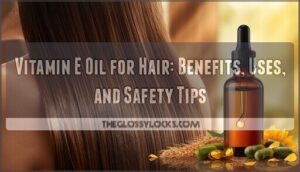
You’ve slathered expensive conditioners on your hair for years, yet split ends persist and shine remains elusive. The missing piece might be sitting in your medicine cabinet: vitamin E oil, a potent antioxidant that neutralizes the free radicals attacking your hair follicles daily.
This nutrient doesn’t just coat your strands—it penetrates the scalp to reduce oxidative stress, the same cellular damage that ages skin and weakens hair from the root. Unlike trendy hair serums with vague promises, vitamin E oil offers measurable protection through its tocopherol compounds, which shield each strand from environmental assault while supporting the biological processes that govern hair growth.
Understanding how to utilize this oil properly separates those who see results from those who waste product.
Table Of Contents
- Key Takeaways
- What is Vitamin E Oil for Hair?
- Key Benefits of Vitamin E Oil for Hair
- How Vitamin E Oil Promotes Hair Growth
- Best Ways to Apply Vitamin E Oil
- Choosing The Right Vitamin E Oil Products
- Dietary Sources and Supplements for Hair Health
- Safety Tips and Potential Side Effects
- Frequently Asked Questions (FAQs)
- Conclusion
Key Takeaways
- Vitamin E oil works as a fat-soluble antioxidant that neutralizes free radicals and reduces oxidative stress on hair follicles, though you’ll need consistent application for six to twelve weeks before seeing measurable improvements in hair strength and reduced breakage.
- You can apply vitamin E oil through scalp massage two to three times weekly, blend it into shampoo at 0.5–1% concentration, or use leave-in treatments on hair ends—but always patch test first since concentrated forms can trigger contact dermatitis or buildup with overuse.
- While topical vitamin E oil directly targets scalp health and may improve blood circulation to follicles, oral supplementation rarely boosts hair growth unless you’re already deficient, and high doses above 15 mg daily increase bleeding risks if you’re taking anticoagulant medications.
- The oil’s tocopherol compounds provide documented benefits for shine, smoothness, and scalp hydration by sealing cuticles and strengthening moisture barriers, but evidence for preventing hair loss or stimulating new growth remains limited and individual results vary significantly by hair type and formulation.
What is Vitamin E Oil for Hair?
Vitamin E oil is a fat-soluble antioxidant extract that you can apply directly to your hair and scalp to help protect against environmental damage. It works by neutralizing free radicals, which are unstable molecules that contribute to oxidative stress and premature aging of hair follicles.
Before you start using it, you’ll want to understand what’s actually in the bottle and which forms work best for hair care.
Composition and Antioxidant Properties
Vitamin E oil contains tocopherols and tocotrienols—powerful antioxidants that shield your hair from oxidative stress. Alpha-tocopherol, the most studied form, fights lipid peroxidation by protecting cell membranes around follicles. These antioxidant mechanisms reduce reactive oxygen species on your scalp, creating a healthier foundation for growth.
Think of tocopherol benefits as your hair’s defense system against environmental damage. Understanding dictionary definitions can also help in exploring the scientific terms related to Vitamin E oil.
Types of Vitamin E Oil Used in Hair Care
When you scan ingredient labels, you’ll spot several vitamin E derivatives formulated for hair care. Here’s what manufacturers commonly include:
Many leave-in conditioners for shine combine vitamin E with keratin to deliver both protective antioxidants and structural repair in one formula.
- Tocopherol variants (alpha, beta, gamma, delta) deliver broad antioxidant properties from plant sources like sunflower and soybean.
- Tocopheryl acetate offers stability in shampoos with extended shelf life.
- Synthetic forms (dl-alpha-tocopherol) provide cost-efficient antioxidant protection.
- Natural blends from wheat germ combine multiple esterified compounds for cosmetic benefits of vitamin E.
Each type brings unique vitamin E benefits for hair through different molecular structures.
Key Benefits of Vitamin E Oil for Hair
Vitamin E oil offers several documented advantages for your hair, though the strength of evidence varies across different outcomes. These benefits range from protecting against oxidative damage to improving the physical appearance of your strands.
Below, you’ll find the key ways vitamin E oil may support healthier hair.
Pairing vitamin E with complementary ingredients like aloe or green tea—especially in after-sun skincare routines—can amplify its protective benefits for both skin and hair.
Preventing Hair Loss
Oxidative stress can weaken your follicles over time, and that’s where Vitamin E Oil steps in with its antioxidant properties. By reducing lipid peroxidation on your scalp, it offers follicle protection that may slow hair loss in some cases.
Scalp health improves when vitamin E stabilizes cell membranes and aids microcirculation. While it won’t replace proven therapies for androgenetic alopecia, consistent use may support hair regeneration.
Pairing vitamin E with nutrient-rich carrier oils like baobab oil for hair growth can further nourish the scalp and strengthen follicles.
Enhancing Shine and Smoothness
Beyond preventing loss, your hair craves a polished finish. Vitamin E oil excels at hair surface smoothing through cuticle sealing, which boosts shine enhancement by reflecting more light.
Its emollient action reduces frizz and aids gloss retention when you use small amounts on ends.
Proper moisturizing protects against hair breakage while maintaining scalp health, giving you that sleek, luminous look without weighing strands down.
Pairing moisture with the right nutrients matters too—certain vitamins to prevent hair loss can strengthen follicles from within and support long-term growth.
Improving Hair Strength and Elasticity
Resilience matters when you’re fighting daily damage. Vitamin E oil bolsters hair strength through antioxidant action that shields keratin protection from lipid breakdown:
- Aids keratinocyte function to reinforce strand resilience
- Reduces oxidative stress that weakens follicle health
- May improve tensile strength, though results vary by formulation
- Mitigates breakage reduction through anti-inflammatory effects
- Concentration-dependent; excessive use can irritate sensitive scalps
Evidence shows modest improvements in hair fiber repair, yet individual responses differ. Scientific study summaries, such as those audited for methodological rigor, highlight the importance of rigorous testing in understanding the effects of various treatments.
Supporting Scalp Health
Your scalp sets the stage for everything that grows from it. Vitamin E oil helps protect scalp cells from oxidative stress through its antioxidant effects, reducing inflammation that can compromise hair follicles. Tocopherol-rich formulations improve scalp hydration by strengthening the moisture barrier, which fosters healthier hair care routines and may reduce scalp irritation linked to dermatitis.
| Scalp Treatment Benefit | Mechanism of Action |
|---|---|
| Reduces oxidative stress | Antioxidant protection shields cells |
| Improves scalp hydration | Enhances moisture barrier function |
| Decreases inflammation | Calms irritation and redness |
| Supports hair follicle health | Creates balanced scalp environment |
How Vitamin E Oil Promotes Hair Growth

Vitamin E oil works through specific biological pathways that support the hair growth cycle. Understanding these mechanisms can help you set realistic expectations about what topical application can—and can’t—accomplish.
The following sections explain how vitamin E interacts with your scalp environment to create conditions that favor healthier hair.
Reducing Oxidative Stress on The Scalp
Your scalp’s defense against damage starts at the cellular level. Vitamin E oil acts as a lipid-soluble antioxidant, shielding hair follicles from reactive species that accelerate aging and weaken follicle health.
When you apply topical formulations, you’re boosting scalp antioxidants that combat oxidative stress and lower inflammatory markers.
Studies suggest combining vitamin E with other antioxidants creates synergy, enhancing oxidative damage protection and supporting overall scalp health.
Improving Blood Circulation to Hair Follicles
When nutrients can’t reach your hair follicles, growth stalls. Scalp massage with vitamin E oil may temporarily boost blood flow and vasodilation, improving nutrient delivery to follicles.
This antioxidant-rich approach bolsters scalp health by boosting local microcirculation. While evidence remains preliminary, pairing topical application with aerobic exercise could increase systemic perfusion, creating conditions that favor follicle health and hair growth.
Stimulating Healthy Hair Regeneration
Your hair follicles operate like miniature factories, and vitamin E oil may keep the production line running smoothly. By protecting keratinocyte function and modulating inflammatory mediators in the scalp environment, this antioxidant therapy could support healthier hair regeneration.
While direct evidence for growth stimulation remains limited, tocotrienol-rich formulations show promise in maintaining follicle health through lipid peroxidation reduction and antioxidant protection.
Best Ways to Apply Vitamin E Oil
You can apply vitamin E oil in several ways, depending on your hair type and how much time you have. The key is choosing a method that fits your routine and lets the oil work without causing buildup or irritation.
Here are three practical techniques to get the most from topical vitamin E.
Scalp Massage Techniques
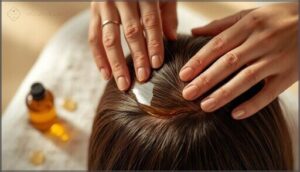
Applying vitamin E oil through gentle massage techniques can boost scalp health and support hair follicle function. Use light-to-moderate pressure in circular motions for 2–3 minutes per area to improve blood flow without causing irritation.
- Start with clean, lightly oiled fingertips and focus on posterior, temporal, and crown regions
- Alternate clockwise and counterclockwise strokes to engage different scalp areas
- Practice massage frequency of 2–3 times weekly for cumulative relaxation techniques and hair growth benefits
Adding to Shampoo or Conditioner
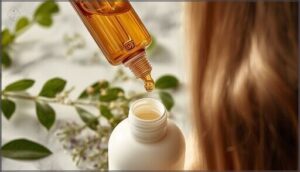
You can blend vitamin E oil directly into your shampoo or conditioner at 0.5–1% of total volume to support scalp health and reduce hair breakage. Shampoo formulation and conditioner compatibility matter—choose products with stable oil phases and test for scalp sensitivity first.
Cold-pressed vitamin E blending preserves oil stability, while proper storage protects antioxidant potency and prevents rancidity in your hair care routine.
Leave-in and Rinse-Out Methods
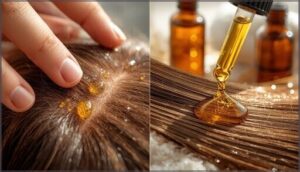
Beyond mixing vitamin E oil into your shampoo or conditioner, you can choose leave-in products or rinse-out methods depending on your hair type and scalp health goals. Leave-in vitamin E oil treatment promotes hair growth and reduces hair breakage when applied sparingly, while rinse-out methods prevent buildup and work well for scalp massage during your hair care routine.
- Apply leave-in products to ends 1–2 times weekly to minimize greasy residue
- Use rinse-out hair masking for 5–15 minutes on damp hair oil treatment sessions
- Combine with carrier oils for better spreadability during scalp massage techniques
Choosing The Right Vitamin E Oil Products
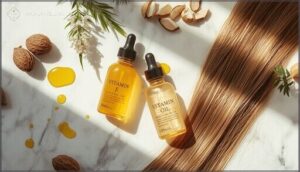
Selecting a vitamin E oil product requires you to understand the difference between pure formulations and those blended with carrier oils or other active ingredients.
Each type offers distinct advantages depending on your hair’s texture, scalp condition, and how you plan to use it.
The choice between pure and blended formulas can determine whether you achieve your desired results or experience unwanted side effects.
Pure Oils Vs. Blended Formulas
You’ll find pure vitamin E oil boasts higher tocopherol concentrations—often measured in percent by weight—but blended formulas combine vitamin E with carrier options like jojoba or coconut oil to improve spreadability and reduce irritancy. Blends also incorporate stabilizers that extend shelf life and boost blend stability.
Both formulation tips matter for hair care: pure oils deliver potent antioxidant effects, while natural hair remedies in blends support hair growth with better scalp coverage.
Dietary Sources and Supplements for Hair Health

Getting vitamin E into your system through food and supplements can support hair health from the inside out, which often works better than topical treatments alone. Your diet plays a bigger role than you might think in creating the conditions your hair follicles need to function properly.
Below, we’ll walk through the best dietary sources, how oral supplementation compares to topical application, and what the evidence actually shows about systemic versus surface-level benefits.
Foods Rich in Vitamin E
You can fuel your hair health from the inside out by choosing vitamin E-rich foods that pack real antioxidant power. Almonds deliver about 26 mg per ounce, while sunflower seeds provide 7.4 mg per tablespoon. Hazelnuts, spinach, and avocado are solid vitamin E sources too.
These dietary planning choices support nutrient absorption and offer food benefits beyond what topical vitamin E oil alone can achieve.
Oral Supplements and Their Effects
The promise of vitamin E supplementation for hair growth remains underwhelming in clinical hair growth studies. Most randomized controlled trials show minimal oral benefits unless you’re actually deficient—which is rare.
Consider these key intake guidelines and supplement risks:
- Recommended dietary supplements for hair shouldn’t exceed 15 mg daily for adults
- High vitamin E dosage can increase bleeding risk with blood thinners
- Antioxidant nutritional supplements rarely boost hair growth in well-nourished individuals
- Oral vitamin E oil won’t outperform a balanced diet
Systemic Vs. Topical Benefits
When you swallow vitamin E, it travels through your bloodstream to hair follicles, influencing antioxidant delivery from within—systemic effects that topical absorption can’t match. Yet, topical vitamin E oil targets scalp health directly with minimal systemic risks. Bioavailability factors differ dramatically between routes, shaping both hair follicle health outcomes and safety profiles for antioxidant hair care and hair growth strategies.
| Route | Bioavailability Factors | Primary Benefit |
|---|---|---|
| Oral | Circulates systemically via plasma | Reaches follicles through blood |
| Topical | Limited systemic absorption | Direct scalp health support |
| Combined | Dual-pathway delivery | Full-spectrum antioxidant coverage |
Safety Tips and Potential Side Effects

Vitamin E oil offers real benefits for your hair, but it’s not without risks if you don’t use it wisely. Taking too much—whether topically or orally—can lead to unwanted side effects, and it may interact with medications you’re already on.
Here’s what you need to know to stay safe while getting the most from this powerful antioxidant.
Dosage Guidelines and Overuse Risks
You don’t want to drench your scalp in vitamin E oil thinking more equals better—that’s a fast track to irritation and buildup. Safe dosage for topical use means just a few drops per application; concentrated forms can trigger contact dermatitis or interfere with follicular health if overused. While vitamin E benefits include antioxidant protection against hair breakage, overdoing it risks vitamin E toxicity symptoms like redness or itching.
With vitamin E oil, a few drops go a long way—overdoing it invites irritation, buildup, and toxicity symptoms instead of healthier hair
- Patch test first: Apply a small amount to your inner wrist and wait 24 hours to check for irritation prevention before broader scalp use.
- Watch for overuse symptoms: Burning, swelling, or grease accumulation signal you’ve crossed topical limits and need to scale back immediately.
- Stick to recommended amounts: A quarter-sized dollop of diluted oil is usually sufficient; daily use of pure concentrations can backfire with buildup.
Interactions With Medications
If you’re on blood thinners or anticoagulants, vitamin E oil isn’t as harmless as it seems—high-dose vitamin E dosage amplifies bleeding risks by interfering with clotting pathways. Drug interactions extend to warfarin and antiplatelet meds, where antioxidant loading shifts how your body metabolizes these drugs.
Before adding vitamin E oil to your hair health routine, consult your dermatologist to dodge medication risks and protect against hair loss safely.
Frequently Asked Questions (FAQs)
Can vitamin E oil help with dandruff control?
An ounce of prevention beats a pound of cure. Vitamin E oil may soothe an itchy, flaky scalp through moisturization and antioxidant benefits, though clinical evidence linking it directly to dandruff causes remains limited.
How long until results become visible on hair?
You’ll notice shine enhancement and scalp improvement within two to four weeks of consistent use.
Hair strength and visible results for reduced breakage usually emerge after six to twelve weeks with vitamin E oil for hair.
Does vitamin E oil work on all hair types?
Vitamin E oil doesn’t guarantee uniform results across all hair types. Dry or damaged strands may absorb moisture better than oily hair, while fine textures can feel weighed down—scalp sensitivity and hair porosity matter too.
Should vitamin E oil be refrigerated after opening?
Most formulations don’t require refrigeration needs—room temperature storage in a cool, dark place preserves oil stability and shelf life.
Always check product expiration labels, since some blends benefit from cold storage to maintain antioxidant potency.
Conclusion
Your hair’s fate hinges on one decision: will you continue buying products that mask damage, or address the oxidative stress causing it? Vitamin E oil for hair offers targeted cellular protection when applied correctly—scalp massages twice weekly, patch-tested first, never exceeding recommended concentrations.
The distinction between transformation and disappointment lies in consistent, informed use. Your follicles regenerate every three months, giving you a fresh opportunity to strengthen what grows next. Start now.