
This site is supported by our readers. We may earn a commission, at no cost to you, if you purchase through links.

A razor’s edge gets most of the credit, but lather does the quiet, essential work—softening the beard, protecting the skin, letting the blade glide instead of dragging. Get it wrong, and even the finest DE razor feels like sandpaper.
Most wet shavers who struggle with irritation, nicks, or that uncomfortable tuggy pull aren’t dealing with a blade problem at all; they’re dealing with a lather problem.
Bad water balance, a dry brush, a rushed loading technique—small missteps that compound fast.
Fixing wet shaving lather mistakes often turns a frustrating shave into a genuinely pleasant one.
Table Of Contents
Key Takeaways
- Lather quality—not blade choice—is the most common root cause of irritation, nicks, and that uncomfortable tuggy drag most wet shavers blame on their razor.
- Water balance, brush soak time, and soap loading are the three variables that make or break your lather before the blade ever touches your face.
- Recognizing warning signs early—runny foam, dry flakes, or lather that vanishes mid-pass—let you correct the issue in seconds rather than enduring a rough shave.
- pre-shave prep, the right brush for your soap type, and small mid-shave adjustments like adding water drops between passes are what separate a frustrating shave from a genuinely smooth one.
Common Wet Shaving Lather Mistakes
Most lathering problems come down to a handful of habits that are easy to overlook, especially when you’re still getting a feel for the process. The good news is that once you can name the mistake, fixing it is usually straightforward.
Here are the most common ones worth knowing.
Using Too Much or Too Little Water
Getting the water balance right is where most beginners stumble. Too much, and your lather turns soupy — large, unstable bubbles that collapse mid‑shave and leave skin exposed. Too little, and you’re dragging paste across your face.
Finding that sweet spot takes practice, but this guide to perfect shaving cream consistency breaks down exactly what to look for before the razor ever touches your face.
Lukewarm water is your baseline, but factor in water hardness impact and seasonal water adjustments, since hard tap water and dry winter air both shift how your soap hydrates and holds. A proper lather bowl helps maintain temperature and consistency, so be sure to use a lather bowl.
Loading Insufficient Soap or Cream
Water balance matters, but brush loading time is just as likely to sabotage your lather. Most shavers rush this step — a 30-to-60-second swirl with even loading pressure is the real target. Watch for the bristle caking indicator: tips fully coated, no bare spots. Skimp on soap saturation level, and your lather quality suffers fast — thin, breakable, zero glide.
Using artisan soap helps achieve a dense, glossy lather that cushions the skin.
Skipping Pre-Shave Preparation
Even perfect soap loading won’t save you if your face isn’t ready. Skipping pre‑shave preparation is one of those shaving mistakes that compounds fast — dry skin irritation, stubble hardening, residue buildup, and pore closure effects all stack against you before the blade even touches your face.
Skipping pre-shave prep lets dry skin, hardened stubble, and clogged pores defeat you before the blade arrives
- Pre shave soap softens overnight stubble, reducing blade skipping considerably
- Warm water opens pores, improving lather quality and skin protection
- Cleansing removes residue that creates gritty, uneven lather spread
- Addressing lubrication deficiency early improves your overall shaving technique
Ignoring Brush Preparation
Your face is ready — but is your brush? Brush preparation is one of those shaving mistakes that quietly ruins your lather before it starts.
Brush soak timing matters: badger needs 2–5 minutes, boar needs 5–10, synthetics just 30 seconds. Bristle bloom benefits your lather’s cushion directly.
Shake gently 3–5 times for proper excess water removal, and keep water temperature impact in mind — anything above 40°C risks weakening the knot.
Using Incorrect Lathering Technique
Technique is where most Lathering Methods fall apart.
Circular motion errors, wrong brush pressure issues, and whipping speed mistakes all quietly sabotage an otherwise solid setup.
Even small technique flaws hit harder when your lather thins out, so mastering thick, rich shaving lather gives you the cushion to correct them mid-shave.
Keep these Wet Shaving Techniques in mind:
- Use figure-eight or J-strokes — not repetitive circles
- Apply gentle pressure; pressing hard bends bristles unevenly
- Whip under one minute to avoid airy, collapsing foam
Bowl‑face technique confusion compounds every other Shaving Mistake.
Signs Your Lather is Not Right
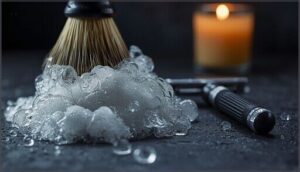
Bad lather doesn’t always announce itself loudly — sometimes it just quietly ruins your shave. Learning to read the warning signs early saves your skin a lot of unnecessary grief.
Here’s what to watch for.
Dry, Flaky, or Sticky Lather
Dry, flaky, or sticky lather is one of those shaving mistakes that sneaks up on you. Ambient humidity control matters more than most shavers realize — a dry bathroom pulls moisture straight out of your concoction. Water hardness impact compounds this, with calcium deposits disrupting your soap concentration ratio. Brush bristle softness affects absorption too, leaving paste instead of silk.
| Lather Problem | Likely Cause | Quick Fix |
|---|---|---|
| Dry, crumbly flakes | Low ambient humidity | Steam up your bathroom first |
| Sticky, paste-like texture | High soap concentration ratio | Add water drops gradually |
| Rough, tuggy feel | Water hardness impact | Try distilled water |
| Stiff peaks that collapse | Temperature shock effects | Use consistent lukewarm water |
| Bristles won’t release cream | Brush bristle softness mismatch | Soak brush 60 seconds longer |
Recognizing these signs early saves your shaving cream — and your skin.
Thin, Runny, or Watery Lather
When your lather slides off the brush like water off a raincoat, water temperature control and brush dampness level are usually the culprits. Too much moisture drowns your shaving soap’s structure before it ever builds up.
Watch for these telltale signs:
- Lather drips down the handle when the shaving brush rests upright
- Product water content feels slick but offers zero cushion
- Shaving cream thins out the moment it touches your face
- Face moisture management breaks down — lather slides instead of clinging
- Lather consistency testing reveals no body, just foam
Lather Breaking Down Too Quickly
Your shaving cream might look perfect in the bowl, yet vanish on your cheek before the razor arrives — that’s lather breaking down too quickly.
Hard water’s mineral hardness attacks soap structure, while low glycerin content speeds evaporation. Excess air incorporation creates unstable bubbles that collapse fast. Lather temperature matters too: hot water accelerates drying.
Rehydration between passes with a damp shaving brush corrects this common shaving mistake.
Lack of Cushion or Glide
Poor cushion density and slickness balance are two signs most shavers overlook until the razor tells them otherwise — through drag, heat, and irritation. When blade‑skin friction rises, you’re not dealing with a technique problem alone; the lather itself is failing.
Airy foam with poor air bubble control collapses under the blade, killing glide retention fast. Fix shaving brush types and shaving pressure before blaming the razor.
How to Achieve The Perfect Lather
Getting the lather right comes down to a few fundamentals—none of them complicated, all of them worth getting right.
Once you understand what each step actually does, the whole process clicks into place. Here’s what to focus on.
Choosing The Right Soap or Cream
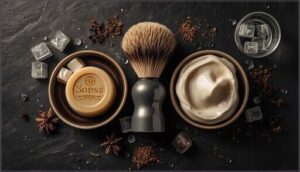
Your soap or cream choice shapes everything that follows. Skin type match matters — dry skin thrives with glycerin‑rich formulas, while oily or acne‑prone skin needs lighter, non‑comedogenic options. Fragrance considerations are equally real; synthetic perfumes can quietly cause redness or tightness. Water hardness compatibility determines lather stability, too. Keep these in mind:
- Shaving soap rewards patience and delivers dense, structured lather
- Shaving cream lathers faster — ideal for sensitive skin or travel‑friendly formats
- Ingredient sensitivity means shorter, cleaner ingredient lists usually win
Correct Water Temperature and Amount

Water temperature shapes your lather more than most people expect. The lukewarm standard — roughly 85 to 100°F — hydrates beard hairs without stripping skin oils, a key shaving tip most beginners overlook.
Temperature impact is real: too hot and lather breaks down fast; too cold and it turns stiff. For best volume, add water in measured drops, not splashes.
Proper Brush Loading and Soaking
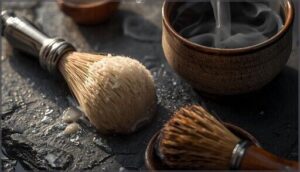
Just as water temperature sets the stage, your brush prep determines how the whole performance plays out. Skipping proper soak time is one of the shaving mistakes to avoid above all else.
- Badger Brush Soak — one minute in warm water is enough; bristles load soap evenly without pulling moisture from your lather mid‑pass.
- Boar Brush Timing — give it two to three minutes; stiff, under‑softened tips drag across skin and chew through your pre‑shave soap work.
- Synthetic Brush Warmup — a quick rinse under warm water does the job; synthetics don’t absorb, so loading pressure control matters more than soaking duration.
- Soap Thirst Calibration — every shaving brush and soap pairing behaves differently; repeated use with the same product teaches you exactly how damp to leave the knot for consistent, glossy lather.
Adjusting Technique for Face or Bowl Lathering

Once brush is loaded right, the method you choose shapes everything else.
Face lathering gives you direct feedback interpretation — you’ll feel instantly if the lather is dragging or over‑slick.
Bowl lathering rewards patience and pressure variation, letting you dial in stroke rhythm without scrubbing sensitive skin.
Temperature tweaks between bowl vs face approaches help you master both shaving techniques and sidestep common shaving mistakes.
Solutions to Fix Lathering Mistakes
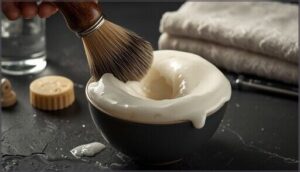
Even the best shavers run into lather trouble — and the good news is, most problems have a straightforward fix.
Whether your lather’s gone paste-like or turned into a watery mess, the solution usually comes down to one or two small adjustments.
Here’s how to diagnose and correct the most common lathering mistakes.
Reviving Dry or Paste-Like Lather
Paste-like lather isn’t a lost cause — it just needs a little coaxing. The Load Hydrate Sequence works beautifully here: let your shaving brush deliver hydration gradually, timing each water drop about 10 seconds apart until creamy peaks form.
For mid-shave dry spots, the Brush Tip Hydration method or a quick Bowl Spritz Technique revives your shaving soap or shaving cream in under 30 seconds.
Thickening Watery or Runny Lather
Runny lather almost always traces back to two culprits: too much water added too fast, or not enough soap loaded onto your shaving brush.
Tighten your Brush Water Control by adding moisture in tiny drops, then extend your Soap Loading Time to 30 seconds or more.
Steady Mixing Rhythm — no fast whipping — reduces Air Incorporation, coaxing your shaving soap or shaving cream into that dense, yogurt-like consistency, wet shaving rewards.
Troubleshooting Brush and Product Issues
Sometimes the problem isn’t your technique — it’s your tools fighting each other. A stiffer boar shaving brush on a soft shaving cream, or a dense badger knot drowning a delicate artisan shaving soap, quietly kills lather volume before you’ve started. Hard water remedies like switching to distilled water can transform your results overnight. Watch for these brush and product mismatches:
- Brush shedding solutions: soak only to the knot base — never over the handle — to protect the glue plug
- Synthetic-natural match: synthetics need far less shaving cream than natural hair knots, so dial back your load
- Product compatibility tips: hard pucks pair with stiff boar; soft creams work better with low-absorbency synthetic fibers
Step-by-Step Lather Adjustment Tips
Think of wet shaving as a slow conversation between your shaving brush and your shaving cream — you adjust, it responds. Start with Water Drop Timing: add drops every 15–20 seconds, whipping between additions.
Watch for Texture Visual Cues, that glossy, yogurt‑like sheen. Keep Brush Whip Rhythm steady rather than frantic. These shaving tips, plus smart Product Load Ratios and Temperature Fine‑Tuning, keep your lather dialed perfectly in.
Lathering Tips for a Smoother Shave
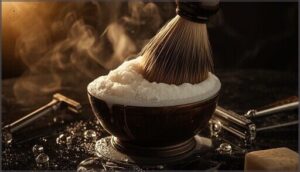
Good lather only gets you halfway there — the rest depends on how you prep, build, and maintain it from start to finish.
Targeted habits can make the difference between a rough shave and a genuinely smooth one.
Here’s what to keep in mind before you pick up that razor.
Pre-Shave Skin and Beard Preparation
Before your razor even touches your face, the prep work decides everything. Warm water cleansing softens your beard and clears debris, while hot towel softening — held on for two to three minutes — hydrates stubborn hair cuticles down to the root. Layer in a good pre‑shave oil and your skin care routine becomes armor against irritation.
- Warm water (98–104°F) with your face for a full two to three minutes
- Hot towel soaked around 100–110°F to open pores and soften stubble
- Work a dime‑sized drop of pre‑shave oil into the beard using circular motions
- Follow an exfoliation routine weekly to clear dead skin blocking follicles
- Don’t neglect neck area hydration — coarse neck hairs cause the worst razor burn
Building Lather for Sensitive Skin
Sensitive skin doesn’t forgive shaving mistakes — ingredient selection matters more than most beginners realize.
Reach for glycerin-rich shaving soap or fragrance-free shaving cream with aloe or oat, since these build a thick, frosting-like lather, your shaving brush delivers smoothly without disrupting skin pH balance.
Water temperature nuance counts here too — lukewarm, never hot.
Do a quick lather consistency testing on your hand before each pass.
Maintaining Consistent Lather During Shave
Lather doesn’t stay perfect on its own — it needs tending, like a low simmer you keep an eye on. For brush hydration timing, dip just the tips into warm water every pass, adding mid‑shave water drops one at a time to maintain that creamy glide.
Humidity impact is real too — close the bathroom door to trap steam, preserving your shaving cream’s consistency. Smart lather storage technique, like floating your bowl in hot water, keeps temperature consistency locked in throughout every wet shaving pass.
Cleaning and Caring for Shaving Tools
Your tools deserve the same care as your technique.
After each shave, rinse your shaving brush — badger or synthetic — bristles down under warm water, then hang it to dry.
For blade rust prevention, dry your razor thoroughly and apply an oil lubrication routine monthly.
Follow a mug sanitation schedule weekly, and practice storage humidity control by keeping everything in a ventilated cabinet, not the damp shower shelf.
Frequently Asked Questions (FAQs)
Does hard water impact shaving lather quality?
Yes, hard water absolutely affects your lather quality.
Dissolved calcium and magnesium ions trigger Mineral Scum Formation, binding to Shaving Soaps and blocking the creamy, stable foam your Wet Shaving routine depends on.
Which brush bristle type lathers soap best?
Synthetic backbone makes loading Shaving Soap fast and forgiving, while a Badger Brush delivers rich Badger moisture for creamy lather.
After Boar Brush break‑in, a Boar Brush holds its own — but beginners win with synthetic.
How does altitude affect shaving lather consistency?
Altitude quietly sabotages your lather. Lower pressure and dry air cause faster evaporation, so add water more often, use a tallow-based soap, and shave immediately after building lather.
Conclusion
A craftsman doesn’t blame his chisel when the wood splinters—he examines his preparation, his angle, his pressure.
Lather works the same way.
Every wet shaving lather mistake you’ve corrected—too dry, too thin, too rushed—has quietly sharpened your instincts.
Now your brush loads with purpose, your water balance feels natural, and your blade finally glides the way it was meant to.
The razor gets the glory, but you know where the real work happens.
- https://www.razoremporium.com/bloglathering-101-how-to-correctly-lather-when-wet-shaving
- https://www.classicshaving.com/blogs/shaving101-com/201-shaving-lather-too-dry-too-wet-just-right
- https://www.artofmanliness.com/style/shaving/shaving-mistakes/
- https://cuttersyard.com/the-5-wet-shaving-mistakes-you-need-to-cut-out/
- http://www.reddit.com/r/wicked_edge/comments/oawmo/dear_wicked_edge_im_about_ten_shaves_in_and_ive/