
This site is supported by our readers. We may earn a commission, at no cost to you, if you purchase through links.
Your shower suddenly delivers a pathetic trickle when you’re expecting a strong, satisfying spray. That weak flow isn’t just annoying—it signals real problems lurking in your plumbing system.
Low water pressure in showers stems from identifiable causes: mineral deposits clogging your showerhead, corroded pipes restricting flow, hidden leaks stealing pressure, or faulty valves that won’t open completely. Sometimes the issue originates with your municipal water supply, but most pressure problems trace back to fixable issues inside your home.
Understanding what’s throttling your water flow puts you in control. Once you know the culprit, you can tackle it with targeted fixes that restore your shower’s full force.
Table Of Contents
- Key Takeaways
- Common Causes of Low Shower Water Pressure
- How Mineral Deposits Affect Water Pressure
- Identifying Pipe Corrosion and Blockages
- Showerhead Problems That Lower Pressure
- How to Test Your Shower’s Water Pressure
- Valve and Regulator Issues in Showers
- Hot Water Vs. Cold Water Pressure Differences
- DIY Fixes to Improve Shower Water Pressure
- When to Call a Professional Plumber
- Preventing Future Low Water Pressure Problems
- Frequently Asked Questions (FAQs)
- Conclusion
Key Takeaways
- Low shower pressure stems from four main culprits you can identify: mineral deposits clogging your showerhead, corroded pipes restricting flow, hidden leaks stealing pressure before water reaches your fixture, or valves that aren’t fully open.
- Hard water minerals build up silently over months, narrowing pipe diameter by 10-50% and choking flow at spray holes—regular descaling with vinegar and installing a water softener stops this cycle before it damages your system.
- You can diagnose most pressure problems yourself by testing with a pressure gauge (healthy readings fall between 40-60 PSI) or timing how long it takes to fill a bucket (standard flow should hit 2.0-2.5 GPM).
- DIY fixes like cleaning showerheads, flushing sediment from your water heater, and confirming all valves are fully open solve most pressure issues, but persistent problems after these steps mean it’s time to call a licensed plumber for hidden leaks or pipe replacement.
Common Causes of Low Shower Water Pressure
Low water pressure in your shower doesn’t just happen out of nowhere. It’s almost always caused by one of a handful of common problems that restrict water flow in your plumbing system.
Here’s what you’re up against.
Mineral Buildup in Showerheads
Mineral deposits are a silent saboteur of your shower’s performance. Hard water carries calcium and magnesium that precipitate as scale on showerhead orifices, blocking water flow. You’ll notice uneven spray patterns, reduced GPM, and sometimes whistling sounds. White, chalky buildup on nozzles confirms the problem.
Hard water doesn’t just clog your showerhead—it also coats your strands with mineral buildup that leads to hair breakage and split ends.
Regular descaling with vinegar or citric acid dissolves these deposits and restores your shower’s original pressure. Understanding the importance of scientific study rigor can help in identifying similar issues in other systems.
Corroded or Clogged Pipes
Beyond your showerhead, corroded pipes or clogged drains choke water flow inside your walls. Brown or rust-colored water signals pipe corrosion, while mineral deposits narrow the passage like arterial plaque. Galvanized steel and older copper lines are prime suspects after 20+ years. Regular pipe maintenance helps you dodge expensive replacements down the line. Understanding language patterns can also help in identifying complex issues with pipe materials and corrosion.
- Discolored water indicates severe pipe corrosion
- Pinhole leaks reveal deteriorating pipe materials
- Mineral buildup reduces internal pipe diameter
- Aging systems (20+ years) face higher corrosion risk
Leaks in Plumbing
Pipe corrosion can crack open hidden leaks that drain pressure before water reaches your showerhead. A damp spot on your wall or an unexplained puddle signals trouble lurking behind finished surfaces. You’ll notice higher water bills and that persistent sound of running water when everything’s supposedly off.
| Leak Type | Warning Signs | Pressure Impact |
|---|---|---|
| Pinhole leaks | Moisture stains, mold growth | Gradual pressure drop |
| Hidden supply line breaks | Unexplained puddles, damp walls | Severe pressure loss |
| Underground leaks | Meter runs when fixtures off | Affects entire home |
| Corroded joints | Rust spots, dripping sounds | Intermittent low pressure |
| Slab leaks | Warm floors, foundation cracks | Persistent pressure issues |
Leak detection and repair protect you from water waste and structural damage.
Faulty or Partially Closed Valves
Your plumbing system hides several valves that secretly control shower pressure. A partially closed shutoff valve chokes water flow before it reaches your showerhead, while a worn mixing valve can’t balance hot and cold supply properly.
Check these critical points:
- Main house shutoff valve left partially open
- Water meter valve not fully turned
- Shower mixing valve clogged with mineral deposits
- Pressure balancing valve worn from age
- Inlet valves restricted by debris buildup
Valve inspection reveals most low water pressure mysteries quickly.
Water Supply Issues
Sometimes your home’s plumbing works fine, but the municipal pressure feeding your property falls short. Utility maintenance, peak demand, or pressure regulator failures at your water meter can restrict flow before water reaches supply lines.
Check if neighbors experience similar drops—that signals upstream problems. Flow restrictions from a misconfigured water pressure regulator or undetected leaks in the service line also starve your shower of adequate pressure.
How Mineral Deposits Affect Water Pressure
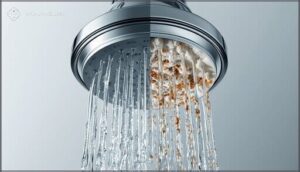
Mineral deposits don’t just appear overnight—they build up slowly in your pipes and showerhead, choking off water flow before you realize what’s happening. Hard water carries dissolved minerals that crystallize into stubborn scale, and once that scale takes hold, your water pressure drops.
If you’ve noticed brassy, orange, or yellow tones creeping into your blonde, the same mineral buildup might be staining your strands—here’s how to remove brassy tones from blonde hair caused by hard water exposure.
Here’s what you need to know about how these deposits form, how to remove them, and how to stop them from coming back.
Hard Water and Scale Formation
Hard water carries calcium and magnesium ions that precipitate out as scale formation on your showerhead and inside pipes. This mineral buildup narrows the bore, throttles flow, and can start accumulating within just months of exposure.
Water softening systems reduce these minerals before they reach your fixtures, cutting scale potential and protecting your plumbing from progressive flow restrictions.
Cleaning and Descaling Techniques
You can break down mineral deposits with distilled white vinegar. Soak your showerhead overnight to dissolve calcium carbonate buildup, then scrub lodged scale with a soft brush.
Commercial descaling solutions tackle heavy lime without damaging chrome finishes. For clogged pipes deeper in the line, flushing with descaling agents restores flow.
For homes where low pressure persists even after descaling, specialized shower heads for low water pressure can dramatically improve your daily shower experience.
Always rinse thoroughly after treatment to clear chemical residue and restore normal shower performance.
Prevention Tips for Mineral Buildup
Stop mineral buildup before it starts by installing a water softener in your home. These systems treat hard water at the source, reducing scale formation on your showerhead and fixtures.
Use inline filters with anti-scale media to capture deposits before they clog your shower. Regular showerhead maintenance—cleaning every month—prevents low water pressure.
Monitor local water hardness to adjust your descaling methods accordingly.
Identifying Pipe Corrosion and Blockages
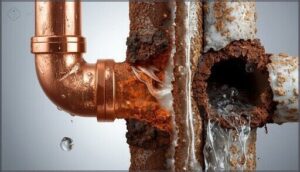
Corroded pipes and hidden blockages are silent pressure thieves that work against you from behind your walls. You can’t fix what you can’t identify, so knowing the warning signs gives you control over your plumbing before small issues become expensive disasters.
Here’s what to look for when diagnosing pipe problems in your system.
Signs of Corroded Pipes
You’ll spot pipe corrosion through distinct warning signs in your plumbing system. Rusty water or brownish-red discoloration signals metal deterioration from iron oxide buildup. Look for visible flaking or pitted surfaces on exposed pipes.
Water discoloration after periods of inactivity, metallic odors, and pressure fluctuations all point to corroded pipes causing low water pressure. These signs demand immediate attention to prevent further plumbing system damage.
How Blockages Restrict Water Flow
Blockages work like crimps in a garden hose—they narrow the pipe’s cross-section and strangle your flow rate. Mineral-scale buildup and sediment from corroded pipes can slash water volume by 10–50%, dropping pressure at your showerhead fast.
Blockages crimp your pipes like a garden hose, slashing water flow by up to 50% before it reaches your showerhead
Debris lodges at bends, creating friction that further restricts flow. The valve can’t compensate for a clogged line, so pipe clearance and blockage removal are essential for pressure restoration.
Pipe Material and Lifespan
Your pipe’s material determines how long it delivers reliable water flow before corrosion chokes your plumbing system. Copper pipes last 50–70 years, while galvanized steel corrodes in 20–50 years—water chemistry and pH accelerate the damage. PVC lasts 25–40 years, and PEX reaches 40–50 years.
Once pipe corrosion and repair needs arise, low water pressure follows, signaling it’s time for pipe replacement.
Showerhead Problems That Lower Pressure
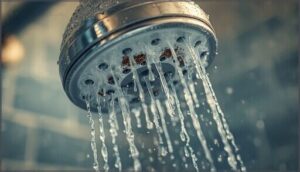
Your showerhead might be the culprit behind weak water flow, even if the rest of your plumbing is in perfect shape. Issues range from mineral deposits clogging the spray holes to flow restrictors that limit water by design. Here’s what to check and how to fix it.
Clogged or Old Showerheads
A clogged showerhead chokes your water flow like a kinked garden hose. Debris and mineral buildup reduce flow-through apertures by up to 40 percent, especially in hard water areas.
Aged fixtures develop stuck diverters or corroded o-rings that strangle spray volume.
If cleaning doesn’t restore your flow rate, replacing the showerhead often recovers original GPM and reclaims your shower pressure.
Low-Flow and Water-Restricting Models
Your showerhead may be doing its job—too well. Modern low-flow fixtures use flow restrictors or pressure-compensating designs to cap output at 1.5–2.0 GPM, slashing water use but sometimes throttling your morning rinse.
These water-savings models regulate flow regardless of inlet pressure, so even a strong supply won’t boost spray force. If you crave stronger flow, consider whether your fixture’s flow rate matches your expectations.
Replacing or Upgrading Your Showerhead
If your low-flow fixture isn’t cutting it, upgrading your showerhead can deliver a pressure boost. Look for models rated at 2.5 GPM—the legal max—with corrosion-resistant showerhead materials like brass or stainless steel.
Check that your shower arm isn’t corroded before installing. A higher flow rate restores strong spray while balancing water savings with performance you’ll actually enjoy.
How to Test Your Shower’s Water Pressure
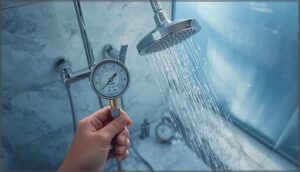
You can’t fix a problem you haven’t measured. Testing your shower’s water pressure gives you concrete numbers that tell you whether you’re dealing with a minor clog or a bigger plumbing issue.
Here are three straightforward ways to measure what’s actually happening in your pipes.
Using a Pressure Gauge
You need accurate pressure readings to diagnose low water pressure effectively. Connect your pressure gauge to a hose bib or test port near the shower valve—this gives you direct water analysis at the source. Healthy residential water flow should read 40 to 60 PSI.
Check gauge calibration first, then take multiple pressure readings at different times. Compare hot and cold lines separately for better leak detection and to pinpoint any pressure regulator issues.
Bucket and Timer Flow Rate Test
A simple 5-gallon bucket and stopwatch give you reliable flow rate testing without specialized equipment. Turn on your showerhead at full force, capture all water in the bucket, and time how long it fills. Divide gallons by minutes to calculate GPM—standard low-flow models run 1.5 to 2.5 GPM.
Run multiple tests for timer accuracy and average your showerhead calibration results.
Interpreting PSI and GPM Results
Your pressure gauge readings and GPM testing reveal where your water pressure problem actually lives. Typical residential showers run 40 to 60 PSI—anything below 40 means low water pressure.
Standard flow rate hits 2.0 to 2.5 GPM, while low-flow models deliver 1.8 to 2.0 GPM. High PSI ratings with weak flow point to flow restrictions in your showerhead or valve, not your supply line.
Valve and Regulator Issues in Showers
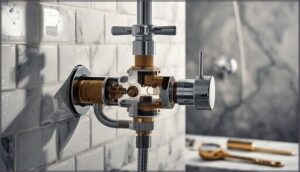
Your shower’s pressure doesn’t just depend on pipes and showerheads. Valves and regulators control how much water reaches your shower, and when they malfunction, your pressure drops fast. Here’s what you need to check.
Main Shutoff and Water Meter Valves
Your home’s main shutoff and water meter valves control every drop flowing through your plumbing system. If either sits partially closed, you’ll face low water pressure throughout your shower and beyond.
Locate both valves—usually near your foundation wall or meter—and verify they’re fully open. Corrosion, mineral buildup, or stiff levers signal trouble.
Regular valve inspection and leak detection prevent future headaches.
Shower Cartridge and Mixing Valve Problems
A worn cartridge or faulty mixing valve throttles your shower flow even when your plumbing system looks fine. Debris lodged inside blocks water passage, creating pressure imbalance between hot and cold lines—your showerhead suffers the consequences.
Watch for these valve malfunctions:
- Temperature swings during unrelated flow changes
- Mineral buildup on cartridge seats
- Internal leaks reducing overall pressure
- Mismatched or incorrectly installed valve types
- Age-related seal deterioration from hard water
Replace the cartridge to restore full pressure.
Faulty Pressure Regulators
A regulator gone wrong can silently choke your shower without warning. When pressure regulators drift closed from debris or age-related failure, you’ll notice pressure drops that no amount of showerhead cleaning can fix.
Older units especially fail downward, creating chronic flow restrictions throughout the house. Replacing the faulty valve restores proper water pressure regulation and brings your shower back to life.
Hot Water Vs. Cold Water Pressure Differences

If your cold water runs strong but your hot water barely trickles, you’re dealing with a problem isolated to your hot water system. This pressure gap points to issues with your water heater or the pipes that carry hot water through your home.
Let’s break down the two main culprits behind weak hot water pressure.
Water Heater Maintenance
Neglecting your water heater creates sediment buildup that chokes your shower’s hot water flow. You should flush the tank yearly to clear out mineral deposits that strangle your plumbing system.
Check the anode rod every 12 months and replace it every 2–5 years to stop corrosion. Set your thermostat to 120°F for ideal performance without wasting energy.
Monthly pressure relief valve tests prevent dangerous malfunctions that silently wreck low water pressure.
| Maintenance Task | Frequency |
|---|---|
| Sediment Removal | Annually |
| Tank Inspection | Every 6-12 months |
| Anode Replacement | Every 2-5 years |
| Thermostat Settings Check | Annually |
| Pressure Relief Valve Test | Monthly |
Issues Specific to Hot Water Lines
Hot water corrosion attacks your plumbing system differently than cold lines. Heat accelerates mineral buildup inside pipes, narrowing the passageways and strangling flow to your shower. Hard water scale formation happens faster when temperatures spike, coating your water heater and hot water lines with thick deposits.
Heat expansion cycles loosen crusty mineral chunks that randomly block your pipes. These deposits weaken metal over time, creating pinhole leaks that tank your pressure before you notice puddles.
| Hot Water Issue | Effect on Pressure | Fix Timeline |
|---|---|---|
| Scale Formation | Gradual reduction | 6-12 months |
| Pipe Narrowing | Progressive loss | 1-3 years |
| Heat-Induced Leaks | Sudden drops | Immediate |
DIY Fixes to Improve Shower Water Pressure
You don’t need to hire a plumber for every low-pressure problem. Most fixes are straightforward and require nothing more than basic tools and a little time.
Here’s what you can tackle yourself to restore strong water flow to your shower.
Cleaning or Replacing Showerheads

A clogged showerhead chokes your flow rate faster than you’d think. Mineral deposits narrow outlet apertures, dropping pressure uniformly across all spray holes.
Unscrew your showerhead and soak it overnight in white vinegar to dissolve buildup and restore flow. If descaling doesn’t work, replace the entire unit with a model matching your existing water pressure—universal 1/2 inch NPT connections make swaps simple.
Checking and Opening Valves
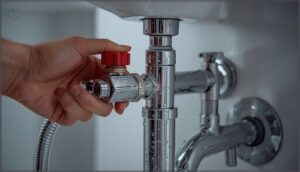
After cleaning your showerhead, inspect every valve in your plumbing system. Locate the main shutoff and hot water supply valves near the shower—they should rotate counterclockwise to fully open. A half-closed valve cuts flow rates in half without warning.
Turn each valve through its complete range and feel for smooth motion. If a valve grinds or resists, plan for valve repair or replacement to restore proper pressure.
Flushing Pipes and Water Heater
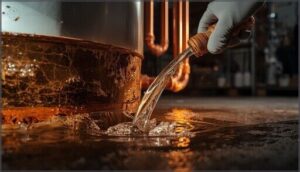
Sediment buildup in your water heater and supply lines can choke off water flow to your showerhead over time. Drain the tank annually by connecting a garden hose to the drain valve and flushing until the water runs clear.
For persistent low water pressure, flush your entire plumbing system through outdoor spigots to dislodge mineral deposits and restore pressure throughout your home.
Replacing Shower Hoses
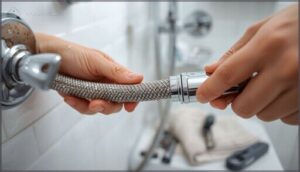
A damaged shower hose can silently sabotage your water pressure. Check for kinks, cracks, or mineral buildup restricting water flow. Stainless steel braided hoses outlast rubber and resist kinking better.
Replacement takes about 10 minutes—just unscrew both ends, install the new hose, and run water at full pressure to test for leaks. Most standard hoses cost $10–$30.
When to Call a Professional Plumber
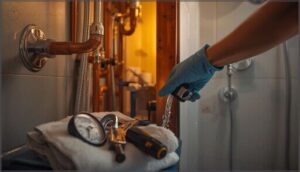
You’ve tried the fixes, cleaned the showerhead, opened the valves—and the pressure is still weak. That’s when it’s time to stop troubleshooting on your own and bring in a licensed plumber.
Here are the situations where professional help isn’t just smart—it’s necessary.
Persistent Low Pressure Despite DIY Fixes
If DIY plumbing solutions don’t fix your shower’s low water pressure, you’re likely dealing with deeper plumbing problems. Hidden leaks in supply lines, faulty pressure regulators, or corrosion detection beyond accessible areas require professional intervention.
Pressure fluctuations from municipal supply issues or internal valve failures won’t respond to surface-level fixes. A water pressure booster may help, but you’ll need expert diagnosis first.
Identifying Hidden Leaks or Major Blockages
If your meter runs when all fixtures are off, you’ve got a hidden leak. Leak detection requires checking for damp walls, mold, or unexplained water bills. Pressure testing can pinpoint concealed pipe corrosion and leaks.
Blockage removal often needs camera inspection to trace mineral deposits or debris in buried lines. These plumbing problems cause persistent low water pressure that DIY fixes won’t solve.
Upgrading Pipes or Installing Booster Pumps
Old galvanized pipes strangle your water flow—replacing them with copper or PEX restores pressure.
When pipe upgrades aren’t enough, a water pressure booster pump provides the pressure increase you need. Booster pump types include inline and tank models, with pump installation costs ranging from $800 to $2,500.
A licensed plumber manages both booster maintenance and ensures your system meets code for reliable water flow.
Preventing Future Low Water Pressure Problems
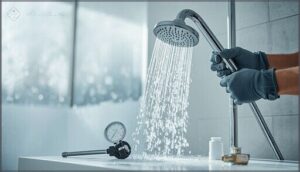
You don’t have to wait for low water pressure to strike again. A few smart habits can keep your shower running strong for years.
Here’s how to stay ahead of the problem with regular maintenance and simple upgrades.
Routine Plumbing Maintenance
Preventing low water pressure starts with simple habits you control. Schedule annual plumbing maintenance to catch hidden issues before they escalate. Keep your system running smoothly with these essentials:
- Pipe Inspection and Leak Detection – Check visible lines quarterly for corrosion or moisture.
- Valve Exercise – Open and close shutoffs yearly to prevent seizure.
- Pressure Monitoring – Track PSI readings to spot gradual declines early.
Clean your showerhead regularly to avoid buildup that chokes flow.
Installing Water Softeners or Filters
Hard water minerals clog your showerhead and choke water flow over time. A water softener addresses this through ion exchange, swapping calcium and magnesium for sodium during the regeneration process. Pair it with a filter for improved water quality and lower maintenance. Proper softener installation requires sizing based on your household’s hardness and flow rate.
| Component | Purpose |
|---|---|
| Bypass Valve | Controls water diversion during regeneration process |
| Resin Tank | Holds ion exchange media for water purification |
| Brine Tank | Stores salt for softener regeneration |
| Filter Cartridge | Removes sediment affecting water flow |
| Drain Line | Manages backwash during filter maintenance |
Regular Inspection of Valves and Fixtures
Your plumbing system inspection should happen at least once a year. Check that valve levers move freely without sticking and open completely. Look for drips around your shower cartridge or mixing valve when adjusting temperature. Tighten loose fixture connections and watch for corrosion at joints.
Test your main shutoff valve—it should stop water flow within seconds. Regular leak detection catches wear before pressure drops.
Frequently Asked Questions (FAQs)
Can low water pressure damage my shower system?
Yes, low water pressure can damage your shower over time. Flow restrictions stress valve seals, accelerate mineral deposits at restrictors, and cause uneven wear on cartridges—eventually leading to leaks and system failures.
Does weather or temperature affect shower water pressure?
You might think weather won’t touch your shower, but temperature effects do shift pressure. Cold snaps thicken water flow, while heat expands pipes—both trigger pressure fluctuations you’ll notice.
Will a water softener increase my shower pressure?
A water softener won’t directly boost your shower pressure or flow rate. Scale reduction methods help prevent mineral buildup on fixtures, but you’ll need a water pressure booster or pipe upgrades for real gains.
How often should I test my shower pressure?
Test your shower pressure quarterly to catch problems early. Regular pressure monitoring helps you spot low water pressure before it worsens.
If you notice sudden flow rate changes or after any plumbing work, check monthly.
Are there building codes for minimum shower pressure?
Building codes don’t mandate a specific minimum shower pressure, but they do set baseline system requirements—usually 20 to 35 psi—and require pressure regulators when inlet pressure exceeds 80 psi for code compliance.
Conclusion
Ignore low water pressure in your shower now, and you’ll face bigger repair bills later. What causes low water pressure in shower situations isn’t mysterious—it’s mineral deposits, corroded pipes, hidden leaks, or faulty valves demanding your attention.
You’ve got the diagnostic tools and fixes at your fingertips. Clean that showerhead, check those valves, flush your water heater. When simple solutions fail, call a plumber before minor pressure drops become major plumbing disasters.