This site is supported by our readers. We may earn a commission, at no cost to you, if you purchase through links.

Your gorgeous silver strands are more porous than pigmented hair—which means they’re sponges for product buildup, hard water minerals, and that dreaded yellowing. Enter baking soda, the kitchen staple that’s been causing heated debates in gray hair communities.
This alkaline powder can strip away months of gunk in a single treatment, restoring your natural shine and brightening dulled silver tones. But here’s the catch: that same clarifying power can raise your hair’s pH level, potentially leaving strands rougher, drier, and more fragile than before.
The difference between a radiant refresh and damaged hair comes down to how you use it—and whether your particular gray hair can handle the treatment at all.
Table Of Contents
- Key Takeaways
- What Does Baking Soda Do to Gray Hair?
- Can Baking Soda Remove Yellow From Gray Hair?
- How Does Baking Soda Affect Scalp Health?
- Does Baking Soda Promote Hair Growth or Lighten Hair?
- What Are The Risks of Using Baking Soda on Gray Hair?
- How to Safely Use Baking Soda for Gray Hair
- What Are Safer Alternatives for Gray Hair Care?
- Frequently Asked Questions (FAQs)
- How long should I leave baking soda and vinegar on my hair?
- Is hydrogen peroxide safe to use on gray hair?
- Are there any other natural ingredients that can help improve gray hair?
- Are there any benefits to washing gray hair with baking soda?
- How long does baking soda treatment last?
- Does baking soda work on naturally gray hair?
- Can baking soda reverse premature graying in hair?
- Conclusion
Key Takeaways
- Baking soda strips buildup and brightens gray hair temporarily, but its high pH (around 9) can roughen cuticles, increase dryness, and cause breakage if overused or applied without proper dilution and conditioning.
- It won’t neutralize yellow tones the way purple shampoo does—you need violet-based toners for real color correction, while baking soda only clarifies surface gunk that dulls your silver.
- Safe use requires mixing one part baking soda with three parts water, massaging for 60-90 seconds, rinsing thoroughly, and limiting treatments to once every 1-2 weeks with deep conditioning afterward.
- Gentler alternatives like apple cider vinegar rinses, sulfate-free clarifying shampoos, and nourishing treatments deliver similar shine and clarity without risking the harsh alkalinity damage that baking soda can cause.
What Does Baking Soda Do to Gray Hair?
Baking soda isn’t just for your kitchen—it’s become a go-to trick for folks trying to brighten up their gray hair. But before you mix up a paste, you need to know exactly what it does to your locks.
The key is understanding how baking soda interacts with your hair’s natural pigment before you commit to the treatment.
Let’s break down the real effects it has on your gray hair’s color, texture, and overall health.
Effects on Hair Color and Tone
Baking soda can shift gray hair’s tone in unpredictable ways! When you use it as a clarifying rinse, it strips buildup that dulls silver hair—hello, natural hue restoration and gray hair brightening.
But here’s the catch: frequent use raises your hair’s pH, potentially making it look more yellowish instead of enhancing that gorgeous tone. For real color fade prevention, balance is everything!
Impact on Hair Texture and Volume
You want hair texture with oomph, right? When you use baking soda in gray hair care, it acts as a volume booster—lifting roots and adding body. But beware: gray hair’s porosity means it can feel rougher and drier.
Scalp exfoliation might perk up limp strands, but overdoing it risks brittle, breakage-prone locks.
- Boosts root lift for fuller hair volume
- Increases hair porosity, risking dryness
- Enhances texture, but can roughen gray hair
Removal of Buildup and Impurities
Beyond texture changes, baking soda addresses the icky film gray hair collects. It dissolves mineral deposits from hard water, strips chlorine residue, and lifts stubborn product buildup like silicones and pomades.
That’s why a clarifying rinse can restore shine—your hair reflects light better when impurities vanish! Just know that scalp detox works temporarily. Overuse strips natural oils, leaving strands vulnerable and dry instead of gorgeously clean.
Can Baking Soda Remove Yellow From Gray Hair?
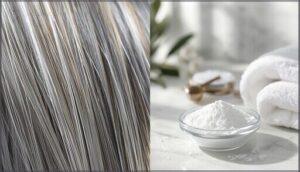
Yellow tones can seriously dull your gorgeous gray hair, making it look dingy instead of stunning. Baking soda might actually help you fight that brassiness and bring back those beautiful silver shades you’re after.
Here’s exactly how it works to neutralize unwanted yellow and amplify your natural white tones.
Neutralizing Brassy and Yellow Tones
Does baking soda actually tackle brassy yellow tones in gray hair? Not really—it’s no match for proper color correction. While baking soda clarifies buildup, it won’t neutralize yellow the way purple shampoo or blue pigments do. For real hair whitening results, you need violet-based toners that counteract warm hues:
If you’re also dealing with flakes alongside brassiness, gentle dandruff treatments that work quickly can restore scalp comfort without disrupting your toning routine.
- Purple shampoo deposits violet pigment to cancel yellow cast
- Blue pigments neutralize orange brassiness effectively
- Clarifying washes prep hair for better toner effects
- UV protection prevents fading of cool tones
- Regular toning maintains silver shades between treatments
Baking soda alone won’t give you those gorgeous cool tones!
Enhancing Silver and White Shades
Silver Shine Tips depend on cool-toned products—not baking soda.
For White Hair Care and true Gray Tone Enhancement, you need purple shampoos that brighten silver by 1 to 2 shade levels over time. Glossing treatments boost light reflection by 15 to 25 percent, giving you that stunning shimmer.
Hair Color Maintenance requires pH-balanced formulas, not alkaline scrubs that strip your hair’s natural glow!
How Does Baking Soda Affect Scalp Health?
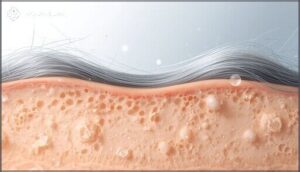
Your scalp’s health is just as important as your hair’s appearance! Baking soda doesn’t just work on your strands—it affects the skin underneath, too.
Let’s look at how it interacts with your scalp and what that means for dandruff, irritation, and overall comfort.
Exfoliating and Clarifying The Scalp
When you mix baking soda with water, you create a gentle scrub that removes dead skin cells, product gunk, and excess oil clinging to your scalp. This natural clarifier works like a mini scalp massage—boosting circulation while exfoliating buildup that weighs down your gorgeous gray locks.
- Removes stubborn residue that dulls your hair’s natural shine
- Stimulates blood flow to follicles for a healthier scalp environment
- Restores pH balance when used sparingly and rinsed thoroughly
Dandruff and Scalp Irritation Considerations
Dandruff causes like yeast overgrowth or product buildup can trigger itchy, flaky chaos on your scalp. While baking soda scrubs away some irritants, its high pH can backfire—stripping protective oils and sparking inflammation. That’s why scalp balance matters! Too much baking soda disrupts your skin’s natural defenses, worsening redness and itch instead of delivering true irritation relief.
| Trigger | How It Affects You | Baking Soda’s Role |
|---|---|---|
| Yeast overgrowth | Feeds on oils, causing flakes and itch | May temporarily remove buildup but doesn’t kill yeast |
| Dry, irritated skin | Produces fine white flakes and discomfort | Can worsen dryness, disrupting scalp health |
| Product residue | Clogs follicles, dulls shine | Clarifies surface gunk but raises pH too high |
| pH imbalance | Weakens protective barrier, triggers redness | Alkalinity can aggravate inflammation, not soothe it |
For real flake prevention and scalp soothing, medicated shampoos with zinc pyrithione or gentle conditioners offer safer dandruff treatment than harsh DIY scrubs.
Does Baking Soda Promote Hair Growth or Lighten Hair?

You’ve probably heard whispers that baking soda can wake up sleepy follicles or magically reverse gray hair—sounds tempting, right?
Let’s clear up what’s real and what’s just wishful thinking. Here’s what actually happens when you use baking soda on your scalp and strands.
Exfoliation and Follicle Stimulation
Gentle stimulation through scalp massage during baking soda exfoliation boosts microcirculation, delivering more nutrients to your follicles! Hair exfoliation clears away dead skin and buildup, creating a smoother surface for new strands.
Follicle care matters because clean, accessible follicles respond better to growth-supporting treatments. Scalp renewal through regular, brief sessions promotes healthier hair production—but you’ll need realistic expectations about gray hair growth results.
Myths About Gray Hair Reversal
No magic powder can turn back the aging process and restore your natural pigmentation—baking soda included! Gray hair genetics determine when melanocytes shut down, and current gray hair treatment options don’t restart them. Natural remedies may improve color perception through shine and tone, but true reversal methods don’t exist.
Baking soda can’t reverse gray hair—genetics control when melanocytes shut down, and no treatment restarts natural pigmentation
Hair pigmentation loss is permanent, so embrace those gorgeous silvers! Note that factors like can contribute to gray hair, but reversing the process remains unsupported by scientific evidence.
What Are The Risks of Using Baking Soda on Gray Hair?
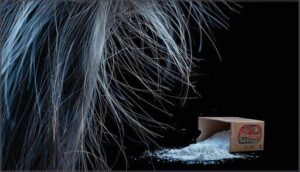
Baking soda can be harsh on gray hair if you’re not careful! The high pH can strip away moisture and leave your hair dry, brittle, and damaged.
Let’s look at the main risks you need to know before you use it.
Potential for Dryness and Damage
Baking Soda can strip natural oils from Gray Hair faster than you’d think! That Moisture Loss leads to Dry Hair that feels brittle and rough.
You’ll notice Cuticle Damage as frizz takes over, plus Hair Breakage at the ends. Scalp Irritation might show up as itching or tightness.
Smart Hair Care means recognizing these red flags before Dryness Prevention becomes your full-time job!
Effects of High PH on Hair and Scalp
That nine pH Level isn’t playing around—it’s way too harsh for your Hair and Scalp Health! High Alkalinity Effects lift those cuticle scales wide open, cranking up Hair Porosity and leaving strands rough. You’ll see more Cuticle Damage, plus your scalp’s natural pH Balance goes haywire.
Gray Hair already battles dryness, and Baking Soda’s extreme alkalinity just makes Hair Damage worse.
Signs of Overuse and When to Stop
Your hair talks back when you’ve gone too far! Watch for these red flags that scream stop:
- Straw-like Dryness Symptoms and split ends within two to four weeks
- Midshaft Breakage Signs during combing—your strands snap easier
- Yellow or brassy Color Shifts that won’t wash out
- Itchy, flaky Scalp Issues appearing within hours
- Greasy rebound after clarifying—classic Damage Control failure
Stop using Baking Soda immediately if you spot any of these!
How to Safely Use Baking Soda for Gray Hair
So you want to try baking soda on your gorgeous gray hair without wrecking it? Smart move!
Here’s exactly how to use it the right way, how often to reach for it, and what you absolutely need to do afterward to keep your hair soft and healthy.
Recommended Methods and Frequency
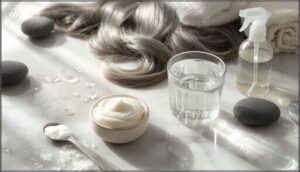
To create a gentle paste for your gray hair, mix one part baking soda with three parts water. Apply it to damp hair and massage your scalp for 60 to 90 seconds. This scalp exfoliation effectively lifts buildup without harsh scrubbing. Rinse completely with lukewarm water.
For frequency guidance, use this treatment once every one to two weeks. This routine helps protect hair texture while maintaining natural hair care results.
Essential Aftercare and Moisturizing Tips

After your baking soda treatment, you need serious hydration techniques to restore moisture! Apply a rich conditioner focusing on mid-lengths to ends—gray hair masks work wonders here.
Follow with a hair serum for benefits like frizz control and shine. Don’t skip scalp nourishment either; massage in a lightweight oil twice weekly.
These moisturizing routines counteract baking soda’s drying effects and keep your natural hair care routine balanced.
Ingredients to Avoid Mixing With Baking Soda

Certain chemical reactions can turn your simple hair treatment into a scalp disaster! Never combine baking soda with these hazardous combinations:
- Vinegar or acidic mixtures – rapid fizzing irritates sensitive skin
- Hydrogen peroxide – sudden foaming causes scalp irritants and burning
- Ammonia-based cleaners – toxic interactions create dangerous fumes
- Chlorine bleach – releases harmful chloramines that damage eyes and skin
Keep your gray hair care simple and safe!
What Are Safer Alternatives for Gray Hair Care?

You don’t have to risk your gorgeous gray hair with baking soda’s high pH drama! There are gentler, scalp-friendly options that’ll give you the same shine and clarity without stripping away your hair’s natural oils.
Let’s talk about three smart alternatives that actually work with your hair instead of against it.
Apple Cider Vinegar Rinses
You’ve probably heard of apple cider vinegar rinses—they’re gentler clarifiers than baking soda for gray hair! Mix one part ACV with two to eight parts water to restore hair pH balance and smooth down those cuticles.
This natural remedy reduces scalp irritation, cuts down on buildup, and boosts shine without the harsh alkalinity. Just rinse thoroughly, use weekly, and follow with conditioner to keep your silver strands gorgeous!
Gentle Clarifying Shampoos
You want that fresh-start feeling without the baking soda drama? Gentle clarifying shampoos use mild surfactant options that lift buildup while respecting pH balance—no harsh alkalinity stripping your gray hair!
Look for sulfate-free formulas with scalp soothers like chamomile, designed specifically for color preservation. They rinse clean, keep your silver gorgeous, and won’t trigger irritation. Use weekly, then follow with conditioner!
Deep Conditioning and Nourishing Treatments
Think of deep conditioner as your gray hair’s weekly spa day! Moisture treatments restore up to 25 percent hydration in just 10 minutes, while protein repair masks rebuild weakened strands within two weeks.
Nourishing oils like argan lock in moisture for 72 hours, and humectant benefits from glycerin keep your locks plump.
Skip baking soda—these gentle heroes support healthy hair growth without the risk!
Frequently Asked Questions (FAQs)
How long should I leave baking soda and vinegar on my hair?
Leave baking soda on your hair for 1 to 5 minutes max, depending on hair porosity and scalp sensitivity. Follow with a vinegar rinse for 1 to 2 minutes, then rinse completely with cool water.
For those interested in customized tips based on hair type or alternatives to traditional shampoo, see this detailed guide on.
Is hydrogen peroxide safe to use on gray hair?
Yes, but only with caution! Peroxide Safety demands proper concentration—3 percent for home use—and strand testing.
Chemical Reactions can trigger Scalp Irritation and Hair Damage Risks, especially on porous Gray Hair, so deep conditioning afterward is essential.
Are there any other natural ingredients that can help improve gray hair?
Herbal remedies like amla and bhringraj support pigment retention, while natural oils such as coconut oil and argan oil boost shine.
Apple cider vinegar rinses and ayurvedic treatments offer gentle, effective natural remedies for hair.
Are there any benefits to washing gray hair with baking soda?
Like a reset button for dull hair, baking soda clarifying treatments lift buildup and brighten gray strands when used sparingly.
You’ll see shinier, softer hair—but only if you condition well afterward to prevent dryness!
How long does baking soda treatment last?
Your baking soda treatment lasts just 5 to 15 minutes on gray hair during each session. Color longevity spans about 3 to 5 shampoos, while scalp recovery and residue removal complete within 24 to 72 hours afterward!
Does baking soda work on naturally gray hair?
Natural hair remedies can transform your gray locks maintenance routine! Baking soda works on naturally gray hair, though results vary with hair porosity and scalp sensitivity. Dilute well and follow with deep conditioner for safer gray hair benefits.
Can baking soda reverse premature graying in hair?
No, baking soda won’t reverse premature graying causes or restore natural color. Melanin production drives hair follicle health internally—topical treatments can’t restart it.
For gray hair prevention or reversal methods, you’ll need science-backed approaches beyond natural hair remedies.
Conclusion
Before you reach for that orange box, remember this: what baking soda does to gray hair depends entirely on your willingness to follow the rules. Used sparingly with proper aftercare, it can banish yellowing and restore radiant shine. Overdo it, and you’ll trade dullness for damage.
Your silver deserves strategic care, not kitchen experiments. Treat baking soda like the powerful clarifier it is—respect its strength, limit its use, and your gorgeous grays will thank you.