This site is supported by our readers. We may earn a commission, at no cost to you, if you purchase through links.
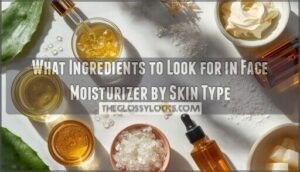
Your face cream’s ingredient list reads like a chemistry exam, but only three categories actually matter: humectants that pull water into your skin, emollients that smooth its surface, and occlusives that lock everything in place.
Most people grab whatever bottle promises “intense hydration” or “age-defying results,” then wonder why their skin still feels tight by noon or breaks out despite using oil-free formulas. The disconnect happens because marketing buzzwords tell you nothing about whether a moisturizer contains glycerin to attract moisture, ceramides to repair your skin barrier, or dimethicone to prevent water loss without clogging pores.
Understanding which specific ingredients address your skin type—whether you’re managing dryness, controlling oil production, or calming sensitivity—transforms moisturizer shopping from guesswork into targeted skincare that delivers measurable results.
Table Of Contents
Key Takeaways
- Effective moisturizers combine three ingredient categories that work together: humectants (like glycerin and hyaluronic acid) draw water into skin, emollients (such as squalane and shea butter) smooth the surface, and occlusives (including dimethicone and petrolatum) seal moisture in to prevent transepidermal water loss.
- Your skin type determines which ingredient proportions you need—oily skin still requires barrier-repair ceramides paired with lightweight humectants, while dry skin benefits from layering hyaluronic acid beneath richer occlusives, making ingredient selection about strategic combinations rather than category exclusions.
- Supporting actives like niacinamide (which strengthens barriers and regulates sebum at 2-10% concentrations), ceramides (which restore lipid matrix integrity), and peptides (which stimulate collagen production) deliver multi-functional benefits across all skin types when properly formulated.
- Price doesn’t predict performance—clinical evidence shows drugstore moisturizers containing glycerin, ceramides, and hyaluronic acid perform comparably to luxury brands, making ingredient quality and concentration more important than cost when evaluating product effectiveness.
Essential Moisturizer Ingredients for Healthy Skin
Effective moisturizers rely on three primary ingredient categories that work together to hydrate and protect your skin’s barrier. Humectants draw water into the skin, emollients smooth and soften the surface, while occlusives seal in moisture to prevent transepidermal water loss.
Understanding how to choose a face moisturizer for your skin type helps you identify which combination of these ingredients will work best for your specific hydration needs.
Beyond these core components, supporting ingredients like ceramides and panthenol boost your moisturizer’s ability to restore and maintain healthy skin function.
They’re especially useful in post-sun skincare routines, where ceramides help repair the skin’s protective barrier after UV damage.
Humectants—Glycerin, Hyaluronic Acid, Urea
Humectants draw water into your skin, providing essential hydration that keeps your complexion soft and plump. These moisture-retention powerhouses work by attracting water from both the atmosphere and deeper skin layers, delivering immediate and sustained skin hydration benefits.
Popular humectants like hyaluronic acid and glycerin are staples in affordable anti-aging products that work, delivering professional-level hydration without the luxury price tag.
- Glycerin draws water to your stratum corneum at concentrations of 2–15%, offering proven humectant benefits
- Hyaluronic acid exists in multiple molecular weights that hydrate surface and superficial layers simultaneously
- Urea functions as both a humectant and gentle exfoliant at 1–10% concentrations
- Pairing humectants with occlusives reduces transepidermal water loss effectively
Emollients—Squalane, Fatty Alcohols, Shea Butter
While humectants pull water inward, emollients smooth and soften your skin’s surface by filling microscopic cracks between cells. Squalane benefits include lightweight hydration and reduced water loss without clogging pores, making it ideal for your skin care routine.
Fatty alcohols like cetyl and stearyl provide slip and stability, while shea butter delivers conditioning emollient properties that improve skin hydration across multiple skin type considerations.
Occlusives—Petrolatum, Dimethicone, Lanolin
After emollients smooth your skin, occlusives seal everything in by forming a protective layer that prevents water loss. Petrolatum offers superior barrier repair for compromised skin, though it feels heavy; dimethicone provides lightweight moisture barriers that won’t clog pores, while lanolin offers natural skin protection.
Each occlusive benefits your routine differently, so choosing depends on your texture preference and sensitivity.
If you’re still unsure which formula works best for your skin type, explore effective facial care treatments that pair occlusives with barrier-supporting ingredients like ceramides and niacinamide.
Supporting Ingredients—Panthenol, Ceramides, Allantoin
Beyond the core moisturizing layers, your skin relies on supporting ingredients to optimize barrier function and moisture retention. Panthenol benefits include attracting water into the stratum corneum at 2–5% concentrations, while ceramides—especially ceramide NP and AP—restore lipid matrix integrity to reduce transepidermal water loss.
Allantoin soothing properties calm irritation at 0.1–0.5%, promoting smooth texture without excessive exfoliation or discomfort.
Choosing Ingredients for Your Skin Type
Your skin type determines which moisturizer ingredients will work best for you, and choosing the wrong formulation can lead to breakouts, irritation, or persistent dryness.
Choosing the wrong moisturizer ingredients for your skin type can trigger breakouts, irritation, or persistent dryness
Understanding your skin’s specific needs allows you to select targeted ingredients that address your concerns rather than exacerbate them.
The following sections outline evidence-based ingredient recommendations for dry, oily, sensitive, and combination skin types to help you make an informed decision.
Best Ingredients for Dry Skin
Your dry skin thrives when you layer hydration strategically. Start with humectants like glycerin and hyaluronic acid to pull moisture deep into your stratum corneum, then lock it in with natural emollients such as squalane and shea butter that smooth surface texture.
Finish with a mineral sunscreen containing zinc oxide—products formulated to minimize redness protect without the irritation chemical filters often cause.
Ideal Ingredients for Oily and Acne-Prone Skin
Your acne-prone complexion needs moisture without the grease. Look for formulations that balance oil control with barrier support—light humectants like glycerin and hyaluronic acid draw water in, while non-comedogenic emollients such as squalane smooth without clogging pores. To minimize shine and maintain moisture balance, choose:
- Dimethicone as a breathable occlusive
- Niacinamide to strengthen your skin barrier
- Ceramides for long-term pore minimization and acne prevention
Sensitive Skin—Low-Irritant and PH-Balanced Choices
Your sensitive skin thrives with fragrance-free, pH-balanced formulations targeting a skin-friendly range of 5.5 to 6.5.
Gentle formulations featuring ceramides and niacinamide strengthen skin barrier repair and skin barrier function while minimizing irritant testing concerns.
Natural moisturizers with squalane, panthenol, and hyaluronic acid provide hydration without triggering reactions.
Prioritize hypoallergenic, dye-free moisturizer ingredients to guarantee effective sensitive skin care that assists rather than compromises your delicate complexion.
Multi-Functional Actives for All Skin Types
Certain actives deliver proven benefits across every complexion profile, making them ideal universal ingredients. Niacinamide benefits include barrier strengthening, sebum regulation, and pigmentation control at concentrations up to 10 percent, while azelaic acid tackles acne, rosacea, and hyperpigmentation simultaneously. Peptide therapy boosts collagen synthesis, ceramide repair targets multi-layer barrier restoration, and panthenol effects include humectant and emollient properties that soothe irritation.
- Niacinamide regulates sebum, reduces inflammation, and improves hyperpigmentation in dry, oily, and sensitive skin types
- Azelaic acid provides anti-inflammatory, comedolytic, and depigmenting actions for overlapping acne, rosacea, and melasma concerns
- Peptide complexes stimulate collagen production and improve firmness with gentle tolerability suitable for delicate periorbital zones
- Bio-active ceramides reset barrier strength across multiple epidermal layers while reducing wrinkle appearance by up to fourfold
- Panthenol with allantoin combines humectants, emollients, and calming agents to support compromised barriers without sensitization
For ideal skin care, consider using a peptide cream product as part of your daily routine.
Key Actives and Additives to Consider

Beyond the foundational hydrators and barrier-protecting ingredients, certain actives can advance your moisturizer from basic hydration to targeted skin improvement. These additives address specific concerns like aging, environmental damage, and barrier dysfunction, though their effectiveness depends heavily on formulation quality and concentration.
The following actives represent evidence-based additions that can meaningfully boost your skincare results when properly incorporated into a moisturizer formula.
Antioxidants—Vitamin C, Green Tea Extract
Your skin faces environmental assault daily, and topical antioxidants like vitamin C and green tea extract shield your surface from free radical damage and photoaging. Understanding the role of antioxidant properties is essential for effective skin care.
Vitamin C boosts collagen synthesis, lightens hyperpigmentation, and improves wrinkles when formulated at 5 to 25 percent, though antioxidant stability remains challenging in jar packaging. Green tea polyphenols reduce UV-induced inflammation and reactive oxygen species, enhancing skin photoprotection when combined with broad-spectrum sunscreen in anti-aging products.
| Antioxidant | Primary Skin Care and Hydration Benefit | Formulation Consideration |
|---|---|---|
| Vitamin C | Aids collagen production and reduces melanin formation | Requires airless packaging and pH control for stability |
| Green Tea Extract | Protects against ultraviolet damage and soothes inflammation | Generally stable and well-tolerated in moisturizer ingredients |
Barrier-Strengtheners—Ceramides, Niacinamide
Your skin barrier function and health depend on ceramides and niacinamide working together to prevent moisture loss and strengthen defense.
Ceramide benefits include restoring the lipid matrix at 50 percent of barrier mass, reducing transepidermal water loss measurably within 24 hours.
Niacinamide effects boost barrier repair by upregulating ceramide synthesis at 2 to 5 percent concentrations, improving skin hydration and reducing irritation in moisturizer formulation.
Anti-Aging Actives—Retinoids, Peptides
Retinoids and peptides address visible signs of aging through distinct cellular mechanisms, with retinoids accelerating cell turnover and collagen production while peptides signal skin cells to repair structural proteins.
You’ll find retinoids delivering measurable wrinkle reduction and facial renewal at 0.025 to 0.1 percent concentrations, though they require gradual introduction to minimize irritation, while peptides offer gentler skin firming and cell regeneration through targeted collagen boosters in antiaging skin care formulations.
Sun Protection—SPF and Broad-Spectrum Filters
Beyond antiaging actives, you need broad-spectrum SPF 30 or higher to shield your skin from both UVA and UVB radiation, which drive skin cancer and photoaging.
Daily protection with mineral filters like zinc oxide or organic UV filters reduces cumulative exposure when you apply it consistently, limiting sun time between 10 a.m. and 2 p.m.
Pairing topical antioxidants with sunscreen regulation-compliant formulations ensures complete defense.
Top Moisturizers With Beneficial Ingredients
Now that you understand which ingredients support your skin’s specific needs, you can evaluate products that combine these elements effectively.
The following moisturizers illustrate how humectants, emollients, occlusives, and actives work together in real formulations designed for different skin types and concerns. Each product demonstrates a strategic ingredient profile that tackles particular dermatological challenges while maintaining skin barrier function.
1. Murad Mattifying Oil Control Moisturizer
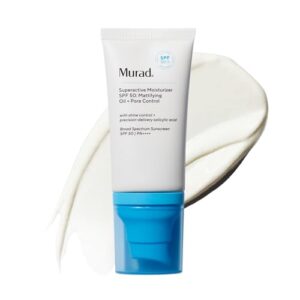
You’ll appreciate that Murad’s Oil Control Moisturizer delivers broad-spectrum SPF 45 protection alongside mattifying effects. Tapioca starch and oil-trapping microspheres absorb excess sebum for up to 10 hours.
The formula combines humectants like sodium hyaluronate and glycerin with lightweight emollients such as hydrogenated lecithin, addressing hydration without greasiness in oily or acne-prone skin conditions.
Zinc gluconate and oleanolic acid support sebum regulation, improving skin texture, while the non-comedogenic profile minimizes pore-clogging during daily application under makeup.
| Best For | People with oily or acne-prone skin who want sun protection, shine control, and a smooth base for makeup in one lightweight product. |
|---|---|
| SPF Level | 50 |
| Scent | Citrus |
| Skin Type | Oily/Acne-Prone |
| Oil-Free | Yes |
| Non-Comedogenic | Yes |
| Product Size | 1.7 Fl Oz |
| Additional Features |
|
- Combines SPF 45 broad-spectrum protection with up to 10 hours of oil and shine control, so you don’t need separate sunscreen and mattifying primer
- Hydrates with hyaluronic acid and glycerin while staying lightweight and non-greasy, which is tough to find in products for oily skin
- Non-comedogenic formula with zinc gluconate and oleanolic acid helps regulate oil and minimize pores without clogging them
- At $45 for 1.7 oz, it’s pricey compared to drugstore sunscreen-moisturizer combos
- Contains fragrance with potential allergens like limonene and linalool, which can irritate sensitive or reactive skin
- Thick texture means you might use more product per application, and the upside-down pump design can be awkward to use
2. Biore UV Aqua Rich Moisturizer
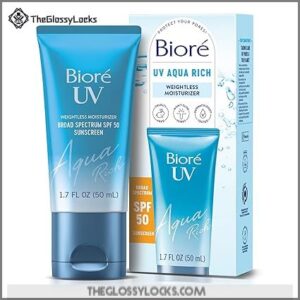
Biore UV Aqua Rich offers SPF 50 broad-spectrum protection in a lightweight, watery essence texture that spreads easily and absorbs without a white cast on all skin tones.
You’ll find humectants like sodium hyaluronate and glycerin providing hydration, while butylene glycol aids moisture retention throughout the day.
The oil-free formula combines avobenzone, homosalate, octisalate, and octocrylene for UV defense, making it suitable for oily or combination complexions.
Its fast-absorbing finish works under makeup, though alcohol and fragrance may irritate sensitive individuals—patch testing helps confirm tolerability before routine use.
| Best For | People with oily or combination skin who want a lightweight daily sunscreen that doubles as a hydrating makeup primer without leaving a greasy feel or white cast. |
|---|---|
| SPF Level | 50 |
| Scent | Citrus |
| Skin Type | Sensitive/Oily |
| Oil-Free | Yes |
| Non-Comedogenic | Yes |
| Product Size | 1.7 oz |
| Additional Features |
|
- Watery gel texture absorbs quickly and layers invisibly under makeup, with SPF 50 broad-spectrum protection that lasts through 80 minutes of water exposure
- Hyaluronic acid and glycerin provide all-day moisture without clogging pores, thanks to the oil-free, non-comedogenic formula
- Fast-absorbing finish works across all skin tones with no heavy residue, and it washes off easily with regular cleanser
- High alcohol content and added fragrance can irritate sensitive skin or cause stinging, especially around the eyes during sweating
- Small 1.7-ounce size runs out quickly with daily face and neck application, making it less economical than larger sunscreen bottles
- Citrus scent may not appeal to everyone, and the formula can potentially react with certain skincare actives layered underneath
3. Eucerin Mineral Sunscreen Lotion
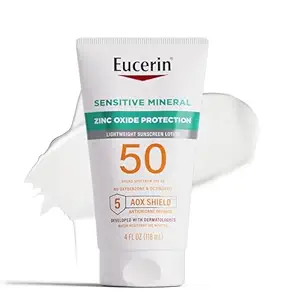
Eucerin Mineral Sunscreen Lotion relies on zinc oxide as its sole active ingredient, delivering SPF 50 broad-spectrum protection in a mineral-only formula designed for sensitive and reactive skin types. You won’t find fragrance, oil, parabens, or chemical filters here—just mineral actives that sit on your skin’s surface to deflect UV rays rather than absorb them.
The lightweight sunscreen formulation spreads smoothly and dries to an invisible finish, making daily application practical for your skincare routine and maintenance without white residue. Though the hypoallergenic moisturizer ingredients don’t include water-resistant properties, they are suitable for everyday use, though not for extended outdoor exposure.
| Best For | People with sensitive or reactive skin who need reliable daily sun protection without chemical filters, fragrances, or common irritants. |
|---|---|
| SPF Level | 50 |
| Scent | Unscented |
| Skin Type | Sensitive |
| Oil-Free | Yes |
| Non-Comedogenic | N/A |
| Product Size | 4 Fl Oz |
| Additional Features |
|
- Zinc oxide-based mineral formula sits on skin’s surface instead of absorbing, making it gentler for sensitive skin types
- Dries to an invisible finish without the heavy white cast that many mineral sunscreens leave behind
- Free from a long list of potential irritants including fragrance, parabens, and chemical UV filters like oxybenzone
- No water-resistant properties, so it’s not ideal for swimming, sweating, or extended outdoor activities
- Only available in a 4-ounce tube, which might run out quickly if you’re using it on both face and body regularly
- Typically costs more than drugstore sunscreens with chemical filters
4. Paula’s Choice Retinol Face Treatment Serum
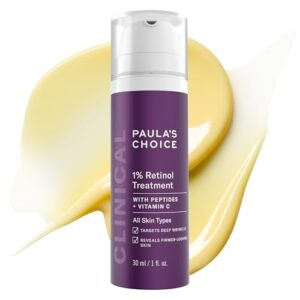
Paula’s Choice Clinical 1% Retinol Treatment delivers high-strength retinol benefits in a slow-release system designed to promote skin renewal without excessive irritation, making it one of the more potent anti-aging products available without a prescription.
Your retinoids work alongside peptides, ceramides, and oat extract to support collagen synthesis, while soothing agents buffer the drying effects common with retinol moisturizer formulation.
This facial serum combines proven anti-aging skincare ingredients in airless packaging that protects retinol stability, though you’ll need gradual introduction and daily SPF to optimize moisturizer ingredients safely.
| Best For | People with mature skin looking for a potent retinol treatment who want professional-strength results and are willing to introduce it slowly to minimize irritation. |
|---|---|
| SPF Level | N/A |
| Scent | Unscented |
| Skin Type | Mature |
| Oil-Free | N/A |
| Non-Comedogenic | N/A |
| Product Size | 1 Fl Oz |
| Additional Features |
|
- Combines 1% retinol with peptides and ceramides in a slow-release system that reduces irritation while still delivering visible wrinkle reduction in about four weeks.
- Airless pump packaging protects the retinol from breaking down when exposed to light and air, keeping the formula effective longer than jar packaging.
- Fragrance-free formula with soothing ingredients like oat extract and licorice root helps buffer common retinol side effects like redness and tightness.
- Small 1 oz bottle at $52 means frequent repurchases if you’re using it on your face and neck regularly.
- Not safe for use during pregnancy or breastfeeding, and requires strict daily sunscreen use since retinol increases sun sensitivity.
- Can still cause dryness, peeling, and irritation during the adjustment period, especially for sensitive skin types, even with the soothing ingredients included.
5. Differin Acne Treatment Gel
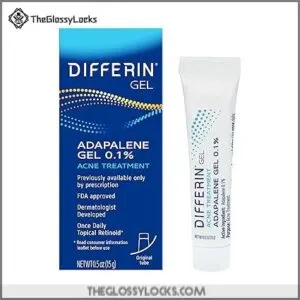
Differin Acne Treatment Gel contains adapalene 0.1%, an over-the-counter retinoid with proven acne treatment efficacy through normalized cell turnover and reduced microcomedone formation, targeting breakouts deep within pores where they begin. This gel formulation delivers retinoid effects in a non-comedogenic, fragrance-free vehicle suited for acne-prone skin, though you should expect an initial skin purging phase as your skin adjusts.
Adapalene benefits extend beyond clearing active acne to improving texture and preventing scarring, making it valuable in both acne skin care and anti-aging product routines when paired with appropriate moisturizers.
| Best For | People with persistent acne who want prescription-strength treatment without a doctor’s visit, especially if you’re dealing with clogged pores, breakouts, or early signs of aging and can commit to a consistent routine. |
|---|---|
| SPF Level | N/A |
| Scent | Unscented |
| Skin Type | Acne-Prone/Sensitive |
| Oil-Free | Yes |
| Non-Comedogenic | Yes |
| Product Size | 15g |
| Additional Features |
|
- Contains the same 0.1% adapalene concentration previously only available by prescription, proven to clear existing acne and prevent new breakouts by normalizing skin cell turnover
- Works deeper than most over-the-counter treatments by targeting acne formation at the source in your pores, with visible results possible in as little as one week
- Gentle enough for sensitive skin with its fragrance-free, alcohol-free, oil-free formula that won’t clog pores or add unnecessary irritation
- You’ll likely go through a purging phase in the first few weeks where acne temporarily gets worse as your skin adjusts and clears out clogged pores
- Can cause significant dryness and flaking, especially around delicate areas like your eyes, so you’ll need a good moisturizer to manage side effects
- Requires patience and consistency since optimal results take 8-12 weeks of daily use, and you need to be careful about sun exposure due to increased photosensitivity
Frequently Asked Questions (FAQs)
How often should I apply face moisturizer daily?
Think of your skin as a thirsty plant—it needs steady watering, not sporadic floods. You should moisturize twice daily, morning and evening, adjusting frequency based on your skin type and moisture balance needs.
Can I mix different moisturizers together safely?
Mixing moisturizers in one container can destabilize preservatives and reduce active potency.
Layering separate products on your skin is safer than pre-mixing them to preserve formulation integrity and minimize irritation risks.
Do expensive moisturizers work better than drugstore brands?
More money doesn’t buy better skin—clinical evidence shows drugstore moisturizers with glycerin, ceramides, and hyaluronic acid perform as well as luxury brands, making cost effectiveness about ingredient quality, not price or brand influence.
Should I refrigerate my moisturizer for better results?
Refrigeration offers cooling benefits like reduced puffiness and temporary soothing, yet it doesn’t improve most moisturizers’ intrinsic effectiveness and may destabilize emulsions.
Storage methods should follow manufacturer guidance for best moisturizer stability.
How long does moisturizer last after opening?
Most moisturizers remain effective for six to twelve months after opening, as indicated by PAO symbols on packaging.
Storage tips matter: keep yours sealed, cool, and dry to maintain stability and extend shelf life.
Conclusion
Decoding what ingredients to look for in face moisturizer transforms your routine from trial-and-error frustration into precision skincare. Humectants draw water into dehydrated cells, emollients smooth compromised surfaces, and occlusives prevent transepidermal water loss—each category meets distinct physiological needs.
Your skin type dictates proportions, not exclusions: oily skin still requires barrier repair through ceramides, while dry skin benefits from lightweight hyaluronic acid layered beneath richer occlusives. Ingredient literacy puts formulation control directly in your hands.
- https://www.fda.gov/drugs/cder-conversations/update-sunscreen-requirements-deemed-final-order-and-proposed-order
- http://www.ivyleemd.com/
- https://pubmed.ncbi.nlm.nih.gov/10475183/
- https://www.mdpi.com/1422-0067/23/2/585
- https://jddonline.com/articles/rejuvenating-hydrator-restoring-epidermal-hyaluronic-acid-homeostasis-with-instant-benefits-S1545961616S0024X/