
This site is supported by our readers. We may earn a commission, at no cost to you, if you purchase through links.

You spot those bouncy S-shaped spirals in the mirror every morning, but pinning down your exact curl type feels like decoding a secret language. If your curls form loose ringlets roughly the width of a sidewalk chalk piece—about 0.5 to 1.0 centimeters in diameter—and they spring back after you stretch them, you’re looking at 3A hair.
This curl pattern sits in that sweet spot where waves graduate into defined spirals, creating volume without the tight corkscrew effect of 3B or 3C textures.
Understanding what makes 3A hair distinct from its wavier and curlier cousins changes how you approach moisture, styling products, and even your haircut. Once you recognize your curl’s natural architecture, you can work with its tendency toward frizz in humidity while maintaining that enviable bounce and definition.
Table Of Contents
- Key Takeaways
- What is 3A Hair?
- How to Identify if You Have 3A Hair
- Best Hair Care Practices for 3A Hair
- Top 7 Products for 3A Hair
- Styling and Maintaining 3A Curls
- Frequently Asked Questions (FAQs)
- Can Type 3A hair be straightened or is it naturally curly?
- How often should I deep condition my Type 3A hair?
- Is it necessary to use a diffuser when drying Type 3A hair?
- Can Type 3A hair benefit from using a satin pillowcase?
- Are there any specific haircuts or hairstyles that are not recommended for Type 3A hair?
- Can 3A hair change to another curl type?
- How often should 3A hair be trimmed?
- Does humidity affect 3A curls differently than others?
- What vitamins support healthy 3A hair growth?
- Is protein treatment necessary for 3A hair?
- Conclusion
Key Takeaways
- Type 3A hair features loose S-shaped spirals roughly 0.5 to 1.0 centimeters in diameter that spring back when stretched, sitting between waves and tighter curls with natural bounce and volume.
- Your 3A curls need lightweight, moisture-rich products like leave-in conditioners and curl-defining gels applied to damp hair, plus weekly deep conditioning to maintain definition without weighing down your spirals.
- Protect your curl pattern by washing only 1-3 times weekly with sulfate-free shampoo, detangling gently from ends to roots with a wide-tooth comb, and sleeping on silk or satin pillowcases to reduce friction and frizz.
- Layered cuts and shoulder-length styles work best for 3A hair because they prevent the pyramid shape while enhancing your natural curl clumping, and you should trim every 8-12 weeks to keep ends healthy.
What is 3A Hair?
If you’ve ever looked at your hair and wondered where you fit in the curl spectrum, you’re not alone. Type 3A hair sits right in that sweet spot between wavy and tightly coiled, with its own unique personality that deserves the right care approach.
Let’s break down what actually defines 3A curls, from their signature shape to how they stack up against other hair types.
Defining 3A Curl Pattern and Shape
Your 3A curly hair showcases a distinct curl pattern that’s all about those soft, loopy S-shaped spirals.
Here’s what defines your texture:
- Ringlets measure roughly 0.3 to 0.9 millimeters in curl diameter measurement
- S-shaped spirals spring back after stretching, giving you natural bounce
- Well-defined curls appear when properly moisturized, though ends may show frizz
- Overall look is lighter and looser than tighter Type 3A hair patterns
Understanding clear science concepts is essential for effective hair care.
Curl Diameter and Texture Characteristics
Your Type 3A Hair shows small to medium diameter spirals that form those signature S-shaped patterns across your scalp. The texture usually runs fine to medium with porous strands that hold moisture well but can frizz when humidity hits.
When you keep your Curl Pattern properly hydrated, you’ll notice well-defined curl clumping with serious spring and bounce, though Hair Porosity levels affect how quickly that moisture escapes from each strand.
Understanding scientific writing techniques can help in researching and communicating hair care methods effectively.
How 3A Hair Differs From Other Curl Types
Type 3A Hair is defined by its spiral diameter—your curls measure roughly the width of sidewalk chalk, forming loose S-shaped loops that stretch more than tighter 3B or 3C coils. Curl Classification Systems position 3A as the gateway between waves and true spirals, with less shrinkage and smoother surfaces than compact coils.
Your Curl Pattern Variations mean you’ll need lighter products than tighter textures, since heavy creams can weigh down those springy spirals and flatten your natural bounce.
How to Identify if You Have 3A Hair
Knowing your exact curl type isn’t about fitting into some rigid box—it’s about understanding what your hair actually needs. If you’ve been squinting at the hair typing chart wondering whether you’re 2C or 3A, you’re not alone, and the differences matter more than you’d think.
Knowing your curl type isn’t about fitting into boxes—it’s about understanding what your hair actually needs
Here’s how to pinpoint whether you’re rocking true 3A curls by comparing them to their closest neighbors and recognizing those signature spiral shapes.
3A Vs 2C Hair Differences
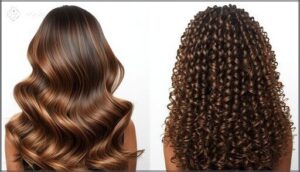
Think your curls fall somewhere between wavy and truly curly? Here’s the deal: 2C hair shows larger S-shaped waves with tighter roots, while Type 3A hair features looser, corkscrew-like spirals that stay consistent from scalp to ends.
Your hair texture and curl pattern matter for frizz control—2C has a tendency to frizz more at the crown, whereas 3A hair loses definition mainly in humidity.
3A Vs 3B Hair Characteristics
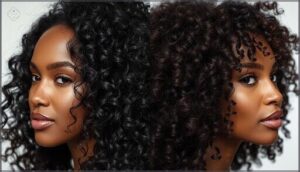
Wondering where 3A ends and 3B begins? The curl diameter tells the story: Type 3A Hair forms loose, defined spirals roughly 0.5 to 1.25 millimeters wide, while Type 3B Hair Characteristics include greater hair density and a tighter curl texture compared to 3A’s looser spirals.
Your 3A curl pattern shows minimal shrinkage and needs strategic moisture levels for frizz control in humidity.
Recognizing Your Hair’s S-Shaped Spirals
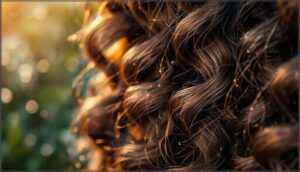
Look for these telltale signs your strands are classic Type 3A Hair with that coveted S-Shaped Identification:
- Loose ringlets relax into S-bends when dry, not tight corkscrews
- Curl diameter measures 0.5 to 1.0 centimeters with springy bounce
- Wet hair shows pronounced S-shaped spirals thanks to cuticle slip
- Natural shine reveals intact cuticle structure in your Curl Pattern Analysis
- Humidity amplifies frizz while your Spiral Formation stays defined underneath
Master these Curl Definition Tips for accurate Hair Texture Types assessment.
Best Hair Care Practices for 3A Hair
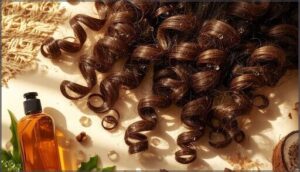
Your 3A curls need a care routine that works with their natural texture, not against it. The key is keeping your spirals hydrated, protected, and free from the damage that causes frizz and breakage.
Here’s what you need to focus on to keep those ringlets bouncing.
Deep Conditioning for Moisture and Definition
Your 3A curls crave deep conditioning like a plant needs water—it’s non-negotiable for moisture retention and curl elasticity.
Apply a deep conditioner to damp hair weekly, focusing on product penetration through the cuticle to boost hair porosity and lock in hydration.
This simple hair care routine step maintains moisture balance, reduces breakage, and gives you that bounce-back definition.
TLDR: Deep condition regularly for strong, healthy curl care tips that actually work.
Avoiding Chemical Exposure and Heat Damage
High-heat tools above 400°F can torch your hair’s moisture balance and trigger serious heat damage, so dial it back. These hair protection methods are gentle styling tips that keep hair health intact while preventing hair damage that’s tough to reverse.
Swap silicone-heavy formulas for chemical-free products and sulphate-free shampoo that won’t strip your natural hair care routine. Skip the relaxers—they mess with your curl structure permanently.
Proper Washing Frequency and Co-Washing
Your washing schedule shapes your moisture balance—too much strips natural oils, too little invites buildup. Aim for 1–3 weekly washes with sulfate-free shampoo, adjusting based on your scalp’s oiliness and hair porosity.
- Co-washing between shampoos keeps curly hair hydrated without over-cleansing
- Scalp massage during washing boosts circulation and distributes protective oils
- Seasonal shifts may require tweaking your hair care routine
- Air-dry or use cool water rinses to lock in curl revitalizing benefits
Using Microfiber Towels to Reduce Frizz
Traditional terry cloth roughens your cuticle layer like sandpaper on silk—switch to a microfiber towel and watch frizz drop. The finer, smoother fibers absorb moisture faster while minimizing friction that lifts cuticles and triggers static.
For 3A hair, gently blot or scrunch curls instead of rubbing, preserving those S-shaped spirals and locking in definition without the flyaways.
Top 7 Products for 3A Hair
Finding the right products for your 3A curls can feel like cracking a code, but it doesn’t have to be complicated. You need formulas that amplify your natural spiral pattern without weighing down your bounce or creating frizz.
Here are seven game-changing products that actually work with your texture, not against it.
Curl Leave-in Conditioner
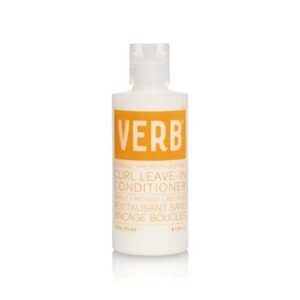
Your 3A curls need lightweight curl hydration that won’t weigh them down, and a quality leave-in conditioner delivers exactly that. Look for formulas with glycerin and sunflower seed extract—they provide moisture balance while keeping your spirals bouncy and defined.
Apply from mid-length to ends on damp hair, using your fingers to distribute evenly. The leave-in benefits include reduced frizz, easier detangling, and improved curl definition between washes.
Just watch for product buildup; rotate between lighter and richer options based on humidity to keep your curl maintenance routine fresh and effective.
- Weightless formula keeps curls bouncy while providing solid moisture and frizz control
- Contains glycerin and sunflower seed extract to help with detangling and add natural shine
- Vegan and cruelty-free without harsh sulfates, parabens, or mineral oil
- Can feel sticky or leave residue on some hair types, requiring occasional clarifying shampoo
- The 1-ounce size runs out quickly, making it pricey for regular use
- May weigh down finer hair or not provide enough hold for very tight curl patterns
Design Essentials Curl Enhancing Mousse
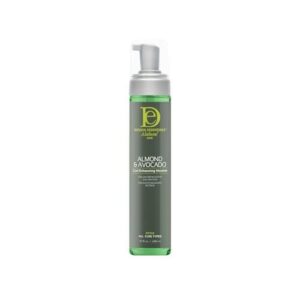
When you want volume and definition without the crunch, Design Essentials Curl Enhancing Mousse delivers mousse benefits that actually work for Type 3A hair characteristics. This lightweight formula—free from parabens and mineral oil—provides curl enhancement while keeping your hair texture soft and movable. Apply it to damp curls in sections for even coverage, then air dry or diffuse.
The honey-scented product ingredients include hydrolyzed wheat protein for conditioning, though if you’ve got low porosity hair, watch for dryness.
These styling techniques for curly hair prove that styling tips don’t need to be complicated when you’ve got the right hair products supporting your spirals.
- Lightweight and non-greasy formula that doesn’t weigh curls down or leave residue behind
- Cruelty-free and free from parabens, mineral oil, and other harsh ingredients
- Adds moisture and shine while reducing frizz for smoother, more manageable curls
- May cause dryness or buildup in low porosity hair due to protein content
- Priced higher than some similar curl mousses at other retailers
- Results can vary widely depending on your specific hair type and how you apply it
Coconut Cowash Cleansing Conditioner
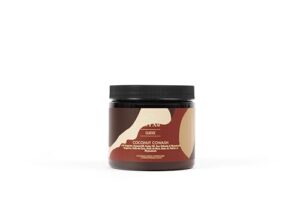
As I Am Coconut Cowash Cleansing Conditioner flips the script on hair care—it cleanses without stripping your curls dry. The cleansing agents here are gentle, coconut-derived surfactants that remove buildup, while conditioning agents like coconut oil and castor oil maintain moisture balance.
Cowash benefits shine for 3A curls: you’re washing and deep conditioning simultaneously, which works beautifully if you’ve got normal to high hair porosity. The product ingredients avoid sulfates and parabens, keeping your curly hair type bouncy.
For low porosity hair, though, watch for heaviness between clarifying sessions.
- Cleanses without stripping natural oils, so your curls stay hydrated and defined instead of dried out
- Packed with nourishing ingredients like coconut oil, castor oil, and saw palmetto that promote healthy hair growth
- Works double duty as both a cleanser and deep conditioner, saving time and effort
- Can feel too heavy on fine or oily hair types, and may weigh down low porosity hair
- Container design is awkward and prone to spills or waste
- Some people might react to the ingredients with irritation or allergies
Carol’s Daughter Hair Milk Curl Refresher

After cleansing, you’ll want something lighter to revive day-two curls without re-wetting everything. Carol’s Daughter Hair Milk Curl Refresher handles that job—it’s built with lightweight emollients and humectants that rehydrate your curl type without flattening volume.
Curl revival here means spraying sections, scrunching to reform those S-shaped spirals, then letting curls air-dry. The styling techniques are simple: finger-coil if definition fades, avoid your scalp to prevent buildup.
Hair milk benefits show up as softer, bouncier curls—revival application keeps your curly hair lively between full wash days.
- Lightweight formula rehydrates curls and reduces frizz without flattening natural bounce or leaving sticky residue
- Works well for reviving day-two or day-three curls with simple scrunching or finger-coiling techniques
- Contains moisturizing ingredients like humectants and plant oils that help soften hair and improve curl clumping
- May not provide enough hold on its own for curlier textures that need stronger definition or frizz control
- Can cause buildup near the roots if applied too close to the scalp or used too generously
- Results vary depending on humidity levels and individual hair porosity, so it might not work consistently in all climates
Mielle Organics Curl Defining Gel
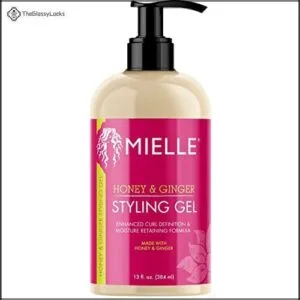
Gel application tips start with damp hair—work a dime-sized amount of Mielle Organics Curl Defining Gel through sections to lock in curl definition without crunch.
Product ingredients like dimethicone and hydroxyethylcellulose hold your curly hair’s shape while plant extracts condition each strand, making it solid hair care for 3A curl types.
Hair texture benefits appear as defined S-spirals with less frizz, especially when you scrunch upward during drying.
Styling results depend on pairing this gel with a leave-in—skip that step and you might feel dryness creeping in.
- Defines curls with a blend of honey, ginger, and aloe vera while keeping hair soft instead of crunchy
- Works well for multiple curl types (3A to 4C) and helps smooth frizz when applied to damp hair in sections
- Paraben-free formula at $12.99 for 13 fluid ounces makes it an affordable option for daily styling
- Some users report dryness or residue if not paired with a moisturizing leave-in product first
- Mixed feedback on hold strength—may not work for everyone depending on hair texture and humidity levels
- Packaging issues and scent sensitivity have been mentioned in customer reviews
Goddess Curls Botanical Gel
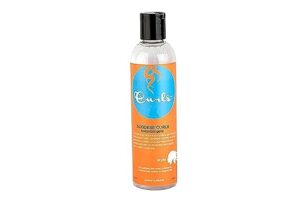
Gel application with Goddess Curls Botanical Gel starts on damp strands—use a quarter-sized dollop and rake through sections to encourage curl enhancement without weighing down your hair texture and type. Product ingredients like Plumeria Alba extract and aloe leaf juice fight frizz while delivering curl definition, making it a smart pick for various curl types including 3A spirals.
Hair benefits show up as bouncy, defined curls that last through humidity, though some users note a crunchy feel. Gel alternatives include mousses if you prefer a softer hold, but this formula excels in hair styling techniques that demand firm control.
- Infused with botanical ingredients like Plumeria Alba extract and aloe that define curls while adding shine
- Provides firm, all-day hold that stands up to humidity without sulfates, silicones, or parabens
- Works well across different curl types, from loose waves to tight spirals
- Can leave hair feeling crunchy or stiff once it dries for some users
- The scent is hit-or-miss—some people find it has a chemical smell they don’t love
- May cause flakiness or stickiness depending on your hair type and how much you use
Rucker Roots Styling Mousse
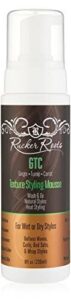
Mousse application with Rucker Roots transforms curl enhancement through its vitamin B7-rich formula—pump a golf-ball-sized amount into your palm, then scrunch upward through damp sections to lock in hair texture without crunch. Product ingredients like hydrolyzed castor oil control moisture loss while defining your curl texture, making it ideal for wash-and-go styling or roller sets across various hair types.
Styling tips: This mousse suits finger coils and spiral rod techniques for curly hair, though some find the hold softens by midday. Hair care routines benefit from its lightweight feel and flexible control.
- Vitamin B7 and hydrolyzed castor oil boost keratin production while locking in moisture for bouncy, defined curls
- Works across multiple styling methods like wash-and-go, finger coils, roller sets, and spiral rods
- 100% vegan, cruelty-free, and free from sulfates, parabens, and mineral oils
- Hold may soften or fade by midday, especially for certain hair types
- Some users report curls losing definition over time
- Might need a blow dryer or additional tools to get the best results
Styling and Maintaining 3A Curls
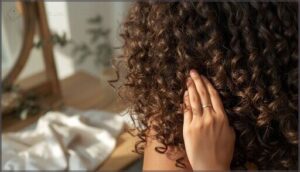
Once you’ve got your products lined up, the real work begins—keeping those spirals looking their best without fighting against your hair’s natural texture. 3A curls respond well to gentle handling and consistent techniques, but they’ll lose definition fast if you’re rough or skip the basics.
Here’s what you need to know about detangling, protecting your curls overnight, choosing flattering cuts, and keeping that bounce alive day after day.
Detangling Techniques to Prevent Breakage
Detangling your 3A curls doesn’t have to mean sacrificing length or definition. The key to breakage prevention is working smart, not hard—start at your ends and gradually move upward using gentle combing with detangling tools like a wide-tooth comb.
Here’s how to protect your hair fiber and maintain those spirals:
- Apply a detangling solution or leave-in conditioner on damp hair for slip
- Use your fingers first to separate major knots before reaching for tools
- Work in small sections to minimize tension on curly hair strands
This approach to hair maintenance preserves curl integrity while keeping hair breakage at bay.
Protecting Hair During Sleep
Your nighttime routine can make or break your curl preservation efforts. Swap cotton pillowcases for silk or satin materials to minimize friction reduction—this simple hair care switch protects hair texture and prevents moisture loss.
Before bed, try a quick nighttime detangling session using your fingers, then secure your curly hair in a loose pineapple or under a breathable sleep cap for advanced hair health and hair maintenance.
Best Hairstyles and Cuts for 3A Hair
Your 3A hair thrives with the right cut. Layered cuts enhance your curl pattern without creating that dreaded pyramid shape, while curly bobs—especially shoulder-length or inverted styles—reduce bulk and encourage natural clumping.
Protective styles like loose buns and twist-outs minimize breakage between trims. For easier detangling tips and better curl enhancement, ask your stylist for face-framing layers that work with your springy ringlets.
Maintaining Curl Definition and Bounce
Once you’ve got the right cut, keeping your curls bouncy and defined comes down to smart moisture lock and frizz control. Your curl enhancers work best on damp hair, and limiting washes to every 3-5 days protects your hair texture and type while preserving curl definition between styling sessions.
- Apply leave-in conditioner from mid-length to ends for curl enhancement and clumping
- Diffuse on low heat or air-dry to minimize frizz and encourage uniform formation
- Use a lightweight curl reviving spray with gel for bounce restoration between washes
- Seal moisture with natural oils on damp curly hair, focusing on ends
Frequently Asked Questions (FAQs)
Can Type 3A hair be straightened or is it naturally curly?
Yes, you can straighten 3A hair with flat irons or chemical treatments, but it’s naturally curly with springy S-shaped spirals.
Heat styling tips and proper protection help minimize heat damage during straightening methods.
How often should I deep condition my Type 3A hair?
You’ll want to deep condition your 3A hair 1–2 times weekly, depending on hair porosity and moisture balance.
High porosity curls need more frequent conditioning, while low porosity types risk product buildup with over-conditioning.
Is it necessary to use a diffuser when drying Type 3A hair?
You don’t always need one, but diffusers help 3A hair preserve curl definition and reduce frizz by distributing heat evenly—though air drying works too if you’re patient enough to avoid heat damage.
Can Type 3A hair benefit from using a satin pillowcase?
Satin pillowcases reduce hair friction and moisture loss overnight, helping your 3A curls stay defined and hydrated.
The smooth fabric minimizes breakage and frizz, making it a worthwhile addition to your hair care routine.
Are there any specific haircuts or hairstyles that are not recommended for Type 3A hair?
Think of your curls as coiled springs—they rebel against restraint. Blunt cuts, razor damage, high heat, and tension styles like tight ponytails cause frizz and breakage in 3A hair, undermining your curly hair’s natural bounce and definition.
Can 3A hair change to another curl type?
Your curl pattern can shift over time due to hormonal changes, aging, chemical treatments, or environmental factors. Heat damage and chemical alterations permanently reshape hair texture, while moisture levels cause temporary changes.
How often should 3A hair be trimmed?
Keeping your ends in check is no “split” decision—most 3A hair thrives with trims every 8 to 12 weeks, balancing hair growth with curl maintenance and split end prevention for healthy, bouncy spirals.
Does humidity affect 3A curls differently than others?
Yes, humidity hits 3A hair harder than straighter types. Your curls swell from moisture absorption, creating more frizz and pattern changes. Combat this with gel, heavy moisturizer, and anti-humidity sealants.
What vitamins support healthy 3A hair growth?
Your 3A hair thrives with B vitamins like biotin for keratin production, vitamin D for follicle cycling, and iron to prevent deficiency-related shedding.
Zinc intake and vitamin E also support scalp health and hair growth promotion.
Is protein treatment necessary for 3A hair?
Not always—it depends on your hair’s protein balance and moisture levels. Some 3A hair types benefit from occasional treatments, but protein sensitivity varies. Focus on what your hair porosity and health actually need.
Conclusion
Think of understanding what’s 3A hair as finding your curl’s native language—once you speak it fluently, everything from product selection to styling becomes second nature rather than guesswork.
Your spirals already know how to form those loose ringlets; your job is simply removing the obstacles that prevent them from thriving.
With targeted moisture, gentle handling, and the right lightweight products, you’re not fighting your texture—you’re finally working alongside it.