This site is supported by our readers. We may earn a commission, at no cost to you, if you purchase through links. This content is for general informational and educational purposes only and is not a substitute for professional medical, dermatological, or nutritional advice.

Your curls shrink up two inches the second they hit the air, and someone still asks why you don’t "just brush it out." Sound familiar? That maddening gap between what your hair does and what people expect it to do usually comes down to one thing: coily hair type.
This is Type 4 territory — tight zigzags and corkscrews that pack density into every square inch of your scalp. It’s not unruly. It’s not "difficult." It grows this way because your follicles curve, and that curve builds a hair pattern engineered for volume, not straight lines.
Once you understand the mechanics behind those coils, caring for them stops feeling like guesswork and starts feeling like mastery.
Table Of Contents
Key Takeaways
- Coily hair (Type 4) grows from curved follicles that produce tight zigzag or spiral patterns, splitting into three subtypes—4A, 4B, and 4C—based on coil tightness and diameter.
- Shrinkage of 75-90% is a natural geometric result of the coil pattern springing back, not a sign of damage or shorter hair.
- The curved follicle shape limits sebum from traveling down the strand, making coily hair naturally prone to dryness and requiring intentional moisture routines like the LOC or LCO method.
- Gentle handling practices—wet detangling with fingers before combs, low-manipulation protective styles, and satin sleep protection—are essential to prevent breakage at the hair’s fragile bend points.
Coily Hair is Type 4 Hair With Tight Coils
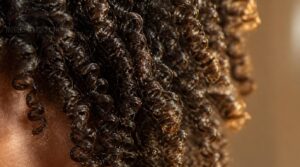
Coily hair sits proudly in the Type 4 family, famous for its tight coils and unique texture. If you’re curious about what makes these coils stand out, you’re in the right place. Let’s walk through the key traits that define this bold and beautiful hair type.
Within this category, hair splits into three distinct patterns, and understanding the differences between 4A, 4B, and 4C curl types can make choosing the right care routine much easier.
Type 4 Hair Meaning
How do you spot Type 4 hair? It’s all about those tight coils packed close together, forming a bold, springy shape across your scalp. This coily hair type isn’t just curly—it’s defined by curl tightness and striking density.
From 4A to 4C, you’ll see varying textures, wild shrinkage, and a natural fullness that’s impossible to ignore. Because of the tight pattern, many people experience significant hair shrinkage when the strands are dry.
Coils Versus Curls
Here’s where the coil-versus-curl debate gets real.
Coily hair—Type 4—shows up as tight, zigzag coils packed so close they often look like interlocking strands, not separate ringlets. Compare that to curly hair, which forms looser, visible S-shaped spirals with more space between each curl. Coily patterns shrink dramatically, making length harder to spot.
Common Texture Traits
You’ll notice coily hair type—whether 4A, 4B, or 4C—packs in tiny coil diameter and sharp pattern orientation. Each strand often feels smaller, denser, and more textured, especially when you run your fingers through.
The surface can switch between smooth and bumpy, depending on hydration, and high surface friction makes tangles and buildup much more common.
Shrinkage and Density
Shrinkage is the real magician here—your stretched length can shrink by 75% to 90% once those coils spring back! The tighter the coil, the greater the shrinkage.
Dense Type 4 hair packs in more strands, which boosts fullness but can make shrinkage look even more dramatic. Clumping and moisture swelling also play tricks, making hair appear shorter and thicker.
Why Hair Typing Helps
Why bother with hair typing? Because it’s your shortcut through the wild jungle of product selection and routine planning. You’ll know whether to reach for curl creams, butters, or light gels—no more guessing games! It helps you set realistic styling goals, recognize your coil’s pattern, and choose detangling strategies that fit your texture.
- Find curl-friendly products
- Expect shrinkage and definition
- Identify coil patterns
- Plan moisture routines
- Choose safe detangling methods
Coily Hair Subtypes: 4A, 4B, and 4C
Coily hair isn’t one-size-fits-all—it comes in three distinct subtypes, each with its own personality. Understanding these differences makes it easier to care for your coils and choose styles that actually work. Let’s break down what sets 4A, 4B, and 4C apart.
4A Springy S-Coils
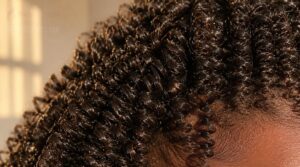
Picture a slinky toy bouncing back after a stretch — that’s basically your 4A hair in short. These S-shaped curls form distinct ringlets with real coil-to-coil definition, springing back thanks to natural elasticity.
To keep those bouncy coils protected overnight, try wearing a bonnet for nighttime hair care, which locks in moisture and prevents frizz.
Wet, detangled, and left to dry, they clump beautifully with product. Want shrinkage control? Leave-in conditioner and gentle stretching keep that curl pattern intact without fighting your natural bounce.
4B Zigzag Pattern
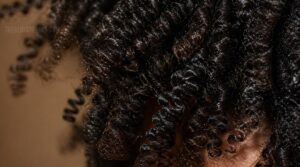
Ever tried tracing lightning bolts with your finger? That’s Type 4B hair — sharp, angular zigzag coils instead of smooth spirals, thanks to asymmetrical follicles.
Definition hides until you stretch it; wet or detangled strands reveal the zigzag path clearly. Shrinkage happens as bends fold tight, causing tension and frizz when dry.
Moisture-rich styling encourages clumping. Protective styling keeps those bends intact between wash days.
4C Tightest Coils
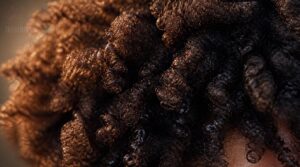
4C is the tightest coil in the family — so compact, it can look like one big cloud instead of individual strands.
- Corkscrew coils packed shoulder-to-shoulder
- Extreme shrinkage up to 75%
- Cloud-like, voluminous texture
- Fragile bends prone to tension breakage
- Dry-fast strands needing constant moisture
That’s textured hair care at its most demanding: low manipulation and steady hydration keep 4C thriving.
Definition Differences
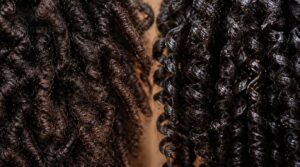
Here’s the thing: two "4B" heads can look totally different, and that’s not a mistake in Type 4 hair classification.
Loop size variations and pattern consistency decide how defined coils appear dry versus hydrated. Dry texture perception often reads rougher, while hydration brings out smoother coil clump formation. Diameter, density, and porosity all shape the final look, even within the same natural hair type label.
Subtype Spectrum
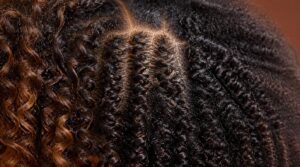
Think of A, B, and C less as boxes and more as a sliding scale—pattern tightness scales up as diameter shrinks. Real heads rarely stay in one lane; subtype shift zones merge springy 4A coils into zigzag 4B, or 4B into dense 4C.
- Coil diameter shrinks strand by strand
- Visual definition shifts with hydration
- Shrinkage impact levels intensify toward 4C
- Type 4A hair loosens, Type 4C hair tightens
- Natural hair types rarely fit neat labels
Why Coily Hair Gets Dry and Fragile

If you’ve ever wondered why your coily hair feels thirsty by lunchtime, you’re not imagining things. There’s real science behind that dryness, and it starts way down at the root. Let’s break down exactly what’s going on beneath the surface.
Curved Follicle Shape
Why does coily hair curl in the first place? It all starts underground, in the shape of your hair follicle.
Straight hair grows from round follicles, but coily hair comes from a curved, asymmetrical one—almost C-shaped. That bend forces the hair bulb to program each strand with a curl already built in, creating those elliptical cross-sections that twist as they grow.
Limited Sebum Travel
That curved follicle isn’t just about shape—it also creates a traffic jam for your scalp’s natural oils. Sebum has to travel down each twist and turn, and it often gives up before reaching your ends. That’s limited sebum travel, and it’s why your roots can look shiny while your ends stay bone-dry and thirsty for moisture.
Hair Porosity Basics
Since sebum can’t reach your ends, understanding hair porosity fills in the gap. Porosity is all about cuticle permeability—how easily moisture moves in and out.
- Low porosity: cuticles lie flat, resisting moisture absorption
- High porosity: gaps let moisture in fast, then escape just as quick
- Medium porosity: the sweet spot for balanced hydration
Knowing your porosity level shapes smarter product penetration and better moisture retention overall.
Breakage-Prone Bends
Every twist and turn in Type 4 hair is a potential snap point. Wherever your coil bends sharply, mechanical bend stress builds up, and dry strands lose the elasticity needed to flex safely.
| Bend Condition | Breakage Risk |
|---|---|
| Moisturized, flexible | Low |
| Dry, brittle | High |
| Repeatedly tangled | Highest |
Friction from combing and micro-tangles worsens things—splits form right at those stressed edges.
Shrinkage Effects
Ever pull a coil straight and watch it "grow" three inches before your eyes? That’s elastic recoil in action—your natural curl pattern snapping back once tension releases.
Shrinkage isn’t damage; it’s geometry. Moisture-induced swelling, humidity, and even product film hold all shift how dramatically strands retract. Measuring stretched length versus resting length just tells two different stories about the same beautifully coiled hair.
Shrinkage isn’t damage—it’s just geometry, the beautiful math of coils springing back to their true form
Best Care Routine for Coily Hair

Now that you know why your coils get thirsty so fast, let’s fix it. The right routine can turn dryness and breakage into softness and strength, no magic required. Here are five habits worth building into your regular hair care rhythm.
Moisturizing Wash Days
Wash day doesn’t have to feel like a battle. Cleanser moisture balance matters most here: pick sulfate-free formulas, focus suds at your scalp, and keep hair soaking wet throughout.
Quick tips:
- Rinse with cool or warm water
- Detangle while dripping wet for slip
- Handle strands gently, never rubbing
- Move fast so hair doesn’t dry mid-wash
LOC or LCO Method
Layering products right seals in moisture that coily hair desperately craves. LOC method means liquid, oil, cream; LCO swaps the last two.
Lower porosity strands often do better with LCO since oil goes last, resisting buildup. Higher porosity hair usually loves LOC’s oil-then-cream seal. Test both—your porosity determines which sealing layer actually locks hydration in versus sitting on top.
Weekly Deep Conditioning
Think of deep conditioning as your coily hair’s weekly reset button. A good treatment frequency usually means once a week, though high porosity strands may need more.
- Apply on clean, damp hair
- Detangle while saturated
- Add gentle heat or steam
- Adjust timing by porosity
- Seal moisture after rinsing
Enhancing hair elasticity reduces breakage—stronger, softer coils, guaranteed.
Satin Night Protection
Your cotton pillowcase is basically sandpaper for your coils while you sleep. Cotton grabs moisture and creates friction, leading to frizz and breakage. Satin or silk pillowcases, bonnets, and scarves let strands glide instead of snag.
A snug, secure fit matters most—loose bonnets slip off, leaving edges exposed. Tuck hair in fully, protect those fragile edges, and wake up to soft, moisturized coils.
Gentle Product Choices
Not every product on the shelf deserves a spot in your coily routine. Sulfate-free cleansers and hydrating shampoo keep coily hair soft, not stripped. Look for:
- Fragrance-free formulas
- Silicone-free or non-greasy options
- Balanced humectants like glycerin
- Non-comedogenic scalp treatments
Skip vague "miracle" labels—transparency wins. Your coils deserve gentle, honest care that actually moisturizes dry hair.
Styling and Detangling Coily Hair Safely

Detangling coily hair isn’t something to rush, and neither is styling it. Do it wrong and you’re fighting breakage; do it right and your coils actually thank you. Here’s exactly how to handle both, step by step.
Sectioned Wet Detangling
Tackling four coily quadrants beats fighting one giant mass of hair. Clip sectioning keeps cleared strands separate, so tangles don’t creep back in.
Apply detangler for slip layer glide, then work ends-first with a widetooth comb using tool control precision. Rewet drying sections with a spray bottle—rewetting maintenance preserves moisture retention throughout your coily hair maintenance routine.
| Step | Action |
|---|---|
| 1 | Clip into 4-8 sections |
| 2 | Apply detangler/conditioner |
| 3 | Detangle ends upward |
| 4 | Rewet as needed |
| 5 | Secure section, repeat |
Finger Detangling First
Before any comb touches your coily hair, let your fingers do the scouting. Finger detangling first gives you tension control your knuckles can feel—no comb ever will.
Work bottom-up in mini sections, using conditioner for slip. Dry or damp, patience wins. This gentle coiled hair maintenance step protects moisture retention and saves your strands from needless breakage before styling begins.
Protective Style Ideas
Once your fingers have done the detangling work, give those coils a break with a protective style. Low manipulation styling means less daily fuss and fewer chances for breakage.
- Cornrows, straight-back or angled
- Crochet installation over cornrow bases
- Two-strand twists for twist durability
- Faux locs for long-wear looks
- Bantu knots for a classic set
Box braids round out the lineup nicely, too.
Curl Definition Methods
Protective styles buy you rest days — now let’s talk defining those coils on purpose.
Clumping techniques turn scattered strands into defined curls, and it starts with wet application, not damp. Layer leave-in, then cream, then gel — this product layering gives strands the slip and hold to group together as they dry.
- Finger coiling for tight, uniform spirals (great on 4C)
- Shingling method, smoothing gel section by section for wash-and-goes
- Twistouts for stretched, bouncy definition
- Braid outs for crimped, voluminous texture
- Flexi rods for heat-free, springy curls
Drying controls matter just as much as application. Air-dry or diffuse on low, and keep your hands off until hair’s bone-dry — touching wet coils invites frizz, not definition. Lighter creams suit 4A; 4B and 4C crave heavier butters for real hold.
Low-Manipulation Habits
Rarely does coily hair thrive on constant fiddling — low manipulation is the golden rule. Keep hands off unless you’re moisturizing or styling, and choose tension-free styling that doesn’t tug your edges.
Reapply moisture between wash days with a light water mist, then seal it in. Watch your scalp for dryness or buildup, and reduce friction with smooth tools. Simple habits, lasting results for your natural hair regimen.
Frequently Asked Questions (FAQs)
What is a coily hair type?
Picture springs so tight they could power a clock tower — that’s Type 4 hair. Coily hair forms tight zigzags or spirals, the tightest end of the texture spectrum in natural hair classification, defining true coily identity.
Is curly hair the same as coily hair?
Not quite twins. Curly (Type 3) forms looser, springy spirals, while coily (Type 4) coils tighter with smaller diameter and denser packing. Shrinkage hits coily hair harder too—same length, way more compact geometry.
What is a coil hair?
Ever wonder why your strands zigzag instead of wave? A coil is a springy, tightly wound spiral with small coil diameter—forming S or Z shapes, clumping together, and shrinking your visual length dramatically compared to its true, stretched-out size.
What is a coily hair follicle?
Your asymmetrical follicles grow curved, not straight, twisting keratin protein into flat, elliptical cross-sections.
This follicle curvature impact, packed densely across your scalp, produces coily hair’s signature zigzag—shaping both texture classification and that gorgeous, dense coil pattern.
Is coily hair the same as 4C hair?
Is every square a rectangle, but not every rectangle a square? Same logic here: coily is the umbrella term, while 4C is its tightest subtype—densest coils, least definition, driest strands, needing extra moisture retention.
What is a Coily hairstyle?
A coily hairstyle works with your zigzag coil geometry, not against it—think twist-outs, Bantu knots, wash-and-gos, and protective updos. These styles honor your hair’s texture variations across 4A-4C patterns while building volume and definition.
Is coily hair curly?
Yes—coily hair is the Beyoncé of the curl world, tightest and boldest of them all. Your Z or S coils spring up tighter than any curly cousin, sitting at the far end of the texture spectrum.
What does coily hair look like?
Picture springy Z’s and S’s stacked root to tip—that’s your zigzag pattern in action. Coils cluster into dense, rounded volume, shrink dramatically once dry, and shift from crisp definition to soft, wiry texture depending on moisture.
Which hair type is most Coily?
The crown jewel of the coily spectrum belongs to Type 4C hair, shrinking up to 70% dry. Compared to 4A’s stretchy S-coils, 4C’s zigzags hide entirely without stretching—dense, cottony, and gorgeously defiant of definition.
What type of hair is a coil?
In the Andre Walker system, that spiral belongs to Type Your tight coils wind into compact shapes or sharp zigzags, holding spiral patterns with real tightness levels.
Coil diameter shrinks small, giving coily hair its signature dense, springy pattern visibility.
Conclusion
Your coils aren’t a puzzle to solve—they’re a language, and now you speak it fluently. Knowing what’s coily hair type means recognizing those tight zigzags as engineered volume, not a flaw to tame. Every twist tells your follicles’ story: curved, resilient, built for density.
Moisturize with intention, detangle with patience, and protect those bends at night. Your hair doesn’t need fixing. It needs understanding. That’s the real definition of mastery, and it’s yours to claim.