
This site is supported by our readers. We may earn a commission, at no cost to you, if you purchase through links.

Most people own a moisturizer. Far fewer use it correctly. Timing matters more than most skincare guides admit—apply it too late, and you’ve already lost the window where your skin absorbs it best. Skip the right step in your routine, and even a great product won’t deliver what it promises.
Knowing when to apply moisturizer in your skincare routine isn’t complicated, but the details make a real difference. Get the sequence right, and everything else you put on your skin starts working harder.
Table Of Contents
- Key Takeaways
- Where Does Moisturizer Fit in Your Routine?
- Should You Apply Moisturizer to Damp or Dry Skin?
- When to Apply Moisturizer in The Morning
- When to Apply Moisturizer at Night
- How Moisturizer Locks in Hydration
- Moisturizer Application for Dry, Oily, and Sensitive Skin
- How to Choose The Right Moisturizer
- Common Moisturizer Mistakes to Avoid
- Best Practices for Layering Skincare Products
- Expert Tips for Maximum Moisturizer Benefits
- Frequently Asked Questions (FAQs)
- Conclusion
Key Takeaways
- Apply moisturizer within five minutes of cleansing, while skin is still slightly damp, to boost absorption and lock in hydration.
- Follow this order every time: cleanser, toner, serum, moisturizer, then sunscreen — skipping or swapping steps weakens how well each product works.
- Your skin type determines the right formula — dry skin needs ceramide-rich creams, oily skin does better with lightweight, oil-free gels, and sensitive skin needs fragrance-free options.
- Twice daily is the sweet spot for moisturizing, and adjusting your formula each season helps your skin stay balanced as conditions change.
Where Does Moisturizer Fit in Your Routine?
Moisturizer doesn’t go just anywhere in your routine — placement actually determines how well it works. Think of your skincare steps as a specific order, not a free-for-all.
Getting the sequence right matters even more for sensitive skin, where layering missteps can trigger irritation — hypoallergenic skincare routines for sensitive skin break down exactly which steps to stack and why.
Here’s what that sequence looks like and where moisturizer lands in it.
Basic Skincare Routine Order
Think of your basic skincare routine order as a simple framework — cleanser, toner, serum, moisturizer, then sunscreen. Your morning skincare routine focuses on daily hydration and protection. Your nighttime skincare routine shifts toward repair. Each skincare product has a set place in that sequence.
Skin preparation starts with cleansing and ends with locking in moisture. That order isn’t random — it’s how your skin actually absorbs what you give it. You can learn more about the to optimize your routine’s effectiveness.
Importance of Product Layering
Layering logic matters more than most people realize. Your skin care routine order determines whether active ingredients actually reach the deeper layers—or just sit on top.
Think of it like building a sandwich: the sequence creates product synergy. Lighter, water-based products go first, then heavier moisturizers seal everything in.
Skipping that logic weakens your skin barrier and wastes your products. To get the most out of your regimen, it’s helpful to follow the golden rule of skincare layering.
Steps Before and After Moisturizer
So what actually comes before and after moisturizer? Your pre-moisturizer steps are cleanser, toner, and serum — in that order. Each one preps your skin barrier for what follows.
Post moisturizer, you apply sunscreen in your morning skin care routine, or retinol in the evening. This product sequence is your moisture lock strategy. Nail the skin care routine order, and everything else clicks into place.
Should You Apply Moisturizer to Damp or Dry Skin?

This one small detail can make a real difference in how well your moisturizer actually works. Damp skin absorbs ingredients faster, so your timing matters more than you might think.
Here’s what you need to know about applying moisturizer at the right moment.
Benefits of Applying to Damp Skin
Damp skin is more permeable — meaning it absorbs products up to five times better than dry skin. That’s a significant boost in product efficacy, and it’s one of the most overlooked moisturizing tips out there.
When you apply moisturizer while your skin is still slightly wet, it seals in that surface moisture and reduces transepidermal water loss. The result? Better hydration levels, a stronger skin barrier, and smoother texture over time.
In your skin care routine order, this small timing shift can make a real difference in how well your moisturizer actually performs.
Timing After Cleansing or Toning
Timing matters more than most people realize in your skin care routine order. After cleansing, apply moisturizer within five minutes — that’s your cleansing interval sweet spot. Wait longer, and transepidermal water loss kicks in fast.
After toner, give it 30 to 60 seconds for full toner absorption before layering anything else. Rushing disrupts skin pH balance and causes product pilling.
Here’s a quick moisturizer timing guide:
- Cleanse, then moisturize within 5 minutes
- Apply toner immediately after cleanser
- Wait 30–60 seconds post-toner for hydration locking
- Skin should feel damp, not dripping
- Follow skincare routine order: cleanser → toner → moisturizer
When to Apply Moisturizer in The Morning

Your morning routine sets the tone for your skin all day. Moisturizer plays a specific role in that lineup, and the order matters more than you’d think.
Layering products correctly—especially moisturizer—ties directly into building a stronger barrier with a gentle skincare routine that pays off over time.
Here’s how to work it in correctly, from first cleanse to final SPF.
Step-by-step Morning Routine
Your morning skin care routine sets the tone for the day. Start with morning cleansing to clear overnight buildup, then apply a hydrating toner for skin preparation.
Next, layer your antioxidant serum, followed by any targeted treatments. Product layering matters here — lightest to heaviest.
Daily hydration comes last before sunscreen, so moisturizer lands as your final protective step in this skin care routine order.
Moisturizer’s Role Before Sunscreen
Order matters in your skincare routine — and moisturizer timing is a big part of why. Applying moisturizer before sunscreen lets your skin barrier absorb the hydration levels it needs first.
Wait one to two minutes, then apply sunscreen as the final layer. This prevents product interactions that can weaken UV protection. Sunscreen works best on a smooth, undisturbed base.
Ideal Products for Daytime Hydration
Not every face moisturizer pulls double duty — but the best daytime ones do. Look for moisturizers that combine hydration with protection:
- Hyaluronic acid formulas like e.l.f. SKIN Holy Hydration for all-day moisture
- SPF-infused options like CeraVe AM to simplify skin care
- Ceramide-rich moisturizer types to strengthen your skin barrier
- Lightweight daytime serums layered under facial oils for oily skin
When to Apply Moisturizer at Night
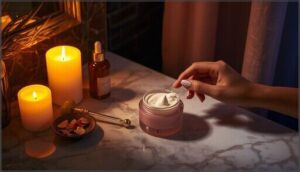
Your nighttime routine is where the real repair work happens. Once the day is done, your skin shifts into recovery mode — and how you layer your products makes all the difference.
Here’s exactly how moisturizer fits into that process.
Nighttime Routine Sequence
Your nighttime product order sets the stage for real repair and renewal while you sleep. Start with a cleanser, then move into any targeted treatments. Moisturizer comes last — it seals everything in and maintains your skin barrier function.
This sequence keeps overnight hydration levels where they need to be. Think of it as the evening skin care version of tucking your skin in for the night.
Pairing With Serums and Treatments
Serums do the heavy lifting — moisturizer just makes sure that work actually sticks. Apply your serum first, then wait one to two minutes before layering moisturizer on top.
This product layering approach enhances skin penetration and serum synergy by locking active ingredients against your skin. Treatment boost happens when moisturizers seal in retinol, vitamin C, or peptide serums during your nighttime skincare routine.
Nighttime Moisturizer Benefits
Your moisturizer does more than hydrate — it aids Night Repair while your body sleeps. Skin Regeneration speeds up three times faster at night, making Overnight Hydration and Barrier Support critical.
A ceramide-rich Moisturizer seals in active ingredients and boosts Collagen production over time.
Stick to this Skin Care Routine consistently, and these Moisturizing Tips will genuinely transform your Skin Hydration by morning.
How Moisturizer Locks in Hydration

Moisturizer does more than just sit on the surface — it actually works to keep water from escaping your skin.
Understanding the mechanics helps you see why timing and technique matter so much. Here’s what’s happening when you apply it.
How Moisturizers Trap Moisture
Think of your skin like a sponge — it can hold water, but only if something keeps it from evaporating. That’s where moisturizer earns its place in your skin care routine.
A good formula works in layers: humectants like hyaluronic acid pull water deep into your skin, ceramides reinforce the moisture barrier by filling gaps between skin cells, and emollients smooth the surface so hydration stays put.
Humectants draw water in, ceramides lock it down, and emollients keep it there — layered hydration that actually lasts
This combination — the humectant role drawing water in, the ceramide function locking it down — is what delivers real, lasting skin hydration lock.
Preventing Water Loss After Cleansing
Cleansing is a reset button — but it also opens the door for moisture to escape. That’s transepidermal loss at work: water evaporating through your skin barrier before anything seals it in.
Hydration timing matters here more than most people realize. Every minute you wait after using your cleanser, your moisture barrier loses ground.
Applying your moisturizer to slightly damp skin — within five minutes — aids water retention by giving humectants something to bind to. That quick window is your best shot at a real moisture lock.
Moisturizer Application for Dry, Oily, and Sensitive Skin
Not every skin type plays by the same rules regarding moisturizer. What works beautifully for dry skin can leave oily skin looking greasy by noon.
Here’s how to apply moisturizer based on what your skin actually needs.
Tips for Dry Skin Types

Dry skin drinks up moisture fast — so timing matters. Apply your moisturizer while your face is still slightly damp, right after cleansing.
Rich cream-based formulas work best for dry skin care, especially ones with hyaluronic acid, ceramides, and shea butter. For extra skin hydration, layer a facial oil on top. Facial oil benefits dry skin by sealing everything in overnight.
Lightweight Options for Oily Skin
Oily skin still needs hydration — just the right kind. Gel moisturizers are your best bet here. They deliver hyaluronic benefits without the greasy payoff.
Look for these features in your skincare routine products:
- Non comedogenic formulas that won’t clog pores
- Mattifying products with silica for oil control
- Lightweight hyaluronic acid for all-day hydration
- Gel-based, oil-free moisturizer options
Skip heavy creams entirely.
Fragrance-free Choices for Sensitivity
Sensitive skin doesn’t forgive harsh ingredients. Fragrance is one of the biggest triggers for irritation, redness, and flare-ups — so fragrance-free moisturizers aren’t just a preference, they’re a smarter choice for long-term skin health.
Look for hypoallergenic options with ceramides, glycerin, or hyaluronic acid. Gentle formulas like La Roche-Posay Toleriane or Illiyoon Ceramide Ato support your skincare routine without disrupting your skin’s natural balance.
Always patch test first.
How to Choose The Right Moisturizer

Finding the right moisturizer isn’t guesswork — it starts with knowing your skin. Once you understand what your skin needs, picking the right ingredients gets a lot easier.
Here’s what to look for when making your choice.
Identifying Your Skin Type
Your skin type is the foundation of every product matching decision you’ll make. Before choosing a moisturizer, do a quick skin analysis. Wash your face, wait an hour, then check the mirror. Shiny all over? That’s oily. Tight and flaky? Dry. Oily T-zone with drier cheeks? Classic combination. Reacts to almost everything? Likely sensitive.
This simple facial mapping exercise tells you more than any quiz online. Keep in mind that skin types shift with seasons, hormones, and age — so reassess every few months for better skin health.
Key Ingredients for Hydration
Once you know your skin type, ingredients become your roadmap. Not all moisturizers hydrate the same way — and the right combo makes a real difference.
- Hyaluronic acid pulls water into skin cells, delivering deep skin hydration and moisture
- Glycerin effects work similarly — its humectant properties draw and hold moisture at the surface
- Ceramide benefits include strengthening your barrier by mimicking natural skin lipids
- Fatty acids and cholesterol work alongside ceramides for lasting moisture retention
Look for moisturizers that combine at least two of these for best results.
Common Moisturizer Mistakes to Avoid

Even with the right moisturizer in hand, a few common habits can quietly work against you. Most mistakes come down to timing, amount, or a myth that oily skin doesn’t need hydration.
Here’s what to watch for.
Applying Out of Order
Order matters more than most people realize. In a skincare routine, applying moisturizer before your toner is like putting on socks over your shoes — it blocks everything that follows.
Proper product layering keeps your skin barrier intact and aids moisture lock. Always follow the correct skincare sequence: cleanser, toner, serum, then moisturizer.
Application timing isn’t minor — it directly affects how well each product actually works.
Using Too Much or Too Little
Getting moisturizer balance right is simpler than it sounds. A pea-sized amount covers your face — that’s genuinely all you need for proper product absorption and healthy hydration levels.
Using too much or too little disrupts your moisture barrier in opposite ways:
- Excess product clogs pores and slows your skin’s natural oil production
- Too little leaves skin tight and accelerates early aging
- Skin saturation shows up as greasiness within 15 minutes
- Skimping undermines the whole importance of moisturizer in your skin care routine
Skipping Moisturizer Due to Oily Skin
Skipping moisturizer because you have oily skin is one of the most common mistakes in any skincare routine. Here’s the irony — oily skin can still be dehydrated.
When your skin barrier lacks water, it overproduces oil to compensate. That means more shine, more breakouts, and a harder time with skin barrier repair.
A lightweight, oil-free face moisturizer meets your hydration needs without clogging pores.
Best Practices for Layering Skincare Products

Layering your products in the right order makes a real difference in how well they work. It’s not complicated once you know the logic behind it.
Here’s what to keep in mind as you build your routine.
Order of Serums, Oils, and Creams
Think of your skin care routine like getting dressed — lightest layers go on first. Start with your serum, since its thin, water-based consistency drives active ingredients deeper into the skin.
From there, apply your face oil, which sits comfortably in the middle of the moisturizer sequence. Oil benefits include reducing inflammation and boosting radiance.
Wait Times Between Steps
Layering techniques only work if you give each product time to actually settle. Rush through your skincare routine and you risk pilling, diluted actives, or a disrupted skin pH balance that weakens product absorption.
A simple rule: wait 30 seconds between lightweight steps like toner and serum. For active ingredient formulas — Vitamin C, AHAs — give it 15 to 20 minutes.
Your face moisturizer goes on last before sunscreen, with about 2 to 3 minutes in between. These small pauses are the skincare tips that quietly make everything else work better.
Expert Tips for Maximum Moisturizer Benefits
Getting the most from your moisturizer comes down to a few small but meaningful habits. How you apply it, when you reapply, and how you adjust with the seasons all make a real difference. Here’s what to know.
Patting Vs. Rubbing Application
How you apply your face moisturizer matters more than most people realize. Rubbing creates skin friction that can irritate sensitive skin and reduce product absorption. Patting — gently pressing with your fingertips — is the better application technique for most skin care routines.
- Pat serums and lightweight gels for deeper penetration
- Press thicker creams between palms first, then apply
- Avoid rubbing to prevent pilling and micro-trauma
This gentle touch promotes long-term skin health maintenance.
Adjusting Routine Seasonally
Your skin doesn’t stay the same year-round, so your moisturizer shouldn’t either. In summer, switch to a lightweight, gel-based formula to manage oil and environmental factors like heat and humidity. Come winter, layer a hydrating serum under a ceramide-rich cream to prevent moisture loss from cold, dry air.
This routine flexibility — adjusting your seasonal product as climate considerations shift — is how you keep maintaining healthy skin every month.
When to Reapply Throughout The Day
Most people forget that moisturizer doesn’t last forever. After exercise, sweat strips your barrier — reapply after exercise with a lightweight face moisturizer. Midday hydration matters too, especially in dry offices.
Post-meal skincare and rehydrating hands after washing keep skin soft throughout the day. Evening touchups before bed complete your skincare routine.
Skin care for dry skin especially benefits from this consistent reapplication habit.
Frequently Asked Questions (FAQs)
Do you put moisturizer before or after skincare?
Moisturizer fits right in the middle of your skincare routine. It goes on after your cleanser and toner, but before sunscreen.
That order protects your skin barrier and improves product absorption.
Can you moisturize too often each day?
Yes, you can overdoit. Slathering on moisturizer five times a day won’t give you five times the glow — it can clog pores and dull your skin. Twice daily is the sweet spot.
Does moisturizer expire or lose effectiveness over time?
It does. Opened moisturizers usually last 6 months to a year before product degradation sets in.
Watch for expiration signs like odd smells, separation, or texture changes — all signal effectiveness loss and potential skin irritation.
Should you moisturize before or after exercise?
After a workout, your skin has done the heavy lifting — now it’s your turn.
Rinse off sweat, then apply a lightweight moisturizer to restore gym hydration and support your post-workout routine.
Can moisturizer cause breakouts or clogged pores?
It can — but the moisturizer isn’t always the villain. Comedogenic ingredients like coconut oil or mineral oil trigger pore clogging and skin congestion in some skin types, leading to breakouts.
Is moisturizer necessary if you drink enough water?
Drinking enough water promotes skin health, but it can’t replace moisturizer. Water hydrates from within, while moisturizer seals that hydration at the skin barrier — especially essential for dry skin types.
Conclusion
Think of your skincare routine as a relay race—each product passes the baton to the next, and moisturizer is the anchor leg. Knowing when to apply moisturizer in your skincare routine means it doesn’t just sit on your skin; it works with everything before it.
Damp skin, correct layering, and consistent timing turn an ordinary step into real results. Get the sequence right, and your skin will show it.
- https://www.wikihow.com/Apply-Moisturizer
- https://realitypathing.com/when-to-apply-moisturizer-for-optimal-skin-absorption/
- https://glossstreet.com/when-to-apply-moisturizer-in-your-skincare-routine/
- https://www.glamour.com/story/how-to-apply-moisturizer
- https://onlinelibrary.wiley.com/doi/10.1111/jocd.13777