This site is supported by our readers. We may earn a commission, at no cost to you, if you purchase through links.
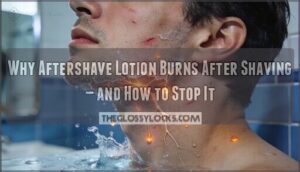
That familiar sting hits the moment aftershave touches your face—sharp, sudden, impossible to ignore.
Most people chalk it up to “that’s just how it works,” but there’s real biology behind why aftershave lotion burns after shaving.
Alcohol in aftershave activates pain receptors called TRPV1—the same ones that fire when you touch something hot.
Meanwhile, shaving has already stripped your skin barrier down to almost nothing, leaving exposed nerve endings and microscopic cuts wide open.
The burn isn’t random.
It’s a predictable reaction—and once you understand what’s triggering it, stopping it becomes a lot more straightforward than you’d expect.
Table Of Contents
- Key Takeaways
- Why Does Aftershave Lotion Burn After Shaving?
- Common Aftershave Ingredients That Cause Burning
- How Shaving Technique Influences Aftershave Burn
- Identifying When Aftershave Burn is a Problem
- Tips to Prevent Aftershave Lotion Burn
- Effective Remedies for Aftershave Burn
- Frequently Asked Questions (FAQs)
- Is it normal for aftershave lotion to burn?
- Why does it sting when I put lotion on after shaving?
- Does aftershave burn if you haven’t shaved?
- Can aftershave burn damage skin over time?
- Does diet affect skin sensitivity after shaving?
- Are natural aftershaves better for sensitive skin?
- How does climate impact aftershave burn severity?
- Can aftershave burn affect beard growth patterns?
- Conclusion
Key Takeaways
- Aftershave burns because alcohol and other ingredients hit freshly shaved skin with a weakened barrier, micro-cuts, and exposed nerve endings, triggering pain receptors similar to a heat response.
- High-ethanol formulas, menthol, fragrances, preservatives, and some antibacterial agents all increase sting, dryness, and irritation, especially if you already have sensitive or allergy-prone skin.
- shaving technique—blade sharpness, shaving with the grain, light pressure, good lubrication, and proper pre-shave prep—can either minimize or massively worsen aftershave burn.
- prevent and calm aftershave burn by choosing alcohol-free, fragrance-free, skin-type-matched products, using soothing ingredients like aloe or chamomile, and seeking medical help if redness, swelling, pus, or systemic symptoms appear.
Why Does Aftershave Lotion Burn After Shaving?
That sharp sting right after applying aftershave isn’t just in your head — there’s real science behind why it happens.
Curious what’s actually going on at a molecular level? The science behind why aftershave stings explained breaks it down in a way that finally makes sense.
Several things work together to make your skin react that way.
Here’s what’s actually going on.
Alcohol Content and Its Effects
Most alcohol-based aftershaves contain 40–70% ethanol — and that’s exactly why they sting. The moment it touches freshly shaved skin, ethanol triggers TRPV1 activation in exposed nerve endings, which your brain reads as burning. It also disrupts your lipid barrier, stripping natural oils quickly.
Here’s what’s actually happening:
- High ethanol concentration causes rapid evaporation cooling, followed by inflammation
- Lipid barrier disruption leaves skin dry and unprotected
- Antiseptic action, while helpful, irritates microscopic cuts
- Fragrances intensify the sting alongside alcohol-based aftershave ingredients
- Fatty alcohol alternatives like glycerin cause far less skin irritation
Skin Sensitivity Post-Shave
Even before the aftershave touches your skin, it’s already in a vulnerable state. Shaving strips away your barrier, leaving sensitive skin exposed and craving barrier recovery.
Think of it like sunburn — anything you apply feels amplified. That’s why fragrance‑free options and smart hydration strategies matter so much.
A quick cool compress beforehand can genuinely reduce that sting before it starts. This is because shaving disrupts skin barrier.
Microscopic Cuts and Nerve Exposure
Your already sensitive skin also has thousands of tiny microtears.
Each nick disrupts barrier lipid loss, exposes nerve endings, and lets aftershave ingredients hit deeper layers.
That Nerve Endings Activation sends sharp signals along sensory fiber types, feeding Razor Burn and Skin Irritation.
Until the Microtear Healing Timeline finishes and inflammatory mediator release settles, soothing agents are your best friend.
Fragrances and Other Irritants
Fragrances hit those microtears next, and that’s where many people really feel Aftershave Lotion burn, especially if you have Sensitive Skin and use Alcohol-based Aftershave. Patchy redness or stinging is your clue.
- Fragrance allergens from complex mixes
- Essential oil irritants like oakmoss
- Synthetic musks lingering, stressing skin
- Preservative reactions from formaldehyde releasers
- Masking fragrances defeating “unscented” labels; Soothing Agents needed
For hypoallergenic product recommendations, consider hypoallergenic product recommendations.
Common Aftershave Ingredients That Cause Burning

The burn doesn’t just happen because your skin is raw — what’s actually in your aftershave plays a big role too.
For a breakdown of which ingredients actually soothe instead of sting, this guide on choosing calming, skin-friendly aftershaves helps.
Some ingredients are genuinely useful, but they can also be surprisingly harsh on freshly shaved skin.
Here’s a closer look at the main culprits worth knowing about.
Alcohol-Based Vs. Alcohol-Free Formulas
Here’s the real divide: alcohol concentration.
Alcohol-based aftershave (think 50–90%) triggers TRPV1 activation — those nerve receptors that scream “fire!” the moment it hits your freshly shaved skin. It also strips your skin barrier, setting you up for long‑term dryness.
Alcohol-free formulas skip all that, making them the smarter pick for skin irritation‑prone or sensitive skin types. Know your skin type suitability before grabbing any bottle.
Role of Menthol, Fragrances, and Preservatives
Beyond alcohol, three more culprits quietly crank up the burn: menthol, fragrances, and preservatives.
Menthol’s sensory impact comes from activating cold receptors — its cooling counterirritant effects can flip to sharp pain on raw skin.
Fragrance allergen load adds another layer of skin irritation risk, especially in alcohol-based aftershave.
Preservative irritation potential and formulation ingredient interactions are often underestimated causes of stubborn razor burn.
How Antibacterial Agents Affect Skin
Antibacterial agents in aftershave offer real protection, but they come with trade‑offs. Ingredients like triclosan cause barrier disruption within 24 hours and trigger inflammatory cytokines that inflame already raw skin. Antiseptics like chlorhexidine cause a microbiome shift, reducing beneficial bacteria by nearly half. Allergenic preservatives also drive resistance development over time.
Gentler options — witch hazel and aloe vera — deliver solid antibacterial protection without torching your skin barrier.
How Shaving Technique Influences Aftershave Burn

How you shave matters just as much as what you put on afterward.
Every pass of the razor can either protect your skin or set it up to sting when aftershave hits.
Let’s look at the key parts of your shaving routine that make the biggest difference to aftershave burn.
Razor Sharpness and Skin Damage
Think of your razor blade like a kitchen knife — a dull one tears, a sharp one glides.
Blade edge microtrauma from a worn or corroded blade creates clusters of tiny skin injuries, flooding the area with exposed nerve endings. Corrosion-induced roughness and multi-blade contact compound this.
Sharpness vs irritation balance means less razor burn and far calmer post-shave care.
Shaving Direction and Pressure
How you move the razor matters just as much as what you put on afterward. Grain alignment — shaving with your hair’s natural direction first — dramatically cuts down on skin irritation.
Pair that with pressure control: let the blade glide; don’t push it. Angle consistency around 30–45 degrees keeps blade glide smooth, reduces passes needed, and makes aftershave burn prevention far more manageable.
Pre-Shave Preparation and Lubrication
What you do before blade touches your face changes everything. Warm water softening — about 30 to 60 seconds — opens pores and relaxes hair shafts considerably.
Then layer smart:
- Exfoliation timing matters: do it 2–3 times weekly, never right before shaving
- Pre‑shave oil types like jojoba mimic your skin’s natural sebum
- Lubricant layering technique: oil first, then shaving cream on top
- Skin hydration locks in moisture, reducing friction and post‑shave burn
Identifying When Aftershave Burn is a Problem

A little sting after shaving is totally normal — it usually fades within a minute or two as the alcohol evaporates.
But sometimes what you’re feeling is more than just a quick burn, and your skin is trying to tell you something.
Here’s how to tell the difference between a minor reaction and something that actually needs your attention.
Signs of Allergic Reactions
Sometimes skin isn’t just irritated — it’s actually allergic. Watch for urticaria outbreaks: raised, itchy welts that appear right where aftershave ingredients touched sensitive skin.
Localized swelling along the jawline, itching and tingling that won’t quit, or even respiratory clues like sneezing signal a true reaction.
Systemic severe signals — dizziness, throat tightness — mean stop everything and get help fast.
Symptoms of Infection or Severe Irritation
Beyond allergy, you also need to watch for signs that simple Razor Burn is becoming an infection or severe Skin Irritation:
- Pus discharge or yellow crust on shaved areas.
- Red streaking spreading out from the shave.
- Warmth sensation that persists after cooling.
- Increasing pain and deep throbbing.
- Systemic fever, chills, and fatigue despite good Postshave Care, Antibacterial Protection, and Soothing Agents.
When to Seek Medical Advice
razor burn clears up in a day or two with good postshave care.
But skin irritation lingers beyond three days, or you notice swelling, spreading redness, or fever, those are medical thresholds worth taking seriously.
Severe reactions — especially hives, throat tightness, or dizziness — need urgent care fast.
Don’t tough it out.
Sensitive skin and hidden aftershave ingredients can trigger real skin infections.
Tips to Prevent Aftershave Lotion Burn
If aftershave burn keeps ruining an otherwise good shave, the good news is you can change that with a few simple tweaks. The matching your products and routine to what your skin actually needs, instead of just grabbing whatever’s on the shelf.
Here’s how to set things up so your aftershave feels soothing instead of harsh.
Choosing The Right Aftershave for Your Skin Type

Picking the right aftershave really comes down to skin type matching.
Oily skin? A light cooling gel works well.
Dry or sensitive skin does better with moisturizing balms packed with glycerin or aloe — not alcohol‑based aftershave that strips what little moisture you have left.
Fragrance‑free options cut your irritation risk considerably.
Think of it like choosing shoes — fit matters more than looks.
Alcohol-Free and Sensitive Skin Options

If aftershave always feels like fire, AlcoholFree options give your Sensitive Skin a break.
- Fragrance-Free Formulas with Cool-Down Aloe and other Soothing Agents calm the sting quickly.
- A gentle Aftershave Balm or Ceramide Enriched Balms pack Barrier Repair Ingredients.
- Light, Non-Comedogenic Gels hydrate without clogging, reducing bumps and Skin Irritation.
- You feel safer, more in control, instead of bracing yourself daily.
Post-Shave Skin Care Best Practices

Building a simple PostShave Care routine keeps your skin calm instead of angry.
Start with a Cool Water Rinse and Gentle Cleanser use to clear residue without stripping oils.
Then focus on Moisturizer Timing, sealing in skin hydration right after your aftershave lotion and soothing agents.
Avoid Tight Clothing and commit to regular blade replacement to cut skin irritation.
Effective Remedies for Aftershave Burn

The good news is that aftershave burn doesn’t have to ruin your morning. Whether it hits hard or just lingers a bit, there are some straightforward ways to calm your skin down fast.
Here’s what actually works.
Soothing Ingredients (Aloe Vera, Chamomile, Etc.)
Nature has some genuinely good answers here. Aloe vera brings immediate aloe hydration — its enzymes actually block pain signals in irritated skin. Chamomile works through chamomile anti-inflammation by calming nerve hypersensitivity.
Calendula healing speeds up nick closure, while oat barrier protection shields freshly exposed skin. Lavender relaxation eases tight post-shave pores.
These natural skincare ingredients turn your aftershave ingredients and effects from a burning problem into a soothing ritual.
Home Treatments for Quick Relief
Your kitchen probably holds better razor burn relief than most pharmacy shelves. Try these natural skincare alternatives before reaching for anything fancy:
- Press a Cold Compress on the burn for 5–10 minutes to calm nerve firing fast.
- A quick Baking Soda Rinse (one tablespoon per cup of water) reduces sting effectively.
- A Honey Yogurt Mask hydrates while fighting bacteria in tiny cuts.
Witch Hazel Spray, an Oatmeal Bath, and aloe all deserve a spot in your post-shave care routine.
Adjusting Your Shaving and Aftershave Routine
Think of your routine as a reset, not a punishment for your skin.
Treat your shaving routine as a gentle reset for your skin, never as punishment
Tighten your Blade cleaning schedule, focus on gentle Shaving Technique, and try Pre‑shave oil usage to cut friction.
Follow with a Cooling post‑shave compress, light Aftershave Lotion with kinder Aftershave Ingredients, smart Shave frequency adjustment, and a Moisturizer layering technique to calm Razor Burn and Skin Irritation.
Frequently Asked Questions (FAQs)
Is it normal for aftershave lotion to burn?
Yes, burning from Aftershave Products is common.
For Sensitive skin, Razor burn, or Skin irritation, focus on Skin barrier repair, pH balance, post‑shave cooling, Soothing Agents and Skin Relief, product patch testing, and usage frequency.
Why does it sting when I put lotion on after shaving?
Shaving strips your skin’s protective barrier, leaving exposed nerve endings and micro-cuts vulnerable.
When aftershave ingredients — especially alcohol — hit that raw surface, your nerves fire immediately.
That sharp sting is basically your skin saying, "Too soon.
Does aftershave burn if you haven’t shaved?
Yes, aftershave can burn even on unshaved skin. Alcohol-based aftershave, fragrance sensitivity, and compromised barrier integrity all trigger skin irritation — cold weather effect and sensitive skin make it noticeably worse.
Can aftershave burn damage skin over time?
Yes — over time, repeated aftershave burn can cause barrier degradation, chronic irritation, and long-term sensitization, quietly accelerating skin aging and cumulative moisture loss if you ignore the warning signs.
Does diet affect skin sensitivity after shaving?
What you eat quietly shapes how your skin reacts after shaving.
Inflammatory foods, sugar spikes, and poor hydration raise skin sensitivity — while omega‑3 intake and balanced nutrition genuinely support a calmer post-shave routine.
Are natural aftershaves better for sensitive skin?
Natural aftershaves often suit sensitive skin.
Botanical soothing agents, Fragrance‑free formulas, Glycerin hydration, Witch‑hazel benefits, Natural Astringents, and a Plant‑oil barrier replace harsher aftershave ingredients.
This eases Skin Irritation and makes your soothing aftershave feel gentler.
How does climate impact aftershave burn severity?
Climate modulates how Low humidity dryness, High humidity sweat, Cold temperature constriction, Hot temperature vasodilation, Seasonal allergy interaction influence Skin Irritation, Aftershave Ingredients feel, Skin Hydration, overall Razor Burn and Prevention, especially on Sensitive skin.
Can aftershave burn affect beard growth patterns?
Yes — repeated aftershave burn can trigger follicle inflammation, disrupt the hair growth cycle, and cause hair shaft weakening over time. Chronic skin irritation even raises scarring alopecia risk.
Conclusion
Studies show nearly 60% of men experience skin irritation after shaving—yet most never question what’s actually in their aftershave.
Now you know why aftershave lotion burns after shaving: exposed nerve endings, a weakened skin barrier, and alcohol that basically lights your face on fire. That’s not dramatic—that’s chemistry.
The good news? It’s completely fixable. Choose gentler formulas, prep your skin properly, and your post-shave routine stops being something to dread—and starts actually working for you.
- https://flavor365.com/your-definitive-guide-to-aftershave-and-skin-health/
- https://shaventheory.com/why-does-aftershave-burn/
- https://en.shavesafe.dk/blogs/articles/aftershave-uden-parfume-fordele
- https://eathealthy365.com/aftershave-explained-benefits-for-your-skin-how-it-works/
- https://www.stratumclinics.com/types-of-aftershave-ingredients-that-can-irritate-acne/