This site is supported by our readers. We may earn a commission, at no cost to you, if you purchase through links.
Your beard shouldn’t feel like sandpaper scraping against dry kindling, yet here you are—scratching, flaking, wondering why facial hair turned into a constant irritation. That maddening itch isn’t rebellion from your follicles. It’s your skin sending an SOS about disrupted moisture balance, stripped protective oils, and compromised barrier function beneath those coarse strands.
The culprits range from harsh sulfate cleansers that strip sebum to low-humidity environments that pull water straight from your epidermis. Meanwhile, conditions like seborrheic dermatitis or folliculitis can transform minor discomfort into persistent inflammation.
Understanding the dermatological mechanisms behind beard dryness reveals exactly how to restore comfort and why generic advice rarely tackles your specific texture, growth pattern, and skin chemistry.
Table Of Contents
Key Takeaways
- Beard dryness and itchiness stem from a disrupted moisture balance caused by harsh sulfate cleansers stripping protective sebum, low-humidity environments increasing transepidermal water loss, and underlying conditions like seborrheic dermatitis or folliculitis creating persistent inflammation.
- Coarse beard texture amplifies discomfort through mechanical friction against skin, while dense growth patterns trap sweat and debris, creating microenvironments that worsen irritation and increase the risk of ingrown hairs.
- Effective treatment requires sulfate-free cleansers used 2-3 times weekly, daily application of beard oils containing jojoba or argan to mimic natural sebum, and regular exfoliation with salicylic acid to prevent pore blockage and dead cell buildup.
- Persistent symptoms lasting beyond two weeks—including redness with warmth, swelling, pain, pus-filled bumps, patchy hair loss, or severe flaking—require immediate dermatological evaluation to rule out bacterial infections, fungal conditions like tinea barbae, or autoimmune disorders like alopecia areata.
Why Does My Beard Feel Dry and Itchy?
Your beard feels dry and itchy because something has disrupted the balance between your skin, hair follicles, and the environment around them. The causes range from simple dehydration to underlying dermatologic conditions that require specific attention.
Beard dryness and itchiness signal a disrupted balance between your skin, follicles, and environment—ranging from simple dehydration to underlying dermatologic conditions
Let’s break down what’s triggering your discomfort so you can address it effectively.
Common Causes of Beard Dryness
Your beard’s dryness often comes from environmental stressors and grooming mistakes that strip natural oils. Dry air effects and skin pH balance play vital roles in beard care, impacting moisture retention and comfort.
- Hot water and harsh cleansers remove protective lipids during washing
- Low humidity environments increase transepidermal water loss from facial skin
- Alcohol-based aftershaves evaporate surface moisture rapidly
- Insufficient beard oil benefits leave hair and skin undernourished
Typical Triggers of Beard Itchiness
Dry skin under your facial hair reduces sebum distribution and raises transepidermal water loss by up to 25 percent. Harsh cleansers strip lipids, while low humidity levels during winter worsen beard care challenges.
Friction from coarse hair provokes mechanical irritation. Allergic or irritant reactions to fragrances manifest as itchy beard symptoms within 24 to 72 hours. A consistent beard wash routine helps remove irritants and soften coarse hair, reducing both mechanical friction and exposure to potential allergens.
Folliculitis and ingrown hair further compound discomfort when skin pH becomes unbalanced or beard porosity increases. Preventing this requires consistent cleansing and exfoliation, which natural beard health remedies can support through gentle, pH-balanced care.
How Beard Texture Affects Discomfort
Coarse strands lift off your skin and create friction that amplifies irritation with every head turn. Fine hair glides more smoothly, reducing mechanical discomfort. Curl pattern matters too—tighter curls trap heat and moisture, worsening itch perception. Proper beard hygiene and conditioning smooth rough cuticles, lowering hair texture–driven skin irritation and supporting overall beard health.
- Bristled edges scrape against your skin, turning minor dryness into relentless discomfort
- Dense growth traps sweat and debris, creating a micro-environment that fuels persistent itchy beard episodes
- Split ends increase beard friction at the follicle, making ingrown hair and inflammation more likely
Dry Skin Under The Beard: Main Culprit
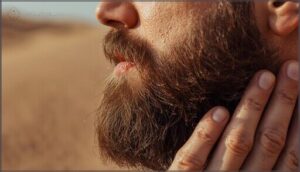
Dry skin is the most frequent reason your beard feels uncomfortable. When the skin beneath your beard loses moisture and natural oils, irritation follows quickly. Two main factors strip your facial skin of hydration and trigger that persistent itch.
Loss of Natural Oils and Moisture
Your facial skin relies on sebum production to maintain oil balance and skin hydration. When natural oils decline, you’ll experience dry skin and an itchy beard. Reduced moisture levels weaken your lipid barrier, allowing water loss. Lipid restoration through proper skin care and beard oil can replenish what’s missing. Here’s how different factors affect skin moisturizing: Switching to beard oils designed for dry climates can significantly boost your skin’s ability to retain moisture throughout the day.
| Factor | Effect on Skin | Solution |
|---|---|---|
| Low sebum | Increased dryness | Daily beard oil |
| Barrier disruption | Moisture loss | Occlusive balm |
| Dehydration | Reduced elasticity | Water intake |
| Oil deficiency | Heightened itch | Moisturizer application |
Environmental Factors (Weather, Pollution)
Beyond your control, external conditions directly damage your skin barrier and worsen beard health. Cold weather, low humidity levels, and air pollution strip moisture through transepidermal water loss. Wind exposure raises mechanical irritation, while seasonal variations alter sebum production. Climate change intensifies these triggers, leading to dry skin, itchy beard episodes, and persistent skin conditions requiring targeted skin care interventions. Men with sensitive skin need specialized approaches that account for both environmental stressors and individual skin reactions, which is why facial hair care for sensitive skin focuses on gentle, barrier-strengthening products.
- Cold air increases dryness by reducing ambient moisture retention.
- Particulate pollutants disrupt lipid organization and barrier function.
- Low humidity correlates with heightened perceived itch severity.
- Wind elevates epidermal friction and inflammatory responses.
Skin Conditions That Cause Beard Itch
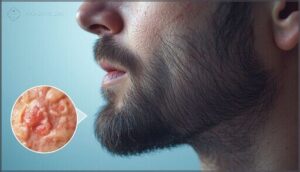
Dry skin isn’t always the whole story. Sometimes an underlying skin condition drives the persistent itch and irritation you’re experiencing in your beard area.
Let’s examine three specific dermatologic disorders that commonly affect the beard-bearing skin.
Seborrheic Dermatitis and Beard Dandruff
You might spot greasy yellowish flakes clinging to your beard—that’s often seborrheic dermatitis at work. This skin condition stems from Malassezia fungal activity in sebaceous-rich areas, triggering inflammation and beard dandruff.
Symptoms include itchy beard patches, dry skin with erythematous scaling, and persistent flaking.
Treatment combines antifungal ketoconazole shampoo, skin barrier repair with emollients, and zinc pyrithione products for effective dandruff prevention.
Folliculitis and Ingrown Hairs
Red bumps beneath your beard often signal folliculitis—a follicle infection caused by Staphylococcus aureus or Pseudomonas. Bacterial folliculitis produces pustules and itchy beard discomfort.
Ingrown hair develops when curly hair curls back into skin, creating pseudofolliculitis barbae. Both conditions worsen beard itch.
Ingrown prevention includes sharp razors and proper moisturizing. Persistent cases warrant topical antibiotics to prevent scarring.
Fungal Infections (e.g., Tinea Barbae)
Fungal infections like tinea barbae attack hair follicles in your beard area, causing scaly patches and hair loss. Dermatophytes such as Trichophyton spread through contact with infected animals or contaminated objects, producing itchy symptoms that worsen without antifungal treatment.
- Erythematous lesions appear on chin and jawline with noticeable pruritus
- Secondary bacterial skin infections may complicate fungal dermatitis treatment
- Systemic antifungal medications like terbinafine provide effective fungal treatment versus topical antifungal remedies alone
Diagnosis requires fungal culture or KOH microscopy. Beard hygiene alone won’t clear tinea barbae—you’ll need prescription antifungal medications and treatments spanning several weeks for complete resolution. Understanding language patterns can help in researching and identifying the causes of such infections.
Effective Solutions for Dry, Itchy Beards
You don’t have to suffer through the itch and irritation any longer. A few targeted changes to your beard care routine can restore comfort and health to both your facial hair and the skin beneath it.
Let’s break down the essential steps that actually work.
Proper Beard Hygiene and Cleansing
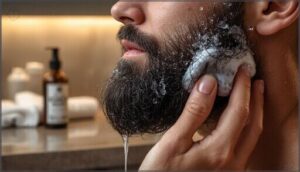
Cleansing your beard 2–3 times weekly with a sulfate-free, pH-balanced cleanser removes excess oil and debris without stripping natural moisture.
Massage the product into the skin beneath your beard, then rinse thoroughly with warm water to prevent residue buildup that worsens beard itch.
Pat dry gently and apply beard oil immediately to lock in hydration and support healthy facial hygiene.
Choosing Gentle Shampoos and Conditioners

Select sulfate-free beard shampoo formulated with mild surfactants like decyl glucoside to preserve your skin’s moisture balance without harsh stripping. Pair with conditioners rich in natural oils—jojoba, argan—to restore hydration and calm beard itch.
Gentle formulas free of synthetic fragrance reduce contact dermatitis risk while supporting effective beard care and maintenance that protects your follicles and underlying skin.
Daily Moisturizing With Beard Oils or Balms

After cleansing, you’ll lock in moisture by applying beard oil or balm directly to damp skin and hair. These products deliver carrier oils—jojoba, argan—that mimic your natural sebum, strengthen the skin barrier, and prevent transepidermal water loss.
Daily moisturizing techniques boost beard oil benefits and itchy beard solutions:
- Warm a few drops between your palms.
- Massage into roots, reaching dry skin beneath.
- Distribute through beard tips for complete hair hydration.
- Use balm ingredients like beeswax for extended protection.
- Apply twice daily to support beard growth and health and sustained beard care and maintenance.
Regular Exfoliation and Beard Maintenance
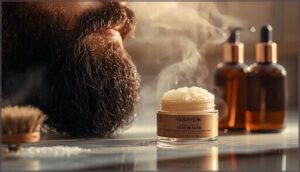
Beyond daily oil, you’ll need exfoliation techniques that clear dead cells and prevent pore blockage. Gentle products with salicylic acid or rounded scrubs promote skin renewal without damaging your beard maintenance routine. Exfoliate once or twice weekly to reduce beard itch and flaking.
Pair this step with beard hygiene essentials—mild cleansers, grooming tips from dermatologists, and beard care products suited to your skin type for a complete daily routine.
When to Seek Professional Help
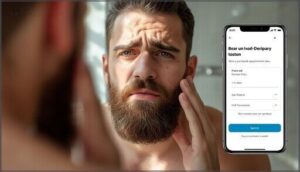
Most beard itch resolves with proper care and moisturizing. However, certain symptoms signal that your skin condition requires professional evaluation by a dermatologist or healthcare provider.
You should seek medical attention if you experience any of the following warning signs.
Persistent Redness, Swelling, or Pain
Redness that lingers beyond two weeks signals your skin is fighting something deeper than simple dryness. Watch for warmth radiating from your beard area, swelling that doesn’t resolve overnight, or sharp pain when you touch your face. These infection signs—especially if accompanied by pus or fever—demand immediate medical attention. Folliculitis, seborrheic dermatitis, or even cellulitis may be brewing beneath those whiskers.
Key warning signs requiring professional evaluation:
- Persistent redness lasting more than 14 days despite improved hygiene
- Facial swelling accompanied by warmth or tenderness
- Pain that intensifies rather than improves with standard itch relief measures
- Pus-filled bumps or discharge indicating bacterial infection
- Fever or systemic symptoms suggesting skin inflammation has spread beyond the beard
Signs of Infection or Severe Flaking
Thick crusting or oozing from your beard signals infection rather than routine dryness. Fungal infections like tinea barbae create ring-shaped skin lesions with scaly borders, while folliculitis produces itchy pustules around hair shafts. Seborrheic dermatitis causes severe beard dandruff with greasy yellow scales.
If flaking symptoms persist despite treatment, or you notice spreading beard crusting, diagnostic testing can pinpoint whether bacteria, yeast, or fungi are driving your skin irritation and guide targeted relief.
Hair Loss or Unusual Skin Changes
Patchy hair loss in your beard may indicate alopecia areata, affecting roughly 0.1% to 0.2% of people, or telogen effluvium following systemic stress.
Fungal infections like tinea barbae produce scaly skin lesions and beard patches with persistent itch. Folliculitis can cause hair thinning through follicle inflammation.
Seborrheic dermatitis worsens dry skin beneath facial hair, requiring targeted itch relief and remedies.
Frequently Asked Questions (FAQs)
Can diet or nutrition affect beard dryness?
Your diet won’t fix dryness alone, but nutrient deficiencies in omega-3 benefits, zinc, and hydration levels can worsen beard itch.
Dietary patterns supporting skin supplements—like fatty fish and adequate water—improve barrier function and moisture retention.
Does beard length influence itchiness and dryness?
Beard length does influence discomfort. Shorter beards expose more skin, increasing irritation.
Longer beards trap sebum, reducing moisture loss but requiring diligent grooming habits to prevent buildup that worsens beard itch and alters the skin microclimate beneath.
How often should I wash my beard?
Your washing frequency hinges on skin type and beard length. Oily complexions tolerate daily cleansing, while dry or sensitive skin thrives with 2–3 washes weekly using sulfate-free formulas to preserve skin moisture levels and minimize beard itch.
Are there specific fabrics that worsen irritation?
Yes, certain textiles can worsen beard discomfort. Polyester traps heat and moisture, while coarse wool creates friction.
Opt for breathable fabrics like 100% cotton to minimize skin irritation and reduce itchy triggers.
Can stress or hormones cause beard problems?
Chronic stress elevates cortisol, which disrupts hormone balance and reduces sebum production, leading to drier skin and increased itch triggers.
Hormonal shifts also affect beard health by altering growth cycles and skin sensitivity.
Conclusion
Scratching the surface of why my beard feels dry and itchy reveals straightforward dermatological solutions. Compromised skin barrier function, depleted sebum production, and environmental stressors create that relentless discomfort.
Targeted hydration with non-comedogenic oils, gentle sulfate-free cleansers, and consistent exfoliation restore moisture balance beneath coarse strands.
Persistent inflammation, hair loss, or spreading redness warrant immediate dermatological evaluation. Address the underlying epidermis, and your beard transforms from irritant to comfortable extension of healthy skin.