This site is supported by our readers. We may earn a commission, at no cost to you, if you purchase through links. This content is for general informational and educational purposes only and is not a substitute for professional medical, dermatological, or nutritional advice.

You open the jar and get hit with smoke. Not perfume, not vanilla. Smoke, like a campfire met a hazelnut.
So why does shea butter smell this way? Blame the kernels. Traditional roasting over open flame adds guaiacol, the same compound behind smoky aromas elsewhere, while natural fats and polyphenols layer on nutty, earthy notes. Refined versions lose all of it, which is why they smell like almost nothing.
Here’s the tricky part. Some funk is perfectly normal. Some means your butter has turned. Knowing the difference keeps your skin safe and your money in your jar.
Table Of Contents
Key Takeaways
- That smoky, nutty smell comes from kernels roasted over open flame, which leaves guaiacol behind, plus natural fats and polyphenols, so it’s a sign your butter is genuinely unrefined.
- Refined shea butter has most of its aroma stripped out, so you’ll get a mild, consistent scent, while raw butter varies from batch to batch by region, season and storage.
- A sharp, sour or old-oil smell, brown or gray color, a slimy feel or dark spots mean your butter has spoiled and you should toss it, while white separation is harmless.
- Store it cool, dark and sealed in glass, and keep your cupboard below 77°F (25°C), because heat and air speed up oxidation and turn that pleasant aroma rancid.
Why Does Shea Butter Have a Smell?
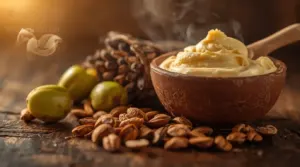
That earthy, smoky scent isn’t a flaw. It’s the sign of real, unrefined shea butter. Here are the two things behind it, so you know exactly what you’re smelling.
If you’re curious how this natural, nutty-smelling butter behaves on your strands, this guide to using shea butter on high porosity hair breaks it down.
Natural Nutty and Earthy Aromas
A nutty, earthy smell isn’t a flaw. It’s chemistry doing its job. Here’s what’s behind it:
- Fatty acid oxidation: oleic and linoleic acids break down into aldehydes and ketones.
- Aroma compounds: benzaldehyde adds almond notes, 3-methylbutanal adds malty ones.
- Polyphenols: they give the earthy, balsamic undertone.
- Vitamin E: it keeps everything balanced.
Shea butter contains only about 100ppm of Vitamin E, and this low Vitamin E content reflects its natural oxidative stability.
Normal? Absolutely.
Smoky Notes From Traditional Roasting
Now for the smoky part. Blame the fire. Traditional processing roasts the kernels over open flame before grinding, and that roasting step leaves guaiacol behind, the same compound in roasted coffee.
That smoky whiff in unrefined shea butter comes from kernels roasted over flame, leaving the same guaiacol found in your morning coffee
| Compound | Smell |
|---|---|
| Guaiacol | Smoky |
| Furfural | Toasty |
| p-Cresol | Woody |
Smoky means genuinely unrefined. Good sign.
Raw Vs. Refined Shea Butter Scent
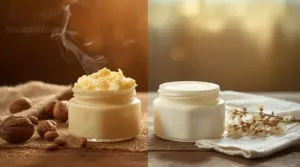
So which one are you holding? That depends on how it was made.
| Type | Scent | Consistency |
|---|---|---|
| Raw | Nutty, earthy, smoky | Varies by batch |
| Refined | Mild or nearly odorless | Steady and predictable |
Raw shea butter keeps its natural aroma compounds, so you get that nutty, smoky character. How strong? It shifts with the region, harvest season, and how the nuts were stored. Two jars can smell different, and that’s normal.
Color varies just as much as scent, and this guide to yellow versus white shea butter explains why shade alone says little about purity.
Refined shea butter is filtered and processed, which strips out most of those aromatic compounds. The result is mild, almost scentless, and consistent from jar to jar. Want a gentle fragrance? Go refined. Want the full, unrefined shea butter scent and all its character? Go raw. Neither is wrong. It’s your call.
Normal Shea Butter Smell Vs. Rancidity
Your shea butter smells strong, and now you’re wondering if that’s normal or a red flag. Good news: you can tell the difference by nose alone. Here’s what to look for, starting with the scents that are fine and ending with the signs it’s gone bad.
Recognizing Normal Scent Variations
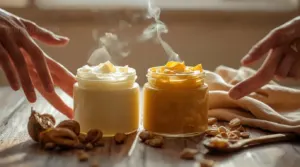
Your friend’s jar smells smokier than yours. Panic? No. That’s normal variation in unrefined shea butter.
| Trait | Normal range | Cause |
|---|---|---|
| Scent | Nutty, smoky | Roasting |
| Color | Ivory to yellow | Harvest |
| Strength | Fades quickly | Skin contact |
| Batches | Differ | Region |
Expect the shea butter natural smell to shift with region, season and storage. Fresh batches smell much stronger, then mellow with age. Relax.
For a closer look at how region, season and storage change the aroma, see this guide on what causes shea butter’s natural scent to vary.
Signs Your Shea Butter Has Spoiled
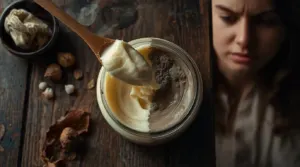
Usually, your nose catches rancid shea first. Sour or sharp, like old cooking oil? Toss it.
Check the rest too:
| Sign | Meaning |
|---|---|
| Brown or gray color | Degrading |
| Sticky or slimy feel | Spoiled |
| Gray or black spots | Mold |
White separation? Harmless. That’s just re-solidified fat, not spoilage, as long as the smell stays pleasant.
When in doubt, just throw it out.
Storage and Shea Butter Scent Changes

Heat, light, air, and water are what change your shea butter’s scent over time. Good storage keeps that nutty aroma steady. Poor storage turns it into a rancid smell. Here’s your oxidation prevention plan:
- Keep it cool, ideally 59–68°F (15–20°C).
- Choose a tightly sealed glass jar.
- Block light with opaque containers or a dark cupboard.
- Scoop with a dry spatula, never wet fingers.
- Skip the bathroom. Steam and temperature swings are trouble.
Worried about a stronger aroma after your butter melts and resets? Relax. Heat cycling can intensify the scent without meaning anything went wrong. Above 77°F (25°C), though, oxidation speeds up, and sour or waxy notes are product spoilage signs. A small digital thermometer for storage lets you check that your cupboard stays below that 77°F mark all year.
Want shelf life extension? Freeze it in sealed portions.
Making Shea Butter’s Natural Scent Less Noticeable
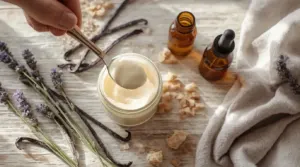
Worried that taming the scent means ruining the butter? Relax. You can soften it without touching what makes shea work.
Start simple. Warm a small scoop between your fingertips before applying. The natural scent fades on skin within 15 to 30 minutes, so the earthy, smoky note rarely lingers.
Want less scent from the jar itself? Choose a naturally refined butter, processed with steam and clay filters rather than solvents. It’s nearly odorless and still nourishing. Just know that shea butter deodorization, even the gentle kind, trims some skin-active compounds.
Prefer to keep it raw? Try fragrance masking. Whip in a few drops of lavender or vanilla for smart essential oil pairing. Sea salt scents work too.
Scent isn’t the enemy. Fix it, don’t fear it.
Frequently Asked Questions (FAQs)
Does shea butter smell fade after applying to skin?
Most people can’t detect any shea scent by the 30-minute mark. The smoky, earthy punch of unrefined shea scent fades fast as volatile compounds evaporate from your skin. So yes, it fades. Quickly.
Is scented shea butter safe for sensitive skin?
Picture Mia, who slathers on lavender shea butter and wakes up itchy. She blames the shea. Wrong suspect.
Usually it’s the added fragrance, not the butter. So patch test first, always.
Does shea butter scent transfer to skin or clothing?
Mostly, no. Shea butter’s nutty, earthy smell fades from skin within about 30 minutes, and it won’t leave a scent or stain on your clothes once it’s absorbed. Rancid butter is the exception.
Conclusion
Smoky is a feature, but sour is a warning. Learn which one you’re sniffing and you’re in charge.
The question "why does shea butter smell" has a simple answer: roasted kernels and natural fats doing their thing. Nutty, earthy, even campfire-y? Fine. Sharp, crayon-like, or stale? Toss it.
Store it cool and dark, trust your nose, and skip the guesswork. A little smoke is just shea being honest about its roots. Your jar, your rules.