This site is supported by our readers. We may earn a commission, at no cost to you, if you purchase through links.
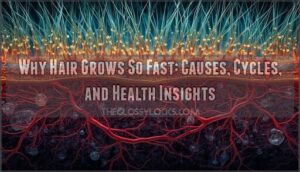
Your scalp produces roughly 100 feet of hair fiber each day—split across about 100,000 individual follicles working in overlapping shifts. That’s why hair grows so fast compared to other tissues: follicle stem cells divide at remarkable rates during active growth phases, churning out new keratin-based cells every 24 to 72 hours.
Genetics set your baseline speed, but hormones, blood supply, and nutrient availability all push that rate higher or lower. Understanding the cellular machinery behind this process reveals why some people gain half an inch monthly while others barely notice change—and what you can control versus what’s locked in your DNA.
Table Of Contents
Key Takeaways
- Your scalp produces roughly 100 feet of hair fiber daily across 100,000 follicles, with growth driven by follicle stem cells dividing every 24-72 hours during the anagen phase that lasts 2-6 years.
- Genetics control over 40% of your hair growth rate by regulating anagen duration and follicle cycling speed, but hormones, blood supply, and nutrient availability push that baseline higher or lower.
- Fast hair growth doesn’t automatically signal good health—it can indicate hormonal imbalances like PCOS or thyroid dysfunction, especially when paired with unexpected texture changes or unusual body hair patterns.
- You can’t force faster growth than your DNA allows, but correcting deficiencies in protein, iron, zinc, and vitamins D and B-complex supports the metabolic engine behind follicle production.
Why Does Hair Grow So Fast?
Hair doesn’t actually grow fast—it just feels that way. Your hair grows about half an inch each month, which adds up to roughly six inches per year.
Understanding what drives this steady rate starts with three key factors: your body’s biological systems, your inherited genetic code, and the differences between hair on your scalp and everywhere else.
Biological Basis of Hair Growth Rate
Your hair’s rapid growth stems from an intricate biological process orchestrated by follicle stem cells in the bulge region. These cells drive cellular regeneration during the anagen phase, determining your visible hair growth rate. Local signaling pathways like Wnt and BMP regulate when growth starts and how long it lasts, while microenvironment factors including:
- Blood supply delivering nutrients to follicles
- Hormonal balance affecting follicle stem cells
- Oxygen availability supporting cellular regeneration
- Hair growth hormones triggering anagen initiation
shape your hair follicle biology and overall hair development timeline.
Understanding clear science concepts is essential for grasping the intricacies of hair growth.
Genetic Factors Influencing Fast Hair Growth
Your genes script every detail of hair growth through molecular signaling and gene expression patterns inherited from both parents. Twin studies confirm heritability rates exceeding 40%, proving genetic variance controls anagen duration and follicle cycling speed. Specific polymorphisms in Wnt/β-catenin pathways regulate how quickly your hair follicle cells divide, while androgen receptor variants modulate hormonal balance effects on your hair growth cycle—dictating whether you grow six inches yearly or markedly more. Understanding the role of scientific study summaries can provide valuable insights into the complex processes governing hair growth.
| Genetic Pathway | Function | Impact on Growth |
|---|---|---|
| Wnt/β-catenin | Triggers anagen initiation | Extends growth phase duration |
| Androgen receptors | Modulates hormone response | Alters follicle proliferation rate |
| Keratin gene family | Encodes structural proteins | Determines shaft thickness and strength |
| IGF-1/FGF signaling | Stimulates cell division | Accelerates matrix formation speed |
Differences Between Scalp and Body Hair Growth
Your scalp follicles dominate hair growth cycle duration—anagen lasts two to eight years here, while body hair barely pushes three months. This difference in follicle biology determines why leg hair stops at inches but scalp strands stretch past your shoulders.
Hormone sensitivity varies by site too, with androgens triggering distinct growth patterns and hair texture across your body, all rooted in scalp health and receptor density at each follicle.
The Hair Growth Cycle Explained
Your hair doesn’t grow continuously without pause. It moves through distinct phases that determine when it grows, rests, and eventually falls out.
Understanding these phases shows you why growth seems fast during certain periods and why shedding is completely normal.
Anagen (growth) Phase and Its Duration
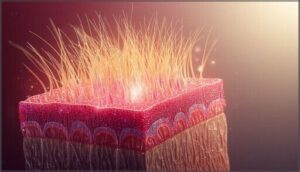
Your hair’s real power move happens in the anagen phase—the active growth period where follicles kick into high gear for two to six years on your scalp. This phase determines your maximum hair length.
During this phase, your hair growth cycle sustains itself through:
- Rapid keratinocyte cell proliferation deep in the hair follicle
- Continuous keratin synthesis building each strand from root to tip
- Dermal papilla signaling that keeps growth rate steady at roughly half an inch monthly
Catagen, Telogen, and Exogen Phases

After anagen ends, your follicles shift through three quieter phases that complete the hair growth cycle. The catagen phase lasts two to three weeks as your follicle shrinks and detaches from its blood supply.
Next comes the telogen phase—a three-to-four-month resting period affecting roughly 10–15% of your scalp hair.
How The Cycle Impacts Perceived Growth Speed

Why does growth seem to speed up or stall? Your anagen phase duration controls how long follicles actively produce hair—subtle differences create noticeable growth rate fluctuations over weeks.
Telogen phase shedding can make lengthening appear slower when you measure during exogen events.
Synchronized hair shedding patterns across regions, combined with cycle variability in follicle development timing, shape your perception of how quickly hair actually grows.
Key Factors Affecting Hair Growth Rate

Your hair doesn’t grow in a vacuum. Several internal and external factors directly control how quickly your follicles produce new cells and extend each strand.
Understanding these influences gives you control over your hair’s behavior and helps you recognize when something’s off.
Hormonal Influences and Imbalances
Your hormones wield enormous power over hair growth—both its speed and its staying power. Androgens like testosterone and dihydrotestosterone can shorten the anagen phase, while estrogen balance helps keep hair in active growth longer. Thyroid effects are equally critical: both overactive and underactive thyroid function disrupt follicle cycling.
- Androgen impact: DHT-driven miniaturization shrinks hair shafts and accelerates shedding in sensitive follicles, creating faster growth plateaus and hair loss patterns.
- Estrogen balance shifts: Pregnancy often extends anagen, producing fuller hair, but menopause-related estrogen decline shortens growth phases and thins scalp coverage.
- Thyroid effects on cycling: Thyroid dysfunction alters metabolic activity in follicles, increasing telogen shedding and slowing overall growth rate.
Hormonal effects on hair reveal themselves through texture changes, unexpected shedding, or unusual growth in non-scalp areas. If you notice rapid thinning alongside fatigue or weight shifts, it’s time to explore hormone therapy or endocrine evaluation with a professional.
Nutrition and Essential Vitamins for Hair Growth
You can’t outrun a nutrient deficit—your follicles demand fuel. Protein intake drives keratin synthesis, while mineral balance (iron, zinc) keeps shedding in check and maintains steady cycling.
Vitamin deficiencies, especially D and B-complex, weaken shaft integrity and slow growth. Omega fatty acids nourish your scalp’s foundation, and meeting caloric needs sustains the metabolic engine behind hair production.
Nutrition for hair growth isn’t optional—it’s structural.
Nutrition isn’t optional for hair growth—it’s the structural foundation your follicles demand
Age, Health, and Medication Effects
Your follicles age with you—hormonal shifts shrink anagen duration and thin shafts, especially post-menopause. Chronic disease (thyroid disorders, diabetes) disrupts cycling, while medication side effects from antidepressants, beta-blockers, or hormone therapy can accelerate shedding or slow regrowth.
Genetic influences set your baseline, but age-related changes compound over time. Health impacts hair growth rate directly—address deficits early for hair loss prevention and sustained hair health.
Does Fast Hair Growth Indicate Good Health?

Fast hair growth doesn’t automatically mean you’re in perfect health. Your hair growth rate can signal strong cellular function, but it can also point to hormonal imbalances or underlying medical conditions that need attention.
Understanding the difference between healthy and abnormal growth patterns helps you recognize when your body is functioning optimally versus when something needs investigation.
Signs of Healthy Versus Abnormal Hair Growth
You can tell healthy hair growth by consistent hair density across your scalp and a steady hair growth rate over months—think half an inch monthly without sudden changes. Your hair texture should feel uniform, and shedding shouldn’t exceed 100–150 hairs daily.
The anagen phase dominates, keeping follicle care strong. Watch for scalp health indicators: no inflammation, itching, or unusual growth patterns signaling deeper hair follicle concerns worth investigating.
Medical Conditions Linked to Rapid Hair Growth
When growth spirals beyond normal, specific conditions may be driving it. Hypertrichosis symptoms include excessive hair anywhere on your body, sometimes appearing suddenly. PCOS effects show up as facial or body hair from hormone imbalance—elevated androgens pushing follicles into overdrive. Acromegaly causes stem from excess growth hormone affecting hair density and hair growth phases. Even thyroid hormones gone rogue can accelerate what genetics programmed.
- Your body’s broadcasting distress signals through your follicles
- Excess hair growth isn’t just cosmetic—it’s a metabolic red flag
- Hormones hold the reins, and when they slip, your hair responds
When to Seek Professional Advice
When hair loss symptoms like sudden shedding, patchy bald spots, or scalp conditions such as intense itching and redness appear, professional consultations become necessary.
Medical evaluations can identify hair growth patterns linked to thyroid issues, iron deficiency, or autoimmune triggers.
Dermatology and trichology specialists use blood tests, scalp biopsy, or trichoscopy to determine if your hair restoration needs treatment beyond vitamins and self-care.
Top 6 Products That Support Fast Hair Growth
You can’t force your hair to grow faster than genetics allow, but the right products work with your biology to enhance what’s already happening. Some formulations deliver targeted nutrients to follicles, while others stimulate blood flow or block hormones that slow growth.
Here are six evidence-backed options that support your hair’s natural growth cycle.
1. Hair Strong Gummies
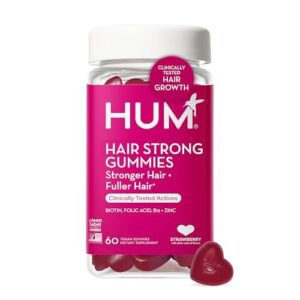
You might consider HUM Hair Strong Gummies if you’re looking for a convenient hair supplement. Each gummy delivers biotin, zinc, folic acid, and B12—nutrients linked to hair health benefits and cellular support.
Biotin’s role centers on keratin synthesis, while zinc helps maintain follicle integrity. These gummy benefits appeal to users seeking hair nutrition without pills, and the vegan, non-GMO formula aligns with supplement safety standards.
Independent clinical proof connecting this product directly to faster hair growth rate remains limited, so manage expectations and focus on correcting deficiencies rather than forcing acceleration.
- Combines biotin, zinc, folic acid, and B12 in a convenient gummy form that’s easier to take than capsules.
- Vegan, non-GMO, and free from artificial colors, making it suitable for various dietary preferences.
- May help support hair strength and fullness if you have nutrient deficiencies affecting your hair.
- Limited independent clinical evidence directly linking this product to accelerated hair growth.
- Some users report inconsistent taste or texture across batches, and the flavor may not appeal to everyone.
- High doses of certain vitamins (like B12 and biotin) might be unnecessary if you’re not deficient, and could interact with medications or health conditions.
2. DIY Skin Care Carrier Oils
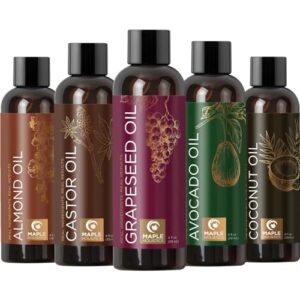
You can skip commercial blends and reach for carrier oils instead—sweet almond, jojoba, argan, and coconut each deliver skin moisturizing and hair nourishment without filler ingredients.
Carrier oil benefits include diluting essential oils for hair while supporting natural hydration and scalp health. Jojoba mirrors sebum composition, argan supplies vitamin E for hair health benefits, and coconut penetrates the shaft for essential oil mixing and hair care.
Combine these with targeted essential oils for hair to build routines that match your follicle needs and hair growth goals.
- Five versatile oils in one set—almond, coconut, avocado, grapeseed, and castor—cover everything from anti-aging to hair thickness
- Cold-pressed formulas retain nutrients like vitamin E and fatty acids for real moisturizing power
- Works as a carrier base for essential oils or standalone treatment for dry skin, nails, and scalp
- At $24.95, it’s pricier than buying single oils separately
- Pump dispensers can be tricky and may squirt out more oil than you need
- Some orders arrive with broken seals or leaking bottles
3. Rogaine Women’s Hair Regrowth Foam
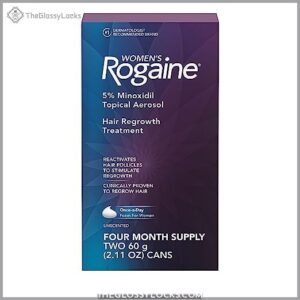
You’re staring at thinning patches and wondering if science can actually reverse the clock. Rogaine Women’s Hair Regrowth Foam delivers 5% minoxidil directly to your scalp, extending the anagen phase so follicles stay active longer.
Clinical data shows 48% thicker hair regrowth when you apply foam twice daily for four to eight months. Minoxidil effects include scalp irritation in some users, but the formula’s Tricho-Prime technology reduces dryness while you’re chasing real hair loss solutions—not promises.
- Clinical trials back the 48% thicker regrowth claim, so you’re not gambling on hype
- Foam format means no dripping mess, and the unscented formula won’t clash with your other products
- Four-month supply for $39.99 keeps the math simple and the commitment manageable
- You’ll need to apply it twice daily without skipping—consistency is the only way it works
- Some users hit initial shedding or scalp irritation before seeing improvement
- Results take four to eight months, so patience isn’t optional
4. Nutrafol Women’s Hair Growth
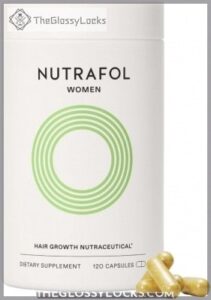
Four capsules daily deliver saw palmetto, ashwagandha, and botanical compounds targeting stress-driven shedding and follicle health. Nutrafol ingredients address hormonal pathways and oxidative stress that slow your hair growth rate.
Clinical data shows some users gain thicker hair after three to six months, though results vary widely. This hair growth supplement aids women’s haircare through dietary influences on follicle cycling, but gastrointestinal upset hits certain users hard.
Real hair regrowth demands patience, not miracles, so weigh cost against your specific hair growth factors and hair care tips before committing.
- Tackles multiple thinning triggers at once—hormones, stress, nutrition—with 21 active ingredients including saw palmetto and ashwagandha
- Clinical trials show some users get visibly thicker hair and less shedding after consistent use
- Dermatologist-recommended and works across all hair types
- Pricey compared to basic biotin supplements, and you’re taking four capsules every day
- Stomach cramps, indigestion, and acne breakouts hit some users hard enough to quit
- Results vary wildly—some see real regrowth, others notice zero change even after months
5. Pro Pac Hair Repair Treatment
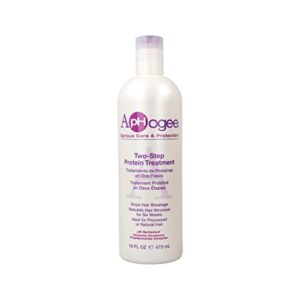
Pro Pac Hair Repair Treatment coats strands with protein complexes and silicones to smooth cuticles and reduce breakage after chemical damage. User reviews report softer hair within weeks, yet no independent clinical trials validate rapid damage restoration claims.
Treatment effects rely on cosmetic smoothing rather than true hair follicle repair, so you won’t accelerate hair growth factors or shorten the anagen phase.
Product safety flags include fragrance allergens and preservative sensitivity. These hair care tips matter: follow label instructions, balance protein with moisture, and skip this treatment if your hair isn’t severely compromised.
- Rebuilds hair structure and stops breakage within six weeks for permed, colored, or relaxed hair
- Contains protein complexes and conditioning agents that smooth cuticles and make hair more manageable
- Cruelty-free formula works well for hair that’s undergone extreme chemical damage
- Strong, unpleasant smell and sticky, messy application process
- May cause allergic reactions due to fragrance and preservatives in the formula
- Can over-protein hair if used incorrectly, requiring careful balance with moisturizing treatments
6. Alpecin C1 Caffeine Shampoo
Alpecin C1 delivers caffeine directly to your scalp with the goal of stimulating each hair follicle and slowing hair loss. The shampoo ingredients skip minoxidil and rely on caffeine effects for scalp stimulation, though substantial evidence for significant hair growth rate increases remains limited.
You might notice temporary fullness or reduced shedding, yet individual caffeine benefits vary widely. Safety profiles show general tolerability, though scalp sensitivity can occur.
Treat this as one element of your hair care routine—not a standalone solution for scalp health or guaranteed hair growth.
- Uses caffeine to stimulate hair follicles and may reduce shedding in some users
- Generally well-tolerated with a good safety profile for typical use
- Affordable at $8.75 and works as part of your daily hair washing routine
- Limited robust clinical evidence for significant long-term hair growth
- Doesn’t contain proven pharmaceutical ingredients like minoxidil
- May cause scalp irritation or sensitivity in some individuals
Frequently Asked Questions (FAQs)
Are there any products or supplements that can promote faster hair growth?
Looking for a shortcut to longer locks? Minoxidil shows modest results in clinical trials. Biotin and iron supplements help only if you’re deficient. Most products lack strong evidence for accelerating hair growth rate.
Can stress permanently damage hair growth rate?
Chronic stress can temporarily slow your hair growth rate by elevating cortisol levels and shortening the anagen phase.
However, most research shows these changes reverse once you manage stress effectively through behavioral strategies.
Does hair grow faster in certain seasons?
The proof is in the pudding: research shows mixed results.
Your hair growth rate shifts slightly in summer due to extended growth phases, but seasonal hair patterns remain modest—climate effects on follicle health vary individually.
How does sleep quality affect hair growth?
Poor Sleep Patterns disrupt hormone balance and hair follicles, shortening growth cycles. Sleep loss raises cortisol, pushing more hairs into resting phases.
Better rest duration promotes a steady hair growth rate and overall hair health and wellness.
Why does hair grow faster on children?
Children’s hair doesn’t grow faster than adults’. Their lower androgen levels actually mean slower body hair growth and shorter anagen phases.
What looks like rapid growth is simply healthy scalp hair with good childhood nutrition supporting steady follicle development.
Do hair texture and growth speed correlate?
Your hair texture and growth speed don’t directly correlate. Genetics shape both independently—coarse or fine strands don’t guarantee faster follicle activity.
Keratin structure affects thickness and curl patterns, but growth phases determine the actual rate.
Conclusion
Your follicles don’t consult a calendar—they respond to hormones, blood flow, and the nutrients you deliver through diet. That’s why hair grows so fast in some people and crawls in others.
You can’t rewrite your genetic code, but you can enhance the variables within reach: stabilize thyroid function, correct deficiencies, and protect anagen-phase follicles from damage. Growth rate isn’t random—it’s a reflection of your body’s internal environment.
- https://sites.google.com/view/yewc/writing-tips/subpoints?authuser=0
- https://www.writingclearscience.com.au/category/writing-guides/writing-research-papers/page/2/
- https://www.sciencedirect.com/science/article/pii/S2949916X23000464
- https://www.mayoclinic.org/diseases-conditions/cushing-syndrome/symptoms-causes/syc-20351310
- https://www.ncbi.nlm.nih.gov/books/NBK499948/