This site is supported by our readers. We may earn a commission, at no cost to you, if you purchase through links. This content is for general informational and educational purposes only and is not a substitute for professional medical, dermatological, or nutritional advice.

Your grandmother might’ve been onto something when she boiled curry leaves in coconut oil and massaged it into her scalp every Sunday. These small, glossy leaves from the Murraya koenigii tree have anchored Ayurvedic hair rituals for centuries—not because of folklore, but because they pack beta-carotene, B-vitamins, iron, and amino acids that directly feed your follicles.
Modern trichology is catching up to what traditional practitioners already knew: curry leaves don’t just smell good in your dal, they trigger molecular pathways that push dormant follicles into active growth. The real question isn’t whether they work—it’s how to use them correctly, how long before you’ll see results, and what they can’t fix no matter how consistently you apply them.
Table Of Contents
Key Takeaways
- Curry leaves deliver beta-carotene, B-vitamins, iron, and amino acids that activate dormant follicles and support the anagen growth phase, but they won’t reverse genetic baldness or override your baseline hair growth rate of roughly 1-1.5 centimeters per month.
- You’ll see reduced shedding within 6-12 weeks and improved follicle density after 4-6 months of consistent use (2-3 times weekly), but only if your thinning stems from nutrient deficiencies or inflammation—not androgenetic alopecia.
- Apply curry leaves as an infused coconut oil massage, yogurt mask, or water rinse rather than relying on oral consumption alone, since topical application delivers antioxidants directly to your scalp for localized anti-inflammatory and follicle-strengthening effects.
- Always patch-test before full application to avoid allergic contact dermatitis, and if you see zero improvement after 12 weeks of proper use, redirect your effort toward dermatologist-backed treatments instead of continuing with herbal remedies.
Curry Leaves for Hair Growth: an Overview
Curry leaves aren’t just a kitchen staple—they’re a centuries-old hair remedy backed by modern science. Before you start mixing up DIY masks, you need to understand what these leaves actually are and why they work.
Let’s break down the basics so you know exactly what you’re putting on your scalp.
What Are Curry Leaves?
Curry leaves come from Murraya koenigii, a tropical tree with roots in India and Sri Lanka. You’ll recognize them by their citrusy, herbal aroma—stronger when heated—and their starring role in South Asian cooking.
Key facts about curry leaves:
- Curry leaf origin: Native to India, now cultivated across tropical regions
- Aromatic compounds: Distinct fragrance from essential oils in the leaf structure
- Leaf nutrition: Contains vitamins A and C, calcium, iron, and antioxidants
- Culinary uses: Fresh or dried in curries, dals, and rice dishes
The study of curry leaves can benefit from scientific study summaries to better understand their properties.
Traditional Uses in Hair Care
For centuries, households across India have relied on curry leaves as a trusted folk hair remedy. Ayurvedic traditions describe these leaves in herbal hair tonics and scalp oils designed to fight dandruff and dryness. Cultural hair practices often involve frying the leaves in coconut oil, creating a massage treatment applied weekly for shine and strength.
| Traditional Preparation | Primary Ingredient Pairing | Intended Benefit |
|---|---|---|
| Fried leaf oil massage | Coconut oil | Scalp nourishment, luster |
| Leaf infusion rinse | Water or sesame oil | Cleanliness, shine |
| Multi-herb paste | Amla, fenugreek | Strength, reduced graying |
| Dried leaf soak | Plain water | Scalp refreshment |
| Temple ritual blend | Hibiscus, coconut oil | Vitality, conditioning |
Key Nutrients in Curry Leaves
What gives these fragrant leaves their power? Your scalp benefits from a dense nutrient package working beneath the surface.
- Carotenoids like beta-carotene deliver provitamin A activity, supporting follicle cell turnover and tissue repair.
- Polyphenols including quercetin offer antioxidant protection against oxidative stress that weakens roots.
- Essential minerals—iron, calcium, potassium—fuel circulation and strengthen each strand from within.
How Curry Leaves Promote Hair Growth

Curry leaves don’t just sit on your scalp—they actively support the biological processes that keep your hair growing strong.
The nutrients and compounds in these leaves work through several distinct pathways to improve follicle function and hair quality.
Here’s how curry leaves target the root causes of thinning and slow growth.
Stimulating Hair Follicles
Your scalp holds thousands of dormant follicles waiting for the right signal. Curry leaves deliver targeted nutrients—amino acids, B-vitamins, and minerals—that activate Wnt/β-catenin signaling pathways in hair follicle stem cells, pushing them into the anagen growth phase. This follicle activation improves the scalp microenvironment and bolsters keratinocyte growth in the outer root sheath.
| Follicle Component | How Curry Leaves Help |
|---|---|
| Dermal Papilla | Increases blood flow and nutrient delivery |
| Hair Follicle Stem Cells | Triggers Wnt/β-catenin signaling for anagen entry |
| Outer Root Sheath | Boosts keratinocyte proliferation during hair cycling |
| Scalp Microenvironment | Reduces inflammation; balances cytokine levels |
The antioxidants in curry leaves protect follicles from oxidative damage, while minerals boost local circulation—both critical for sustained hair growth promotion and improved scalp health.
Strengthening Hair Shafts
Proteins and B-vitamins in curry leaves reinforce hair shaft integrity by supporting keratin alignment—your first line of defense against breakage prevention and split ends.
This scalp nourishment boosts tensile strength and follicle health, so each strand resists mechanical stress from styling and combing. Stronger shafts mean better hair strength enhancement, improved hair nutrition, and visibly healthier hair follicles.
Reducing Hair Thinning and Breakage
Antioxidants in curry leaves neutralize free radicals that attack your follicles, reducing hair thinning and breakage at the root. Their anti-inflammatory compounds calm scalp inflammation—a hidden driver of shedding—while phenolic acids strengthen each strand’s cuticle layer.
Together, these natural hair remedies support follicle strengthening and hair follicle health, giving you fewer hairs on your brush and better hair growth over time.
Supporting Melanin Production
Your hair’s natural color depends on melanin production inside each follicle—and curry leaves may help preserve it. These melanin boosters from Ayurvedic hair care deliver antioxidant properties that protect melanocytes from oxidative stress, supporting hair pigmentation as you age.
- Copper and amino acids fuel melanin production pathways
- Kaempferol and quercetin shield pigment cells from damage
- Melanocyte support slows premature greying
- Scalp nutrition maintains follicle health for vibrant color
Scientific Evidence Behind Curry Leaves and Hair

You’ve heard the claims about curry leaves, but does science actually back them up? The good news is that researchers have put this traditional remedy to the test.
Here’s what the studies reveal about curry leaves and their real impact on hair growth and scalp health.
Clinical Studies on Hair Growth
You won’t find a mountain of human trials proving curry leaves boost hair density or follicle health. Most research gaps remain unfilled—small sample sizes and limited long-term data dominate the landscape.
While some studies hint at improved scalp health and reduced scalp inflammation, rigorous clinical proof for natural hair growth from curry leaves in your hair follicles is still scarce.
Antioxidant and Anti-inflammatory Properties
Curry leaves pack polyphenols and flavonoids that neutralize free radical damage and reduce oxidative stress on your scalp. Their antioxidant capacity helps protect hair follicles at the cellular level.
Plus, curry leaves contain bioactives that lower inflammatory markers like TNF-α and IL-6. These anti-inflammatory properties calm scalp inflammation, making curry leaves a promising herbal remedy for scalp health.
Effects on Scalp Health
Your scalp’s inflammatory response directly impacts hair follicle function. Curry leaves deliver quercetin and kaempferol—antioxidants that combat oxidative stress while reducing scalp inflammation. Beta-carotene and vitamins A and C support scalp hydration and flakiness reduction.
These scalp health benefits may help manage seborrheic dermatitis and psoriasis-related irritation, though direct clinical evidence linking curry leaf scalp treatment to measurable hair growth outcomes remains limited.
Best Ways to Use Curry Leaves for Hair
Now that you know the science backs curry leaves for hair health, let’s talk application. You can use them fresh, infused in oil, or blended into masks—each method targets different scalp and hair needs.
Here are the most effective ways to work curry leaves into your routine.
Curry Leaves and Coconut Oil Mask
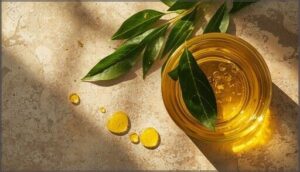
One of the simplest DIY hair remedies combines curry leaves with coconut oil for a conditioning mask. Warm the oil infusion, massage it into your scalp for several minutes, then leave it on for 30 minutes to a few hours.
This treatment delivers antioxidants and emollients that support scalp health and improve manageability. Use weekly for best results.
Curry Leaves and Yogurt Hair Mask
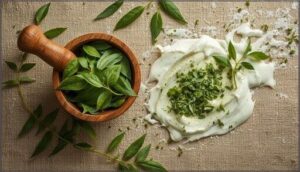
Mix crushed curry leaves with plain yogurt to create a protein-rich DIY hair mask that offers yogurt benefits like lactic acid for scalp exfoliation and hair nourishment.
The combination encourages follicle stimulation while the mask preparation is simple. Apply this natural hair care treatment to your scalp for 20-25 minutes, then rinse thoroughly.
Use 2-3 times weekly for best hair growth results.
Curry Leaf Water Rinse
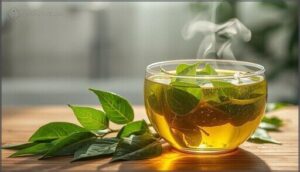
A simpler approach is a curry leaf water rinse—steep fresh leaves in hot water, cool, then pour over your scalp after shampooing. This infusion method delivers phytonutrients that may support scalp pH balance and hair porosity.
Use 1-2 times weekly as part of your natural hair care routine. While direct evidence for rinse benefits on hair growth remains limited, it’s a low-effort addition worth trying.
DIY Curry Leaf Pastes and Oils
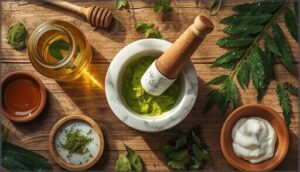
For a more concentrated scalp treatment, you can make homemade pastes and oil blends using curry leaf extraction methods:
- Fresh paste: Blend fresh curry leaves with coconut, mustard, or almond oil until smooth
- Dried powder mix: Combine curry leaf powder with yogurt or honey
- Infused oil: Heat carrier oil with curry leaves, then strain
- Storage: Keep in airtight containers for 1–2 weeks maximum
Precautions and Limitations of Curry Leaves
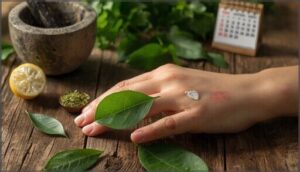
Curry leaves are generally safe for most people, but they’re not without some risks you should know about. Like any topical treatment, they can cause reactions in certain individuals or become less effective when misused.
Here’s what to watch for so you can use curry leaves safely and set realistic goals for your hair.
Potential Allergic Reactions
Before you chase hair growth with curry leaves, know this: allergic contact dermatitis and skin irritation can strike if you’re sensitive to compounds in the leaves. Patch testing isn’t optional—it’s your hypersensitivity test.
While anaphylaxis risk remains rare, cross-reactivity with related plant families exists. These anti-inflammatory properties won’t help if your scalp rebels, so test a small area first.
Proper Usage Frequency
Apply curry leaves in your hair care routine 2–3 times per week—not daily—to avoid scalp irritation and buildup. Overdoing DIY remedies won’t fast-track hair growth; it’ll compromise tolerance testing and trigger allergic reactions.
Usage limits that protect your scalp:
- Start cautiously: One session every 5–7 days lets you monitor for redness or itching
- Increase gradually: Only after 2–4 weeks with zero irritation
- Stop immediately: If burning or swelling appears
Realistic Expectations for Hair Growth
Patience separates hope from results. Your scalp hair grows roughly 1–1.5 centimeters monthly—curry leaves won’t rewrite that biology. Expect reduced hair shedding and improved scalp health within 8–12 weeks, but maximum follicle density gains take 4–6 months of consistent use.
Curry leaves support healthier hair over months, not miracle growth—patience and consistent use matter more than biology-defying promises
Growth timelines vs. realistic outcomes:
| Metric | Timeframe | What to Expect |
|---|---|---|
| Reduced shedding | 6–12 weeks | Fewer strands in brush |
| Follicle density increase | 4–6 months | Scalp fullness, not length |
| Maintenance | Ongoing | Stop = reversal in 3–6 months |
Natural remedies for hair growth support hair care and hair loss prevention, not miracles. Hair growth rates depend on genetics, nutrition, and overall scalp health and hair growth factors—curry leaves enhance conditions but can’t override your baseline cycle.
Frequently Asked Questions (FAQs)
Are curry leaves effective for treating baldness?
Can curry leaves reverse baldness? Not quite. While these herbal remedies support scalp health and follicle health, they lack rigorous clinical proof for hair regrowth.
For genuine baldness treatment, consider medically approved hair loss prevention options instead.
Can curry leaves prevent hair loss permanently?
No solid clinical evidence shows curry leaves permanently prevent hair loss. They may support scalp treatment and follicle health short-term, but hair regrowth longevity factors require proven therapies, not herbal hair regeneration alone.
How long until visible hair growth results?
Like watching seeds break soil, early signs appear in 4–8 weeks—less shedding, stronger shafts.
Visible hair density and regrowth patterns emerge around 3–6 months with consistent scalp health support and treatment duration.
Are fresh or dried curry leaves more effective?
Fresh curry leaves deliver more volatile oils and moisture for topical application, while dried leaves concentrate certain antioxidants.
Both forms retain hair growth benefits—choose fresh for immediate use, dried for longer shelf life.
Can curry leaves help with alopecia conditions?
Evidence supporting curry leaves for androgenetic alopecia or alopecia areata remains limited. While antioxidants and anti-inflammatory compounds may support scalp health and follicle function, no substantial clinical trials demonstrate effective hair regrowth or reversal of autoimmune hair loss patterns.
Should curry leaves be eaten or applied topically?
Both paths have merit—topical application delivers antioxidants straight to your scalp for localized skin penetration, while eating curry leaves offers oral bioavailability and systemic nutrient uptake that promotes digestive benefits and overall hair follicle health.
Conclusion
Like a slow-release supplement for your scalp, curry leaves work best when you commit to consistent use over months, not weeks. Will curry leaves work for hair growth? Yes—but only if your thinning stems from nutrient deficiencies or inflammation, not genetic androgenetic alopecia.
Boil them into oil, apply twice weekly, and measure progress in reduced shedding first. If you see no change after 12 weeks, redirect your energy toward dermatologist-backed treatments instead.