This site is supported by our readers. We may earn a commission, at no cost to you, if you purchase through links. This content is for general informational and educational purposes only and is not a substitute for professional medical, dermatological, or nutritional advice.

Your colorist says 10 volume is the gentle one, so why does your hair feel like wet noodles two weeks after a glaze?
That 3% hydrogen peroxide still oxidizes your strands. It breaks down melanin and keratin, lifts the cuticle, and lets moisture slip out. Stack it on top of bleach or a perm, and the damage compounds quietly until strands snap at the brush.
So is 10 volume developer damaging to hair? Sometimes, but not always. Fine, porous, or previously lightened hair pays the highest price, while sturdy virgin hair shrugs it off. Here’s how to tell which camp you’re in and protect your strands.
Table Of Contents
- Key Takeaways
- Why Can 10 Volume Developer Damage Hair?
- When is 10 Volume Developer a Lower-Damage Color Option?
- Which Hair Types Are Most Vulnerable to 10 Volume Developer Damage?
- How to Apply 10 Volume Developer and Avoid Overprocessing
- Aftercare for Hair Treated With 10 Volume Developer
- Frequently Asked Questions (FAQs)
- Is 10 volume developer bad for your hair?
- What volume developer is the least damaging?
- How long should you leave 10% developer on hair?
- What happens if I use 10 developer instead of 20?
- Can 10 volume developer lighten dark hair?
- Is 10 volume developer safe for colored hair?
- How often can you use 10 volume developer?
- Does 10 volume developer cover gray hair completely?
- What is the difference between 10 and 20 volume developer?
- Conclusion
Key Takeaways
- Even though 10 volume developer is only 3% hydrogen peroxide, it still oxidizes your hair, so damage can build up quietly through touch-ups, overlap on old color, or stacking it with bleach or perms.
- You’ll get the best results when you use it for depositing color, toning, glazing, or grey blending, since it lifts less than one level and can’t deliver real lightening.
- Fine, porous, previously bleached, or already fragile hair is the most vulnerable, so repair weak strands first and test porosity before you apply.
- You can protect your hair by patch and strand testing, mixing 1:1 or 1:1.5 and applying fresh, watching your processing time, and following up with sulfate-free shampoo, weekly deep conditioning, and a balance of moisture and protein.
Why Can 10 Volume Developer Damage Hair?

The 3% hydrogen peroxide in 10 volume developer is gentle compared to higher strengths, but it still works by oxidizing your hair. Once the alkaline color mix lifts your cuticle, the peroxide slips inside and breaks down melanin and keratin proteins.
Once mixed, that oxidation starts right away and doesn’t pause, which is why it helps to know how long mixed hair dye stays usable before you start.
That’s where hair cuticle damage starts. The scales on your strands roughen, lose their protective barrier, and let moisture escape.
Repeat the process and the loss adds up. Touch-ups, toning, and overlapping onto old color all pile on more oxidation, so you mightn’t see trouble until breakage shows up weeks later.
Stack it with bleach, perming, or relaxing, and the risk climbs fast. Strands can’t rebuild lost protein on their own, so every color round leaves a mark. Because volume numbers indicate peroxide strength and lift, matching the developer to your hair type and color service helps limit unnecessary oxidation.
When is 10 Volume Developer a Lower-Damage Color Option?

The good news? You can keep that oxidation low when you pick the right job for it. As a gentle hair developer, 10 volume developer shines when you want color without major lift.
Reach for it in these three situations:
- Depositing color only: Go darker or match your natural shade without lifting pigment.
- Toning and glazing: Cancel brassiness on pre-lightened hair while keeping your level.
- Grey blending: Soften greys on finer hair without full-coverage strain.
Each option gives you subtle lightening at most, so your protective barrier stays far more intact than it would with 20 volume or higher. Anything that needs real lift, like going several shades lighter, calls for a stronger mix and more risk. Plan accordingly, though.
If you’re weighing how much lift your hair can handle, this guide to the best bleach for hair can help you pick a formula that lightens effectively without wrecking your strands.
Which Hair Types Are Most Vulnerable to 10 Volume Developer Damage?
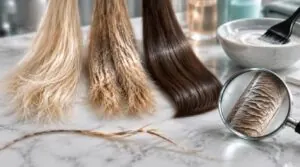
Even a gentle mix has limits, and your hair type decides how well it copes.
Fine hair is the first to feel it. Thin strands have less mass to buffer the chemistry, so 10 volume developer works faster and can overprocess before you notice.
Previously colored or bleached hair comes next. Chemical treatments rough up the cuticle, so porous mid-lengths and ends soak up developer quickly. Apply it without checking porosity and you’ll get patchy color and weakened strands.
Fragile hair needs the most caution. If yours snaps, feels gummy, or stretches without bouncing back, preexisting damage may mean even low volume is too much. Repair it first.
Virgin hair with a sturdy cuticle usually tolerates 10 volume developer best.
How to Apply 10 Volume Developer and Avoid Overprocessing
Applying 10 volume developer is simple when you know the steps, and you can keep your hair healthy while you do it.
Once your developer is on, choosing a shade that flatters your complexion matters too, so check this guide to hair colors that look great on dark skin before you commit.
It’s notable that two habits make the biggest difference: strand testing and scalp safety, plus getting your mixing ratios and processing times right.
Here’s how to handle each one so you stay in control from start to finish.
Strand Testing and Scalp Safety

Picture Maya, who skipped her patch test because 10 volume developer "seems gentle." Two days later, her scalp stung and itched.
Don’t repeat that. Do this:
- Patch test your inner elbow 48 hours ahead.
- Skip dye if you see redness or burning.
- Pick a hidden nape strand.
- Apply your exact mixture.
- Rinse, dry, and judge after 24 hours.
Scalp sensitivity won’t wait.
Mixing Ratios and Processing Times

How much color should you actually mix? Stick to 1:1 or 1:1.5 mixing ratios with 10 volume developer, since extra developer dilutes pigment.
Watch your processing time closely, because overrunning it invites hair damage.
| Hair type | Processing time |
|---|---|
| Fine or treated | 25-30 minutes |
| Coarse or resistant | Up to 40 minutes |
Mix fresh and apply immediately. That’s smart hair damage prevention.
Aftercare for Hair Treated With 10 Volume Developer

You can’t undo the chemistry, but you can control what happens next. Smart aftercare starts the very moment you rinse, and it’s your best hair damage prevention.
You can’t undo hair color chemistry, but the care you give right after rinsing is your best defense against damage
Focus on moisture and strength over the next few weeks:
- Use a sulfate-free shampoo to keep natural oils intact.
- Apply a deep conditioner once a week.
- Add a moisturizing treatment with argan or jojoba oil.
- Sleep on silk or satin to cut friction.
- Use heat protectant, and keep scalp protection in mind by avoiding tight styles.
Alternate protein and moisture every few days so your strands stay supple, not stiff.
Frequently Asked Questions (FAQs)
Is 10 volume developer bad for your hair?
Worried it’ll wreck your hair? Here’s the truth: 10 volume developer is only 3% hydrogen peroxide, so it’s gentler, not harmless. Hair damage builds with longer processing time, overlap on processed lengths, and scalp sensitivity.
What volume developer is the least damaging?
Is lower always safer? Mostly, yes. 10 volume developer lifts least, so it’s your gentlest pick against hair damage.
Choose the lowest developer volume that works, and your hair cuticle and hair health thank you.
How long should you leave 10% developer on hair?
Most 10 volume developer jobs need 35 to 40 minutes at most. Toning or glazing takes just 10 to Check your strand every 5 to 10 minutes, since going past your maximum exposure time raises hair damage risk.
What happens if I use 10 developer instead of 20?
Think of 10 volume developer as a tide, not a wave. Its weaker oxidizing capability barely lifts your hair cuticle, so color deposits instead of lightening. Expect longer processing time, but lower hair damage risk.
Can 10 volume developer lighten dark hair?
Hoping for dramatic lift? Don’t count on it. On dark hair, 10 volume developer gives less than one level, since its low hydrogen peroxide concentration mainly deposits color.
Real hair lightening requires bleach, risking damage.
Is 10 volume developer safe for colored hair?
Yes, 10 volume developer is generally safe for colortreated hair when you use it right. Its 3% hydrogen peroxide deposits pigment without lifting, so you’ll limit hair damage. Strand test first, rinse on time.
How often can you use 10 volume developer?
You could technically slather it on every single day, but please don’t. With 10 volume developer, wait 4-6 weeks for color depositing, 3-4 weeks for gray blending, and 2-3 weeks for toning.
Does 10 volume developer cover gray hair completely?
Don’t expect a magic eraser. 10 volume developer rarely covers gray completely.
With minimal hair color lift levels, it blends coarse strands but leaves some translucent. Your hair cuticle and hair health face less damage.
What is the difference between 10 and 20 volume developer?
Think of developer as the hair’s gatekeeper. A 10 volume developer nudges the door open for gentle deposit or toning. A 20 volume developer swings it wider, lifting one to two levels and covering grey, but raising your damage risk.
Conclusion
Still wondering whether your gentle glaze is secretly costing you strength? Here’s the truth: 10 volume developer damaging to hair depends less on the bottle and more on your strands, your timing, and your habits.
Test first, mix precisely, and watch the clock. Then rebuild with moisture and protein so every shade you love leaves your hair softer, not weaker. Treat color like a real partnership, and your hair will happily hold up its end.