This site is supported by our readers. We may earn a commission, at no cost to you, if you purchase through links. This content is for general informational and educational purposes only and is not a substitute for professional medical, dermatological, or nutritional advice.
Your patchy chin at week four isn’t a life sentence. It’s biology doing its slow, methodical work, and most guys quit right before things fill in.
Genetics sets your ceiling, sure. But how you eat, sleep, and care for your skin decides how close you get to it. DHT, follicle sensitivity, timing, none of it is random, and once you understand the mechanics, the patience gets easier.
Here’s what separates guys with genuine growth from guys chasing myths, and how to know which camp you’re in.
Table Of Contents
- Key Takeaways
- How to Grow a Thicker Beard Faster: What Actually Works
- Eat and Supplement for Healthy Beard Growth
- Build a Skin and Beard Care Routine
- Improve Beard Growth Through Daily Habits
- Consider Medical Options for Patchy Growth
- Frequently Asked Questions (FAQs)
- What helps my beard grow thicker?
- How to get a thick beard fast?
- Will testosterone thicken my beard?
- How much beard will grow in 2 days?
- How to grow a beard faster?
- How to grow a thicker beard?
- Do men really want a thicker beard?
- How long does it take to get a thick beard?
- How to grow a fuller beard?
- Will a thin beard thicken?
- Conclusion
Key Takeaways
- Genetics set your beard’s ceiling, but sleep, nutrition, and stress management determine how close you actually get to it.
- Patchiness at weeks 3-4 is a normal part of the growth cycle, with most beards filling in and reaching full density between months 6-12.
- Nutrients like zinc, vitamin D, and protein support growth, but supplements like biotin only help if you’re genuinely deficient, so testing first beats guessing.
- If patchiness persists despite good habits, options like minoxidil, microneedling, or ruling out skin conditions are worth discussing with a doctor.
How to Grow a Thicker Beard Faster: What Actually Works

A thicker beard isn’t just wishful thinking or luck of the draw. Some of it comes down to biology, but plenty comes down to what you actually do day to day. Let’s start with the basics that shape your growth potential before we get into the habits that can push it further.
Genetics set the ceiling, but daily habits like solid nutrition, quality sleep, and stress management determine how close you get to it, along with the right beard thickening products for men to support the process.
Genetics, Age, and Growth Potential
Before diet or discipline enter the picture, your DNA already wrote most of the script. Genetic hair patterns dictate which follicles activate and how sensitive they’re to signaling. Age matters too, since fullness usually arrives well after puberty. Genetics can set real ceilings, but nutrition and care still shift outcomes within your inherited limits.
Testosterone and DHT Basics
So what’s actually flipping the switch on those follicles? Two androgenic hormones: testosterone and DHT. Enzymes convert testosterone into DHT right in your skin and follicles, and DHT is the more potent one. This conversion is driven by the enzyme 5-alpha reductase, which acts directly in hair follicles.
Beard growth depends on androgen receptor sensitivity, not just hormone levels. That’s why hormone balance matters more than raw testosterone alone.
Genetics largely determine how sensitive your receptors are, which explains why some men simply can’t grow a full beard — a reality explored in detail in this breakdown of why certain guys struggle to grow a beard no matter how hard they try.
Realistic Beard Growth Timelines
Receptor sensitivity explains why timelines vary so much. Most guys hit a full, shaped beard in 2-6 months:
- Stubble: weeks 1-2
- Patchy: weeks 3-4
- Awkward phase: through week 6
- Defining to full: months 3-6
Growth averages 0.5 inch monthly. Patches usually fill between weeks 6-12, with max density around month 10-12.
Patchiness Versus Hair Loss
That awkward gap at week 4 is normal. Alopecia areata patterns look different: coin-sized, well-defined patches from immune activity, not gradual filling.
Causes vary: hormonal imbalance effects, nutritional deficiency links, stress-induced shedding, even skin infection causes. Follicles often stay intact, so hair follicle health can recover.
True patchy beard loss deserves evaluation, maybe minoxidil or hormone therapy, before assuming it’s just timeline.
Beard Growth Myths Debunked
A lot of "beard hacks" floating around are just noise.
- Shaving doesn’t change growth rate, only blunt tips fake thickness
- Beard oil softens hair but won’t switch on new follicles
- Supplements help only if you’re actually deficient
Exercise helps hormones, minoxidil results vary. Beard growth realism and patience beat gimmicks every time.
Eat and Supplement for Healthy Beard Growth

Genetics sets your ceiling, but nutrition decides how close you get to it. Your follicles need real building blocks to keep producing hair, not just good intentions. Here’s what your plate (and maybe your supplement shelf) should actually cover.
Prioritize Protein and Healthy Fats
Your beard is basically built from what’s on your plate. Amino acids from a protein-rich diet fuel keratin production, so prioritize lean protein, fish, and eggs.
With hydration handled, pairing that protein boost with a nourishing beard moisturizer keeps strands flexible and less prone to breakage as they grow.
| Nutrient | Role |
|---|---|
| Protein | Keratin synthesis |
| Omega-3s | Reduces inflammation |
| Healthy fats | Helps testosterone |
| Zinc | Tissue repair |
| Amino acids | Hair structure |
Balance matters, don’t skip fat for protein.
Get Enough Vitamin D
Sunshine on your face does more than lift your mood, it feeds your follicles. Low vitamin D blunts follicle activity, and deficiency often hides with no symptoms, so testing matters.
- Get 10-15 minutes of sun exposure daily
- Eat fatty fish or fortified foods
- Aim for 20 ng/mL or higher
- Supplement if levels run low
- Recheck blood levels after 3 months
Meet Daily Zinc Needs
Zinc quietly powers protein synthesis, and skimping on it can stall your beard growth timeline.
Aim for 8-11 mg daily from oysters, beef, or pumpkin seeds. Deficiency signs include shedding and slow beard thickness gains.
Take supplements with food, away from calcium, to boost zinc absorption.
Watch your zinc and copper balance, too much zinc blocks copper uptake.
Use Biotin Only When Needed
Those biotin bottles at every drugstore checkout? Mostly marketing.
Biotin (vitamin B7) only helps if you’re actually deficient, think brittle nails or scalp dermatitis. Otherwise, evidence for extra beard growth is thin.
- Get bloodwork before supplementing
- Watch for true deficiency signs
- Talk to your doctor first
It’s water-soluble, your body excretes excess anyway. Beard growth patience beats guessing with supplements.
Avoid Excessive Supplement Doses
More isn’t better here, it’s just more.
Stacking a biotin supplement with a multivitamin often means overlapping doses of vitamin E, vitamin C, copper, or magnesium, quietly pushing you past safe upper limits.
That raises real toxicity risks. Always check dose verification on labels, and choose quality control certified brands (USP, NSF) before trusting what’s inside the bottle.
Build a Skin and Beard Care Routine
Genetics and diet set the stage, but your skin routine decides how well that beard actually shows up. A healthy follicle needs the right environment, not just the right fuel. Here’s what your daily and weekly routine should include.
Wash Without Stripping Natural Oils

Your beard needs sebum, the natural oil keeping strands soft and skin calm. Wash 2-3 times weekly with a mild beard shampoo, using lukewarm water instead of hot. Gentle lather, light massage, thorough rinse. Overwashing strips oils and invites dryness or irritation. Think of sebum as your beard’s built-in conditioner, don’t scrub it away chasing "clean.
Exfoliate Once or Twice Weekly
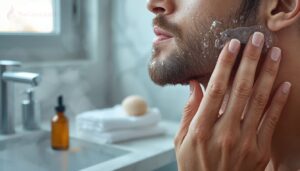
Dead skin builds up under a beard just like anywhere else, clogging follicles and slowing growth.
Exfoliate once or twice weekly, patch test new products on your inner elbow first. Chemical exfoliants (think gentle acids) suit sensitive skin better than scrubbing. Overdo it and you’ll trade progress for irritation, redness, even breakouts. Easy does it here.
Moisturize Skin Beneath Beard

Once you’ve exfoliated, don’t skip hydration. Skin under a beard dries out fast, flaking and itching without it.
Apply moisturizer straight to skin, not just hair, using fingers to work it downward after a warm shower.
- Choose humectant-based formulas (glycerin, hyaluronic acid)
- Pick non-comedogenic products to avoid clogged pores
- Reapply daily to strengthen your skin barrier
Condition and Brush Regularly

Moisturized skin sets up the next step: locking that hydration into the hair itself.
Apply oil first, then massage in conditioner for 1-2 minutes before rinsing. Dry fully before brushing.
Use a boar bristle brush daily on longer beards, every other day on medium length. Brush upward first, then downward to style and distribute oils evenly.
Trim for a Fuller Shape

Scissors are your secret weapon here, not just clippers.
Tapering blends lengths for natural fullness. Define your neckline in a clean U-shape. Trim frequency depends on length: short beards need weekly touch-ups, longer ones just need split ends managed.
- Shape cheek lines to your face
- Taper high-to-low guards
- Trim neckline above Adam’s apple
- Address split ends monthly
- Comb patchy spots forward
Improve Beard Growth Through Daily Habits

Your beard doesn’t grow in a vacuum—it reacts to how you treat the rest of your body. Hormones, blood flow, and follicle health all shift based on daily choices you’re probably already making, for better or worse. Here are five habits worth locking in.
Sleep Seven to Nine Hours
Your beard grows while you sleep, literally. Testosterone peaks between 4 and 6 AM, and 7-9 hours nightly means 10-15% more testosterone than short sleepers get.
Your beard grows while you sleep: 7-9 hours nightly can mean 10-15% more testosterone than short sleepers get
| Sleep Duration | Beard Impact |
|---|---|
| Under 6 hrs | 18% less follicle activity |
| 7-9 hrs | 12% thicker hair diameter |
| Fragmented sleep | 30% less growth hormone |
Poor sleep sabotages melatonin secretion too, disrupting the repair work your follicles need.
Manage Stress Consistently
Chronic stress quietly sabotages your beard by spiking cortisol, which can cut testosterone by 15% and stall follicles in a resting phase for weeks.
Daily relaxation practices help: 10 minutes of deep breathing lowers cortisol roughly 20%, while meditation eases hormone interference. Yoga twice weekly can boost density 8% in six weeks.
Cortisol regulation through mindfulness isn’t mystical, it’s measurable hormone balance your follicles will thank you for.
Strength Train Regularly
Want a beard boost that also builds your whole body? Hit the weights.
Compound moves like squats and deadlifts spike testosterone 15-20% post-workout. Aim for 3-4 sessions weekly, 8-15 reps per exercise. No gym? Resistance bands and bodyweight moves work too.
Progressive overload matters most: gradually add resistance as lifts get easier. Better circulation feeds follicles too.
Limit Smoking and Excess Alcohol
Every cigarette causes vasoconstriction, tightening blood vessels and starving follicles of oxygen.
Heavy drinking isn’t much better. Beyond four drinks daily (men) or three (women) strains hormone regulation and blunts nutrient absorption your beard needs.
Quitting smoking and moderating alcohol intake improves circulation, helps testosterone balance, and reduces inflammation, giving your follicles what they need to thrive.
Stay Consistently Hydrated
Your beard is roughly 60% water, so skimping on fluids shows up fast. Aim for 64 ounces daily to keep nutrients like biotin and iron flowing to follicles.
Dehydration causes brittle, breakage-prone hair and lower testosterone. Sip steadily instead of chugging when thirsty, swap one coffee for water, and pair intake with beard oil to lock in moisture barrier health.
Consider Medical Options for Patchy Growth
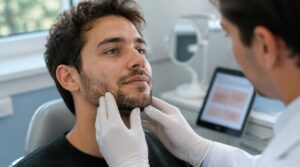
Sometimes lifestyle tweaks only get you so far, and that’s okay. If your patchiness sticks around despite doing everything right, it might be time to talk options with a doctor. Here’s what’s worth bringing up at that appointment.
Ask About Off-Label Minoxidil
Ever wonder why your dermatologist keeps mentioning minoxidil for patchy beards? It’s off-label, so ask first. It works as a topical vasodilator, boosting hair follicle stimulation around androgen receptors. Discuss:
- Concentration (5% often beats 2%)
- Application frequency
- Cardiovascular history
- Side effect management
- Telehealth prescription options
Consult before starting, especially with heart concerns.
Use Microneedling With Caution
Minoxidil boosts blood flow, but pairing it with a derma roller adds another layer worth discussing with your dermatologist first.
Microneedling triggers collagen production via tiny punctures, though deeper needles mean more irritation.
| Do | Don’t |
|---|---|
| Clean device before/after | Share needles |
| Check FDA-listed devices | Use with active infection |
| Start with 0.25mm | Skip provider consultation |
Test Suspected Nutrient Deficiencies
Before popping supplements, get a blood test. Low vitamin D, zinc deficiency, or iron deficiency can stall growth, and biotin supplementation only helps if you’re actually low.
Test before loading up on pills, since excess zinc blocks copper absorption. Ask your doctor about timing labs around your regular protein-rich diet and omega-3 intake for accurate results.
Rule Out Skin Conditions
Labs come back clean but your jawline still looks patchy? The skin itself might be the problem, not your hormones.
Three culprits to rule out:
- Fungal infection — scaly, ring-shaped patches
- Bacterial rash — redness with drainage or pus
- Psoriasis or dermatitis — thick scale or persistent itch
Treating the actual cause calms inflammation and protects your skin barrier, clearing the runway for regrowth.
Compare Beard Transplant Methods
Nothing else worked and the patches persist? A beard transplant moves hair, follicle by follicle, from donor sites to bare skin.
| Method | How It Works | Scarring |
|---|---|---|
| FUE | Extracts individual follicles | No linear scar |
| FUT | Strip harvesting | Linear scar |
| Donor source | Scalp or body/beard hair | Varies by site |
Frequently Asked Questions (FAQs)
What helps my beard grow thicker?
Like a blacksmith stoking coals, your body needs the right fuel. Hormone balance, steady nutrient absorption, and follicle stimulation from washing and brushing all matter, while genetics still set your final ceiling.
How to get a thick beard fast?
Fast isn’t realistic, but you can speed things up. Support hormone balance with sleep and exercise, follow a solid skin care routine, and use beard oil consistently. Genetics set the ceiling; good habits help you reach it sooner.
Will testosterone thicken my beard?
Injecting your way to Chris Hemsworth’s jawline? Cute plan. Reality check: testosterone can boost beard density in low-T men, but genetic sensitivity, not just hormones, decides your final facial hair density. Talk to a doctor first.
How much beard will grow in 2 days?
Two days gets you roughly 6 to 0 mm of new growth, a barely-there change. Daily growth rate stays steady, but growth variability means results differ. Trust the process, real beard growth consistency shows up over weeks, not 48-hour snapshots.
How to grow a beard faster?
Real speed comes from stacking basics: solid protein and zinc intake, quality sleep, regular strength training, gentle facial massage for blood flow, and consistent beard oil use. No serum or trick beats hormones and patience working together.
How to grow a thicker beard?
Think of your beard as a garden, not a switch. Feed follicles with protein and zinc, massage in rosemary oil, rinse cold water, sleep on silk, and train regularly to support testosterone naturally.
Do men really want a thicker beard?
Yes, and it’s more than vanity. Full beards jumped from 25% to 44% in five years. Men link thicker beards to confidence, professional respect, and social status, that quiet nod that says "he’s got it together.
How long does it take to get a thick beard?
Patience pays off here. Most guys notice real thickness by 2-4 months, but full density often needs 6-12 months. Genetics set your ceiling, so track monthly progress instead of comparing yourself to someone else’s timeline.
How to grow a fuller beard?
Fullness builds like layers of soil feeding roots underground, slow but deliberate.
Combine daily protein (eggs, lean meat), zinc-rich foods, weekly exfoliation, and gentle derma rolling to boost density, ease itch, and support steady beard growth over time.
Will a thin beard thicken?
A thin beard often does thicken over time. Age-related thickening is real since follicles keep responding to DHT for years. Genetics sets your ceiling, but consistent care, better hormone balance, and patience help patchy spots fill in.
Conclusion
Feed your follicles. Protect your skin. Respect your sleep. That’s the real formula for how to grow a thicker beard faster, no gimmicks required.
Genetics hands you the ceiling, but daily habits decide how close you climb toward it. Some weeks you’ll swear nothing’s happening, then catch your reflection and notice it’s finally filled in. Stay consistent, stay patient, and let biology finish what you started.