This site is supported by our readers. We may earn a commission, at no cost to you, if you purchase through links. This content is for general informational and educational purposes only and is not a substitute for professional medical, dermatological, or nutritional advice.
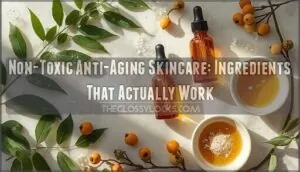
I still remember the day I realized my expensive anti-aging serum had the same phthalates listed on my shower curtain. As a dermatologist, I’d spent years telling patients to invest in quality skincare—but I’d never stopped to think about what quality really meant when the beauty industry can legally use thousands of untested chemicals.
The truth is, you don’t need to choose between looking younger and protecting your health. Non-toxic anti-aging skincare has evolved far beyond the watered-down natural products of a decade ago. Today’s clean formulas combine powerhouse ingredients like bakuchiol, niacinamide, and plant-derived retinol alternatives that deliver real results without the hormone disruptors, skin barrier damage, or mystery chemicals hiding in conventional products.
Table Of Contents
Key Takeaways
- “Clean beauty” has no legal definition, so look for third-party certifications like EWG Verified and full ingredient transparency rather than trusting marketing labels alone.
- Effective non-toxic anti-aging ingredients like bakuchiol, niacinamide, and hyaluronic acid deliver clinical results without harsh chemicals, hormone disruptors, or skin barrier damage.
- Conventional anti-aging products often contain parabens, phthalates, and harsh surfactants that compromise your skin barrier and accumulate toxic exposure over time, especially risky for pregnant women.
- Plant-based oils like cold-pressed rosehip and argan provide essential fatty acids and antioxidants that support natural skin renewal without synthetic additives.
What Makes Skincare Non-Toxic and Anti-Aging
Not all “clean” skincare is created equal—and honestly, that’s where things get confusing.
Some brands slap the word “clean” on packaging without much to back it up, which is why learning how to build a skincare routine with intentional ingredient choices matters more than ever.
The beauty industry throws around terms like “natural” and “non-toxic” without real oversight, so you need to know what actually matters when choosing anti-aging products that won’t mess with your health.
Let’s break down the two key factors that separate genuinely safe skincare from marketing fluff.
Clean Beauty Standards and Ingredient Bans
When you’re shopping for non-toxic anti-aging products, here’s the catch: “clean beauty” has no legal definition. Regulation gaps mean brands set their own toxic ingredient lists—some ban 50 ingredients, others over 2,700!
That’s why certification standards like EWG Verified and COSMOS matter. Look for label transparency (full ingredient disclosures, not just marketing fluff) and consumer guidance from third-party programs.
Natural ingredients still need vetting, so scrutinize the actual list rather than trusting the label alone. For more insight into why brands ban certain substances, check out this overview of harmful beauty product ingredients.
Importance of Avoiding Harsh Chemicals
Your skin barrier is your first line of defense, but harsh chemicals in conventional anti-aging skincare break it down piece by piece. Sulfates and aggressive surfactants strip protective lipids, spiking transepidermal water loss and leaving you vulnerable to irritation.
Instead, look for gentle cleansers and barrier-supporting formulas that work with your skin’s natural defenses, not against them.
Even worse, parabens and certain UV filters mess with your hormones—cumulative toxic exposure from layering multiple products amplifies that risk. According to research, consumers should be cautious of skin health and chemical exposure when selecting cosmetic products.
Here’s what you need to know about going chemical-free:
- Pregnant women face amplified harm from endocrine disruptors hiding in “anti-aging” formulas
- Contact allergies to synthetic fragrances are surprisingly common (and often preventable!)
- Gentle formulas with natural skincare actives protect your barrier while delivering real results
Choosing nontoxic skincare isn’t a trend—it’s eco-friendly medicine for long-term skin health.
Products like an anti-aging serum for wrinkles and fine lines work best when paired with clean ingredients that support your skin’s natural renewal process over time.
Key Non-Toxic Ingredients for Youthful Skin
Here’s what I’ve found after years of reviewing clinical studies and working with patients: the most effective non-toxic anti-aging ingredients aren’t exotic or expensive—they’re backed by solid research and gentle enough for long-term use.
Your skin doesn’t need a hundred-step routine with questionable chemicals to look younger. Let’s break down the four powerhouse ingredients that actually deliver results without compromising your health.
Hyaluronic Acid for Hydration
Here’s the truth: in the realm of nontoxic antiaging skincare, hyaluronic acid is your hydration powerhouse. This molecule holds up to 1000 times its weight in water—imagine that plumping effect on your skin!
Hyaluronic acid holds 1000 times its weight in water, making it the ultimate nontoxic hydration powerhouse for plumping skin
For best results, look for formulations with multiple molecular weights (they work at different depths). The real beauty? Studies show 134% immediate moisture boost, with consistent improvement over six weeks. No harsh chemicals needed.
Retinol and Bakuchiol Alternatives
Looking for powerful anti-aging results without irritation? Bakuchiol benefits your skin like retinol—clinical trials show it halves wrinkle depth over 12 weeks—yet it won’t trigger the redness or peeling typical of traditional retinoids.
This botanical active aids skin renewal and collagen production while working beautifully in nontoxic skincare products. You can even use it during the day (no sun sensitivity!), making natural antiaging solutions surprisingly practical.
Niacinamide and Antioxidants
Want real results without a harsh chemical cocktail? Niacinamide benefits your skin through multiple pathways—calming inflammation reduction, strengthening the skin barrier, and neutralizing oxidative stress alongside antioxidants like vitamin C and E. At 2–5% concentration, you’ll see:
- Improved hydration through ceramide production
- Visible tone evening within four weeks
- Enhanced protection against environmental damage
This multitasker shines in nontoxic skincare products, delivering natural antiaging solutions that work with your skin, not against it.
Plant-Based Oils (Rosehip, Argan, Prickly Pear)
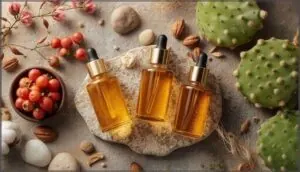
Plant-based oils—rosehip oil, argan oil, and prickly pear—deliver essential fatty acids and antioxidants that support skin barrier repair without synthetic additives.
Rosehip oil provides beta-carotene (nature’s vitamin A), while argan offers vitamin E and oleic acid for elasticity.
Prickly pear’s 70% linoleic acid content makes it powerful for moisture retention.
Oil extraction methods matter: choose cold-pressed varieties.
These natural moisturizers work beautifully alone or through facial oil blending with anti-aging serums.
Frequently Asked Questions (FAQs)
What are some non-toxic skincare brands?
If you care about what touches your skin, several clean beauty pioneers deserve your attention.
True Botanicals, Annmarie, and OGEE deliver certified-organic formulas, while Cocokind and Bubble & Bee offer budget-friendly options in eco-conscious packaging.
How often should I replace non-toxic skincare products?
Most non-toxic skincare products have a shelf life of 3-12 months after opening.
Replace cleansers and serums every 3-6 months, moisturizers at 6-12 months, and sunscreen annually—proper storage extends product expiration dates substantially.
Whats the difference between organic and clean skincare?
Organic skincare demands ingredients grown without synthetic pesticides (requiring certification like USDA Organic), while clean beauty focuses on avoiding controversial chemicals—regardless of whether they’re natural or lab-created for safety.
Conclusion
Picture yourself five years from now—same glow, fewer worries about what’s seeping into your bloodstream. That’s the promise of non toxic anti aging skincare when you choose ingredients that respect both your skin barrier and your body’s chemistry.
I’ve watched patients transform their routines (and their faces) by swapping mystery chemicals for proven alternatives like bakuchiol and niacinamide. Your skin doesn’t need toxic shortcuts to look younger—it just needs smarter science.