This site is supported by our readers. We may earn a commission, at no cost to you, if you purchase through links. This content is for general informational and educational purposes only and is not a substitute for professional medical, dermatological, or nutritional advice.

Most people own more skincare products than they know what to do with. A cleanser here, a serum there, maybe three different moisturizers competing for shelf space—and somewhere in the mix, a sunscreen they apply whenever they remember. The products aren’t the problem. The order is.
Layering skincare incorrectly can block absorption, reduce effectiveness, or, worse, cause irritation that gets blamed on a "bad" product. vitamin C serum applied over a thick moisturizer, for example, never fully reaches the skin—it just sits on top, doing little. Knowing the correct order to apply skincare products turns your existing routine from a guessing game into something that actually works.
This guide walks through both morning and evening sequences, step by step, so your skin gets the full benefit of every product you’ve already invested in.
Table Of Contents
- Key Takeaways
- Correct Skincare Product Order
- Morning Skincare Routine Order
- Night Skincare Routine Order
- Top 5 Skincare Products
- Frequently Asked Questions (FAQs)
- What order should you apply skincare products?
- Should skin care products be applied in a certain order?
- How should a skin care routine be ordered?
- How do I choose the best skincare products?
- What is the correct order of applying skincare?
- What is the 4 2 4 rule in skincare?
- What skincare does Sali Hughes use?
- Which two serums cannot be used together?
- What happens if I apply products out of order?
- Can I skip steps when traveling or busy?
- Conclusion
Key Takeaways
- Applying skincare thinnest to thickest — cleanser, toner, serum, eye cream, moisturizer, then sunscreen — lets each layer actually be absorbed instead of sitting on top of the one before it.
- Skipping sunscreen or applying it out of order undermines every other product in your routine, making it the one step you can’t skip or misplace in the morning.
- Retinol and exfoliating acids (AHAs/BHAs) should never be used on the same night, as combining them breaks down your skin barrier and causes redness and peeling.
- Waiting 30–60 seconds between layers isn’t optional — rushing through steps causes pilling and blocks absorption, wasting even the best products you’ve paid for.
Correct Skincare Product Order
Getting your skincare order right makes a bigger difference than most people realize. The right sequence helps each product actually work instead of fighting with the one before it.
Think of it like layering clothes — the correct skincare layering order keeps lighter formulas from getting blocked by heavier ones.
Here’s the correct order to follow, step by step.
Start With Cleanser to Remove Dirt and Oil

Cleansing is always step one — it clears the canvas before anything else can work properly. Oil-based cleansers and cleansing balms dissolve sunscreen and sebum, while water-based cleansers handle sweat and everyday grime. Surfactant selection matters more than people think, because harsh formulas strip your barrier.
- Use an oil-based cleanser first to break down oil-soluble buildup
- Follow with a water-based cleanser for thorough, pH-balanced cleansing
- Patch test any new cleanser for 24 hours before committing
salicylic acid exfoliation helps keep pores clear and reduces excess oil throughout the day.
Apply Toner Right After Cleansing

Once your skin is clean, reach for your toner right away — damp skin application makes a real difference. While your face is still slightly damp, apply an alcohol-free toner using either patting technique with clean fingers or cotton pad swiping across your face and neck.
This step restores pH balance and sets the layering order for everything that follows. Allow a short absorption window of 20–30 seconds, then move on.
Layer Serums Before Moisturizer

After toner, serums come next. Think of them as your targeted treatments — they work best when applied directly to the skin before anything heavier.
Follow this product layering hierarchy:
- Lightweight serum texture goes first, thin to thick
- Serum absorption timing matters — wait 30–60 seconds
- Barrier sealing benefits come when moisturizer locks it all in
This pH compatibility check keeps your actives working, not competing.
Use Eye Cream Before Moisturizer

Once serums have settled, eye cream is next — before your moisturizer.
The under-eye area is thinner and more delicate, so it needs its own dedicated step.
Use a pea-sized dosage for both eyes combined, and apply with a gentle tapping technique along the orbital bone placement.
This absorption pause lets the product settle before your moisturizer acts as a barrier guard.
| Step | Product | Technique |
|---|---|---|
| 1 | Eye Cream | Tap along orbital bone |
| 2 | Dosage | Pea-sized for both eyes |
| 3 | Finger | Ring finger, light pressure |
| 4 | Motion | Tap, don’t drag or rub |
| 5 | Pause | Wait before moisturizer |
Following this product layering hierarchy — thin to thick — keeps delicate skin protected within the proper order of skincare product application.
Finish With Sunscreen in The Morning

Sunscreen is your morning routine’s final, most important layer. Choose a broad-spectrum formula with SPF 30 or higher — that’s your SPF selection sorted.
Dot about a quarter-teaspoon across your forehead, cheeks, nose, chin, and neck, then blend using smooth, even strokes for full ear coverage, too. This application technique ensures makeup compatibility, since foundation applies cleanly right on top.
Allow Brief Drying Time Between Layers

Rushing through layers is one of the fastest ways to ruin an otherwise solid routine. Give each product 30–60 seconds to settle — this is your absorption timing window. Watch for that slight loss of tackiness; it signals layer setting is complete.
If you want to dial in your timing even further, Korean skincare layering techniques and absorption tips break down exactly why that milky, fast-absorbing texture works so well between steps.
Texture matching matters here too: lightweight serums absorb faster than heavy creams, making pilling prevention simpler.
Proper order of skin care product application only works when each step actually has time to land.
Morning Skincare Routine Order

Your morning routine sets the tone for how your skin treats everything the day throws at it. Getting the steps in the right order makes a real difference — not just for how your skin looks, but for how well each product actually works.
Here’s how to build a simple AM routine that covers all the bases.
Cleanse Gently to Prep Skin for The Day
Your morning skin prep sets the tone for everything that follows.
Start with a water-based cleanser — a gentle massage for 30 to 60 seconds is plenty. Avoid over-scrubbing; let the formula do the work.
Rinse with a lukewarm rinse, then use a patting motion to dry. Proper cleanser contact time lifts overnight buildup without stripping your skin’s natural balance.
Use Toner to Rebalance and Hydrate
Think of toner as your skin’s reset button. After cleansing, your skin’s pH can shift — a good Alcohol-Free Toner with Humectant Boost ingredients like glycerin and hyaluronic acid brings it back to balance.
Apply with light patting motions while skin is still slightly damp.
Three reasons this step matters:
- pH Balancing Benefits prep your skin barrier for actives
- Moisture retention improves immediately
- Layering Timing becomes more effective — serums absorb better on hydrated skin
Apply Vitamin C Serum for Daytime Protection
Vitamin C serum is your morning armor — and where it sits in your routine matters. After toner, apply 2 to 3 drops to dry skin, patting it evenly across your face and neck.
This antioxidant serum works best when pH compatibility is right, so layering it post-toner keeps it stable. Mind your storage conditions too — a cool, dark spot preserves serum stability and potency.
Add Moisturizer to Seal in Hydration
Moisturizer is your hydration lock — and timing matters. Apply it to damp skin right after your serum absorbs to trap water before it evaporates. A nickel-sized amount is plenty.
Look for these key ingredients:
- Humectants (like hyaluronic acid) pull water into the skin
- Occlusive ingredients (like shea butter) seal it in
- Emollients (like squalane) smooth and soften
- Ceramides reinforce your skin barrier
- Glycerine helps with barrier reinforcement and the hydration lock
Finish With Broad-spectrum Sunscreen
Sunscreen is the final step — and it’s non-negotiable. A broad-spectrum formula with SPF 30 or higher covers both UVA and UVB rays.
Mineral filters like zinc oxide physically reflect UV rays, while chemical filters like avobenzone absorb and neutralize them.
Applying it last keeps the protective film intact. Skip it, and everything underneath works a lot harder for a lot less.
Reapply Sunscreen When Exposed to Daylight
One application isn’t enough to carry you through the day. UV radiation protection fades with time, sweat, and movement — so reapplication timing matters as much as the first layer.
broad-spectrum sunscreen every two hours outdoors, or immediately after swimming and heavy sweating. Watch these friction zones especially:
- Hairline and forehead
- Sides of the nose
- Jaw and chin edges
- Behind the ears
- Neck collar area
indoor exposure adds up near windows. Water resistance helps, but it’s not a pass to skip the refresh.
Night Skincare Routine Order

Your nighttime routine is where the real repair happens — skin renewal peaks while you sleep, so the order you layer products actually matters. Getting it right means your actives work harder and your skin wakes up looking better.
Your nighttime routine is where real skin repair happens — layer it right, and you wake up better
Here’s how to build your PM routine, step by step.
Remove Makeup and Sunscreen First
Think of your evening cleanse as a reset button — and it starts with removal, not treatment.
Reach for micellar water first, or a dedicated makeup remover, then follow with an oil-based cleanser to handle targeted sunscreen dissolution. Massage it onto dry skin, use gentle patting removal around your eyes, and rinse thoroughly.
| Step | Product Type |
|---|---|
| 1st | Micellar water or makeup remover |
| 2nd | Oil cleanser for sunscreen |
| 3rd | Water-based cleanser |
Double Cleanse When Wearing Heavy Buildup
Double cleansing earns its place on heavy-product nights. Start with your oil cleanser — massage it onto dry skin using small circular motions, paying attention to the hairline and nose area. Rinse with lukewarm water, then follow with a water-based cleanser.
hand hygiene matters here, too. This two-step order of skin care products respects barrier preservation while fully clearing buildup without harsh scrubbing.
Apply Treatment Serums or Retinol at Night
Night is when your skin shifts into repair mode — and that’s exactly why retinol belongs here. Use a pea-sized dose, nothing more.
- Start 2–3 nights per week to build tolerance
- Apply retinol after toner for nighttime pH adjustment
- Use a buffering moisturizer before retinol if you’re sensitive
- Practice active alternation — keep acids on separate nights
Layering your skincare this way protects against active ingredient interactions.
Use Eye Cream for Delicate Under-eye Skin
Your under-eye skin is thinner than the rest of your face — so it needs its own dedicated care.
Apply a pea-sized application using the gentle tapping technique with your ring finger along the orbital bone. Lash line avoidance matters here; keeping product away from the lash line prevents irritation.
| Eye Cream Element | Why It Matters |
|---|---|
| Barrier-friendly ingredients | Ceramides and hyaluronic acid protect delicate skin |
| Caffeine puffiness reduction | Helps deflate morning swelling |
| Gentle tapping technique | Reduces pressure on fragile tissue |
| Lash line avoidance | Prevents stinging and migration |
Seal in Moisture With Moisturizer
After your serum and eye cream sink in, moisturizer is what holds everything together. Apply it to slightly damp skin — that damp skin application trick maximizes humectant boost, pulling water into the barrier.
Ingredients like glycerin and ceramides handle emollient smoothing and TEWL control, forming an occlusive film that slows transepidermal water loss. This is skin barrier protection and hydration balance working exactly as intended.
Add Face Oil Last if Needed
Face oil is the final seal in your nighttime skin care routine steps — think of it as the lid on a jar. After moisturizer, pat just a few drops using minimal drop application, focusing on dry areas.
This barrier sealing benefit locks in hydration underneath.
Wait 20 minutes — your absorption waiting period — for pillow stain prevention.
Oily or blemish-prone skin types can skip it entirely.
Alternate Retinol and Exfoliating Acids on Different Nights
Think of retinol and chemical exfoliant as two strong personalities — they work better on separate nights.
Your Nightly Rotation Schedule might look like: retinol Tuesday and Friday, Acid Type Selection on Monday and Thursday. This retinol and exfoliant scheduling approach is the backbone of smart product layering.
Add a Recovery Night Strategy mid-week for Irritation Management, and use Retinol Buffering with moisturizer on active nights.
Top 5 Skincare Products
Knowing the right order is half the battle — the other half is picking products that actually work with your skin. These five options cover every step of your routine, from cleansing to SPF, without overcomplicating things.
Here’s what’s worth your time and money.
1. Elf Holy Hydration Daily Cleanser
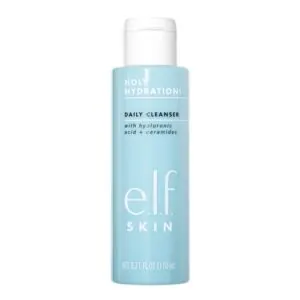
At just $6, the e.l.f. Holy Hydration Daily Cleanser punches well above its price tag. This gel-based formula lathers up with just a dime-sized amount, rinsing clean without that tight, stripped feeling some cleansers leave behind.
It’s built with hyaluronic acid and ceramides, so it actually helps your skin barrier while it cleans.
Sensitive skin types do well with it, and it’s fully vegan and cruelty-free.
One note — it won’t fully take off waterproof mascara, so keep a separate eye makeup remover handy.
| Best For | Budget-conscious shoppers with combination, oily, or sensitive skin who want a clean, vegan-friendly daily face wash without spending a lot. |
|---|---|
| Price | $6.00 |
| Skin Type | All skin types |
| Key Ingredient | Hyaluronic acid |
| Fragrance | Light neutral fragrance |
| Net Volume | 3.71 oz |
| Skin Barrier Support | Ceramides |
| Additional Features |
|
- Only takes a dime-sized amount to lather, so the bottle lasts a while for just $6
- Hyaluronic acid and ceramides actually support your skin barrier instead of stripping it
- Gentle enough for sensitive skin and fully vegan and cruelty-free
- Won’t cut through waterproof mascara or heavy eye makeup on its own
- People with very dry skin may still feel some tightness after washing
- Oily skin types might need a toner or astringent to feel fully balanced
2. Hada Labo Gokujyun Hyaluronic Milky Lotion
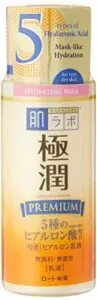
If your cleanser left your skin feeling clean but thirsty, the Hada Labo Gokujyun Hyaluronic Milky Lotion is your next best friend.
At $14.98, it packs eight different forms of hyaluronic acid — including nano and super variants — that hydrate at multiple skin depths, not just the surface.
The milky texture absorbs fast without any sticky residue, so layering your moisturizer or sunscreen right after feels natural.
It works mornings and nights, and it’s free from fragrance, alcohol, and parabens.
| Best For | People with dry or sensitive skin who want serious hydration without a heavy, greasy feel. |
|---|---|
| Price | $14.98 |
| Skin Type | Dry/sensitive |
| Key Ingredient | Hyaluronic acid |
| Fragrance | Fragrance-free |
| Net Volume | 5.93 oz |
| Skin Barrier Support | Moisture barrier hydration |
| Additional Features |
|
- Eight types of hyaluronic acid hydrate at different skin depths — not just the surface
- Absorbs fast with no sticky residue, so it layers perfectly under makeup or sunscreen
- Free from fragrance, alcohol, and parabens — great for reactive or sensitive skin
- Can feel too rich or slightly sticky on oily or combination skin, especially in heat or humidity
- Some users notice a faint film-like sensation that lingers after it sinks in
- Return and exchange options are limited, so it’s a bit of a commitment if it doesn’t work for you
3. Obagi Professional Vitamin C Serum
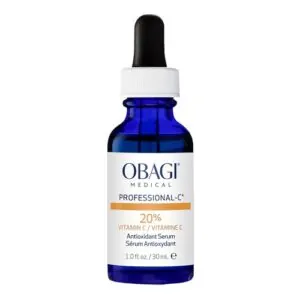
Once your skin is hydrated and balanced, it’s ready to absorb something stronger. The Obagi Professional C Serum delivers 20% L-ascorbic acid — the most concentrated version in their lineup — directly into your skin.
At $155, it’s an investment, but the results back it up: brighter tone, faded dark spots, and softer fine lines, sometimes noticeable within a week.
Apply a few drops after toner each morning, let it absorb, then layer your moisturizer right on top.
| Best For | Anyone serious about tackling dark spots, uneven tone, or early signs of aging who wants a clinically strong vitamin C serum and doesn’t mind spending a bit more to get there. |
|---|---|
| Price | $155.00 |
| Skin Type | All skin types |
| Key Ingredient | Vitamin C (L-ascorbic acid) |
| Fragrance | Not specified |
| Net Volume | 1.0 fl oz |
| Skin Barrier Support | Collagen stimulation |
| Additional Features |
|
- 20% L-ascorbic acid is about as potent as it gets — you’re getting a real dose, not a token amount.
- Results can show up fast, with brighter, more even skin sometimes visible within a week.
- Works across all skin types, so it’s not just for one kind of complexion.
- $155 is a tough pill to swallow, especially if you’re not sure how your skin will react.
- That high concentration can irritate sensitive or reactive skin — patch testing isn’t optional here.
- You’ll need a solid moisturizer and SPF to go with it, which adds steps and cost to your routine.
4. BYOMA Niacinamide Gel Moisturizer
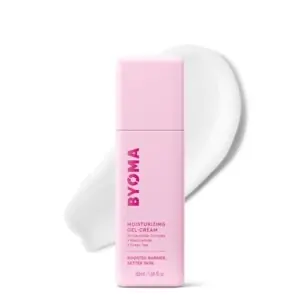
After a potent vitamin C serum, your skin needs something calm and supportive to balance things out.
The BYOMA Niacinamide Gel Cream does exactly that — and at $11.99 for a 50 mL bottle, it’s genuinely easy on your wallet.
Its Tri-Ceramide Complex, niacinamide, and green tea antioxidants work together to strengthen your barrier and soften redness.
The gel-cream texture absorbs quickly, sits comfortably under makeup, and won’t clog pores.
If your skin reacts easily, these under-eye creams for sensitive skin are gentle enough to wear daily without irritation.
A solid daily moisturizer for almost any skin type.
| Best For | Anyone with normal to dry or sensitive skin who wants a lightweight, barrier-supporting moisturizer that layers cleanly under sunscreen or makeup without breaking the bank. |
|---|---|
| Price | $11.99 |
| Skin Type | Normal to dry |
| Key Ingredient | Niacinamide |
| Fragrance | Fragrance-free |
| Net Volume | 1.69 fl oz |
| Skin Barrier Support | Ceramides + niacinamide |
| Additional Features |
|
- Ceramides, niacinamide, and green tea work together to calm redness and strengthen your skin barrier over time
- Gel-cream texture absorbs fast and sits well under makeup or SPF — no pilling, no greasy feeling
- Fragrance-free, oil-free, and alcohol-free, making it a safe pick for sensitive or reactive skin
- The 1.69 oz bottle is pretty small and can disappear fast if you’re applying twice a day
- Leaves a subtle dewy finish, so if you want a fully matte look, this probably isn’t your match
- May not be hydrating enough for very dry or compromised skin, especially in harsh winter conditions
5. EltaMD UV Clear Face Sunscreen Oil Free
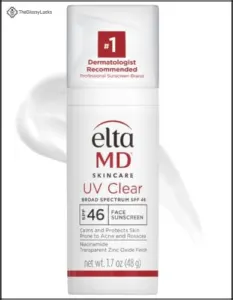
Your moisturizer locked in hydration — now you need to protect all that work. EltaMD UV Clear Face Sunscreen SPF 46 is the final step your morning routine depends on.
It uses transparent zinc oxide for broad-spectrum coverage, plus 5% niacinamide to calm redness and even your skin tone.
The formula is oil-free, non-comedogenic, and won’t sting around your eyes.
It sits cleanly under makeup and works for sensitive, acne-prone, and rosacea-prone skin.
At $45 for 1.7 oz, it’s an investment worth making.
| Best For | Anyone with sensitive, acne-prone, oily, or rosacea-prone skin who wants a clean, lightweight daily sunscreen that works under makeup. |
|---|---|
| Price | $45.00 |
| Skin Type | Normal/oily/sensitive |
| Key Ingredient | Niacinamide |
| Fragrance | Fragrance-free (faint almond scent) |
| Net Volume | 1.7 oz |
| Skin Barrier Support | Niacinamide |
| Additional Features |
|
- Broad-spectrum SPF 46 with zinc oxide — solid protection without a heavy, greasy feel
- Niacinamide helps calm redness and fade dark spots over time
- Oil-free, fragrance-free, and non-comedogenic — plays well with most skin types
- At $45 for just 1.7 oz, you’ll be restocking more often than you’d like
- Can pill or flake if layered over certain moisturizers
- May leave a faint white cast on deeper skin tones
Frequently Asked Questions (FAQs)
What order should you apply skincare products?
Think of your routine as a recipe — order matters. Start with cleanser, add toner, apply serums, use eye cream, then moisturizer. In the morning, always finish with sunscreen.
Should skin care products be applied in a certain order?
Yes, order matters more than most people realize. Applying products thinnest to thickest lets each layer actually absorb.
Get it wrong, and even great products won’t work the way they should.
How should a skin care routine be ordered?
Your routine works best when you layer products from thinnest to thickest — cleanser, toner, serum, eye cream, moisturizer, and sunscreen in the morning.
At night, swap sunscreen for retinol or a face oil.
How do I choose the best skincare products?
Start with skin type and main concern.
Oily skin does better with gel formulas; dry skin needs richer creams. Pick actives like vitamin C for brightness or niacinamide for uneven tone.
What is the correct order of applying skincare?
Cleanse first, then toner, serum, eye cream, moisturizer, and sunscreen in the morning.
At night, skip sunscreen and add retinol or treatment serums after toner, finishing with moisturizer or a face oil.
What is the 4 2 4 rule in skincare?
The 4-2-4 rule is a timed cleansing method: four minutes of oil cleansing, two minutes with a water-based cleanser, then four minutes rinsing — warm water first, cold water last.
For a practical follow-up, explore this simple skincare routine for busy moms to maintain a brighter complexion.
What skincare does Sali Hughes use?
Sali Hughes keeps it simple: a cleansing balm to remove sunscreen and makeup, a vitamin C, hyaluronic acid, and niacinamide serum, her Cream Drench Moisturiser, and SPF during the day.
Which two serums cannot be used together?
Retinol and AHA or BHA serums don’t mix well together. Using both in one routine overworks your skin barrier, causing redness, peeling, and irritation. Alternate them on different nights instead.
What happens if I apply products out of order?
Think of your routine like a recipe — swap the steps, and the dish falls flat.
Wrong order blocks absorption, causes pilling, and can leave skin dry, irritated, or with weakened sunscreen protection.
Can I skip steps when traveling or busy?
Yes, you can. Keep sunscreen and cleanser — skip the rest if needed. A simple cleanse, moisturize, and SPF routine still protects your skin on the go.
Conclusion
Your skincare shelf is a toolkit—and like any toolkit, the order you reach for each piece determines the result. Now that you know what’s the correct order to apply skincare products, every cleanser, serum, and sunscreen has a defined role and a defined moment.
Nothing gets wasted sitting on top of a barrier it can’t cross. Follow the sequence consistently, and your skin won’t just look better—it’ll finally respond the way you always expected it to.