This site is supported by our readers. We may earn a commission, at no cost to you, if you purchase through links. This content is for general informational and educational purposes only and is not a substitute for professional medical, dermatological, or nutritional advice.

Here’s something most people don’t know: rosemary oil went head-to-head with 2% minoxidil in a clinical study, and it held its own. No prescription, no itchy scalp, just a plant extract doing quiet, serious work on hair count.
That’s the kind of detail we care about when we test a hair growth oil treatment. Your scalp isn’t one-size-fits-all, and neither is the shelf full of bottles promising thicker strands.
We spent weeks massaging, measuring, and comparing formulas so you don’t have to guess which one earns a spot on your bathroom shelf.
Table Of Contents
- Key Takeaways
- 10 Best Hair Growth Oil Treatments
- 1. Mielle Rosemary Mint Hair Oil
- 2. Organic Jamaican Black Castor Oil 3.38 fl oz
- 3. Disposable Eyelash Brushes 100 Count
- 4. Ceremonia Aceite de Moska Scalp Oil
- 5. Wild Growth Hair Oil 4 Oz
- 6. Wild Growth Light Oil Moisturizer 4 Fl Oz
- 7. Camille Rose Rosemary Hair Oil Blend
- 8. Weleda Rosemary Conditioning Hair Oil 1.7 Fl Oz
- 9. Root Comb Applicator Bottle Oil Applicator
- 10. Rosemary Hair Oil with Biotin Jojoba Castor
- How Hair Growth Oil Treatments Work
- Best Ingredients for Hair Growth Oils
- Compare Hair Oils by Hair Type
- How We Evaluated Each Hair Oil
- Hair Growth Oil Treatment Routine
- How Often to Apply Hair Oils
- Results, Side Effects, and Safety
- Choosing The Right Hair Growth Oil
- Frequently Asked Questions (FAQs)
- What is the best oil for hair growth?
- Which oil is best for fastest hair growth?
- What’s the most effective oil for hair growth?
- Do hair growth oils really work?
- Which oil is best for hair growth fastest?
- Do hair growth oils actually work?
- Which oil can regrow lost hair?
- Is oiling can regrow hair?
- Can hair growth oils cause allergic reactions?
- How often should you apply hair oils?
- Conclusion
Key Takeaways
- Rosemary oil stands out as the top pick since studies show it matches 2% minoxidil for boosting hair count, all without the itchy scalp side effects.
- Your hair type should drive your choice: lightweight oils like jojoba work best for fine or thinning hair, while richer options like castor oil suit thick, coily, or coarse textures.
- A solid routine matters more than any single product, so patch test first, massage oil in for 5-10 minutes, and stick with it since real thickness and density usually take three to six months to show up.
- Oils can ease scalp irritation, boost circulation, and cut down on breakage, but they can’t fix hormonal, genetic, or autoimmune hair loss, so see a dermatologist if you’re losing 100+ strands a day.
Understanding your hair’s porosity alongside its density helps you narrow this down even further — curly hair styling tips for long hair break down how these factors together shape the best oil choices for your texture.
10 Best Hair Growth Oil Treatments
We tested dozens of hair growth oils this year, from budget castor oil blends to rosemary-packed formulas dermatologists actually recommend. Some left our scalps greasy by noon, others earned a permanent spot in our shower caddy. Here’s exactly which ten made the cut, and why.
Take castor oil, a longtime favorite that surprised us most, thanks to nutrients that visibly strengthen strands, as detailed in this guide to using castor oil for natural hair growth.
1. Mielle Rosemary Mint Hair Oil
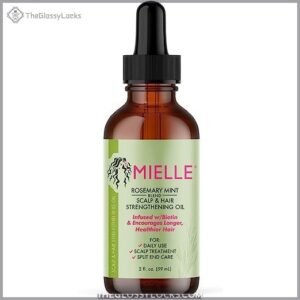
This little glass bottle punches way above its weight. We love that it’s got real rosemary oil, proven in studies to work as well as minoxidil 2% for boosting hair count, plus peppermint for that tingly scalp wake-up call.
At $10 for 2 fl. oz., it’s a steal. Daily use means it lasts about 4-6 weeks. Just watch out, thin hair types might feel weighed down unless you apply before bed.
| Best For | Anyone dealing with a dry, flaky scalp who wants a lightweight, nourishing oil treatment—especially those with coarse or 4C hair looking to strengthen and moisturize from root to tip. |
|---|---|
| Volume/Size | 2 oz |
| Application Method | Dropper |
| Hair Type Suitability | All types incl 4C |
| Scent Profile | Strong medicinal |
| Key Ingredient | Biotin/rosemary |
| Primary Benefit | Scalp nourishment |
| Additional Features |
|
- Packed with rosemary oil, biotin, and a blend of essential oils (tea tree, jojoba, coconut, peppermint) to support scalp health and hair strength
- Lightweight, non-greasy formula that works well for all hair types and textures, including 4C hair
- Versatile use as a pre-wash treatment, scalp oil, or even a leave-in for brows and lashes
- Some users find it too heavy for daytime wear and prefer applying it only at night
- The strong scent (some compare it to Vicks Vapor Rub) may not suit those sensitive to fragrance
- Results take consistent use over weeks or months, and outcomes vary based on individual hair, health, and genetics
2. Organic Jamaican Black Castor Oil 3.38 fl oz
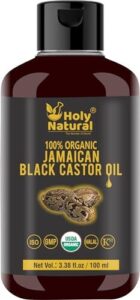
If rosemary oil is the trendy pick, this one’s the old-school workhorse. Traditionally made in Jamaica from roasted castor beans, it’s rich in ricinoleic acid, the fatty acid credited with boosting scalp circulation and thickness.
This 3.38 fl. oz bottle is USDA Certified Organic, no additives, non-GMO. It’s thick, dark, and honestly a little smoky-smelling. Apply a small amount 1-3 times weekly, massaged into the scalp. Fair warning: the consistency can feel heavy, so a little goes a long way.
| Best For | People looking to strengthen and thicken their hair, lashes, or brows with a traditional, no-frills oil rather than a lightweight trendy option. |
|---|---|
| Volume/Size | 3.38 fl oz |
| Application Method | Direct pour |
| Hair Type Suitability | All types |
| Scent Profile | Strong/rancid |
| Key Ingredient | Castor oil |
| Primary Benefit | Hair strength |
| Additional Features |
|
- Rich in ricinoleic acid to support scalp circulation and hair thickness
- USDA Certified Organic, 100% pure with no additives or GMOs
- Doubles as a moisturizer for dry lips and cracked heels
- Thick, heavy texture that can be hard to spread or absorb
- Some reviewers note a strong, smoky or rancid smell
- Comes in plastic packaging, which some customers dislike
3. Disposable Eyelash Brushes 100 Count
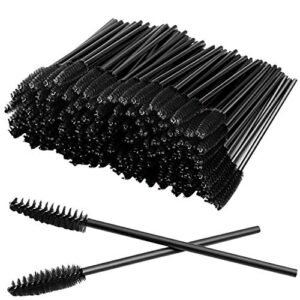
Okay, this one’s a curveball, and we’ll admit it. These aren’t a growth treatment, they’re a precision applicator. A 100-pack of disposable nylon wands, each about 3.9 inches, built to separate lashes and brows without snagging.
Where they earn their spot is roots grooming, working oils precisely into edges and lash lines without cross-contamination. Single-use means no lint, no bacteria buildup. Think of them as the detail tool in your growth routine, not the treatment itself.
| Best For | Anyone who wants a precise, hygienic tool for grooming brows, lashes, and hair roots or applying oils along the lash line. |
|---|---|
| Volume/Size | 3.9 in length |
| Application Method | Wand brush |
| Hair Type Suitability | All types |
| Scent Profile | N/A |
| Key Ingredient | N/A |
| Primary Benefit | Hygienic grooming |
| Additional Features |
|
- Single-use design keeps things sanitary, with no lint or cross-contamination
- Adjustable spiral nylon bristles give precise control for separating lashes and taming brows
- Lightweight, portable handle makes it easy to toss in a bag for travel or on-the-go touch-ups
- Some buyers reported receiving the wrong quantity or color
- Not built for heavy-duty tasks, even though people sometimes try to repurpose them that way
- Disposable format means ongoing waste and the need to keep repurchasing
4. Ceremonia Aceite de Moska Scalp Oil
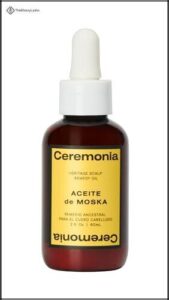
Back to actual scalp care now. Ceremonia’s Aceite de Moska leans on meadowfoam, chia, babassu, pataua, and maracuja oils, a mix built for curly and coily textures that still plays nice with straighter hair.
Shake it, massage it in pre-shower, leave it 10-15 minutes (or overnight for dry scalps), then rinse. Wohlner reported less scalp dryness and fewer stray hairs after regular use. Silicone-free, vegan, cruelty-free, and priced fairly for a 2 oz bottle.
| Best For | Anyone with curly or coily hair dealing with scalp buildup, dryness, or frizz who wants a nourishing, silicone-free oil treatment. |
|---|---|
| Volume/Size | 2 oz |
| Application Method | Leave-in |
| Hair Type Suitability | Color-treated hair |
| Scent Profile | Wood/botanical/lemon |
| Key Ingredient | Botanical blend |
| Primary Benefit | Scalp cleansing |
| Additional Features |
|
- Color safe, silicone-free, paraben-free, sulfate-free, and phthalate-free formula
- Certified cruelty-free by Leaping Bunny with a pleasant wood, botanical, and lemon zest scent
- Nourishes the scalp, enhances shine, and helps combat frizz with regular use
- Requires a 10–15 minute leave-in time before shampooing, which adds to your routine
- Limited to 1–2 uses per week, so results build gradually rather than instantly
- Results may vary and it may not fully resolve all scalp conditions on its own
5. Wild Growth Hair Oil 4 Oz
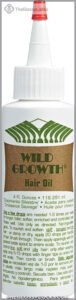
If you’ve ever scrolled Amazon reviews at 2am, you’ve probably seen this bottle. Nearly 48,000 ratings, 4.5 stars, that’s not hype, that’s consistency.
The formula leans on olive, coconut, and jojoba oils, with pumpkin seed oil thrown in for extra strand support. Users noted stronger, shinier hair within a month.
Use daily or stretch it to three times weekly. At 4 oz for a solid price, it’s an easy staple for thick or coily textures needing consistent conditioning.
| Best For | People with dry, thick, curly, or coily hair (including braids, locs, and beards) who want a deep-conditioning oil to help reduce breakage and support length retention. |
|---|---|
| Volume/Size | 4 fl oz |
| Application Method | Hand application |
| Hair Type Suitability | Curly/coily/thick |
| Scent Profile | Strong herbal |
| Key Ingredient | Olive/jojoba/coconut |
| Primary Benefit | Moisture/length retention |
| Additional Features |
|
- Deeply moisturizes and softens even the driest, coarsest hair textures
- Versatile enough for braids, locs, protective styles, and beards
- Helps reduce split ends and breakage with regular, consistent use
- Strong herbal or medicinal scent that some users find unpleasant
- Can feel greasy or heavy if too much is applied
- May cause itching or scalp irritation for those with sensitive skin
6. Wild Growth Light Oil Moisturizer 4 Fl Oz
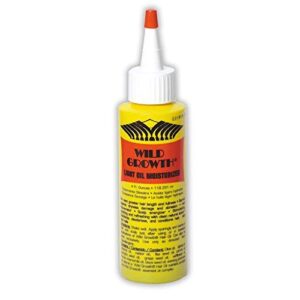
Think of this as the original oil’s lighter sibling. Same brand, same trusted base, but built for fine or natural hair that gets weighed down easily.
Coconut, olive, and rice bran oils bring quick-absorbing moisture without the greasy feel, while a touch of peppermint gives that fresh scalp tingle.
Use it sparingly on damp ends, or pair it with the original formula for a protective, everyday routine. It’s a smart pick when you want hydration without heaviness.
| Best For | People with fine, natural, or relaxed hair who want lightweight daily moisture without the heaviness of a richer oil. |
|---|---|
| Volume/Size | 4 fl oz |
| Application Method | Hand application |
| Hair Type Suitability | Fine/natural/relaxed |
| Scent Profile | Strong herbal |
| Key Ingredient | Conditioning agents |
| Primary Benefit | Detangling/moisture |
| Additional Features |
|
- Fast-absorbing formula that hydrates without weighing hair down
- Adds slip for easier detangling, which helps cut down on breakage
- Great pre-styling prep that smooths frizz and conditions strands before heat styling
- Strong herbal scent that some find overpowering at first
- A small number of users report scalp irritation or inflammation with prolonged use
- Too light for thick hair or anyone needing a heavier, more intensive moisturizer
7. Camille Rose Rosemary Hair Oil Blend
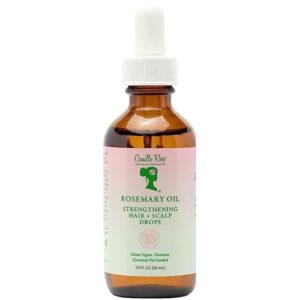
A no-fuss bottle that fits right into daily rotation, no complicated steps required.
Just squeeze, lather, and rinse—gentle enough for oily, wavy, or fine hair, as highlighted in these natural hair care product reviews.
Just two to three drops on wet or dry hair, worked into your scalp and strands. Rosemary oil takes the lead here, boosting circulation while keeping things lightweight enough for everyday use.
You won’t get heavy buildup, just softer, shinier hair with better manageability. It’s simple, practical, and easy to stick with, which honestly matters more than any fancy formula when you’re building a real routine.
| Best For | People with curly hair or locs who want a lightweight, easy-to-use oil that supports scalp health and boosts shine without a complicated routine. |
|---|---|
| Volume/Size | 1.9 fl oz |
| Application Method | Direct application |
| Hair Type Suitability | Curly/locs |
| Scent Profile | Neutral |
| Key Ingredient | Rosemary/amla/biotin |
| Primary Benefit | Scalp stimulation |
| Additional Features |
|
- Infused with rosemary, peppermint, and tea tree oils to stimulate the scalp and improve circulation
- Lightweight formula absorbs quickly, leaving hair soft and shiny without greasy buildup
- Simple application (just two to three drops) makes it easy to stick with daily
- May feel too heavy or greasy for fine or thin hair types
- Scent is subtle and may come across as neutral rather than strongly fragrant
- Small 1.9 oz bottle may run out quickly with frequent or daily use
8. Weleda Rosemary Conditioning Hair Oil 1.7 Fl Oz
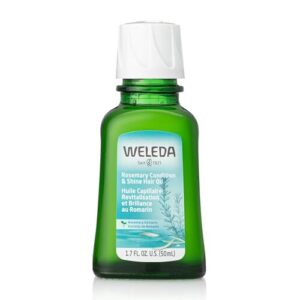
This one’s more of a conditioning treatment than a growth serum, and Weleda’s upfront about that. Rosemary and burdock root nourish scalp and strands, while clover extract softens split ends and adds shine.
Massage it in or smooth it over wet or dry hair, just a few drops from that compact 1.7 fl oz bottle. It calms itchy scalps nicely, though heavy-handed application can leave hair greasy. Worth knowing before you buy: some listings mix up 50 mL versus 100 mL sizing.
| Best For | Anyone dealing with a dry, itchy scalp or brittle, split-prone ends who wants a nourishing treatment oil rather than a hair growth product. |
|---|---|
| Volume/Size | 1.7 fl oz |
| Application Method | Massage application |
| Hair Type Suitability | All types |
| Scent Profile | Rosemary, fades fast |
| Key Ingredient | Rosemary/burdock |
| Primary Benefit | Split end repair |
| Additional Features |
|
- Rosemary, burdock root, and clover extracts deeply nourish the scalp and strands
- Softens split ends and adds noticeable shine
- Soothes itchy scalp and helps reduce dandruff with regular use
- Contains peanut oil as a major ingredient, which may pose allergy risks for some users
- Easy to overapply, leaving hair feeling greasy
- Listings inconsistently show 50 mL vs. 100 mL, so it’s worth double-checking the size before purchasing
9. Root Comb Applicator Bottle Oil Applicator
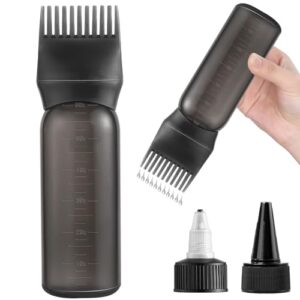
Not every product on this list is an oil itself, and this applicator bottle from FXSPLCZ proves the tool matters just as much as what’s inside it.
The built-in comb tip parts hair while dispensing product straight to your scalp, and the graduated scale keeps you from overpouring. Squeeze gently for a controlled stream.
Just don’t overfill it. Users report leaking at the twist cap, especially tilted or stored on its side.
| Best For | Anyone doing at-home hair dye jobs or oil treatments who wants a mess-free way to apply product straight to the scalp with precision. |
|---|---|
| Volume/Size | 6 oz |
| Application Method | Comb applicator |
| Hair Type Suitability | All types |
| Scent Profile | N/A |
| Key Ingredient | N/A |
| Primary Benefit | Precise application |
| Additional Features |
|
- Graduated scale makes it easy to measure and control exactly how much product you’re using
- Comb attachment helps distribute oils or dye evenly while parting hair as you go
- Comes with a dual cap system, giving you flexibility for different applications
- Prone to leaking if overfilled or squeezed too forcefully
- Twist cap doesn’t fully seal, so it can drip if the bottle is tilted or laid on its side
- Comb attachment may fall short for those with longer hair
10. Rosemary Hair Oil with Biotin Jojoba Castor
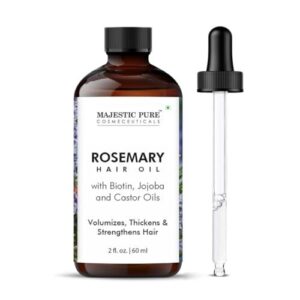
Rounding out our list is Botanic Hearth’s rosemary formula, and don’t let the "100% Pure Rosemary Oil" label fool you. Rosemary shares space with jojoba, castor, and grape seed oils, plus biotin.
That said, the dual-nozzle applicator makes mess-free application genuinely easy. Massage it in, let it sit ten minutes to overnight, then shampoo.
At 2 fl oz, it’s a solid budget pick, just go easy on the amount so you’re not reaching for a towel to protect your pillow.
| Best For | Anyone on a budget who wants a nourishing, no-fuss rosemary hair oil to help with dry scalp and stronger, softer-feeling hair over time. |
|---|---|
| Volume/Size | 2 fl oz |
| Application Method | Dual-nozzle |
| Hair Type Suitability | All types |
| Scent Profile | Herbal rosemary |
| Key Ingredient | Rosemary/jojoba/castor |
| Primary Benefit | Scalp soothing |
| Additional Features |
|
- Blend of biotin, jojoba, and castor oils offers extra nourishment beyond rosemary alone
- Dual-nozzle applicator allows for precise, mess-free application
- Affordable 2 fl oz option that’s gentle on the wallet
- "100% Pure Rosemary Oil" labeling is misleading since rosemary isn’t the main ingredient
- Can feel greasy if too much is applied, potentially requiring a towel on your pillow
- Strong herbal scent may not appeal to those sensitive to fragrance
How Hair Growth Oil Treatments Work
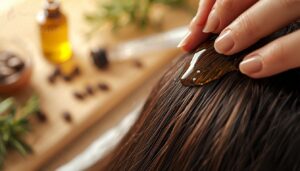
So how does an oil actually help your hair grow, and not just look shinier for a day? It comes down to a few real jobs happening under the surface, from your scalp’s blood flow to how well it holds moisture. Here’s what these oils are actually doing for you, one function at a time.
Supporting Scalp Circulation
Blood flow is the engine behind scalp circulation, and it’s easier to boost than you’d think. Warm oil application helps carrier oils spread with better slip, so your fingers glide instead of tug. Add circular scalp massage and you get real mechanical stimulation, waking up sluggish follicles session after session.
Scalp massage has been shown in studies to increase blood flow temporarily, supporting follicular health through enhanced microcirculation regulation.
Nourishing Hair Follicles
Once blood is flowing, your follicles need actual building blocks, not just circulation. That’s where dermal papilla activation matters: it releases growth factors signaling stem cells to work.
Rosemary’s carnosic acid neutralizes free radicals nearby, while ricinoleic acid in castor oil calms inflammation.
This nutrient delivery is what turns better circulation into visible, stronger growth.
Balancing Scalp Moisture
Growth factors need a stable stage, and that means moisture balance. Scalp pH around 4.5 to 5.5 keeps hydration locked in.
Try this:
- Layer lightweight, humectant serums
- Use glycerin or hyaluronic acid
- Gently exfoliate weekly
- Follow with sulfate-free cleansing
Whether you’re dry-scalped or oil-prone, balance keeps your microbiome (and follicles) thriving.
Reducing Breakage and Shedding
Balance sets the stage, but breakage undoes it fast. Oils create a friction-reducing film between strands, so combing feels smoother and snapping drops.
Detangle in sections, finger-first, then a wide-tooth comb. Scalp massage boosts circulation and eases shedding tied to normal cycles.
Silk pillowcases and loose twists cut nighttime rubbing, protecting lengths where breakage usually starts.
What Oils Cannot Treat
Where do oils fall short? Right here: hormonal imbalance causes, genetic pattern baldness, autoimmune alopecia, and scarring can’t be fixed with oil alone.
- Hormonal or genetic thinning needs medical evaluation
- Autoimmune attacks require specialist treatment
- Nutritional deficiency loss needs dietary correction
- Scarring alopecia demands procedural care
Oils ease scalp inflammation and breakage, not DHT-driven miniaturization or tissue damage. Losing 100+ strands daily? See a dermatologist.
Best Ingredients for Hair Growth Oils
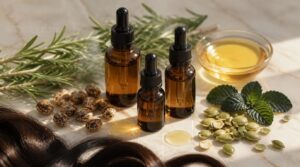
Not every oil in your cabinet is pulling its weight. Some ingredients have real research behind them, while others just smell nice. Here’s what actually earns a spot in a smart hair growth routine.
Rosemary Oil for Regrowth
Can a kitchen herb really rival minoxidil? Studies suggest yes, rosemary oil matched 2% minoxidil for hair count over six months, no itchy scalp included. It works as a vasodilator, boosting scalp blood flow so follicles get more oxygen and nutrients.
Always dilute it first, five drops per teaspoon of carrier oil, then massage in and leave on 5-10 minutes before rinsing.
Castor Oil for Thickness
Thick, sticky, almost stubborn, that’s castor oil for you. It’s 85-90% ricinoleic acid, the acid behind its scalp circulation boost and moisture-locking film.
That coating bonds with keratin, cuts breakage, and creates real hair thickness enhancement over time.
- Jamaican black castor oil for coarser strands
- Weekly scalp massage benefits
- Dilute to avoid irritation
Peppermint Oil for Stimulation
That tingle? It’s menthol vasodilation at work, widening blood vessels for real follicle activation.
| Effect | How It Feels | Benefit |
|---|---|---|
| Cooling | Instant chill | Scalp comfort |
| Tingling | Sensory buzz | Circulation boost |
| Massage | Rubbing in | Density support |
Pair peppermint with scalp massage benefits, and you’re supporting your hair growth cycle honestly.
Amla Extract for Strengthening
Indian gooseberry packs a serious antioxidant punch, and that’s the real story here.
Amla extract fights oxidative stress while conditioning strands, cutting friction that causes breakage. Pair it with a carrier oil for scalp nourishment, and you get smoother, flexible hair that resists snapping. It’s quiet strengthening, not flashy, but your ends will thank you.
Lavender Oil for Soothing
Ever notice how a stressed scalp feels tight, almost defensive? Lavender oil eases that. Its scalp calming effects come from linalool and linalyl acetate, easing inflammation and locking in moisture.
Quick guidelines:
- Dilute to 3-5% for scalp use
- Patch test 24 hours first
- Avoid eye contact
- Pair with carrier oil nightly
Even aromatherapy fans love it, undiluted use isn’t recommended though.
Compare Hair Oils by Hair Type
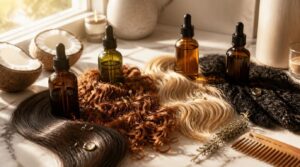
Not all hair oils work the same way for every head of hair, and that’s the honest truth. What feels light and nourishing on curly strands might weigh down fine hair completely. Here’s how we break it down by hair type and scalp condition, so you can find your match.
Fine and Thinning Hair
When strands are narrow and scalp shows through, less is more. Go for lightweight oil application, a few drops of Mielle or Camille Rose, massaged gently to boost circulation without weighing hair down.
Pair this with iron and folic acid-rich foods, since nutritional support for hair matters just as much as what you apply.
Gentle handling reduces breakage and protects density over time.
Thick and Coarse Hair
Coarse strands measure around 120 microns wide, nearly double fine hair, so they need richer treatment to actually absorb.
- Go heavy: butters and rich oils won’t flatten thick strands
- Massage 2-3 minutes for scalp circulation
- Oils penetrate coarse hair in 2-3 minutes, use that window
- Expect 25% more product needed for full hydration
Coarse hair tolerates heat up to 400°F, giving styling flexibility fine hair can’t match.
Curly and Coily Hair
Coily hair shrinks up to 75%, so oil feels like it’s doing less than it is. That’s exactly why castor oil and rosemary oil matter here, they coat each curl for moisture retention and easier detangling. Apply oil during protective styling or before bed as part of your nighttime routine.
| Curl Type | Best Oil Approach |
|---|---|
| Curly | Rosemary oil, daily |
| Coily | Castor oil, pre-bed |
| Both | Detangle wet, gently |
Dry or Irritated Scalps
Detangling coily strands is one thing, but a tight, flaky scalp underneath is another problem entirely.
Lavender oil calms inflammation and repairs the moisture barrier, while aloe vera cuts scaliness within two weeks.
Skip sulfate shampoos, they strip oils you’re trying to restore.
Massage rosemary oil in gently, boosting circulation without aggravating already-irritated skin.
Oily and Buildup-prone Scalps
If your scalp gets greasy fast, oil sounds backwards. But sebum control starts with balance, not stripping.
Use clarifying shampoo weekly, add scalp exfoliation to lift buildup, and clean brushes often for residue prevention.
Amla extract oils work well here, offering DHT inhibition and scalp circulation boost without heavy residue when applied just twice weekly.
How We Evaluated Each Hair Oil

We didn’t just sniff a bottle and call it a day. Every oil on this list went through the same five-point check, from what’s actually in it to how it performed over weeks of real use. Here’s exactly what we looked at.
Evidence-backed Active Ingredients
Why did some oils make our list and others didn’t? Clinical data, plain and simple. Rosemary oil rivaled minoxidil in trials. Castor oil boosted thickness by nearly 69%. Peppermint outpaced minoxidil in follicle stimulation studies. Amla extract inhibited the enzyme behind hair loss. Lavender calmed irritated scalps. Bhringraj oil showed up often, too, backing traditional use with real results.
Texture and Absorption
Not all oils soak in the same way, and that’s chemistry, not chance. Molecular weight penetration matters most: lighter oils under 500 Daltons slip into the hair shaft, while heavy ones just sit on top.
That’s why we favored formulas balancing scalp penetration with lightweight coating, especially for curly hair or dry scalps needing real absorption, not greasy buildup.
Application and Washability
Can you actually stick with this oil long-term? That’s the real test.
We checked whether each formula worked pre-wash or post-wash, how easily it rinsed clean, and whether daily use felt realistic. Droppers scored higher than wide-mouth jars for scalp precision.
Bonus points went to oils that skipped the double-shampoo struggle, leaving zero greasy residue behind.
Price, Size, and Value
Would you pay $20 for a bottle that runs out in three weeks? We ran the numbers on cost per use, not just sticker price.
Bottle longevity mattered most: 4 oz sizes stretched 2-3 months, while 1 oz options lasted 4-6 weeks. Size vs price didn’t always align, so we rewarded true value, watching for sales and discount availability that made premium picks worth it.
Reported Growth Results
Numbers don’t lie, but timelines matter more than promises. We tracked visible hair growth, baby hair emergence, and shedding reduction across every reported growth timeline, not just week-one hype.
- Noticeably thicker strands you can actually feel
- Less hair on your pillow each morning
- New growth peeking through old part lines
Thickness improvement and scalp coverage change carried the most weight in our before-and-after scoring.
Hair Growth Oil Treatment Routine
Buying the right oil is only half the battle, your technique matters just as much. A few small habits can mean the difference between real growth and a greasy scalp with nothing to show for it. Here’s exactly how to build a routine that actually works.
If those brown-gray patches on your cheeks and forehead are lingering longer than they should, pairing your oil routine with an enzyme treatment for dark spots can help even out your tone while your hormones settle.
Patch Testing Before Application

Before any essential oil mixture touches your scalp, run a quick skin sensitivity test. Dab a small amount on the inside of your arm or elbow crease, safe testing areas that won’t get rubbed off.
Wait 24 to 48 hours, watching for redness or itching. This patch test duration catches allergic reactions before they reach your scalp health.
If you’re thinking about coloring again soon after, dyeing your hair twice in one day is risky, especially on freshly lifted strands that already feel weak.
If you’re tempted to speed things up, this guide on dyeing hair twice in one day explains why patience pays off.
If you’re unsure whether a sulphur shampoo suits your scalp type, this guide on whether sulphur is good for hair breaks down the benefits and risks in more detail.
Sectioning Hair Evenly
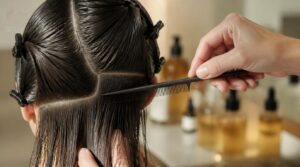
Once your patch test clears, grab a tail comb and get sectioning. Part hair into even, manageable pieces, clip each one at the root to keep it isolated, and work crown to nape in one clean line.
This keeps your hair oil application thorough instead of patchy, so every section actually gets treated.
Massaging Oil Into Scalp

With sections clipped and ready, it’s massage time, the part your scalp actually looks forward to.
Use fingertips (never nails) and work in circular motion massage with gentle pressure. This boosts scalp circulation, feeds follicles, and helps oil absorb rather than just sit on top.
- Warm oil between palms first
- Massage 5-10 minutes total
- Keep pressure relaxing, not painful
- Cover crown to nape
- Make it a daily scalp stimulation habit
Choosing an Ideal Leave-time

Once massaged in, how long should the oil actually sit? Best oil duration depends on your hair type and climate.
| Hair Type | Ideal Leave-Time |
|---|---|
| Fine hair | 30 minutes |
| Normal hair | 30-120 minutes |
| Thick/coarse | 2-3 hours |
| Damaged/dry | Overnight (6-8 hrs) |
In humid weather, shorten it. Dry climates tolerate overnight treatment without extra grease.
Shampooing Without Residue
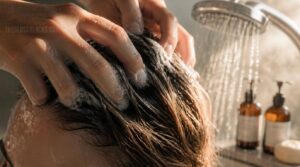
Now for the part everyone rushes: washing it out. Skip a proper cleanse and you’re left with flat, greasy strands, no matter how good that rosemary oil or castor oil actually was.
- Apply shampoo to dry roots first, letting it grip oil directly
- Add lukewarm water gradually, massaging to emulsify
- Rinse until slip disappears completely
Use residue-free formulas with sulfate-free, gentle cleansers for real moisture balance.
How Often to Apply Hair Oils

So how often should you actually be oiling your hair? The answer depends on your product, your goals, and honestly, your patience. Here’s how to build a schedule that actually works for you.
Daily Lightweight Applications
Not every oil needs a scalp soak. For daily use, think lightweight hair oil only, like jojoba or argan, applied to damp hair before air drying or before heat styling.
Rub a drop between your fingers first, that warms it up for better absorption. Fine hair? Stick to 1-2 drops max.
It’s a quick moisture retention step, not a full treatment.
Twice-weekly Scalp Treatments
Twice a week hits the sweet spot for real scalp treatments, like rosemary or castor oil blends. Section your hair first, then massage in gently with fingertips, letting it absorb 2-3 minutes before rinsing.
Pair sessions with wash days to avoid buildup. Skin sensitive? Watch for irritation, and dial back frequency if dryness creeps in.
Pre-shampoo Oiling Schedules
Think of pre-shampoo oil as a protective buffer, not a treatment. Applied to dry hair 30-60 minutes before washing, it fills shaft gaps and limits water absorption during shampooing.
Curly or coily hair? Go 2-3 times weekly. Fine or oily scalps do better every 10-14 days, focused on ends only, using lightweight oils like jojoba.
Safe Overnight Oil Treatments
Sleeping in your oil overnight? That’s fine, but only with the right setup.
Use two to three drops, warmed in your palms, since heavier amounts just sit on your scalp and transfer to fabric.
Cover your hair with:
- A silk or satin bonnet
- An old T-shirt
- A towel over your pillow
Wash with sulfate-free shampoo come morning to prevent buildup.
Long-term Maintenance Routines
Six weeks in, you switch gears: twice-weekly application becomes once-weekly upkeep. Pair it with weekly deep conditioning, gentle scalp massage, and steady wash day scheduling.
Keep trim frequency planning on track (every 8-12 weeks) and treat protective styles gently. Real hair growth timeline results build over months, not days, so consistency beats intensity every time.
Results, Side Effects, and Safety
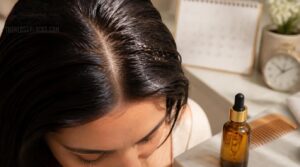
So you’ve picked an oil and you’re using it on schedule, but what should you actually expect to see, and when? Growth oils can work wonders, though they also come with a few safety details worth knowing before you commit. Here’s what to watch for, from realistic timelines to knowing when it’s time to call in a pro.
Realistic Hair Growth Timelines
Patience wins here. Most people see shedding first, then fine vellus hairs by month two. Thickening kicks in around months three to four, real density by six. Genetics, hormones, and consistency matter as much as the oil itself, since hair only grows about 0.5 inches monthly regardless of product.
Shedding comes first, but real density takes six months of patience and consistency
- Months 1-2: shedding, fine regrowth
- Months 3-4: thickening shafts
- Months 5-6: visible density
Scalp Irritation Warning Signs
Timelines matter, but so does listening to your scalp. Itchy scalp symptoms or a burning sensation alert mean stop and check ingredients.
Watch for redness and swelling, flaky skin signs, or a bumpy lesion check along your hairline. New oil, new symptoms? That’s your scalp health talking, not just hair thinning frustration.
Preventing Greasy Product Buildup
Symptoms aside, buildup itself causes plenty of frustration. Stick to lightweight oil application, just a few drops, and stretch out your usage frequency if your scalp runs oily.
Weekly clarifying shampoo clears residue, while an apple cider vinegar rinse dissolves mineral film. Choose silicone-free formulas, brush strands regularly, and keep protective styles loose so oil doesn’t pool against your scalp.
Tracking Thickness and Shedding
Guessing whether your oil’s working wastes time. Do a scalp visibility test monthly under bright light, and track ponytail circumference, a 0.5-inch gain signals real progress.
Snap progress photos with the same lighting each week. Count hairs in a one-inch square for density data, and log shedding patterns after washing. Numbers beat memory every time.
When to See Dermatologists
When does an oil routine stop being enough? If persistent hair thinning or sudden patchy loss continues past a few months, it’s time. Add scalp redness itching, nail discoloration changes, or recurrent hives rash, and don’t wait.
- Rash spreading or lasting weeks
- Mole changing size or color
- Nail separating from the bed
- Cystic acne resisting OTC care
Dermatologist recommended care beats guesswork every time.
Choosing The Right Hair Growth Oil

So how do you actually pick the right bottle for your hair? It comes down to a handful of practical checks, not guesswork. Here’s what we tell every reader before they add an oil to cart.
Match Oil to Concerns
Every scalp has a story, and yours will tell you exactly which formula to reach for. Match the oil to your actual concern, not just the prettiest label.
| Concern | Best Oil Type |
|---|---|
| Shedding/thinning | Growth Stimulation Oils (rosemary) |
| Low density | Thickness Boosting Formulas (castor) |
| Dryness | Moisture Retention Blends |
| Flyaways | Frizz Control Solutions |
| Breakage | Damage Repair Treatments |
Check Ingredient Concentrations
Flip the bottle over before you buy. FDA rules require active ingredients above 1% to appear in order, so a "rosemary oil" mixture listing water first isn’t concentrated enough to matter.
Rosemary and peppermint work best around 2-3%, castor and bhringraj oil need no strict cap, and vitamin E should appear early on the label, not buried last.
Consider Texture and Porosity
Ever wonder why your oil sits on your hair like a puddle instead of soaking in? That’s porosity talking.
Low porosity hair wants lightweight, fast-absorbing oils like jojoba.
High porosity hair craves richer, sealing textures like avocado or castor.
Medium porosity sits happily in between.
Match texture to your cuticle’s behavior, and you’ll finally stop the buildup and boost real moisture retention.
Compare Cost Per Treatment
A $10 bottle can still cost more per treatment than a $14 one, once you crunch the numbers.
Cost per ml matters more than sticker price:
- Mielle: $0.42/ml
- Castor oil: $0.93/ml
- Weleda: $0.26/ml
- Wild Growth: $0.23/ml
- Camille Rose: $0.25/ml
Bigger bottles often mean better application coverage and lower long-term cost.
Prioritize Consistent, Practical Use
The fanciest oil in the world won’t do a thing sitting in your cabinet. Build hair oil habit by pairing it with something you already do, like brushing your teeth. Set application reminders for consistency, track usage frequency in a notes app, and adjust for hair type as results roll in. Consistency beats intensity every time.
Frequently Asked Questions (FAQs)
What is the best oil for hair growth?
Think of your scalp as soil, and roots as your reward. Rosemary oil leads the pack for follicle stimulation, rivaling minoxidil in studies. Pair it with castor oil for thickness, peppermint for circulation, like Mielle’s mix proves daily.
Which oil is best for fastest hair growth?
For pure speed, peppermint oil wins, it stimulates follicles faster than minoxidil 3% in studies. But for balanced, lasting results, pair it with rosemary. That combo targets hair thinning while calming your scalp with lavender’s soothing touch.
What’s the most effective oil for hair growth?
Rosemary oil takes the top spot, matching minoxidil 2% in clinical trials. Castor oil adds thickness, peppermint stimulates circulation, amla helps block DHT, and lavender soothes irritation, all working together for real, sustainable growth.
Do hair growth oils really work?
A seed only sprouts with the right soil, water, and light, not magic. Yes, evidence shows real results, but only when scalp absorption, ingredient balance, and long-term consistency line up, not overnight miracles from a bottle.
Which oil is best for hair growth fastest?
For sheer speed, rosemary blends win. Clinical data shows rosemary-lavender oil boosted growth rate by 73% in 90 days, edging out castor oil’s thickness gains.
Peppermint sparks follicle stimulation fast too, but rosemary’s combined regrowth and scalp health benefits make it our top pick.
Do hair growth oils actually work?
Like Achilles’ heel, the promise sounds mighty but has a weak spot: results vary. Clinical evidence review shows rosemary oil genuinely helps regrowth, while most others mainly improve shine and reduce breakage, not follicle biology itself.
Which oil can regrow lost hair?
Honestly? None can fully regrow lost hair alone. Rosemary oil shows the strongest evidence, matching minoxidil in studies, while saw palmetto may block DHT. Treat oils as supportive hair loss prevention, not a guaranteed fix.
Is oiling can regrow hair?
Yes, oiling can regrow hair, boosting circulation, calming inflammation, feeding follicles. Rosemary oil rivals minoxidil in trials; consistent scalp massage plus evidence-based application over months delivers real, measurable regrowth, not overnight magic.
Can hair growth oils cause allergic reactions?
They can. Essential oils and fragrance often trigger allergic contact dermatitis, especially with overnight leave-on use. Preservatives add risk too. Always patch test first, watch for redness or itching, and lower application frequency if your scalp reacts.
How often should you apply hair oils?
Think old-school dial-up patience, applied to your scalp. Frequency by hair type matters most: dry or coarse hair does well 2-3 times weekly, oily scalps once a week, and lightweight daily use works fine with just a few drops.
Conclusion
Think of your scalp like soil: feed it right, and growth follows naturally.
You’ve seen ten formulas, each strong for different hair types and concerns.
The best hair growth oil treatment isn’t the priciest bottle, it’s the one you’ll actually use, night after night.
Rosemary, castor, and peppermint work, but only with consistency behind them.
Massage it in, and give your follicles the patience they deserve.
Real change takes root slowly, but it takes root.