This site is supported by our readers. We may earn a commission, at no cost to you, if you purchase through links. This content is for general informational and educational purposes only and is not a substitute for professional medical, dermatological, or nutritional advice.
You want a thicker beard. Your skin wants to stop breaking out. Most products force you to pick one.
Here’s the catch: heavy oils and thick balms that promise fuller growth often clog the same follicles you’re trying to feed. Only one product category has a 16-week clinical trial behind it, and it isn’t oil. That gap between marketing and evidence makes non comedogenic beard growth products harder to shop for than they look.
Below, you’ll find three tested picks, a checklist for reading ingredient labels, and a simple routine that keeps your skin clear while your beard fills in.
Table Of Contents
- Key Takeaways
- Beard Product Reviews for Acne-Prone Skin
- How to Choose Non-Comedogenic Beard Growth Products
- Can Beard Oils Actually Stimulate Growth?
- How to Apply Beard Products Without Clogging Pores
- A Simple Beard Care Routine for Acne-Prone Skin
- Frequently Asked Questions (FAQs)
- What is a good non-comedogenic moisturizer for my beard?
- What is the best product to stimulate beard growth?
- What are some non-comedogenic beard balms?
- What is the 3 month beard rule?
- What is the best non-comedogenic oil for beards?
- What beard conditioner won’t clog pores?
- Can beard growth oil cause acne?
- Is there a beard growth product that actually works?
- How long before seeing beard growth results?
- Do beard growth vitamins cause skin breakouts?
- Conclusion
Key Takeaways
- You’ll keep your skin clear by choosing lightweight, fragrance-free, non-comedogenic products like a gel-cream and squalane, and by checking the full ingredient list rather than trusting a "non-comedogenic" label alone.
- You can’t change your beard’s growth with oils, because genetics and DHT set your ceiling, so oils only condition hair and make it look fuller.
- You should know that minoxidil is the only option with clinical evidence behind it (a 16-week trial of 3% minoxidil), but it isn’t approved for beards, so talk to a doctor first.
- You’ll avoid breakouts with a simple routine of gentle washing, a light moisturizer, and one thin leave-on, plus a 48-hour patch test and about two weeks before you change anything.
Beard Product Reviews for Acne-Prone Skin
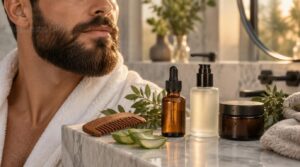
You want a beard that grows full without a single new breakout. Here are three non-comedogenic beard products that fit acne-prone skin, so you’ll know what to try first. Check each pick below and choose the one that matches your routine.
If your beard feels coarse or itchy while it fills in, a pH-balanced beard wash that softens facial hair can keep growth manageable without clogging pores.
CeraVe Oil Control Gel-Cream
Because you’re dealing with acneprone skin under your beard, you’ll want a moisturizer that doesn’t fight you. CeraVe’s gel-cream delivers real oil control with niacinamide 4% and ceramides, so your skin barrier function stays strong. Its light, non comedogenic feel absorbs fast.
It’s not an acne treatment, and it’s not one of those beard growth products. Use it every day.
The Ordinary Plant-Derived Squalane
Want something even simpler? The Ordinary’s plant-derived squalane is a single-ingredient oil that sits light on acneprone skin. It’s non comedogenic, fragrance-free, and a truly nonirritating formulation.
Use two drops under your beard after CeraVe. You’ll get barrier-supporting moisture without grease. It’s not one of those beard growth products, so skip the miracle claims. Keep layers thin to avoid shine.
Honest Amish PURE Beard Oil
If you’d rather have a blend of oils than just one, Honest Amish PURE Beard Oil gives you seven premium ones, including organic pumpkin seed, avocado, and argan, with no added fragrance or synthetic chemicals. Here’s how to use Honest Amish PURE Beard Oil on acne prone skin:
Since its blend of lightweight oils absorbs quickly, it can suit breakout-prone skin, and this guide to how beard oil helps with acne explains what to look for.
- Warm two drops between your palms.
- Press it onto damp skin first.
- Work it through, root to tip.
- Stop at two drops, since thin layers win.
- Wash your beard every night.
It’s non comedogenic, but it isn’t one of those beard growth products. Just think noncomedogenic beard oils.
How to Choose Non-Comedogenic Beard Growth Products

Picking the right beard growth product doesn’t have to feel like guesswork. You’ll use five simple checks to find a non-comedogenic beard product that keeps your skin clear and your beard on track. Here’s what you’ll want to look at before you buy.
Look Beyond Oil Ratings
A comedogenic rating is a weather forecast, not a guarantee. It tells you about oils, but your pores live through the whole storm.
Labels like non comedogenic only go so far. Some esters, occlusives, and film formers are poreclogging ingredients that never show up on oil charts.
Check the full ingredient list when shopping beard growth products. Prioritize sebum regulation.
If breakouts keep showing up along your jawline, this guide on whether beard oil can cause acne explains which oils tend to clog pores and which ones actually keep skin balanced.
Choose Lightweight Formulas
Swap out heavy balms for lightweight moisturizers, and you’ll keep your pores clear. Look for non comedogenic gel-creams that set fast. Check the oil absorption rate too. Quick beard oil absorption means less residue on your skin.
Stick with noncomedogenic oils like squalane, and start with a pea-sized amount. Less product means more control, since overapplying turns thin formulas heavy.
Avoid Irritating Ingredients
Watch out for hidden irritants in your beard products. Fragrance, essential oils like tea tree or peppermint, and high-level alcohol denat. can leave acne-prone skin red and stinging.
Pick fragrancefree, hypoallergenic, dermatologist tested formulas. Skip harsh acids and formaldehyde-releasing preservatives too. A non comedogenic label alone won’t protect you, so stay in control with patch testing before every new bottle.
Evaluate Growth Claims
One 16-week trial tested 3% minoxidil on 48 men’s beards. That’s real clinical evidence, and most oils can’t match it.
Does the label promise follicle stimulation, or just softness? A low spot on the comedogenic scale protects pores, not growth. A noncomedogenic beard oil conditions; it doesn’t stimulate. Demand proof for beard growth products without side effects, not just testimonials.
Patch Test First
A friend of mine skipped testing once and spent a week with a red, itchy jaw.
Don’t be him. Run a patch test on your lower jaw before you commit to any new beard growth products.
Even a hypoallergenic label or noncomedogenic beard oil can still bother acne-prone skin.
Apply a dab, leave it on, and check at 48 hours.
Can Beard Oils Actually Stimulate Growth?
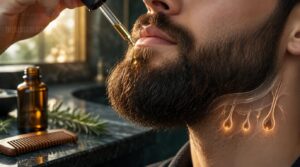
Here’s the hard truth: your follicles run the show, not your oil bottle.
Your follicles, not your oil bottle, decide how your beard grows
Beard growth is driven by genetics and your DHT hormone levels, and no topical oil rewrites that program. What oils can do is condition skin and coat each hair, so you’ll see less dryness, fewer snapped ends, and a fuller look. That’s cosmetic thickness, not new follicles.
So treat big promises with caution. Most beard growth products lack controlled data showing real density gains. Even minoxidil, the one name people trust, isn’t approved for beard use, so talk to a doctor before trying it.
Stay patient. Real change takes months, while a non comedogenic oil can improve looks in days. Judge beard oil application only by conditioning.
How to Apply Beard Products Without Clogging Pores
Think your beard oil is the problem? Often it’s the way you use it.
Smart beard oil application starts with a clean dry beard. Damp skin spreads product unevenly and traps residue at the follicle. Pick a non comedogenic formula, check the comedogenicity scale, and favor sebum mimicry oils that feel light.
Here’s how to keep pores clear:
- Warm 3 to 4 drops between your palms. More isn’t better.
- Work it through to the skin, then comb it out to the tips.
- Stick to one leave-on. Stacking oil, serum, and balm builds heavy film.
Fragrance can irritate even a safe formula, so keep it simple. Less product, fully worked in, means fewer breakouts and more control. Go light. Stay steady.
A Simple Beard Care Routine for Acne-Prone Skin
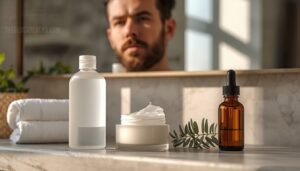
You’ve got the application down. Now build a routine around it.
Keep it to three steps. Fewer products mean fewer variables, and that means more control.
Morning and night, wash with a gentle beard washcleanser. Skip harsh scrubs. Irritation sparks an inflammatory response, and that’s how breakouts start.
Next, smooth on a noncomedogenic beard moisturizer while your skin’s still slightly damp. Gel-cream textures absorb fast and won’t leave a film.
Finish with your single leave-on, like a light oil built on sebum mimicry. Use it at night, or only when your beard feels dry.
Give it two weeks before you change anything. Skin reacts to cumulative exposure, so quick swaps just muddy the results. Stay simple. Stay steady. Stay consistent.
Frequently Asked Questions (FAQs)
What is a good non-comedogenic moisturizer for my beard?
You’ll want a noncomedogenic beard moisturizer like CeraVe Oil Control Gel-Cream.
It calms sebum overproduction, helps skin barrier repair, and absorbs fast. Your acne prone skin stays hydrated, matte, and totally breakout-free under facial hair.
What is the best product to stimulate beard growth?
One 2016 trial found 3% minoxidil beat placebo for beard density.
It extends the anagen phase, boosting follicular unit activation through transdermal absorption. Your DHT hormone sensitivity still sets your ceiling, so give it months.
What are some non-comedogenic beard balms?
You’ll find three solid non-comedogenic beard balms worth trying.
Abundantly Aromatic uses jojoba and shea.
Badger Organic is USDA certified and soothes itchy skin.
Aermeda’s seed oil mix balances oil.
Each suits acne-prone skin.
What is the 3 month beard rule?
Guys quit by week four, before the payoff. The 3 month beard rule says you’ll wait 10 to 12 weeks before judging beard growth.
Protect follicle health with non comedogenic care for acne prone skin.
What is the best non-comedogenic oil for beards?
Picture your beard as a garden, and jojoba oil as its soil. It mimics your skin’s sebum and sits low on the comedogenic scale.
Go lighter with grapeseed oil, hemp seed oil, or safflower oil.
What beard conditioner won’t clog pores?
You’ll want a lightweight, noncomedogenic beard conditioner. With acne prone skin, check the comedogenic scale and pick hypoallergenic, low-residue formulas.
Skip heavy balms and layered oils, since stacked leave-ons build a film. Patch test first.
Can beard growth oil cause acne?
Yes, it can. A beard oil with heavy, high-ranking ingredients on the comedogenic scale, like coconut oil or lanolin, can clog your pores. For acne prevention, choose a non comedogenic formula and keep sebaceous gland regulation in mind.
Is there a beard growth product that actually works?
Forget miracle cures: most beard growth products can’t override your genetics. Minoxidil has the best evidence, though it’s off-label for beards.
For your acne prone skin, pick noncomedogenic formulas and look for sebaceous gland regulation.
How long before seeing beard growth results?
Noticeable results in 2-4 weeks? That’s mostly a myth. Your beard growth timeline follows beard growth phases, so expect 8-12 weeks of consistent daily application.
Topical minoxidil efficacy varies, so minoxidil results aren’t guaranteed either.
Do beard growth vitamins cause skin breakouts?
Think supplements are harmless? Not always. Beard growth vitamins with high-dose biotin or B12 can fuel comedone formation and an inflammatory skin response in acne-prone skin. Choose dermatologist recommended doses, and always check every label.
Conclusion
Picture Marcus, three months in, with patchy cheeks and a fresh breakout along his jawline. He swapped his heavy balm for a squalane-based routine and a light gel-cream, and by week twelve, both problems eased.
That’s the lesson. The right non comedogenic beard growth products feed your beard without feeding your breakouts. Read labels, patch test, and keep layers thin. Clear skin comes first, because healthy follicles grow better beards. Let your face do the rest.