This site is supported by our readers. We may earn a commission, at no cost to you, if you purchase through links. This content is for general informational and educational purposes only and is not a substitute for professional medical, dermatological, or nutritional advice.
That sunscreen you apply at the pool may leave more than a protective film on your skin. In FDA maximal-use studies, some chemical filters reached blood levels far above the agency’s 0.5 ng/mL threshold for further safety testing, though absorption alone does not prove harm.
The label can feel like a chemistry exam, and the risks are not all alike. PABA and trolamine salicylate carry established safety concerns; oxybenzone, octinoxate, homosalate, and octocrylene raise different questions about data gaps, allergies, or coral reefs.
Knowing what ingredients to avoid in sunscreen lotion helps you choose protection without confusing uncertainty with harm.
Table Of Contents
- Key Takeaways
- Avoid PABA and Trolamine Salicylate
- Know FDA Safety Categories Before Avoiding
- Consider Avoiding Oxybenzone
- Consider Avoiding Octinoxate
- Review Homosalate and Octocrylene
- Watch Avobenzone on Sensitive Skin
- Avoid Fragrance and Sensitizing Additives
- Check Pregnancy-Specific Ingredient Concerns
- Consider Environmental Ingredient Impacts
- Choose Better-Tolerated Sunscreen Ingredients
- Frequently Asked Questions (FAQs)
- What are the least harmful ingredients in sunscreen?
- What are some harmful ingredients in sunscreens?
- What brands of sunscreen are not safe?
- Which sunscreen is best for avoiding toxic ingredients?
- Are sunscreen sprays safe to inhale?
- Should I avoid sunscreen containing nanoparticles?
- Which ingredients can trigger acne or breakouts?
- Do water-resistant formulas contain more irritants?
- How does sunscreen expiration affect ingredient safety?
- Conclusion
Key Takeaways
- Avoid PABA and trolamine salicylate because the FDA considers them not generally recognized as safe and effective due to established allergy and toxicity concerns.
- Systemic absorption of chemical filters such as oxybenzone, octinoxate, homosalate, and octocrylene warrants further study, but blood detection alone does not prove harm.
- If you have sensitive skin, eczema, fragrance allergy, or eye irritation, choose a fragrance-free formula and avoid filters that have previously caused you rash or photoallergy.
- A broad-spectrum SPF 30+ mineral sunscreen containing zinc oxide, titanium dioxide, or both is a practical conservative choice, especially during pregnancy or where reef-protection rules apply.
Avoid PABA and Trolamine Salicylate

Two sunscreen ingredients — PABA and trolamine salicylate — stand apart from the rest because the FDA has flagged them for confirmed safety concerns, not just missing data. Before you check another label, it helps to understand exactly what those concerns are and why these two ingredients disappeared from most shelves. Here’s what the evidence shows.
FDA Safety-based Concerns
While the FDA is still gathering data on a dozen chemical sunscreen filters, it has already made up its mind on two. PABA and trolamine salicylate are formally classified as not GRASE based on confirmed safety concerns, not just data gaps. When the FDA says the jury is still out for other ingredients, for these two, the verdict is in.
PABA Allergy and Photoallergy
PABA’s skin problems go beyond regulatory concerns. When UV light hits PABA on your skin, it converts into a compound your immune system may flag as foreign, triggering photoallergic contact dermatitis, an eczematous rash in sun-exposed areas. One clinical study found PABA photoallergy in 14.7% of tested individuals. If you’re allergic, benzocaine and procaine anesthetics may cause the same reaction.
Review post-tanning bed skin care precautions carefully, especially if medications already heighten your UV sensitivity.
Surprisingly, sunscreen allergy prevalence rates in clinical patch-testing populations remain consistently below 1%, suggesting PABA and other sunscreen allergens affect a small but significant subset of users.
Trolamine Salicylate Toxicity Risks
Trolamine salicylate presents a different threat entirely. Skin penetration studies confirm complete dermal absorption, so salicylic acid moves directly into your bloodstream after topical application.
High doses can trigger salicylate toxicity, producing tinnitus, vomiting, and confusion, and in severe cases, seizures or coma.
The FDA proposed it as Not GRASE after documenting coagulation-related adverse events tied to liberal skin application.
Why Both Are Uncommon
Both hazards help explain why neither ingredient survives on modern U.S. sunscreen labels. Three forces drove them out:
- FDA’s Not GRASE ruling in 2019 effectively ended their regulatory path
- Allergy and toxicity reports mounting since the 1980s pushed formulators away
- Newer chemical filters like avobenzone, homosalate, octocrylene, and octinoxate replaced them
Growing environmental aquatic toxicity concerns ultimately sealed the outcome.
Alternative Active Ingredients
What works instead? Zinc oxide and titanium dioxide sit on your skin’s surface without absorbing into your bloodstream, and the FDA confirms both as GRASE.
For a lighter feel, avobenzone and octocrylene offer chemical options, though both carry their own safety caveats.
Bemotrizinol, a hybrid filter with FDA approval since June 2026, delivers broad-spectrum protection with very low skin absorption.
Know FDA Safety Categories Before Avoiding
Before you start crossing ingredients off your list, it helps to understand how the FDA actually categorizes sunscreen safety. Not every flagged ingredient carries the same weight — there’s a real difference between "we don’t have enough data yet" and "this is confirmed harmful." Here’s what those distinctions look like in practice.
GRASE Status Explained
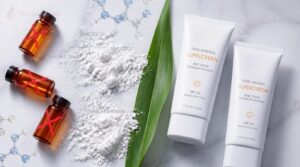
The FDA classifies sunscreen ingredients into three categories:
- GRASE for use
- Not GRASE due to safety concerns
- Not GRASE due to insufficient data
Only zinc oxide and titanium dioxide currently qualify as GRASE for use. Ingredients like oxybenzone and octinoxate remain under review. In June 2026, bemotrizinol gained GRASE status, marking the first newly approved filter in over two decades.
Data Gaps Versus Confirmed Harm
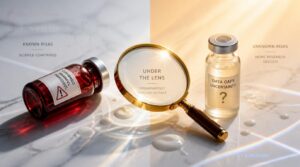
Missing data isn’t the same as proven danger. The FDA separates ingredients with confirmed harm from those lacking sufficient long-term studies.
| Evidence Type | Example | Meaning |
|---|---|---|
| Confirmed harm | PABA | Proven adverse effects |
| Insufficient data | Oxybenzone | Data gap, not proven risk |
| Environmental gaps | Oxybenzone, octinoxate | Lab findings, field unclear |
Skin absorption doesn’t prove toxicity. Concerns about endocrine disruption, reproductive effects, and developmental toxicity often rely on lab concentrations far exceeding real-world exposure. Pregnancy data gaps and hormone research limits mean questions stay unanswered, not that harm is confirmed.
Systemic Absorption Evidence

Systemic absorption occurs after ordinary use. In FDA trials, one application pushed all six common chemical filters above 0.5 ng/mL in blood plasma. Oxybenzone reached 258.1 ng/mL in lotion, while octinoxate reached 7.9 ng/mL.
Absorption varied by formulation and participant, but was consistent: oxybenzone exceeded the threshold in 100% within two hours. Some ingredients remained detectable for 21 days.
Absorption Does Not Prove Toxicity
Finding a filter in blood confirms absorption and dermal penetration, not injury. FDA’s 0.5 ng/mL trigger calls for toxicology data; it isn’t a danger line.
Detecting sunscreen chemicals in blood shows absorption, not harm; the FDA’s 0.5 ng/mL threshold triggers further safety testing
Pharmacokinetics, biomarkers versus health effects, and margin-of-exposure analysis compare exposure with toxicological reference points.
Evidence for endocrine disruptor effects, nanoparticle safety concerns, and longterm health effects remains incomplete; population-level data haven’t shown disease increases.
Personal Risk Factors Matter
If you’re pregnant, your skin is already working harder than usual. Hormonal changes can heighten reactivity, making ingredients like oxybenzone, homosalate, and octinoxate, all suspected endocrine disruptors, worth scrutinizing. Mineral filters such as zinc oxide don’t penetrate the bloodstream. With fragrance allergies or contact dermatitis in your history, a fragrance-free formula isn’t optional; it’s protective.
Consider Avoiding Oxybenzone
Oxybenzone is one of the most widely used chemical UV filters in American sunscreens, but it’s also one of the most scrutinized. Research has raised questions across several fronts—from how your body absorbs it to what it might mean for marine ecosystems. Here’s what the evidence currently shows.
Systemic Absorption Findings
Of all the chemical filters the FDA has tested, oxybenzone absorbs into your bloodstream fastest and at the highest concentrations. Here’s what the data shows:
- Plasma concentration peaked at 258.1 ng/mL in lotion formulations
- Threshold exceedance happens within just 2 hours of a single application
- Systemic absorption can linger in blood for weeks after last use
Hormone Research Limitations
Those absorption numbers are striking, but they don’t automatically translate to confirmed harm. Oxybenzone behaves as an endocrine disruptor in lab settings, yet how it affects your hormones long-term remains genuinely incomplete. Glucocorticoid signaling and retinoic acid pathways haven’t been studied for UV filters like oxybenzone and homosalate. The table below clearly shows how thin the clinical evidence actually is.
| Research Area | Current Evidence | Key Gap |
|---|---|---|
| Thyroid dysfunction | Animal-based signals only | No human epidemiological data |
| Growth hormone | Virtually no studies exist | No validated screening assays |
| Pituitary/hypothalamic axis | No data available | No testing methodology yet |
Allergic Contact Dermatitis
Beyond hormone questions, oxybenzone is a well-documented photocontact allergen. When UV light activates it on your skin, it undergoes hapten binding to skin proteins, triggering a delayed hypersensitivity reaction in sensitized people.
Watch for these signs:
- Itchy, red patches at application sites
- Oozing or crusted areas on re-exposure
- Symptoms peaking 48 to 72 hours later
- Diagnosis confirmed through patch testing
Breast Milk Detection
Skin reactions aren’t oxybenzone’s only concern for new mothers. Once absorbed, it reaches breast milk within hours, and studies have measured concentrations as high as 121 ng/g lipid. At least one UV filter appeared in 85% of breast milk samples tested in a Swiss study. Daily sunscreen use causes gradual accumulation, and higher body fat raises the measured levels further.
Coral Reef Toxicity
Oxybenzone doesn’t stop at your skin. Research shows it causes coral larvae deformity and bleaching at concentrations as low as 62 parts per trillion, a level documented in popular reef areas. It stresses zooxanthellae, the algae corals depend on to survive.
Hawaii and several Pacific jurisdictions have already banned reef-toxic sunscreen ingredients in response to the growing marine environment impact.
Consider Avoiding Octinoxate

Octinoxate is another chemical UV filter worth looking at more carefully before it ends up in your daily routine. Research has raised questions about how it moves through the body, how it may affect hormonal function, and what it does to marine ecosystems. Here’s what the evidence currently shows.
Urinary Detection After Application
When you apply octinoxate-based sunscreen, urinary detection occurs within 24 hours of use. A 2020 study found blood levels reaching 16 times the FDA’s 0.5 ng/mL safety threshold after typical application:
- Octinoxate in urine within one day
- Oxybenzone and avobenzone persisting in plasma
- Octocrylene retained on skin tissues
That level of systemic exposure prompts legitimate concern about endocrine disruptor risk.
Thyroid Research Limitations
What animal studies show about octinoxate and thyroid hormone disruption sounds serious, but those doses far exceed typical human exposure.
| Research Question | Current Evidence Status |
|---|---|
| Dose-response uncertainty | Animal doses exceed real-world human levels |
| Human data gaps | No large epidemiological cohorts yet exist |
| In vitro limitations | Cell assays don’t mirror whole-body physiology |
Even oxybenzone studies show inconsistent thyroid results across populations. In vitro hormone assays can’t replicate how your full hormone system responds, and epidemiological evidence confirming octinoxate as a true endocrine disruptor in humans isn’t there yet.
Hormone Signaling Concerns
Octinoxate behaves like an endocrine disruptor, not just a UV filter. Research documents endocrine system interference across multiple pathways:
- Estrogen receptor activity detected in cells
- Androgen pathway disruption, blocking testosterone
- Progesterone signaling interference seen in rats
- Thyroid hormone effects reducing T4 levels
- Fetal development impacts from perinatal exposure
These raise questions about hormonal infertility links and broader hormone disruption.
Coral Bleaching Evidence
Your sunscreen doesn’t stop working when it washes off. Octinoxate has been documented to promote viral infection in symbiotic algae, organisms that keep coral alive. Without them, corals bleach. Like oxybenzone, octinoxate is now restricted by reef-safe sunscreen bans in Hawaii and similar regions. Warming oceans already stress reefs; adding chemical pollutants makes recovery slower and harder.
Mineral Replacement Options
If you’re stepping away from octinoxate, zinc oxide and titanium dioxide are your most trusted replacements. Both are photostable UV filters, unlike avobenzone or homosalate, which can degrade in sunlight. Choose non-nano particle formulas to limit skin penetration. Zinc oxide covers full UVA and UVB; titanium dioxide strengthens UVB defense. Bemotrizinol may soon expand your options further, pending FDA finalization.
Review Homosalate and Octocrylene

Homosalate and octocrylene don’t get as much attention as oxybenzone, but that doesn’t mean they’re off the hook. Both have raised questions around hormone disruption, environmental impact, and contamination that are worth understanding before you reach for your next bottle. Here’s what the current research says about each one.
Homosalate Hormone Research
Though the evidence is still emerging, homosalate is flagged as a potential endocrine disruptor by TEDX. Like oxybenzone and avobenzone, it raises real hormone disruption concerns:
- Binds to estrogen receptors in cell studies
- Plasma levels reach 47 times the FDA’s 0.5 ng/mL safety threshold
- Shows possible thyroid function impact in animals
- Linked to reproductive system effects and puberty development concerns
Octocrylene Photoallergy Risk
For people already weighing homosalate’s possible endocrine system interference, octocrylene adds a different concern: photoallergy. This delayed allergic reaction requires both the ingredient and UV exposure, often causing itchy eczema-like rash on sun-exposed skin.
Dermatologists can confirm suspected reactions with photopatch testing. Risk is higher with prior ketoprofen photoallergy. European reviewers consider octocrylene safe up to 10%, but sensitized skin can react at lower exposure.
Benzophenone Contamination Concerns
Photoallergy is not octocrylene’s only drawback. With heat and UV exposure, this UV filter can degrade into benzophenone, an unlisted contaminant that builds during storage.
- Heat in a car
- Sunlit bathroom shelves
- Aging bottles
- Variable batches
- Damaged skin barriers
Benzophenone penetrates skin and, like oxybenzone, is an endocrine disruptor; testing is specialized. Buy bottles; store cool, dark. Regulators monitor contamination.
International Concentration Differences
Regulatory limits show why labels from abroad aren’t interchangeable. The EU caps homosalate at 7.34% for face products, while the U.S. permits 15%; octinoxate is 10% versus 7.5%.
| Market | Examples |
|---|---|
| EU | Homosalate 7.34% |
| U.S. | Oxybenzone 6% |
| U.S. | Avobenzone 3% |
| U.S. | Octocrylene 10% |
Bemotrizinol joined U.S. options in June 2026. Different limits don’t prove safety differences. They reflect different regulatory frameworks.
Coral Accumulation Concerns
Once these filters enter seawater, homosalate and octocrylene can be absorbed into coral tissue, lipid-rich areas, where bioaccumulation may prolong exposure. This can disrupt symbiotic algae, contribute to coral bleaching, and add to marine toxicity associated with oxybenzone and octinoxate.
Contaminated reefs may pass chemicals through the marine food chain, causing bioaccumulation in aquatic life. DNA damage may follow.
Watch Avobenzone on Sensitive Skin
Avobenzone provides important UVA protection, but it can be difficult for some sensitive skin to tolerate. Reactions often depend on the rest of the formula, how it is stabilized, and where you apply it. Keep the following considerations in mind before choosing an avobenzone-based sunscreen.
UV-triggered Skin Reactions
Avobenzone can trigger UV-related reactions in sensitive skin, especially when sunlight changes it into an irritant or immune trigger.
- Phototoxic reactions burn or redden skin within hours.
- Photoallergic contact dermatitis may itch 24–72 hours later.
- Oxybenzone, octinoxate, homosalate, octisalate, and octocrylene can also act as photoallergens in sunscreens.
- Reactions stay on sun-exposed treated areas.
- Photopatch testing methods can identify triggers.
UV-triggered skin reactions management starts with stopping the product and choosing mineral sunscreen.
Eye Stinging and Irritation
Why do sunscreens sting? Avobenzone and other UV filters can disrupt the tear film, especially with contact lens irritation or sunscreen sprays.
| Trigger | What to do |
|---|---|
| Foreign object exposure | Rinse |
| Allergic eye reactions, preservative agents | Stop; skin irritation testing |
| Urgent care signs | Seek care |
| Allergic reactions | Avoid product |
Burning, grit, redness, tearing, pain, light sensitivity, or blurred vision need attention.
Photostability Limitations
Sunlight can gradually weaken the protection you expect from a lotion. Avobenzone undergoes UV filter breakdown, and light source, heat, pH, and concentration can alter both protection and by-products.
- UVA/UVB intensity changes breakdown.
- Heat speeds degradation.
- Oxybenzone, octinoxate, and octocrylene may affect photostability enhancement.
- Opaque packaging limits pre-use light exposure.
Choose products stored carefully away from heat and direct sun.
Stabilizing Ingredient Combinations
Stable UVA protection depends on the whole formula, not avobenzone alone. Octocrylene can stabilize avobenzone, but both can trouble sensitive skin. Tinosorb S offers effective stabilization where permitted.
Encapsulation and suitable oil solvents can shield avobenzone from breakdown. Avoid formulas pairing it with octinoxate when stability is uncertain. Synergistic blends may include oxybenzone or homosalate, so check every active ingredient.
Patch Testing Guidance
When reactions follow sunscreen use, patch testing can identify contact allergens, including avobenzone and declared fragrance ingredients.
After consultation, bring packaging; custom allergens in petrolatum are applied for 48 hours and read at 96 hours. Results are graded minus to three plus.
Negative results don’t exclude photo-contact allergy or dermal chemical absorption reactions, so prick or intradermal follow-up may help.
Avoid Fragrance and Sensitizing Additives
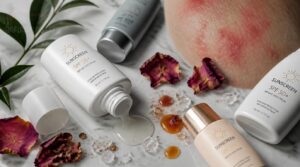
Inactive ingredients can matter as much as the UV filters, especially if your skin is reactive or eczema-prone. A sunscreen may protect well from UV exposure yet still cause stinging, itching, or a rash from added fragrance, preservatives, or solvents. Check the label for these common sensitizing additives before you buy.
Parfum and Fragrance Labels
A single word, “Fragrance” or “Parfum,” can conceal dozens of chemicals rather than a clear ingredient list. U.S. labeling rules allow this consumer-facing shortcut, creating labeling loopholes exposed only when irritation occurs.
Knowing exactly which shaving cream ingredients to watch out for helps you cut through that ambiguity before a reaction forces the issue.
For sensitive skin, choose fragrance-free sunscreen. Synthetic fragrance risks include contact dermatitis, and hidden allergen exposure can complicate eczema care. Some formulas also combine fragrance with a paraben preservative or potential endocrine disruptor.
Essential Oil Allergens
“Natural” doesn’t mean nonallergenic. Essential oils can contain linalool, limonene, citral, cinnamaldehyde, or alpha-pinene, all recognized fragrance mix allergens that can trigger contact allergies.
Check labels for botanical names, “aromatic oils,” or blends. Lemon, eucalyptus, peppermint, cinnamon bark, ylang-ylang, and lemongrass are common essential oil allergens. Never apply undiluted oils; higher concentration raises sensitization risk. Stop using any product that causes itching, rash, or burning.
Paraben Sensitivity Context
Like essential oils, parabens trigger allergic reactions in some people, usually itchy rash. Patch testing uses a paraben mix and may show cross-reactivity with PABA esters.
Parabens prevent microbial spoilage. Despite urinary biomarker data confirming skin absorption, they are excreted quickly and sensitization risk remains low for most users. Regulatory concentration limits apply. Paraben-free cosmetics don’t resolve endocrine disruptor concerns.
Denatured Alcohol Irritation
Paraben sensitivity is uncommon, but alcohol denat can sting compromised skin. This ethanol-based solvent evaporates quickly, yet skin sensitivity may worsen with frequent use, especially in eczema or after shaving. Its chemical composition varies because denaturants may include methanol or other additives.
- Burning on dry skin
- Serious eye irritation
- Inhalation discomfort from sprays
Cosmetic use commonly ranges from 0.05% to 12%. Avoid eye-area application.
Retinyl Palmitate Concerns
Although Retinyl Palmitate is a vitamin A ester, sunlight raises UV photocarcinogenicity risk questions. It converts to retinol, retinaldehyde, then retinoic acid, a Vitamin A phototoxicity pathway. Mouse research found higher skin cancer tumor incidence, prompting regulatory monitoring recommendations.
Safety limits remain reassuring, but avoid it in pregnancy, osteoporosis, or endocrine disruptor concerns. Sunscreen reformulation trends increasingly omit it altogether.
Check Pregnancy-Specific Ingredient Concerns
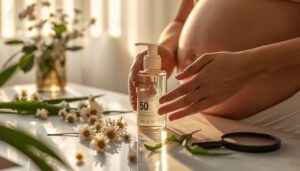
Pregnancy is a reasonable time to examine the products you apply every day, including sunscreen. Evidence does not support avoiding sun protection, but some ingredients raise questions worth discussing with your care team. Use the following points to guide a practical, pregnancy-conscious choice.
Oxybenzone Exposure Questions
During pregnancy, oxybenzone questions are reasonable. This UV filter shows dermal absorption: trials found plasma concentrations above 0.5 ng/mL after one application; urine biomonitoring detects it in about 97% of people tested. It appears in breast milk.
Oxybenzone is a suspected endocrine disruptor, though hormonal infertility links remain unsettled. Its photoinstability, coral reef toxicity, and environmental persistence matter during pregnancy.
Mineral Filter Preferences
When you want the most conservative option during pregnancy, choose mineral-only sunscreen with zinc oxide, titanium dioxide, or both. These filters sit on skin rather than relying on oxybenzone, octinoxate, or octocrylene.
Blended formulas improve UVA and UVB coverage and may reduce whitening. “Non nano” reflects particle-size preference. Choose a water-resistant texture you’ll apply generously and comfortably.
Retinoid Ingredient Caution
Vitamin A derivatives show up in some sunscreens, and during pregnancy, that detail matters. Check labels carefully for these retinoid ingredients:
- Retinyl palmitate
- Retinol
- Tretinoin
- Adapalene
- Tazarotene
Oral retinoids cause serious birth defects, including craniofacial and cardiac abnormalities. Topical forms absorb far less, but your healthcare providers still recommend avoiding them as a precaution. Try niacinamide or azelaic acid instead.
Fragrance-free Formula Options
When you’re already steering clear of oxybenzone, octinoxate, and retinoids, fragrance-free mineral formulas are a natural next step.
Synthetic fragrance ranks among the top five contact allergens, and paraben preservatives can worsen skin sensitivity. Look for hypoallergenic, dermatologist-tested sunscreens with zinc oxide or titanium dioxide. They skip common allergen triggers and are gentle enough for daily use throughout your pregnancy.
Ask Your Prenatal Clinician
Your prenatal clinician is your best resource for pregnancy-safe sunscreen guidance. Bring your product labels to your first-trimester appointment and ask specifically about oxybenzone, octinoxate, homosalate, and avobenzone, each a potential endocrine disruptor.
Discuss chemical vs mineral options by trimester, request an ingredient label review, and don’t forget to ask about postpartum breastfeeding safety before resuming your regular skincare routine.
Consider Environmental Ingredient Impacts

Your sunscreen doesn’t stop working when it rinses off — for marine ecosystems, that’s when the problem begins. Several common chemical filters have been linked to measurable damage in coral reefs and ocean life, and knowing which ones to watch for helps. Here’s what the research shows about the ingredients most likely to affect the environments where you swim.
Oxybenzone Coral Toxicity
When you scan sunscreen labels for marine safety, benzophenone-3, or oxybenzone, is one compound with a deeply troubling record.
Research shows it causes coral bleaching and DNA damage at concentrations as low as 62 parts per trillion. Exposure also acts as a skeletal endocrine disruptor, triggering ossification that traps coral larvae inside their own calcified skeletons, permanently ending their development.
Octinoxate Bleaching Concerns
Octinoxate, a recognized endocrine disruptor, also damages reefs differently than oxybenzone. It triggers viral induction in marine bacteria, releasing viruses that destroy the symbiotic algae corals depend on to survive.
- DNA damage disrupts coral reproduction
- Oxidative stress halts algae photosynthesis
- Heat stress interaction accelerates coral bleaching
Hawaii’s reef-toxic sunscreen ban targets octinoxate specifically.
Octocrylene Marine Accumulation
Octocrylene accumulates in coral tissue, disrupting the symbiotic algae reefs depend on to survive. Its environmental persistence and degradation into benzophenone, a known carcinogen, compound risk across the marine food web. Lab studies confirmed early life toxicity in Pacific oyster larvae.
| Compound | Marine Effect | Status |
|---|---|---|
| Octocrylene | Coral bleaching risk | Persistent |
| Benzophenone | Carcinogenic byproduct | Hazardous |
| Both combined | Food web contamination | Severe |
Homosalate Coral Stress
Homosalate triggers coral bleaching at concentrations near 50 μg/L. As an endocrine disruptor, it generates oxidative stress in symbiotic algae, impairing photosynthesis and damaging coral tissue, much like oxybenzone but through distinct pathways.
- Disrupts coral larval development and settlement rates
- Heightens marine organism sensitivity to thermal stress
- Drives reef stress accumulation over prolonged exposure
- Increasingly flagged in reef-toxic sunscreen bans
Local Reef-safe Rules
Why check local rules before packing sunscreen? Reef-safe labeling laws vary, and “reef-safe” has no single FDA-regulated definition.
Coastal sunscreen bans, marine protected zones, and tourist area regulations may restrict oxybenzone and octinoxate because of coral bleaching concerns.
Review ingredient restriction policies, then choose a reefsafe sunscreen with zinc oxide or titanium dioxide, avoiding products named in reeftoxic sunscreen bans.
Choose Better-Tolerated Sunscreen Ingredients
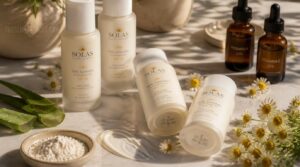
If you want a simpler starting point, focus on sunscreen filters with the strongest current safety support and a lower likelihood of irritation.
Check the active-ingredient panel rather than relying on front-label claims such as “clean” or “reef-safe.”
The options and label details below can help you choose broad-spectrum protection with more confidence.
Zinc Oxide Options
Zinc oxide is a well-tolerated mineral option for broad-spectrum protection. Look for non-nano zinc oxide, ideally 10% to 25%, with coated particles for smoother coverage and less whitening. Silicone, oil, or beeswax bases affect feel and water resistance. Tinted formulas can reduce cast. As a reefsafe sunscreen choice, non-nano zinc oxide also limits marine exposure.
Titanium Dioxide Options
Although Titanium Dioxide is weaker than zinc oxide for UVA, it gives UVB-short UVA protection.
- Tinted formulations reduce cast; nanoparticle safety is reassuring on intact skin, but avoid inhaling powder applications.
- Sticks and brush-ons simplify reapplication, though sprays carry nanoparticle inhalation risk.
- For mineral sunscreen benefits and UVB-UVA coverage, pair it with zinc oxide; nonnano mineral filters suit users.
Bemotrizinol’s 2026 FDA Status
Bemotrizinol is GRASE. FDA proposed its addition December 12, 2025, finalized it June 10, 2026, and made it effective August 9. Permitted up to 6% from six months of age.
DSM-Firmenich markets it as PARSOL Shield with 18-month exclusivity. This UVA/UVB filter has low systemic absorption, is not an endocrine disruptor, and brings U.S. sunscreen options closer to global standards.
Active Ingredient Label Checks
Your safeguard is the Drug Facts panel, not front-label promises. Verify active filters and percentages; marketing can hide mixed formulas.
- Find oxybenzone, benzophenone-3 (BP-3).
- Identify octinoxate, homosalate, avobenzone.
- Compare concentrations.
- Read inactive ingredients separately.
- Ask a pharmacist about missing details.
Ingredient lists generally run by weight, but filters should appear in an active-ingredient section. If it is unclear, don’t guess.
Broad-spectrum Protection Still Matters
Broad-spectrum protection remains essential, even when you avoid certain filters. UVB burns; deeper-penetrating UVA drives photoaging and DNA damage. Wear SPF 30+ daily, through clouds and window glass.
| Check | Why |
|---|---|
| Broad-spectrum | Balances UVA/UVB |
| Critical wavelength >370 nm | Verifies UVA efficacy |
| Daily use | Limits cumulative exposure |
| Oxybenzone, octinoxate, homosalate, avobenzone, octocrylene | Assess tolerance |
Your skin’s tolerance may still vary considerably.
Frequently Asked Questions (FAQs)
What are the least harmful ingredients in sunscreen?
At the safety Olympics, mineral filters take the gold: zinc oxide and titanium dioxide, including nonnano forms, offer broad-spectrum protection and sensitive-skin compatibility. Bemotrizinol awaits FDA approval, so choose mineral filter options first when possible.
What are some harmful ingredients in sunscreens?
Potentially harmful concerns include PABA allergy reactions, trolamine salicylate toxicity, and hormone-related questions around oxybenzone, octinoxate, homosalate, octocrylene, and avobenzone. Oxybenzone and octinoxate also raise coral concerns; homosalate may stress coral ecosystems.
What brands of sunscreen are not safe?
No sunscreen brand is universally unsafe; consumer advocacy testing and independent lab verification reveal brand performance gaps, label accuracy issues, and safety standard failures. Be cautious with products containing oxybenzone, octinoxate, homosalate, avobenzone, or octocrylene.
Which sunscreen is best for avoiding toxic ingredients?
An ounce of prevention counts: choose natural mineral filters with zinc oxide, fragrance-free options, and paraben-free sunscreen for broad-spectrum safety. Avoid oxybenzone, homosalate, avobenzone, octocrylene, and parabens; bemotrizinol availability now offers another U.S. option too.
Are sunscreen sprays safe to inhale?
Don’t inhale spray sunscreen. Aerosols containing oxybenzone, avobenzone, octocrylene, homosalate, or octisalate can irritate airways and trigger asthma. Apply outdoors, spray into hands, never toward faces, and use extra caution around children.
Should I avoid sunscreen containing nanoparticles?
At under 100 nanometres, nanoparticles raise nano safety concerns, but zinc oxide and titanium dioxide show low absorption. Long-term data and labeling gaps remain. Avoid nano concerned; oxybenzone is an endocrine disruptor with coral effects.
Which ingredients can trigger acne or breakouts?
Breakouts may follow comedogenic ingredients such as coconut oil, lanolin, isopropyl myristate, or mineral oil. Fragrance sensitivity and irritation from oxybenzone, octinoxate, homosalate, octocrylene, or avobenzone can potentially aggravate acne-prone skin in sensitive individuals too.
Do water-resistant formulas contain more irritants?
Water-resistance testing measures staying power, not irritation: surfactant concentration levels, preservative-system changes, occlusion-sweat impact, and cleansing-residue removal can outweigh emollient barrier effects, while endocrine-disruptor concerns, avobenzone photoinstability, dermal absorption, and UV-filter penetration depend on actives.
How does sunscreen expiration affect ingredient safety?
After sunscreen expiration, ingredient degradation and chemical instability can cause UV filter breakdown, reducing SPF and creating a safety compromise. Discard expired bottles: UV filter degradation, allergenic preservatives, and dermal absorption of chemicals become unpredictable.
Conclusion
Let the label be your quiet safeguard, steering you away from ingredients with established risks and helping you weigh unresolved questions without fear.
When deciding what ingredients to avoid in sunscreen lotion, prioritize your history of eczema, allergy, pregnancy concerns, and local environmental rules.
A fragrance-free mineral formula is often a sensible starting point.
Yet the best sunscreen remains the one you’ll apply generously, reapply reliably, and wear whenever ultraviolet exposure is coming up.